Pruning
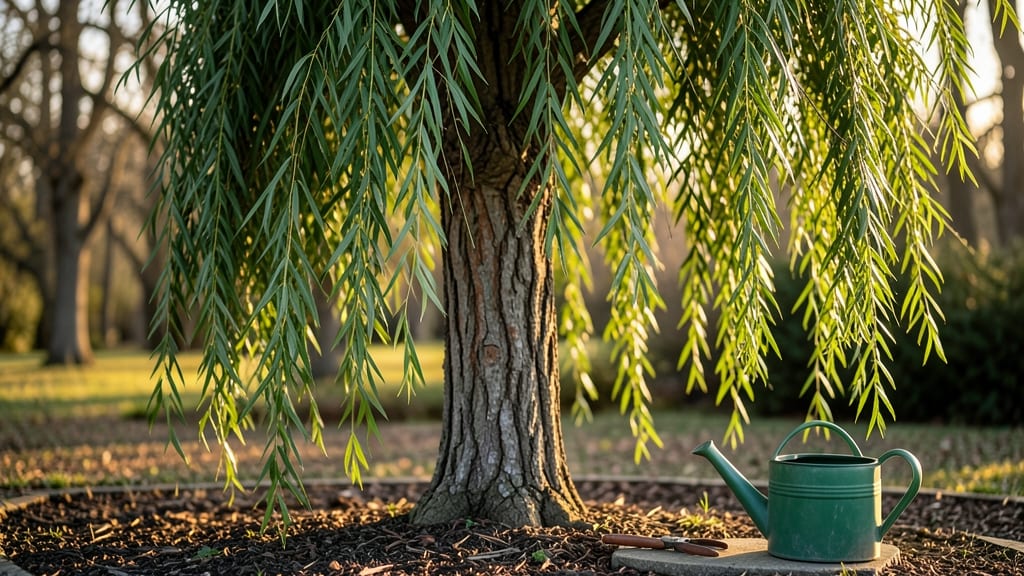
Your weeping willow tree’s graceful arcs could sag into chaos without the right pruning—especially in the Pacific Northwest’s damp winters. 🌿 I’ve spent years restoring these trees after storms and neglect, and the secret isn’t cutting back wildly but shaping growth to match its natural elegance.
The key? Timing cuts to the dormant season and removing dead wood before spring flushes new leaves.
You’ll need sharp pruners, a ladder (for higher branches), and a clear day to avoid wet wood splintering. Focus on thinning crowded branches first—this improves airflow and reduces disease risk.
For shape revival, prune no more than 25% of the tree’s canopy in one session, or you’ll trigger stress that weakens its cold-hardy resilience.
What you’ll end up with is a tree that bounces back with lush, symmetrical weeping branches by summer, its bark gleaming under Pacific Northwest skies. The best part? Proper pruning extends its lifespan by decades, turning a potential liability into a year-round focal point. Ready to restore its beauty?
Works for both young saplings and mature trees, though larger specimens may need a team for safety. Here’s how to approach it without overcomplicating the process—even if you’ve never pruned a willow before.
📚 In This Guide
- What you need
- Instructions
- Tips and common mistakes
- Wrapping up and next steps
What you need
- ● Pruning shears: Bypass pruners (for cuts up to ½ inch thick) – 1 pair (look for blank">Felco F-2 or blank">Gonicc for durability).
- ● Loppers: Bypass or anvil (for branches ½–2 inches thick) – 1 pair (e.g., blank">Felco 203).
- ● Pruning saw: Curved-tooth (for branches 2+ inches thick) – 1 saw (e.g., blank">Fiskars).
- ○ Extension pole: 10–12 ft (for high branches) – 1 pole (optional but handy for weeping willows!).
- ● Disinfectant: 70% isopropyl alcohol or blank">pruning sealant (to prevent disease) – small bottle.
- ● Gloves: Heavy-duty, cut-resistant (e.g., blank">Wolverine) – 1 pair.
- ● Safety gear: Safety glasses and long sleeves/pants (willow branches can be sharp!).
- ● Rope or twine: For securing branches during drying (if pruning for shape).
- ● Ladder: Sturdy, 3-section (if tree exceeds 15 ft).
- ● Tree wound dressing: Pruning paste (controversial but useful for large cuts).
- ● Wheelbarrow: For hauling debris (willow leaves/clippings add up!).
- ● Timing: Prune willow weeping trees in late winter/early spring (before new growth). Avoid fall—it’s a disease risk! ⏳
- ● Weather: Choose a dry, calm day (rain = slippery branches!).
- ● Tree health: Inspect for cankers or pests before pruning. Remove infected branches last to avoid spreading spores. 🚫🐛
- ● PNW note: Willow trees thrive in the Pacific Northwest’s mild winters—just avoid pruning in frost (tissue can tear).
Step-by-Step guide to pruning your weeping willow tree
Reviving your weeping willow's graceful shape takes patience and precision—here's how to do it right.
✂️ Step 1: Assess the Tree's Structure and Identify Problem Areas
Start by examining your weeping willow from all sides, looking for areas where branches are growing too thick, crossing, or breaking the tree's natural weeping form. You'll want to focus on the main scaffold branches—the sturdy arms that support the cascading growth. Use a small notebook to sketch a rough diagram if needed; this helps visualize where cuts should go.
Look for dead or diseased branches (they'll be brown, brittle, or oozing sap) and mark them for removal. These should go first, as they drain the tree's energy. Also note any branches growing straight up instead of downward—they'll need pruning to maintain the tree's signature weeping silhouette. The goal is to encourage a balanced, open canopy that allows light to reach the ground.
✂️ Step 2: Gather Tools and Prepare for Pruning
You'll need sharp pruning shears for smaller branches, loppers for thicker stems up to 2 inches in diameter, and a pruning saw for anything larger. Disinfect your tools with rubbing alcohol or a 10% bleach solution to prevent spreading disease between cuts. Wear long sleeves and gloves—willow branches can be sharp and sap can irritate skin.
Work on a dry day when the tree isn't actively stressed. Early morning is ideal because the tree's sap is flowing upward, making cuts heal faster. Avoid pruning during the Pacific Northwest's wet winter months, as open wounds take longer to seal. Gather a bucket and tarp to collect debris—you'll want to clean up fallen branches immediately to prevent pests from taking advantage.
☀️ Step 3: Prune for Shape and Health
Begin with the dead or diseased branches, cutting just outside the branch collar—the swollen area where the branch meets the trunk. Make clean cuts at a 45-degree angle without leaving stubs. For healthy branches, focus on removing about 20-25% of the tree's total foliage to avoid over-stressing it. You'll notice the weeping willow's natural grace when you remove upward-growing branches, encouraging more downward flow.
When shaping, aim to create an open center that allows air and light to circulate. For each branch you prune, look for a lateral bud facing the direction you want new growth to go. Cut just above this bud at the branch collar. If you're unsure, make a small notch in the bark above the bud first—this helps guide your final cut. Step back frequently to check your progress; the tree's natural weeping form should become more defined with each cut.
🌿 Step 4: Clean Up and Monitor Recovery
After pruning, collect all debris and dispose of it properly—never leave cut branches on the ground, as they can harbor pests and diseases. Seal larger cuts (over ½ inch in diameter) with a tree wound sealant to protect the tree from fungal infections. For smaller cuts, let them heal naturally—the tree will form callus tissue over time. Water the base of the tree deeply, especially if the pruning was extensive, to help it recover.
Monitor your weeping willow over the next few weeks, watching for new growth in the areas you pruned. You'll see fresh, vibrant leaves emerging from the lateral buds you preserved. If you notice any unusual wilting, discoloration, or sap oozing, it could indicate stress or infection—address it promptly with targeted care. In the Pacific Northwest's mild climate, your tree should show noticeable improvement within a growing season.
Tips & tricks for perfect weeping willow pruning
Pruning your weeping willow properly can transform its appearance—here are my go-to tips for achieving that signature graceful form.
Branch Collar Matters: When removing branches in Step 3, always cut just outside the branch collar—the swollen area where the branch meets the trunk. This is crucial because cutting too close can damage the tree's healing ability and leave it vulnerable to disease. I've seen too many trees with ugly stubs because people didn't notice this detail.
Season Timing Secret: The instructions mention avoiding winter pruning, but I also recommend waiting until late winter or early spring when new growth begins. This timing gives your willow the best chance to recover before summer's heat. In the Pacific Northwest, aim for February or March when buds start swelling—this is when the tree's energy is naturally shifting toward growth.
Clean Cuts Are Non-Negotiable: Make your cuts at a 45-degree angle without leaving stubs, especially for branches thicker than ½ inch. I use a sharp pruning saw for anything larger than 2 inches—dull tools crush the wood instead of making clean cuts. The cleaner the cut, the faster the tree will heal and the less chance of fungal infections.
Visual Progress Check: Step back frequently during Step 3 to check your progress. Your goal should be to see an open center with branches cascading downward. I like to imagine the tree's natural weeping form like a fountain—you want that graceful, flowing silhouette. If you're unsure about a cut, make a small notch in the bark first to guide your final cut.
Pro Tips for Willow Weeping Tree
- Pruning your weeping willow properly can transform its appearance—here are my go-to tips for achieving that signature graceful form.
- Branch Collar Matters: When removing branches in Step 3, always cut just outside the branch collar—the swollen area where the branch meets the trunk.
- Season Timing Secret: The instructions mention avoiding winter pruning, but I also recommend waiting until late winter or early spring when new growth begins.
Frequently asked questions
Got questions about pruning your willow weeping tree? You’re not alone! Here are answers to the most common queries—whether you're a PNW gardener or just curious about these graceful beauties.
When is the best time to prune a weeping willow?
The ideal window is late winter or early spring (before buds swell), when the tree is dormant but pests are less active. Avoid pruning in fall—it invites disease, or in summer (stresses the tree). For Pacific Northwest climates, aim for February to March for optimal results.
Can I prune a weeping willow in winter?
Yes, but only if it’s mild (no freezing temps). Cold snaps can stress the tree, and sap flow slows, making cuts heal poorly. If you must prune in winter, do it on a warmer day (above 40°F) and avoid heavy cuts. Pro tip: Wait until late winter for safer pruning!
How much can I trim back a weeping willow?
Weeping willows are fast-growing but resilient—you can remove up to one-third of the canopy in a single session. For dramatic shape revival, focus on thinning out dense branches (never “topping” it like a hedge). Prioritize dead, crossing, or weak branches first to encourage healthy regrowth.
What if my weeping willow keeps growing back after pruning?
Weeping willows love to regrow—it’s their survival instinct! If suckers or unwanted sprouts appear, cut them at the base (use a clean pruner or saw). For stubborn regrowth, apply a dormant oil spray in late winter to discourage new shoots. Patience is key: Consistent pruning trains the tree over time!
Are there alternatives to weeping willows for PNW gardens?
If you love the dramatic drape but want lower maintenance, consider:
- Pacific Willow (Salix lucida) – Cold-hardy, less aggressive.
- Japanese Snowbell Tree (Styrax japonicus) – Elegant with white flowers.
- Dwarf Fountain Grass (Pennisetum ‘Little Bunny’) – Adds texture without pruning woes.
Wrapping up and next steps
Pruning your willow weeping tree in the Pacific Northwest isn’t just about aesthetics—it’s a gift to its health and longevity! 🌿 With the right tools, timing, and techniques, you’ll help it thrive in cold climates while keeping its graceful, cascading form.
Remember, patience and precision are key—your tree will reward you with stunning growth and resilience for years to come.
Ready to give your weeping willow the care it deserves? Mark your calendar for late winter or early spring, gather your supplies, and roll up your sleeves! Whether you’re a seasoned gardener or a newbie, every snip brings you one step closer to a showstopping garden centerpiece. Happy pruning! ✂️✨