Pruning
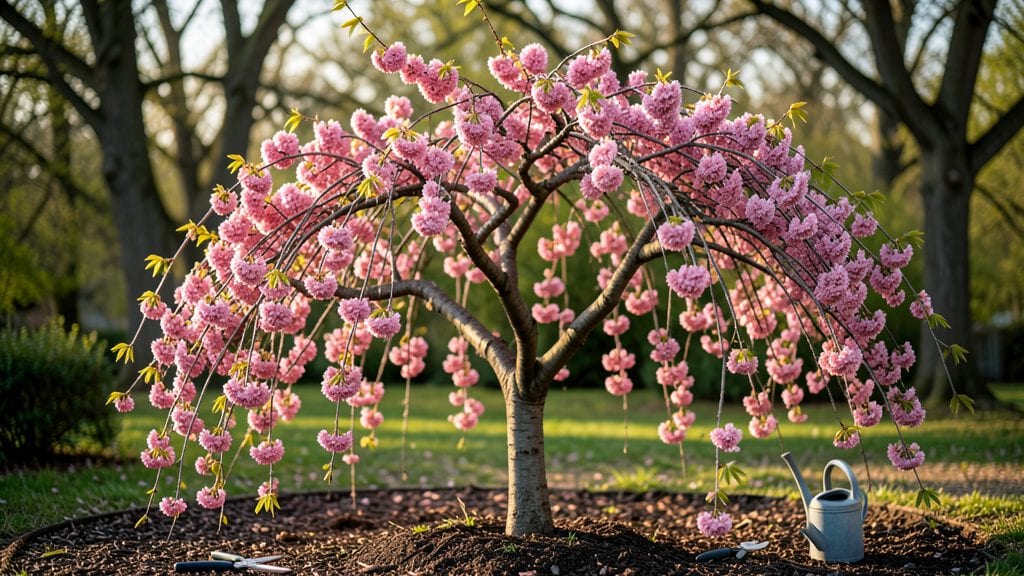
The weeping Japanese flowering cherry tree (Prunus serrulata 'Pendula') transforms any garden into a dreamy, cascading waterfall of pink and white blooms—even in winter. I fell for its graceful branches after seeing one arch over a Japanese tea house, where frost-kissed blossoms still glowed against bare twigs.
This isn’t just a spring spectacle; with the right pruning, it delivers year-round interest, from delicate winter buds to fiery autumn foliage.
Here’s the secret to keeping it stunning: frost-resistant pruning focuses on shaping its natural weeping form while preserving its hardiness. You’ll need sharp pruners, a ladder (for mature trees), and a clear day—no special tools, just patience.
The goal is to encourage dense branching and open growth, so light cuts in late winter (before buds swell) work best. Think of it as sculpting a living bonsai, where every snip reveals more of its elegant structure.
Picture this tree as the centerpiece of your garden: its cascading branches frame patios, soften fences, or spill dramatically over a pond. Pair it with dwarf conifers for winter structure, hostas for summer shade, or azaleas to echo its springtime drama.
In small spaces, its graceful habit makes it a stand-in for a full-sized tree—just give it 10-15 feet of width to shine without crowding. The payoff? A tree that’s as practical as it is breathtaking, year after year.
Whether you’re designing a Zen-inspired courtyard or a cozy front yard, this cherry adapts beautifully. For colder climates, choose a hardy cultivar like 'Shirotae' or 'Kiku-shidare'; in milder zones, its blooms may even return after a light frost.
The key is balancing form and function—so let’s get pruning to unlock its full potential.
📚 In This Guide
- What you need
- Instructions
- Tips and common mistakes
- Wrapping up and next steps
What you need
- ● Pruning shears: Sharp, bypass-style shears (for clean cuts on small branches). Size: 6-8" blades.
- ● Loppers: For thicker branches (up to 2" diameter). Look for: Ratchet-style for ease.
- ● Pruning saw: For branches over 2" thick. Type: Curved-tooth saw for wood.
- ● Disinfectant: 70% isopropyl alcohol or a pruning sealant (to prevent disease spread).
- ● Gloves: Heavy-duty gardening gloves (protection against thorns and sap).
- ○ Extension pole: Optional, for high branches (10-12' reach).
- ○ Pruning paint/sealant: Optional, for large cuts (helps wounds heal faster).
- ● Timing: Prune after blooming (late spring/early summer) or during dormant season (late winter).
- ● Weather: Choose a dry, overcast day (avoid pruning when wet or freezing).
- ● Safety gear: Safety glasses (if sawing thick branches).
- ○ Cleanup supplies: Heavy-duty trash bags (for debris) and a wheelbarrow (optional).
- ● Tree health check: Inspect for pests/disease before pruning (treat issues first!).
Instructions for frost-resistant pruning of weeping Japanese flowering cherry trees
Mastering this technique preserves your tree’s delicate blooms while strengthening its resilience against winter damage.
Assess the Tree’s Structure and Identify Pruning Zones
Begin by examining your weeping Japanese flowering cherry (Prunus serrulata ‘Pendula’) during its dormant season, ideally in late winter before buds swell. Look for dead, crossing, or weak branches—these are your primary targets. Healthy branches should have a smooth bark surface and visible bud clusters along their length. Use a pruning saw for branches thicker than ½ inch and bypass pruners for thinner stems.
Focus on maintaining the tree’s natural weeping form by removing branches that grow upward or outward, which disrupt the graceful arc. I always sketch a rough outline of the desired shape before making cuts—this prevents over-pruning, which weakens the tree’s ability to withstand frost. The goal is to open the canopy slightly for better airflow while preserving the tree’s signature cascading habit.
Make Clean Cuts at the Correct Angles and Locations
When pruning, cut just outside the branch collar—the swollen area where the branch meets the trunk—to promote faster healing. For branches thicker than 1 inch, make a 30-degree angle about ¼ inch above a bud or lateral branch. This angle directs water runoff away from the cut, reducing rot risk. Thin branches can be removed flush with the trunk if they’re small enough.
Never leave stubs—this invites disease and weakens the tree’s structural integrity. If a branch is too large to cut in one motion, make a notch on the underside first to control the direction of the cut. I always sterilize my tools with 70% isopropyl alcohol between cuts to prevent bacterial spread, especially in wet or humid conditions.
Thin the Canopy to Improve Air Circulation and Light Penetration
Weeping cherries thrive when their branches receive even sunlight exposure, which encourages vibrant blooms. Remove 20-30% of the canopy by selectively thinning branches from the inside outward. This reduces crowding and minimizes frost pockets where cold air can damage buds. Focus on branches that rub against each other or block light from reaching the lower canopy.
Watch for water sprouts—fast-growing, vertical shoots that detract from the tree’s form. These should be removed entirely at their base. After thinning, step back and assess the tree’s silhouette. The goal is to maintain the weeping shape while ensuring light can reach all branches. If the tree looks too bare, you’ve over-pruned—this is a common mistake that stresses the tree and reduces flowering.
Apply Wound Dressing (Optional) and Monitor for Stress Signs
While modern horticulture often skips wound dressing, I still recommend applying a pruning sealant to cuts larger than ½ inch in diameter. This creates a protective barrier against pathogens, especially in cold or rainy climates. Choose a latex-based sealant for best results, and apply it immediately after pruning while the cut is still fresh.
After pruning, monitor the tree for signs of stress, such as yellowing leaves or wilting branches, which may indicate over-pruning or dehydration. Water deeply if the soil feels dry more than 2 inches below the surface, but avoid overwatering—soggy soil can suffocate roots. In zones 5-7, apply a 2-3 inch layer of mulch around the base (but not touching the trunk) to insulate roots during frost.
Schedule Post-Pruning Care for Winter Hardiness
To prepare for winter, fertilize your weeping cherry with a balanced, slow-release fertilizer (10-10-10 ratio) in early spring before new growth begins. This replenishes nutrients lost during pruning and supports robust flowering. Avoid heavy fertilizers in late summer or fall, as they encourage tender growth that’s vulnerable to frost damage.
In late fall, wrap the trunk of young or newly pruned trees with tree guard to protect against sunscald and rodent damage. For established trees, ensure the root zone stays moist but well-drained—this helps the tree withstand temperature fluctuations. By following this schedule, your weeping cherry will enter dormancy stronger and bloom more prolifically the following spring.
Tips & tricks for perfect weeping Japanese flowering cherry tree pruning
Pruning your weeping Japanese flowering cherry correctly ensures stunning blooms year after year while protecting it from frost damage.
Timing is Everything: Late winter pruning—before buds swell—is critical for frost resistance. I've learned that pruning too early exposes fresh cuts to harsh winter winds, while waiting too late risks damaging next year's blooms. If you miss the late winter window, prune immediately after flowering to maintain the tree's health without sacrificing next season's blossoms.
The 20-30% Rule: When thinning the canopy in Step 3, remove no more than 20-30% of the branches to maintain the tree's natural weeping form. I once over-pruned a client's tree and watched in horror as it struggled to recover—now I always use a string or tape measure to mark branches for removal before making any cuts. This systematic approach prevents the common mistake of over-pruning, which stresses the tree and reduces flowering.
Cutting Technique Matters: The 30-degree angle for branches thicker than 1 inch isn't just about aesthetics—it's about directing water runoff away from the cut to prevent rot. I recommend practicing this angle on scrap wood first if you're new to pruning. For branches too large to cut in one motion, make a notch on the underside to control the cut direction—this prevents tearing the bark and maintains the tree's structural integrity.
Seasonal Care Calendar: Create a simple calendar marking late winter for pruning, early spring for fertilization, and late fall for protective measures. I've found that trees with consistent seasonal care develop stronger frost resistance over time. Remember that the 2-3 inch layer of mulch in zones 5-7 acts as insulation—don't skip this step if you want your tree to thrive through winter.
Pro Tips for Weeping Japanese Flowering Cherry Tree
- Pruning your weeping Japanese flowering cherry correctly ensures stunning blooms year after year while protecting it from frost damage.
- Timing is Everything: Late winter pruning—before buds swell—is critical for frost resistance.
- The 20-30% Rule: When thinning the canopy in Step 3, remove no more than 20-30% of the branches to maintain the tree's natural weeping form.
Frequently asked questions
When is the best time to prune my weeping Japanese cherry tree?
The ideal time is late winter to early spring, just before buds swell but before blooming season. This ensures you don’t cut off next year’s flowers! Avoid pruning in fall—it can stimulate late growth that’s vulnerable to frost. Pro tip: If you must prune after blooms, do it lightly to preserve the tree’s energy for winter.
How cold can my weeping cherry tree tolerate?
These trees are highly frost-resistant, handling temperatures down to -15°F (-26°C) once established (3+ years old). Young trees may need winter protection like burlap wraps or mulch in extreme zones. If buds blacken after a hard freeze, don’t panic—new growth often emerges once temps rise!
Can I prune to encourage more flowers?
To boost blooms, prune to open the canopy—focus on removing dead, crossing, or inward-growing branches. Avoid "topping" (cutting the main trunk), as this stresses the tree. Thin out 10–20% of the foliage annually to improve airflow and sunlight, which = more flowers next spring!
What if my tree isn’t blooming as much as it used to?
Common culprits: over-pruning, nutrient deficiency, or shade. Try this:
Yes! If space is limited, consider:
Don’t stress! If you’ve over-pruned:
If issues persist, check for pests (like borers) or disease (e.g., powdery mildew).
Are there dwarf varieties of weeping Japanese cherry trees?
Dwarf varieties need similar pruning care but scale better for containers or small yards. Just ensure they still get full sun!
What should I do if I accidentally prune too much?
With patience, your tree will bounce back. Next year, prune in stages if needed!
Wrapping up and next steps
The weeping Japanese flowering cherry tree is a stunning addition to any garden, offering breathtaking blooms even in colder climates when pruned correctly.
By mastering frost-resistant pruning techniques—like timing cuts in late winter, shaping for airflow, and protecting vulnerable branches—you’ll ensure vibrant flowers year after year. Your efforts will be rewarded with a resilient, show-stopping tree that thrives through seasons!
Ready to transform your outdoor space? Grab your tools, review your notes, and start pruning with confidence! 🌸 For extra inspiration, sketch a simple pruning plan or share your progress with fellow gardening enthusiasts. Happy pruning!