
Pruning
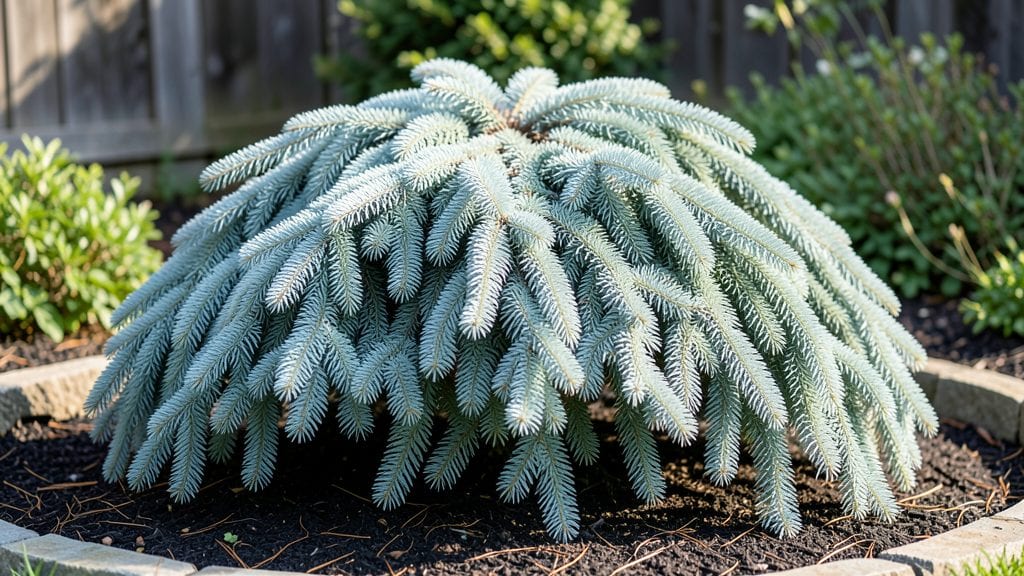
A weeping blue spruce tree transforms any landscape into a living watercolor painting. 🌲 Its sky-blue needles and graceful, cascading branches create a focal point that feels both majestic and delicate.
Unlike its upright cousins, this variety grows horizontally, making it perfect for accenting patios, slopes, or as a natural privacy screen.
The secret to keeping it thriving lies in understanding its needs: well-draining soil, full sun to partial shade, and moderate watering—especially during the first two years after planting. I’ve learned the hard way that soggy roots turn blue into brown, so good drainage is non-negotiable.
Once established, it handles drought surprisingly well, though the needles stay prettier with consistent moisture.
Pruning isn’t just about shaping—it’s about encouraging that weeping habit and keeping the tree healthy. Light trimming in late winter or early spring removes dead growth and opens up the center for air circulation.
The goal? A full, lush silhouette that looks like a sky-blue cloud spilling over rocks or a retaining wall.
This tree adapts to zones 3-7, making it versatile for cold climates and milder regions alike. In hotter areas, afternoon shade prevents needle scorch, while colder zones appreciate its wind resistance.
Whether you’re planting a sapling or pruning a mature specimen, the key is patience—its true beauty unfolds over decades.
📚 In This Guide
- What you need
- Instructions
- Tips and common mistakes
- Wrapping up and next steps
What you need
- ○ Pruning shears: Bypass pruners (for clean cuts on small branches, 6–8 inches long, with sharp, stainless-steel blades). Optional: Felco F-2 or Gonicc G9S for precision.
- ○ Loppers: Bypass loppers (for branches ½–2 inches thick, extendable pole loppers for higher branches). Optional: Fiskars X27 for ergonomic grip.
- ○ Pruning saw: Curved-tooth pruning saw (for branches >2 inches thick). Optional: Felco F-3 for durability.
- ● Ladder: Sturdy aluminum or fiberglass ladder (16–20 ft tall, with non-slip feet). Safety tip: Use a harness if working >10 ft high!
- ○ Disposable gloves: Nitrile or leather gloves (to protect hands from sap and thorns). Optional: Mechanix Wear for extra grip.
- ● Sealing wax: Pruning sealant (like Tanglefoot Tree Wound Pruning Sealer) to prevent disease entry.
- ● Cleaning supplies: Rubbing alcohol (70%+) or bleach solution (1 part bleach to 9 parts water) to sterilize tools.
- ○ Trash bags: Heavy-duty contractor bags (for debris disposal). Optional: Bio-degradable bags for eco-friendliness.
- ● Timing: Prune in late winter or early spring (before new growth) to avoid stressing the tree. ✨ Pro tip: Avoid pruning in fall—it invites fungal infections!
- ● Weather: Choose a dry, calm day (no rain forecast for 24 hours). Humidity can spread disease.
- ● Safety gear: Safety glasses and ear protection (if using a chainsaw for large branches).
- ● Tree health check: Inspect the tree for diseases (e.g., needle blight) or pests (e.g., spruce beetles) before pruning. 💡 Treat issues first!
- ● Chainsaw: Only for very large branches (>3 inches thick). Use a pole saw for hard-to-reach spots.
- ● Tree bag: Mesh bag to collect fallen needles and small debris.
- ● Extension cord: If using an electric pruner (for larger properties).
- ● First-aid kit: Bandages and antiseptic wipes for minor cuts.
Step-by-step pruning guide for weeping blue spruce trees
Here’s how to shape your tree’s elegant silhouette while keeping it healthy and vibrant.
✂️ Step 1: Time Your Pruning for Optimal Growth
Prune your weeping blue spruce in late winter or early spring, just as new growth begins but before buds swell. This timing ensures you remove dead branches without stressing the tree during dormancy. Avoid pruning in summer or fall—you’ll risk exposing tender growth to heat stress or fungal diseases. If you must prune later in the season, do it in early morning when temperatures are cooler to minimize shock.
Look for dry, brown branches or those growing inward—these are your first targets. Healthy branches should have deep blue-green needles and firm, flexible growth. If you see yellowing or sparse foliage, that’s a sign of stress, not just overgrowth. Wait until the tree shows fresh spring growth before making cuts.
🌿 Step 2: Assess the Tree’s Structure and Remove Deadwood
Start by examining the tree’s overall shape. Weeping blue spruces naturally grow in a pyramidal or cascading form, so your goal is to enhance—not flatten—that silhouette. Use sharp, clean pruning shears (or a pruning saw for thicker branches) to remove dead, diseased, or crossing branches first. These cuts should be made just outside the branch collar, the swollen area where the branch meets the trunk.
If a branch is thicker than ½ inch, make the cut in three steps: first undercut the branch from below, then cut from above about 6 inches out, and finally trim just outside the collar. This prevents bark from tearing. For smaller branches, a single clean cut is all you need. Never leave stubs—this invites decay and weakens the tree.
☀️ Step 3: Thin Out for Airflow and Light Penetration
Weeping blue spruces need good airflow to prevent fungal issues like needle blight. Focus on thinning 10-20% of the tree’s interior growth—this means removing entire branches back to their origin rather than just trimming tips. Start at the outer edges and work inward, targeting branches that are crowded or growing toward the center. You’ll see gaps in the foliage where light can now reach the inner branches.
Use your hand as a guide: if you can’t fit it between branches, the tree is too dense. Avoid shearing or "lion’s tailing" (cutting all branches to the same length)—this disrupts the tree’s natural form. Instead, aim for a gradual taper, with the widest part at the base narrowing toward the tips. This keeps the tree’s iconic weeping shape intact.
⏰ Step 4: Shape the Silhouette with Precision Cuts
Now it’s time to refine the tree’s signature cascading form. For horizontal branches, trim back the tips by ⅓ to ⅕ of their length to encourage bushier growth. For vertical branches, shorten them slightly to maintain balance. Avoid cutting into the leader branch (the central upright stem)—this keeps the tree’s structure stable. If you must prune the leader, do it gradually over several years to avoid shocking the tree.
Step back frequently to assess your work. The goal is a soft, flowing silhouette that doesn’t look hacked or overly manicured. Weeping blue spruces are prized for their natural elegance, so resist the urge to create sharp angles. If you’re unsure, err on the side of less pruning—these trees recover slowly from aggressive cuts.
💧 Step 5: Clean Up and Monitor for Recovery
After pruning, sterilize your tools with rubbing alcohol to prevent spreading disease. Collect and dispose of all clippings—don’t leave them beneath the tree, as they can harbor pests or fungi. Water the tree deeply (about 1-2 gallons per inch of trunk diameter) to help it recover, especially if you’ve made large cuts. Mulch around the base with 2-3 inches of organic mulch to retain moisture and protect roots.
Watch the tree closely in the weeks following pruning. Healthy new growth should appear within 4-6 weeks. If you notice wilting, yellowing, or excessive needle drop, the tree may be stressed—reduce watering slightly and avoid further pruning until it stabilizes. Over time, your weeping blue spruce will reward you with a lush, sky-blue canopy that’s the envy of the neighborhood.
Tips & tricks for perfect weeping blue spruce pruning
A few strategic insights will help you maintain your tree's stunning silhouette while keeping it thriving for years to come.
Timing Secret: The late winter to early spring window is your sweet spot because the tree is still dormant but about to burst with new growth. I've learned the hard way that pruning in summer exposes tender new shoots to heat stress, and fall pruning can encourage late-season growth that won't harden off before winter. If you absolutely must prune outside this window, do it on cool mornings when temperatures are below 75°F to minimize shock to the tree.
Branch Collar Technique: When removing branches thicker than ½ inch, that three-step cutting method makes all the difference. I used to make clean cuts right at the trunk, which left ugly stubs and weakened the tree. The undercutting prevents bark tearing while protecting the branch collar - that swollen area where the branch meets the trunk. This technique promotes faster healing and reduces disease risk. For branches smaller than ½ inch, a single clean cut just outside the collar is all you need.
Visual Assessment: Step back frequently during pruning to assess your work from a distance. The goal is to maintain that soft, flowing silhouette that makes weeping blue spruces so special. I've found that using a 10-20% thinning guideline for interior branches creates perfect airflow while preserving the tree's natural form. Think of it like sculpting - you want to enhance, not flatten. If you can't fit your hand between branches, it's time to thin out.
Recovery Strategy: After pruning, the care you provide in the weeks that follow determines how well your tree recovers. Sterilizing tools with rubbing alcohol prevents disease spread, while deep watering (1-2 gallons per inch of trunk diameter) helps the tree heal. I've seen trees recover beautifully when given proper post-pruning care, but neglected trees can show stress symptoms like wilting or needle drop. Mulching with 2-3 inches of organic material helps retain moisture and protect those vital roots.
Pro Tips for Weeping Blue Spruce Tree
- A few strategic insights will help you maintain your tree's stunning silhouette while keeping it thriving for years to come.
- Timing Secret: The late winter to early spring window is your sweet spot because the tree is still dormant but about to burst with new growth.
- Branch Collar Technique: When removing branches thicker than ½ inch, that three-step cutting method makes all the difference.
Frequently asked questions
Got questions about caring for your weeping blue spruce? You’re not alone! This stunning tree deserves attention, and we’ve got answers to the most common concerns—from pruning to troubleshooting. Dive in!
Why is my weeping blue spruce "weeping"?
The weeping habit comes from its naturally drooping branches, a genetic trait that creates a graceful, cascading silhouette. Unlike some trees that weep from stress, this feature is inherent—no intervention is needed! Just enjoy its sky-blue foliage and elegant shape.
When is the best time to prune a weeping blue spruce?
Prune in late winter or early spring (before new growth starts) to avoid stressing the tree. Avoid heavy pruning in fall—it can encourage tender new growth that won’t survive winter. Light shaping (like removing dead branches) can happen year-round, but major cuts wait for dormancy.
Can I prune too much? What are the signs?
Yes! Over-pruning weakens the tree, leading to sparse foliage, stunted growth, or even death. Watch for yellowing needles, bare spots, or excessive water sprouts—these signal stress. Rule of thumb: Never remove more than 25% of the canopy in one season.
Are there alternatives to weeping blue spruce for small yards?
If space is tight, consider these compact evergreens with similar drama:
- Dwarf Alberta Spruce – Dense, blue-green, and slow-growing (4–6 ft tall).
- Emerald Green Arborvitae – Columnar shape, soft texture, and cold-hardy.
- Prostrata Juniper – Spreading habit, drought-tolerant, and low-maintenance.
Why are my weeping blue spruce needles turning brown? How do I fix it?
Brown needles often mean disease, pests, or environmental stress. Check for:
- Spider mites (tiny webs on needles) – Treat with horticultural oil.
- Fungal issues (like needle cast) – Improve airflow, avoid overhead watering.
- Drought or sunburn – Mulch well and water deeply in dry spells.
Wrapping up and next steps
The weeping blue spruce is a stunning addition to any landscape, and with the right pruning techniques, you can keep it thriving for years. Remember, patience and precision are key—focus on shaping, removing dead growth, and encouraging that lush, sky-blue silhouette.
Your efforts will reward you with a showstopping centerpiece that turns heads and adds elegance to your outdoor space!
Ready to take the next step? Grab your tools and schedule your first pruning session this season. Watching your tree transform will be incredibly satisfying—happy pruning! 🌲✨