
Pruning
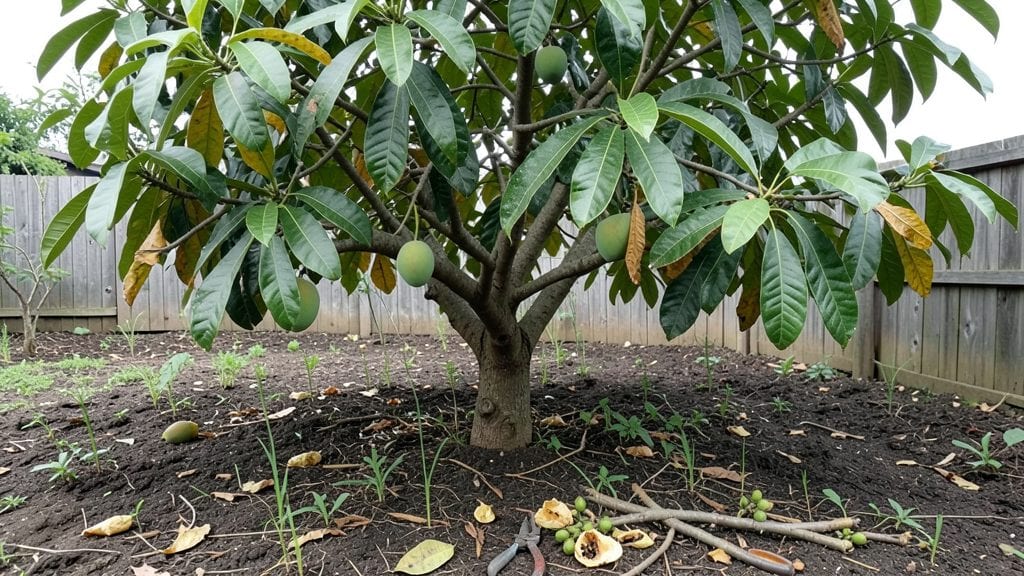
Trimming mango trees in the Pacific Northwest isn’t just about shaping—it’s about survival. 🌿 The right cuts mean the difference between a thriving tree and one struggling against our damp, cool summers.
I’ve learned that timing matters just as much as technique, especially when you’re dealing with a tropical fruit tree in a climate that wants to hold it back.
You’ll need sharp pruning shears, a sturdy ladder, and a clear day with no rain in the forecast. The best time to trim is late winter or early spring, just as new growth begins, but light shaping can happen year-round if needed.
The goal is to open up the canopy for sunlight, remove dead or crossing branches, and encourage strong, upward growth—never more than 25% of the tree’s foliage at once.
What you’ll end up with is a tree that produces fruit more reliably and resists disease better. The branches will spread evenly, letting sunlight reach every part of the canopy, and the tree’s energy will focus on growing fruit instead of weak, leggy growth.
Plus, your harvest will be easier to reach—and way more satisfying to pick.
This method works for both container-grown mangoes and larger backyard trees, though young trees need gentler pruning than mature ones. Let’s get those branches in shape without sacrificing next year’s crop.
📚 In This Guide
- What you need
- Instructions
- Tips and common mistakes
- Wrapping up and next steps
What you need
- ● Sharp bypass pruners (for small branches, 1-2 pairs): Look for bypass-style (clean cuts) with 4-6" blades.
- ● Disinfect with 70% isopropyl alcohol before/after use.
- ● Loppers (for medium branches, 1 pair): Choose 20-24" long with bypass or anvil blades.
- ● Pruning saw (for thick branches, 1): Opt for a curved-tooth saw (reduces tear-out).
- ● Ladder (if tree exceeds 6-8 feet): Use an extension ladder with non-slip feet.
- ● Gloves (heavy-duty, 1 pair): Choose cut-resistant (e.g., 12-14 gauge) for thorns.
- ● Sealing wax or pruning paste (for cuts > ½"): Helps prevent disease in Pacific Northwest’s damp climate.
- ● Disposable bags or bucket (for debris): Collect 1-2 gallons of clippings per session.
- ○ Tree pruning spray (optional but helpful): Contains copper fungicide to deter fungal growth.
- ● Pole pruner (for high branches, 1): Extendable up to 10-12 feet.
- ● Marking spray (for planning cuts): Helps visualize the tree’s new shape.
- ● Safety goggles: Protects eyes from debris (especially in windy PNW conditions!).
- ● Tree growth regulator (e.g., Paclobutrazol): Slows excessive growth if needed.
Step-by-step guide to trimming mango trees in the Pacific Northwest
Here's how I keep my mango trees healthy, productive, and thriving despite our cooler climate.
✂️ Step 1: Prune for Airflow and Sunlight in Late Winter
Start your trimming 2-3 weeks before your last frost date, when the tree is still dormant but the threat of hard freezes has passed. Your goal is to open up the canopy so sunlight and air circulate freely—this prevents fungal diseases that thrive in our damp Pacific Northwest winters. I focus on removing dead, diseased, or crossing branches first using sharp, clean pruners. You'll know a branch is dead if it snaps when bent or has no green tissue inside when cut.
Next, thin out overcrowded branches to create a vase-like shape with a strong central leader. Aim for 6-8 main scaffold branches spaced evenly around the trunk. Cut branches back to a bud or lateral branch—never leave a stub. This encourages new growth in the right direction. I always step back after each cut to visualize the tree's balance. If one side looks heavier, trim there first.
🌿 Step 2: Encourage Fruit Production in Early Spring
Once new growth appears in early spring (March-April), shift focus to shaping the tree for fruit production. Remove suckers (those vigorous shoots at the base of the trunk)—they drain energy from fruit development. Also, prune back any water sprouts (vertical shoots growing from the trunk or branches) to 1/3 of their length. These cuts redirect energy to flower buds, which form on older wood.
Look for flower buds—they appear as small, round swellings along the branches. Avoid heavy pruning at this stage; instead, lightly trim to maintain the tree's shape. If a branch grew too long last season, cut it back to a strong lateral branch just above a leaf node. You'll see new leaves emerge within 2-3 weeks—that's your signal the tree is responding well.
☀️ Step 3: Summer Maintenance for Fruit Development
During summer (June-August), your focus shifts to fruit development and pest control. Remove any damaged or diseased fruit immediately to prevent the spread of infection. If you notice aphids or scale insects (common in PNW mango trees), prune out heavily infested branches and dispose of them in the trash—not the compost. Healthy trees resist pests better, so prioritize branches that show signs of stress.
Thin out overly dense foliage to improve air circulation, especially in the lower canopy. Mango trees in cooler climates produce best when sunlight reaches the inner branches. Cut back shading branches to 1/2 their length, making sure to leave at least 3-4 leaves on each remaining branch. This ensures the tree retains enough energy for fruit maturation. Water deeply after pruning to help the tree recover.
⏰ Step 4: Light Winter Pruning for Structure
In late fall (November), do a light maintenance trim to remove any dead wood, weak growth, or branches that rub together. This prevents damage during winter storms and keeps the tree tidy. Avoid heavy pruning now—you want the tree to enter dormancy with enough energy stored for spring growth. Focus on cleaning up rather than shaping.
After trimming, sanitize your tools with rubbing alcohol to prevent the spread of disease. Store pruners in a dry place until next season. In the PNW, where winters can be wet and mild, this final trim helps the tree recover faster in early spring. You'll notice fewer fungal issues and stronger new growth the following year if you keep up with this habit.
Tips & tricks for perfect mango tree trimming
Here's what I've learned after years of pruning mango trees in our cool Pacific Northwest climate—these tricks will help you avoid common mistakes and get the best results.
Timing is Everything: The 2-3 week window before your last frost date is critical because it gives the tree time to heal before spring growth begins. In the PNW, this often means starting in late February or early March. I check my local frost date calendar and mark my pruning date 3 weeks prior—this timing prevents late-season frost damage to new growth. If you're unsure about your frost date, local garden centers or agricultural extensions can provide this information for your specific area.
Visualize Your Cuts: Before making any cuts, step back and look at your tree from all sides. You're aiming for that open vase shape with 6-8 main scaffold branches. I like to sketch a quick diagram on paper—this helps me visualize where branches should go. When cutting back branches, always make your cuts just above a bud or lateral branch (never leave stubs). This simple technique ensures new growth emerges in the right direction and prevents unsightly stubs that can harbor disease.
PNW-Specific Pest Watch: Our damp climate creates perfect conditions for fungal diseases and pests like aphids and scale insects. After each pruning session, I inspect all cut branches for signs of infestation—look for sticky residue (honeydew) or white cottony masses. If you find pests, dispose of infested branches in the trash (not compost) and immediately sanitize your tools with rubbing alcohol. This proactive approach prevents problems from spreading to healthy parts of your tree.
Seasonal Adjustments: In summer, when you're thinning dense foliage, focus on the lower canopy first—this is where sunlight often gets blocked in our cloudy PNW summers. I make a habit of cutting back shading branches to half their length while leaving at least 3-4 leaves on each remaining branch. This balance ensures your tree retains enough energy for fruit development while still getting the sunlight it needs to thrive in our cooler climate.
Pro Tips for Trimming Mango Trees
- Here's what I've learned after years of pruning mango trees in our cool Pacific Northwest climate—these tricks will help you avoid common mistakes and get the best results.
- Timing is Everything: The 2-3 week window before your last frost date is critical because it gives the tree time to heal before spring growth begins.
- Visualize Your Cuts: Before making any cuts, step back and look at your tree from all sides.
Frequently asked questions
Got questions about trimming your mango trees in the Pacific Northwest? You’re not alone! Here are some of the most common concerns—and their answers—to help you prune like a pro.
When is the best time to trim mango trees in the PNW?
In the Pacific Northwest, late winter (February–early March) is ideal for major pruning, just before buds swell. Light trimming can also happen in summer (June–July) to remove dead wood or shape growth. Avoid heavy cuts during rainy seasons to prevent fungal risks.
How much can I trim without harming the tree?
Never remove more than 25–30% of the canopy in one session. Focus on thinning out crowded branches (especially water sprouts) and dead/diseased wood. Over-pruning weakens the tree—think of it as giving your mango a haircut, not a buzz cut!
What if my mango tree is young—should I trim it differently?
Young trees (under 3 years) need minimal shaping—just remove dead branches or those growing inward. Wait until the tree establishes a strong structure (usually by year 3) before aggressive pruning. The goal? Encourage a central leader (main trunk) with evenly spaced scaffold branches.
My trimmed branches have weird oozing sap—is this normal?
Yes! Mango trees often "bleed" sap after cuts, especially in early spring. It’s harmless but can attract pests. Seal cuts with pruning sealant (optional) or let them air-dry. If sap turns black/moldy or bugs swarm, prune in drier weather or sterilize tools with rubbing alcohol.
Can I trim mango trees in winter if it’s too cold?
Trim only if temps stay above 40°F (4°C). Cold snaps stress trees and slow healing. If you must prune in winter, do it on mild days and avoid heavy cuts. Pro tip: Wait until late winter when buds show signs of waking up—your cue to get pruning!
Wrapping up and next steps
Trimming your mango trees in the Pacific Northwest doesn’t have to be intimidating—with the right timing, tools, and techniques, you can keep your tree thriving year-round! 🌿 Whether you’re shaping for aesthetics, improving airflow, or boosting fruit production, consistent care pays off.
Start small, observe your tree’s growth, and adjust your approach as needed.
Ready to take the next step? Mark your calendar for seasonal pruning sessions and grab your tools—your mango tree (and future harvest!) will thank you. Happy trimming! 🍈✨