
Planting
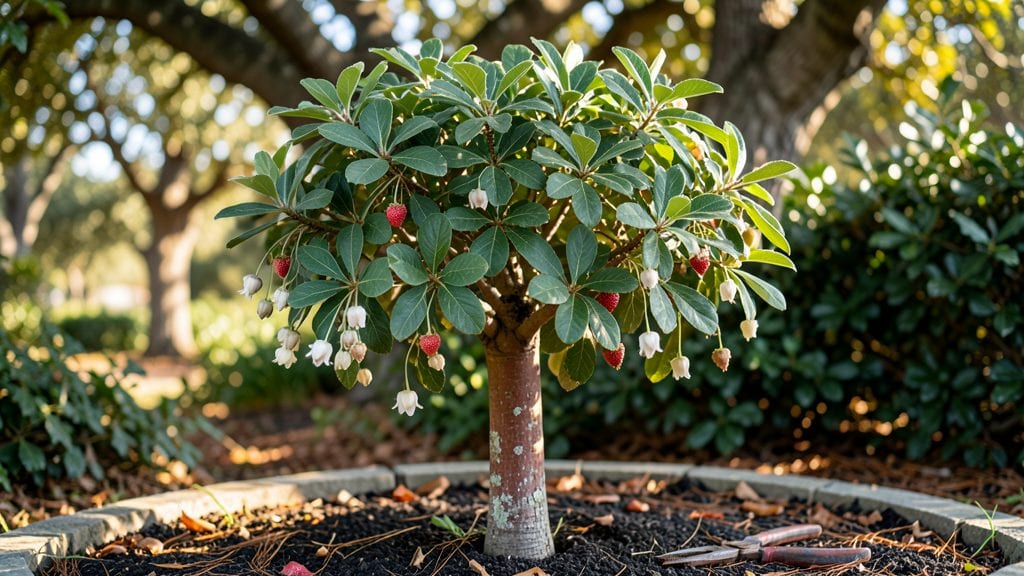
The strawberry tree plant (Arbutus unedo) brings Pacific Northwest gardens a year-round hummingbird haven with its peeling bark and fragrant white blossoms. I first fell for this Mediterranean native after seeing how hummingbirds swarmed its flowers even in late fall—when most gardens had gone quiet.
The trick to growing one successfully here isn't complicated, but it does require understanding its Mediterranean roots while adapting to our wet winters.
You'll need a sun-drenched spot with well-draining soil—think slopes or raised beds if your yard stays soggy in winter. The tree thrives in partial shade too, making it perfect for woodland edges or understory plantings.
Watering's the real key: keep soil moist but never soggy during the first two years, then let it dry slightly between waterings once established. Mulch helps retain moisture while protecting roots from our damp winters.
What you'll end up with is a textured, four-season focal point that hummingbirds can't resist. The peeling bark adds winter interest, spring flowers attract pollinators, and summer fruits (edible but bland!) provide food for birds.
Prune lightly in late winter to shape the tree and remove dead branches—never cut into old wood, as it won't regrow. With proper care, your strawberry tree will grow 15-25 feet tall, creating a living tapestry of wildlife activity.
Works beautifully as a specimen plant, in mixed borders, or even as a small patio tree in containers. The only challenge is protecting young plants from slugs during our rainy seasons—copper tape around the pot solves that.
Once established, it's nearly maintenance-free while delivering year-round beauty and wildlife value that few plants can match.
📚 In This Guide
- What you need
- Instructions
- Tips and common mistakes
- Wrapping up and next steps
What you need
- ● Strawberry tree plant: 1–2 nursery-grown saplings (3–5 gallons in size) or bare-root seedlings. Look for healthy, disease-free specimens with vibrant foliage.
- ● Well-draining soil: A mix of native soil, compost, and perlite or coarse sand (50/30/20 ratio). Strawberry trees hate soggy roots!
- ● Sunlight: A full-sun to partial-shade spot (6+ hours of sunlight daily). They tolerate light shade but thrive in bright conditions.
- ● Watering can or hose: For deep, infrequent watering (1–2 gallons per week, depending on weather).
- ● Organic mulch: 2–3 inches of pine needles, wood chips, or bark to retain moisture and regulate soil temperature.
- ● Fertilizer: Slow-release, acidic fertilizer (e.g., 8-3-9 or 10-10-10 with micronutrients) applied in early spring.
- ● Garden trowel or spade: For digging the planting hole (1.5x wider and as deep as the root ball).
- ● Gloves: To protect your hands while handling soil or thorny branches.
- ● Pruning shears: For shaping or removing dead branches (sterilize blades with rubbing alcohol!).
- ● Soil pH test kit: Strawberry trees prefer acidic soil (pH 5.0–6.5). Adjust with sulfur or peat moss if needed.
- ○ Hummingbird-friendly plants: Optional companion plants like salvia, fuchsia, or penstemon to attract pollinators year-round!
Step-by-Step instructions for planting a strawberry tree in the Pacific Northwest
This drought-tolerant beauty thrives in our region's mild climate—here's how to establish it for years of hummingbird visits.
Choose the Perfect Planting Location
The strawberry tree (Arbutus unedo) loves full sun to partial shade—at least 6 hours of direct sunlight daily—but tolerates light shade in hotter inland areas. In the Pacific Northwest, a south-facing slope or east-facing border works best, where morning sun warms the soil without afternoon heat stress. Avoid low spots where cold air settles, as young trees are frost-sensitive until established.
Test the site's drainage by digging a 12-inch deep hole. If water pools after 30 minutes, amend the soil with 2-3 inches of coarse sand or composted bark to improve airflow. The tree's native Mediterranean roots despise soggy conditions, which lead to root rot. In heavy clay soils common to the PNW, I always add 1 part perlite to 3 parts native soil for the first planting season.
Prepare the Planting Hole and Soil
Dig a hole twice as wide but no deeper than the tree's root ball. The top of the root ball should sit 1 inch above ground level—settling will occur over time, so don't bury it too deeply. Loosen the sides of the hole with a shovel to encourage root spread into surrounding soil. For the 4 plants you'll be installing, space them 15-20 feet apart to allow for mature spread.
Mix the excavated soil with equal parts compost and native soil, then add a handful of osmocote fertilizer (14-14-14) to the bottom of the hole. This slow-release formula provides nutrients without burning young roots. Avoid peat moss—it compacts when wet and suffocates roots. Instead, I blend in 1 part coconut coir to retain moisture while improving aeration.
Plant and Stake for Stability
Gently remove the tree from its container and tease the roots outward if they're circling. Place it in the hole so the root flare (where roots meet trunk) is visible above soil level. Backfill with the amended soil mixture, tamping lightly every 2 inches to eliminate air pockets. Water deeply to settle the soil, then add 1-2 inches of wood chips around the base to conserve moisture and suppress weeds.
Strawberry trees develop a tall, slender trunk that can lean in windy coastal areas. Install two 6-foot stakes on opposite sides of the tree, securing with soft tree ties (never wire). Water again immediately after staking to help roots bond with the surrounding soil. In the PNW's rainy winters, the stakes will prevent uprooting during storms.
Water and Mulch for First-Year Establishment
Water deeply twice weekly for the first 3 months, then taper to once weekly once new growth appears. The goal is to moisten the soil to a depth of 12 inches—check by inserting a screwdriver into the soil. Overwatering is worse than underwatering; the tree's thick bark stores moisture efficiently. In summer, I water in the early morning to reduce evaporation and fungal risks.
Apply 2-3 inches of wood chip mulch in a 3-foot diameter ring around the base, keeping it 3 inches away from the trunk to prevent rot. Replenish mulch annually in late winter. The tree's evergreen foliage and peeling bark make it a standout winter landscape feature, but proper mulching ensures it survives our mild but wet winters without stress.
Prune and Fertilize for Long-Term Health
Prune in late winter (February-March) to remove dead, crossing, or inward-growing branches. The strawberry tree's rounded canopy naturally develops with minimal intervention, but I always trim 1/3 of the oldest stems at the base to encourage new growth. Sterilize pruners with rubbing alcohol between cuts to prevent bacterial spread.
Fertilize in early spring with ½ cup of 10-10-10 granular fertilizer spread over the root zone, then water deeply. In the PNW, where soils are often nitrogen-rich, I skip additional fertilizing unless the tree shows yellowing leaves (a sign of deficiency). The tree's edible fruit (yes, it's related to strawberries!) thrives with minimal care—just avoid heavy-handed feeding, which promotes weak, disease-prone growth.
Tips & tricks for perfect strawberry tree planting in the Pacific Northwest
These essential insights will help you establish a thriving strawberry tree that becomes a hummingbird magnet for years to come.
Location Selection: The 6 hours of daily sunlight requirement is non-negotiable for healthy growth. In coastal areas with foggy summers, position your tree on a south-facing slope to maximize sun exposure during critical afternoon hours. I've found that east-facing borders work well in inland areas where afternoon sun can be intense—this gives the tree morning energy without midday stress. For container planting, choose a location that gets full sun and can be moved indoors during winter if frost threatens.
Drainage Test: That 30-minute drainage check in Step 1 is crucial—don't rush it. If water pools after 30 minutes, you're dealing with compacted soil that needs immediate amendment. In the PNW's heavy clay soils, I've had success using a 50/50 mix of native soil and coarse sand (not fine sand) for better long-term drainage. For containers, ensure pots have drainage holes and use a well-draining cactus/succulent mix as your base layer.
Root Ball Preparation: When teasing roots in Step 3, focus on the outer edges where roots naturally spread. The root flare should be clearly visible above soil level—this is your visual cue that the tree is planted at the correct depth. I've seen many gardeners bury the root flare too deeply, which can lead to girdling and poor growth. For container-grown trees, gently squeeze the sides of the pot to encourage roots to spread outward before planting.
Long-Term Mulching Strategy: That 2-3 inch wood chip mulch ring should be replenished annually in late winter before new growth begins. I recommend using locally sourced wood chips from untreated hardwoods to prevent introducing pests. For containers, use a 1-inch layer of mulch on top of the soil surface (not against the pot) to help retain moisture. The mulch should always stay 3 inches away from the trunk to prevent rot—a common mistake that can kill young trees.
Pro Tips for Strawberry Tree Plant
- These essential insights will help you establish a thriving strawberry tree that becomes a hummingbird magnet for years to come.
- Location Selection: The 6 hours of daily sunlight requirement is non-negotiable for healthy growth.
- Drainage Test: That 30-minute drainage check in Step 1 is crucial—don't rush it.
Frequently asked questions
Got questions about growing or caring for your strawberry tree (Arbutus unedo)? You’re not alone!
Here are answers to the most common queries from gardeners in the Pacific Northwest and beyond.
Is the strawberry tree really drought-tolerant once established?
The strawberry tree thrives on drought tolerance once its roots are well-established (after 2–3 years). While it enjoys regular watering in its first year, mature trees can handle dry spells—just avoid soggy soil, which can lead to root rot. Pro tip: Mulch around the base to retain moisture and mimic its Mediterranean native habitat.
How long does it take for a strawberry tree to bear fruit?
Patience is key! Strawberry trees typically take 5–7 years to produce their signature strawberry-like fruit (though they’re not true strawberries). Young trees focus on leaf and root growth first. For faster results, choose a grafted plant or a mature specimen (3+ years old) from a nursery.
Why aren’t hummingbirds visiting my strawberry tree?
Hummingbirds love strawberry trees—but a few factors might keep them away. Ensure your tree has plenty of blooms (prune lightly in late winter to encourage flowers). Also, check for pesticides (even natural ones) or over-fertilizing, which can deter pollinators. Bonus: Plant companion flowers like salvia or fuchsia nearby to attract them!
Can strawberry trees survive PNW winters?
Strawberry trees are hardy to USDA Zones 7–9, making them perfect for the Pacific Northwest’s mild winters. However, young trees (under 3 years) may need winter protection, like a thick layer of mulch or a burlap wrap, if temps dip below 10°F. Mature trees handle frost beautifully—just avoid pruning in late winter to prevent cold damage.
What’s a good alternative if I can’t grow a strawberry tree?
If your climate or space is limiting, consider these hummingbird-friendly alternatives with similar evergreen charm:
- Pacific Wax Myrtle (Myrica californica) – Thrives in PNW, drought-tolerant, and attracts birds.
- Oregon Grape (Mahonia aquifolium) – Native, berry-producing, and low-maintenance.
- Manzanita (Arctostaphylos spp.) – Another evergreen with red berries and year-round interest.
All three are pollinator magnets and adapt well to coastal and inland PNW gardens!
Wrapping up and next steps
The strawberry tree plant isn’t just a stunning addition to your Pacific Northwest garden—it’s a year-round hummingbird magnet that thrives with minimal fuss. With its vibrant blooms, edible fruit, and low-maintenance care, it’s the perfect choice for both wildlife lovers and plant enthusiasts alike. 🌿
Ready to transform your outdoor space? Start by choosing the right spot—whether it’s a sunny garden bed or a cozy container—and watch as this hardy tree becomes the heart of your ecosystem. Plant it today, and enjoy the buzz of hummingbirds for seasons to come! 🐦❤️