Pruning
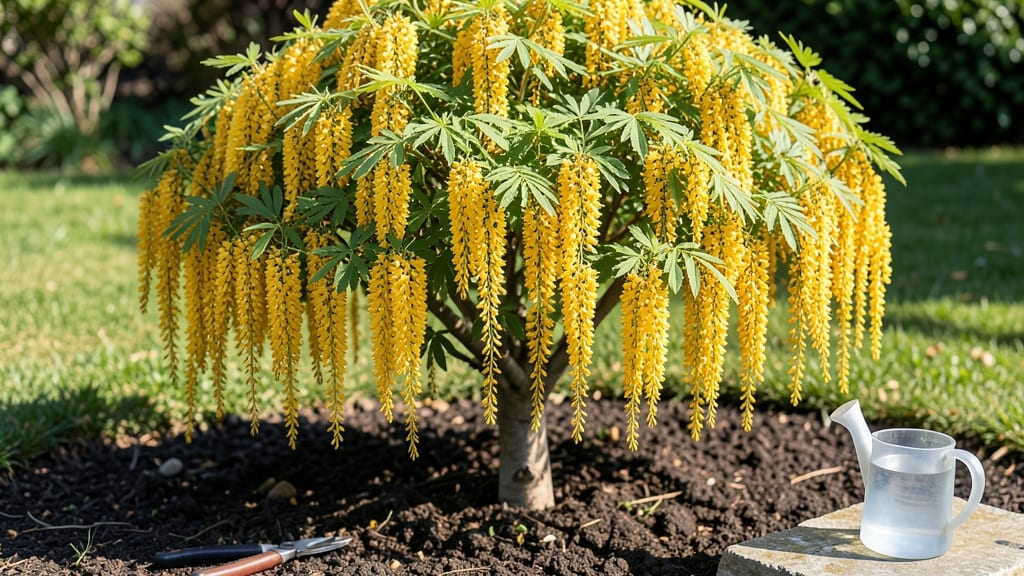
The gold chain tree (Laburnum anagyroides) transforms your Pacific Northwest garden into a hummingbird magnet with its cascading golden blooms and sweet nectar. 🌿 I planted mine last spring, and by summer, it was already buzzing with activity—hummingbirds couldn’t get enough of its fragrant flowers.
The key to getting this stunner to thrive lies in mimicking its natural habitat: rich soil, dappled shade, and consistent moisture.
This tree loves well-draining soil with a touch of organic matter—think compost mixed into your native earth. It thrives in zones 5-7, making it perfect for the PNW’s mild winters and damp summers. Water deeply once a week during dry spells, but avoid soggy roots.
The real magic happens when you prune lightly after flowering to shape it without sacrificing next year’s blooms. With the right care, you’ll have a year-round nectar source that hummingbirds return to again and again.
By late summer, the tree’s foliage turns a rich golden-yellow, creating a stunning contrast against evergreens. The seed pods add texture, and the scent lingers in the air—like nature’s own perfume. Just be warned: the seeds are toxic, so keep pets and kids away.
With proper pruning and placement, your gold chain tree will become the star of your garden, drawing pollinators and turning heads for decades.
If you’re in a warmer zone, consider a container to protect it from heat stress. The PNW’s climate is ideal, but even here, a sheltered spot helps it weather winter’s chill. Start small, and you’ll soon have a fragrant, hummingbird-friendly giant that’s as rewarding to grow as it is beautiful.
📚 In This Guide
- What you need
- Instructions
- Tips and common mistakes
- Wrapping up and next steps
What you need
- ● Gold chain tree (Laburnum × watereri) – Choose a healthy, disease-free specimen (1-3 years old for transplanting).
- ● Pruning tools: Bypass pruners (for small branches, sharp and clean)
- ● Loppers (for thicker branches, 1.5–2 inches in diameter)
- ● Pruning saw (for stubborn, larger limbs)
- ● Gloves – Heavy-duty gardening gloves (to protect from thorns and sap).
- ● Disinfectant – Rubbing alcohol or a 10% bleach solution (to sterilize tools between cuts).
- ● Mulch – 2–3 inches of organic mulch (wood chips or bark) to retain moisture.
- ● Fertilizer – Slow-release balanced fertilizer (10-10-10) for established trees.
- ● Tree ties or supports – If pruning heavily to shape young trees.
- ● Hummingbird feeders – Supplemental feeders (4:1 sugar-water ratio) during lean nectar months.
- ● Pest control – Horticultural oil or neem oil (if aphids or spider mites appear).
Step-by-step guide to planting and caring for gold chain trees
This stunning Pacific Northwest native thrives with the right placement and care—here's how to set it up for success.
🌱 Step 1: Choose the Perfect Planting Location
Gold chain trees (Laburnum anagyroides) need full sun to partial shade—at least 6 hours of direct sunlight daily. In the Pacific Northwest, a south-facing spot with afternoon shade works best. Avoid low-lying areas where cold air pools, as these trees are sensitive to frost damage.
Test the site by observing how sunlight moves across the area throughout the day. The ideal spot will have dappled shade in summer afternoons but plenty of morning sun. If your yard only offers shade, the tree will grow slower and produce fewer flowers, but it won't die—just expect less dramatic golden chains of blooms.
🪴 Step 2: Prepare the Soil and Plant
Dig a hole twice as wide as the root ball but only as deep. Gold chain trees prefer well-draining soil with a slightly acidic to neutral pH (6.0-7.0). Amend heavy clay soil with 2-3 inches of compost mixed into the bottom of the hole to improve drainage.
Gently remove the tree from its container and loosen any circling roots with your fingers. Place it in the hole so the top of the root ball sits 1 inch above ground level. This prevents soil from settling and suffocating the trunk. Backfill with native soil, tamping lightly every 6 inches to eliminate air pockets.
☀️ Step 3: Water Deeply and Mulch Properly
Water immediately after planting, soaking the root zone until moisture reaches 12 inches deep. You'll know it's enough when water runs out the drainage holes if planted in a container, or when the soil feels damp at that depth. Let the top 2 inches of soil dry between waterings once established.
Spread 2-3 inches of organic mulch (like wood chips or shredded bark) over the soil surface, keeping it 6 inches away from the trunk**. This conserves moisture, regulates soil temperature, and prevents weed competition. Refresh the mulch layer annually in late winter to maintain its protective benefits.
✂️ Step 4: Prune for Shape and Health
Prune in late winter or early spring before new growth begins. Remove any dead, diseased, or crossing branches first. Then shape the tree by cutting back overgrown branches to just above a outward-facing bud. Avoid heavy pruning—gold chain trees flower on old wood, so aggressive cuts reduce next year's blooms.
Watch for suckers growing at the base—these compete with the main tree for nutrients. Remove them by cutting at the base with clean pruners. If you notice yellowing leaves in summer, it's often due to overwatering. Let the soil dry more between waterings and check that your tree isn't planted in a depression where water pools.
🌿 Step 5: Maintain for Year-Round Interest
Gold chain trees reward patience with stunning golden yellow flower chains in spring, followed by seed pods that persist into winter. Fertilize lightly in early spring with a balanced 10-10-10 fertilizer if your soil is poor, but avoid heavy feeding—these trees prefer lean conditions.
In fall, rake up fallen leaves and seed pods to prevent fungal diseases. The tree's natural growth habit is multi-stemmed, so resist the urge to prune for a single trunk—this encourages a fuller, more interesting shape. With proper care, your gold chain tree will become a Pacific Northwest hummingbird magnet for decades.
Tips & tricks for perfect gold chain tree planting and care
Here's what nobody tells you about making your gold chain tree thrive like a Pacific Northwest pro.
The Sunlight Secret: When testing your planting spot, observe the sunlight pattern for at least 3 days before planting. The ideal location should get those crucial 6 hours of sun consistently, even during our famously cloudy Pacific Northwest days. I've seen gardeners plant in spots that seem sunny but actually get blocked by neighboring trees or buildings during key sun hours.
Root Ball Placement: That 1-inch elevation above ground level for the root ball is critical—don't skip it! I learned this the hard way after planting one too low, which caused the trunk to suffocate as soil settled. Use a level to ensure proper positioning, and consider adding a small mound of soil if your planting hole isn't perfectly shaped.
Watering Wisdom: After planting, check that water reaches 12 inches deep by inserting a long screwdriver or soil probe. If it doesn't, keep watering until it does. Once established, let that top 2 inches dry between waterings—this prevents root rot while keeping the tree hydrated during our dry summer months. A rain gauge helps track how much natural water your tree actually gets.
Pruning Pro Tip: When pruning in late winter, look for outward-facing buds when making cuts. These buds will grow outward, creating a fuller tree shape. I always prune on a dry day to prevent fungal spores from spreading—wet tools and branches create the perfect breeding ground for diseases that can stress your gold chain tree.
Pro Tips for Gold Chain Tree
- Here's what nobody tells you about making your gold chain tree thrive like a Pacific Northwest pro.
- The Sunlight Secret: When testing your planting spot, observe the sunlight pattern for at least 3 days before planting.
- Root Ball Placement: That 1-inch elevation above ground level for the root ball is critical—don't skip it!
Frequently asked questions
Got questions about nurturing your gold chain tree (Laburnum anagyroides)—the Pacific Northwest’s stunning hummingbird magnet? Here are answers to the most common ones, from pruning to care tips:
When is the best time to prune a gold chain tree?
Prune your gold chain tree right after flowering (late spring to early summer). Avoid pruning in fall or winter, as it blooms on new wood—cutting too late risks losing next year’s flowers. Light shaping is fine, but never remove more than 20% of foliage in one season to avoid stress.
How do I prune for more hummingbird-friendly flowers?
Focus on opening the canopy to improve airflow and sunlight penetration. Trim back overlapping branches and dead wood, then thin out dense growth from the center. Hummingbirds love bright, accessible blooms—so prioritize airy, upward-facing clusters!
Why aren’t my gold chain tree’s flowers lasting long?
Gold chain tree flowers are ephemeral (they drop quickly after blooming). If they’re wilting too fast, check for:
- Underwatering (keep soil consistently moist but not soggy).
- Too much sun (partial shade extends bloom life).
- Pests (aphids or spider mites can stress the tree).
Can I grow a gold chain tree in containers?
While possible, it’s not ideal—gold chain trees grow large (20–30 ft tall) and have aggressive roots. If container-grown, use a 50+ gallon pot, prune roots annually, and repot every 2–3 years. For PNW climates, plant in-ground is best for long-term success.
Is the gold chain tree toxic to pets or kids?
Yes!
All parts of the tree—seeds, leaves, and bark—contain cytisine, a toxic alkaloid. Ingestion can cause vomiting, weakness, or even seizures. Keep pets/kids away from fallen seeds or chewed branches. If exposed, contact a vet immediately.
Wrapping up and next steps
The Gold Chain Tree isn’t just a stunning addition to your Pacific Northwest garden—it’s a hummingbird magnet that keeps these tiny pollinators buzzing year-round! 🐦⬛ With its vibrant foliage, low-maintenance care, and endless nectar, this tree is a win-win for both wildlife and gardeners.
Whether you’re pruning for shape or health, remember: timing and technique are key to keeping your tree thriving.
Ready to transform your yard into a hummingbird hotspot? Start by assessing your tree’s needs—grab those pruners, follow the steps, and watch your Gold Chain Tree shine (and feed the birds!) for seasons to come. Happy gardening! 🌿✨