Pruning
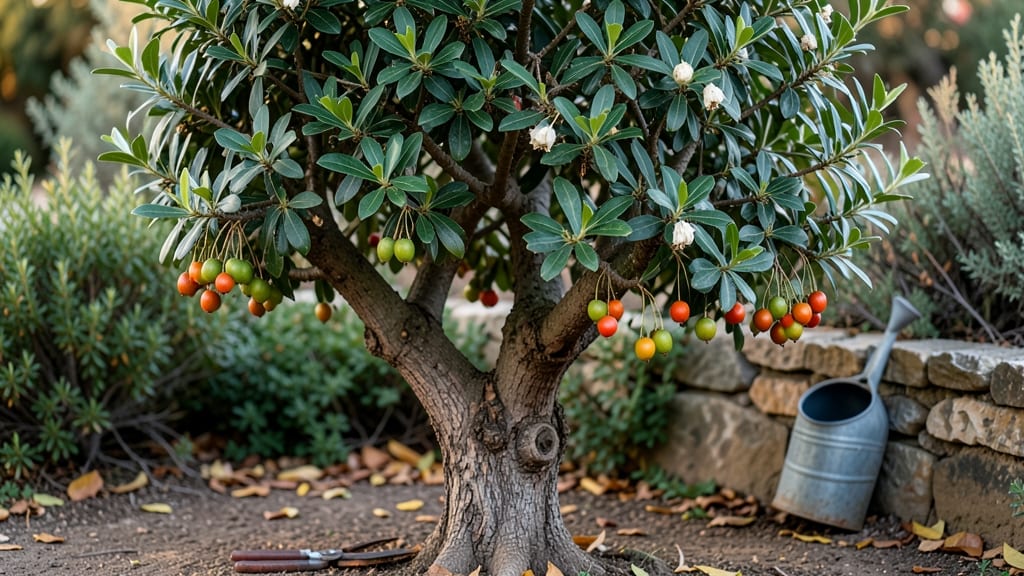
That strawberry tree (Arbutus unedo) in your yard deserves better than random cuts—it thrives when you prune with purpose. I’ve learned the hard way that skipping this step means fewer berries and scraggly branches, but the right approach turns it into a year-round showstopper.
The key? Timing and technique that encourage both fruit and foliage.
You’ll need sharp bypass pruners, a ladder for higher branches, and a clear day to assess the tree’s structure. Start by removing dead or crossing branches first—they’re the easiest to spot and the most important to cut.
Then focus on shaping the tree to let light reach the center, where those sweet strawberry-sized berries develop. It’s less about heavy pruning and more about strategic trims that keep the tree healthy and productive.
After pruning, you’ll notice new growth within weeks—bright green shoots that promise next year’s harvest. The tree’s peeling bark and glossy leaves stay vibrant, and the fruit production actually improves over time.
Plus, the scent of those tiny berries ripening in fall? That’s the real reward. Let’s get those pruners ready—your strawberry tree will thank you.
Works beautifully in zones 7-9, though mature trees handle cooler climates too. In warmer areas, prune lightly in summer to avoid stress. The same principles apply whether you’ve got a young sapling or a decades-old specimen. Here’s how to do it right the first time.
📚 In This Guide
- What you need
- Instructions
- Tips and common mistakes
- Wrapping up and next steps
What you need
- ● Pruning shears – Bypass pruners (sharp, 6-8" blades) for clean cuts on small branches.
- ● Loppers – 20-24" bypass or anvil loppers for thicker branches (1-2" diameter).
- ● Pruning saw – Curved-tooth saw for branches thicker than 2" (avoid tearing bark).
- ● Gloves – Heavy-duty, cut-resistant (strawberry trees have thorns!).
- ● Disinfectant (70% isopropyl alcohol or bleach solution) – To sterilize tools between cuts and prevent disease.
- ○ Pruning sealant (optional but helpful) – Tree wound paint for large cuts (controversial but useful for very thick branches).
- ● Ladder or step stool – Sturdy, extendable (reach branches safely without straining).
- ● Heavy-duty trash bags or bucket – For collecting pruned branches (compost or dispose of properly).
- ● Hand saw – For stubborn, oversized branches.
- ● Pole pruner – If your tree is tall (extends reach without a ladder).
- ● Work apron or bandana – To protect clothes from sap and thorns.
- ● Notebook & pen – To sketch a quick map of cuts for reference.
- ● Pruning guide or ruler – Helps measure branch thickness and spacing.
Step-by-Step guide to pruning your strawberry tree (Arbutus unedo)
This is how I keep my strawberry tree thriving year-round—simple cuts that encourage blooms and maintain its natural shape.
Assess the Tree in Early Spring
Start in late February or early March when new growth begins but before buds swell. Look for dead, diseased, or crossing branches—these are your first targets. Dead branches snap easily when bent; diseased ones have blackened bark or oozing sap. Crossing branches compete for sunlight and should be removed to improve airflow.
I always examine the tree from all angles, holding a pruning tool in each hand to visualize the final shape. The goal is to open the center of the tree so light reaches the interior branches. Strawberry trees hate crowded growth, so thin out any branches growing inward or rubbing against others.
Remove Dead and Weak Growth
Use clean, sharp pruning shears to cut dead or weak branches at their base, just above a healthy bud or outward-facing branch. For larger branches over ½ inch thick, switch to loppers and make cuts just outside the branch collar—the swollen area where the branch meets the trunk. This prevents tearing and promotes faster healing.
Don’t worry about making perfect cuts—strawberry trees are forgiving. The key is to remove anything that’s clearly not contributing to the tree’s health. If a branch is completely dead but still attached, cutting it now prevents it from becoming a harbor for pests or disease later in the season.
Shape and Thin for Airflow
Step back and assess the tree’s overall form. Strawberry trees naturally grow in a rounded shape, so avoid heavy pruning that turns it into a rigid, geometric form. Remove up to 20% of the tree’s foliage in one season—never more. Focus on branches that grow inward or downward, as these block light and air.
For thicker branches, make a small notch on the underside of the branch before cutting through to prevent the bark from tearing. Always cut just outside the branch collar, and avoid leaving stubs. After pruning, the tree should look balanced, with light able to filter through to the center.
Light Summer Maintenance
In June or July, do a quick check for any water sprouts—fast-growing, vertical shoots that steal energy from the tree. These should be pruned back immediately to encourage stronger, horizontal growth. Avoid heavy pruning in summer, as it stresses the tree and can reduce next year’s bloom production.
If you notice any diseased leaves or branches during this time, remove them promptly and dispose of them in the trash—not the compost. Strawberry trees are generally low-maintenance, but keeping an eye out for issues early prevents them from spreading.
Final Adjustments in Late Fall
In October or November, do a final light pruning to remove any dead growth that may have appeared over the summer. This is also the time to tidy up any branches that grew out of place during the season. Avoid heavy pruning now, as the tree needs to enter dormancy with its energy reserves intact.
After pruning, give the tree a deep watering to help it recover. Mulch around the base with 2-3 inches of organic mulch to protect the roots over winter. Strawberry trees are drought-tolerant once established, but consistent moisture during their first few years encourages strong growth.
Tips & tricks for pruning your strawberry tree
Pruning your strawberry tree might seem intimidating at first, but these simple tricks will help you achieve professional results without stressing the tree.
Timing is Everything: The late February to early March window in Step 1 is crucial because it allows the tree to heal before summer stress. I've learned the hard way that pruning too early can expose the tree to late winter frosts, while waiting too long risks encouraging new growth that could be damaged by cold snaps. If you miss this window, don't panic—just wait until the tree shows new growth in spring before proceeding.
Tool Selection Matters: Using clean, sharp pruning shears as mentioned in Step 2 is non-negotiable. Dull tools crush branches instead of making clean cuts, which can damage the tree's bark and invite disease. For branches over ½ inch thick, always switch to loppers—your shears will struggle and could even break. I keep a small spray bottle of rubbing alcohol handy to disinfect my tools between cuts, especially when dealing with diseased branches.
Visualize the Final Shape: Before making any cuts, step back and really look at your tree's natural shape. Strawberry trees grow beautifully rounded, so aim to maintain that organic form rather than trying to create geometric perfection. In Step 3, when you're removing up to 20% of foliage, think of it as creating an open canopy—like opening the curtains to let sunlight flood in. This isn't about drastic transformation, but about refining what's already there.
Seasonal Maintenance Strategy: The light summer maintenance in Step 4 is often overlooked, but it's what keeps your tree thriving year-round. I set a reminder for June or July to do my quick water sprout check—these vertical shoots might look vigorous, but they're actually stealing energy from your tree's main structure. Think of them like weeds in your garden; a little attention now prevents big problems later. The same goes for that final fall adjustment—it's not about heavy pruning, but about tidying up before winter dormancy.
Pro Tips for Strawberry Tree Arbutus Unedo
- Pruning your strawberry tree might seem intimidating at first, but these simple tricks will help you achieve professi...
- Timing is Everything: The late February to early March window in Step 1 is crucial because it allows the tree to heal...
- Tool Selection Matters: Using clean, sharp pruning shears as mentioned in Step 2 is non-negotiable. Dull tools crush ...
Frequently asked questions
Got questions about pruning your Arbutus unedo (strawberry tree)?
Here are some of the most common ones—plus straightforward answers to keep your tree thriving year-round!
When is the best time to prune a strawberry tree?
The ideal window is late winter or early spring (just before new growth starts), but you can also prune lightly in summer to shape the tree. Avoid heavy pruning in fall—it can stimulate tender growth that won’t survive winter. Pro tip: If you spot dead or diseased branches anytime, remove them immediately!
How much can I trim back my strawberry tree?
Never remove more than 25-30% of the canopy in a single session. Over-pruning weakens the tree, especially since Arbutus unedo grows slowly. Focus on thinning out crowded branches and opening the center for airflow. For mature trees, light annual pruning is better than drastic cuts.
Will pruning affect the strawberry-like fruit production?
Pruning can boost fruit production by improving sunlight and air circulation—but only if done correctly! Remove suckers at the base and thin dense growth. Avoid cutting back fruiting branches heavily, as they bear fruit on old wood. Fun fact: The fruit matures over winter, so prune early to avoid missing the harvest!
My strawberry tree has brown leaves after pruning. Is this normal?
Not always! If leaves turn brown right after pruning, it might be stress from the cut. Water deeply and avoid fertilizing for a few weeks. If browning happens later (especially in summer), check for pests (like spider mites) or fungal issues. A light copper fungicide spray can help if needed.
Can I prune a strawberry tree in containers?
Yes, but with extra care! Container-grown Arbutus unedo needs more frequent pruning to control size and roots. Trim roots if they circle the pot (every 2–3 years), and prune lightly in spring. Use well-draining soil and a larger pot (18"+ diameter) to reduce stress. Pro tip: Root prune in early spring for a healthier tree!
What if I skip pruning entirely?
Your tree won’t die—but it’ll become overcrowded, leggy, and prone to disease. Skipping pruning also reduces fruit quality and air circulation. Even a light annual trim (removing dead wood and shaping) keeps the tree vibrant. Think of it like a haircut: better to maintain than fix later!
Wrapping up and next steps
The strawberry tree (Arbutus unedo) thrives when you embrace precision pruning—whether you’re shaping its graceful branches, boosting fruit production, or preventing disease.
By following seasonal cues and the right techniques, you’ll nurture a healthier, more vibrant tree that rewards you with delicious, honey-scented berries year after year. 🌿✨
Ready to take the next step? Grab your pruners and schedule a quick check-in with your strawberry tree—even a small trim now can make a big difference! For deeper dives, explore local horticultural guides or connect with fellow gardeners to swap tips. Your tree (and future harvests) will thank you!