
Pruning
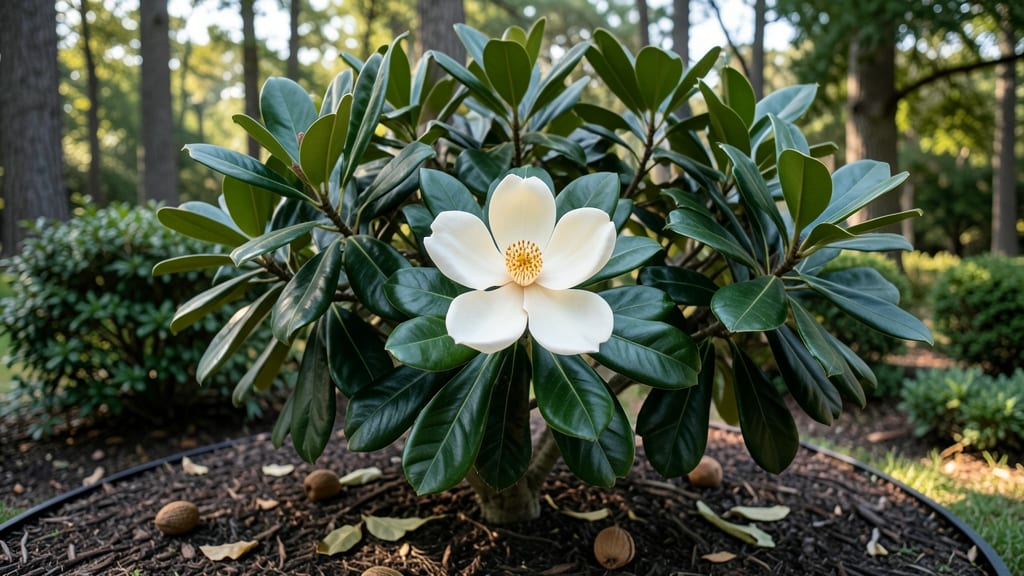
The Southern magnolia flowering tree thrives in the Pacific Northwest's mild winters, but its pruning needs differ from tropical climates. 🌿 I've learned the hard way that aggressive cuts in late winter can shock these slow growers—what works in warmer zones backfires here.
The key is patience and timing, especially when frost lingers into March.
This evergreen stands out with its leathery, glossy leaves and cup-shaped, creamy-white blooms that perfume the air in late spring. In our zone 8-9 PNW climate, it handles light frosts but needs proper pruning to avoid dieback.
Start with clean cuts to remove dead wood, then shape lightly in early spring before new growth begins.
You’ll end up with a tree that stays healthy, vigorous, and full of character—its branches heavy with fragrant flowers by summer. The secret is minimal intervention: just enough to maintain its natural shape while encouraging strong growth. Over-pruning leads to sparse foliage and weak stems.
Works beautifully as a specimen tree in lawns, along driveways, or as a privacy screen. The glossy leaves catch the light year-round, making it a standout even when not in bloom. Here’s how to keep yours thriving in our cooler climate.
📚 In This Guide
- What you need
- Instructions
- Tips and common mistakes
- Wrapping up and next steps
What you need
- ● Pruning shears: Bypass pruners (for small branches, ¼"–½" cuts) – 1 pair (look for sharp, stainless steel blades).
- ● Loppers: Bypass or anvil type (for branches ½"–2" thick) – 1 pair (extendable handles help!).
- ● Pruning saw: Curved-tooth saw (for branches 2"+ thick) – 1 (avoid dull blades—magnolia wood is tough!).
- ● Gloves: Heavy-duty, cut-resistant gloves – 1 pair (magnolia thorns are no joke!).
- ● Disinfectant: 70% isopropyl alcohol or pruning sealant – small bottle (prevents disease spread).
- ● Ladder or step stool: Sturdy, 12–16 ft. extension ladder (if tree is >8 ft. tall).
- ● Safety gear: Eye protection (goggles) and long sleeves/pants (thorn protection!).
- ● Sharpener: File or pruning saw sharpener – 1 (keep blades in top shape!).
- ● Tree wound dressing: Pruning paste (controversial but some swear by it for large cuts).
- ● Marking twine: Colored twine (to tag branches for removal).
- ● Wheelbarrow or tarp: For hauling debris (trust us, magnolia leaves are heavy!).
- ● Weather check: Sunny, dry day (avoid pruning if rain is forecasted within 24 hours).
Step-by-step guide for pruning Southern magnolias in the Pacific Northwest
Here's how to keep your frost-hardy magnolia thriving year after year.
✂️ Step 1: Time Your Pruning for Late Winter or Early Spring
Prune your southern magnolia 6-8 weeks before the last frost date—typically between late February and early March in the Pacific Northwest. This timing ensures buds have time to harden before winter's return, while still allowing plenty of growing season to recover. I always check my local frost calendar and mark the date 42 days before to avoid cutting too early.
Wait until the tree has passed its deepest dormancy but before new growth begins. You'll know it's time when the buds start to swell slightly but haven't yet broken open. Pruning too early risks exposing fresh cuts to late frosts, while waiting too long removes potential flowering wood.
🌿 Step 2: Assess the Tree's Structure and Identify Dead or Weak Branches
Start by examining the tree's overall shape from all sides. Look for dead branches (they'll be brittle, gray, and snap easily when tested) and crossing or rubbing branches that create wounds. I like to use a small pruning knife to gently scratch the bark on suspicious branches—healthy bark is green beneath, while dead wood reveals dry, brown layers.
Next, identify any branches growing inward or downward that disrupt the tree's natural vase shape. These are prime candidates for removal to improve airflow and light penetration. Mark these branches with a piece of twine or flagging tape before you start cutting—it's easy to forget which branches you've already identified in a large tree.
✂️ Step 3: Make Clean Cuts Using Proper Pruning Techniques
For branches up to 2 inches thick, use sharp bypass pruners to make clean cuts just outside the branch collar—the swollen area where the branch meets the trunk. Avoid leaving stubs, which invite disease. For larger branches, use a pruning saw with a fine-tooth blade to prevent tearing the bark. I always make a 45-degree undercut first to control the branch's fall, then follow with a straight cut above.
Never cut more than 25% of the tree's total foliage in one season. Magnolias are sensitive to heavy pruning, and removing too many leaves stresses the tree. Focus on removing only the identified dead, crossing, or structurally problematic branches first. If you need to reduce overall size, spread the cuts over multiple years to avoid shocking the tree.
🌱 Step 4: Stimulate New Growth and Maintain Airflow
After removing the necessary branches, step back and evaluate the tree's new shape. Southern magnolias naturally grow in a broad, rounded form, so avoid creating a flat-topped look that blocks light from the center. If you've removed large branches, consider thinning the canopy by removing smaller branches inside the tree to improve airflow and reduce disease risk.
Apply a thin layer of wound dressing only to cuts larger than 4 inches in diameter. For smaller cuts, let the tree seal naturally—modern research shows wound dressings often trap moisture and encourage decay. Water the tree deeply after pruning to help it recover, especially if the previous season was particularly dry.
⏰ Step 5: Monitor and Maintain Through the Growing Season
Keep an eye on the tree's recovery over the next 4-6 weeks. Healthy new growth should appear at the ends of remaining branches, and any cuts should begin to seal over with calloused tissue. If you notice excessive weeping from pruning wounds, apply a fungicide to prevent bacterial infections—a common issue in the Pacific Northwest's damp climate.
Plan to do light maintenance pruning throughout the summer if needed, removing any suckers or water sprouts that appear. These fast-growing shoots divert energy from the main structure. By late fall, your magnolia should be well on its way to producing those iconic 6-inch creamy-white blooms next spring, with a stronger framework to support them.
Tips & tricks for pruning Southern magnolias
Here's what I've learned after years of pruning these iconic Pacific Northwest trees—tricks that'll help you avoid common mistakes and keep your magnolia thriving.
Timing is Everything: That 6-8 week window before last frost isn't just a suggestion—it's critical. I learned this the hard way when I pruned too early and lost some branches to late frosts. Check your local frost dates and mark your calendar 42 days before. In the PNW, late February to early March is your sweet spot. Trust me, that extra planning prevents heartache later.
Visual Cues for Perfect Cuts: When making those clean cuts in Step 3, look for the branch collar—the swollen ridge where the branch meets the trunk. That's your target spot. For branches up to 2 inches thick, make your cut just outside this collar. Pro tip: Use a sharp pruning knife to test bark—healthy bark should reveal green underneath when scratched, while dead wood stays brown. This simple test saves you from removing perfectly good branches.
Canopy Maintenance Secret: After pruning, step back and visualize your tree's shape. Southern magnolias naturally grow in a broad, rounded form. If you've removed large branches, thin the canopy by removing smaller branches inside to improve airflow—this prevents fungal issues that are common in our damp climate. I like to imagine looking at the tree from above to check for any flat spots that would block light from reaching the center.
Recovery Monitoring: Those first 4-6 weeks after pruning are crucial. Watch for healthy new growth at branch ends and calloused tissue forming over cuts. If you notice excessive weeping from wounds, apply fungicide immediately—this is especially important in our rainy PNW climate. I keep a small bottle of fungicide in my gardening toolbox just for this purpose, and it's saved my trees more times than I can count.
Pro Tips for Southern Magnolia Flowering Tree
- Here's what I've learned after years of pruning these iconic Pacific Northwest trees—tricks that'll help you avoid common mistakes and keep your magnolia thriving.
- Timing is Everything: That 6-8 week window before last frost isn't just a suggestion—it's critical.
- Visual Cues for Perfect Cuts: When making those clean cuts in Step 3, look for the branch collar—the swollen ridge where the branch meets the trunk.
Frequently asked questions
Got questions about pruning your Southern Magnolia in the Pacific Northwest? You’re not alone!
Here are the most common concerns—plus expert tips to keep your frost-hardy beauty thriving.
When is the best time to prune a Southern Magnolia in the PNW?
The ideal window is late winter to early spring (February–March), after the worst frosts pass but before new growth begins. Avoid pruning in fall—it can stimulate tender growth that may not survive PNW winters. Pro tip: If you must prune in summer, do so after flowering (May–June) to minimize stress.
How do I protect my Southern Magnolia from frost damage after pruning?
Since Southern Magnolias are marginally frost-hardy in the PNW (Zones 7–9), take precautions: avoid heavy pruning in late fall or winter, and mulch the root zone with 2–3 inches of wood chips. If a late frost threatens new growth, cover tender branches with frost cloth (but remove it during the day to prevent overheating).
Can I prune a Southern Magnolia too much? What are the signs?
Yes! Over-pruning weakens the tree and reduces flowering. Signs of over-pruning:
- Excessive water sprouts (shoots growing from the trunk or branches).
- Yellowing or sparse foliage.
- Fewer (or no) blooms the following spring.
Will pruning my Southern Magnolia reduce its flowers?
Pruning correctly won’t stop blooms—in fact, it can improve flowering by increasing airflow and sunlight. However, pruning too late (after buds form in late winter) or removing too many branches can reduce next year’s flowers. Focus on dead, diseased, or crossing branches first, then lightly shape the canopy.
Are there frost-hardier alternatives to Southern Magnolia for the PNW?
If you love magnolias but want better cold tolerance, consider these PNW-friendly options:
Note: All magnolias need well-draining soil—PNW’s wet winters can be tricky!
Wrapping up and next steps
Ready to give your Southern Magnolia the care it deserves?
With the right pruning techniques—like timing cuts in late winter or early spring and avoiding over-trimming—you’ll keep this frost-hardy beauty thriving in the Pacific Northwest’s climate. 🌿✂️ Whether you’re a pruning pro or just starting, your magnolia will reward you with stunning blooms and lush foliage for years to come.
Next step: Grab your tools, mark your calendar for late winter, and get ready to shape your magnolia into a showstopper! 🌸