Pruning
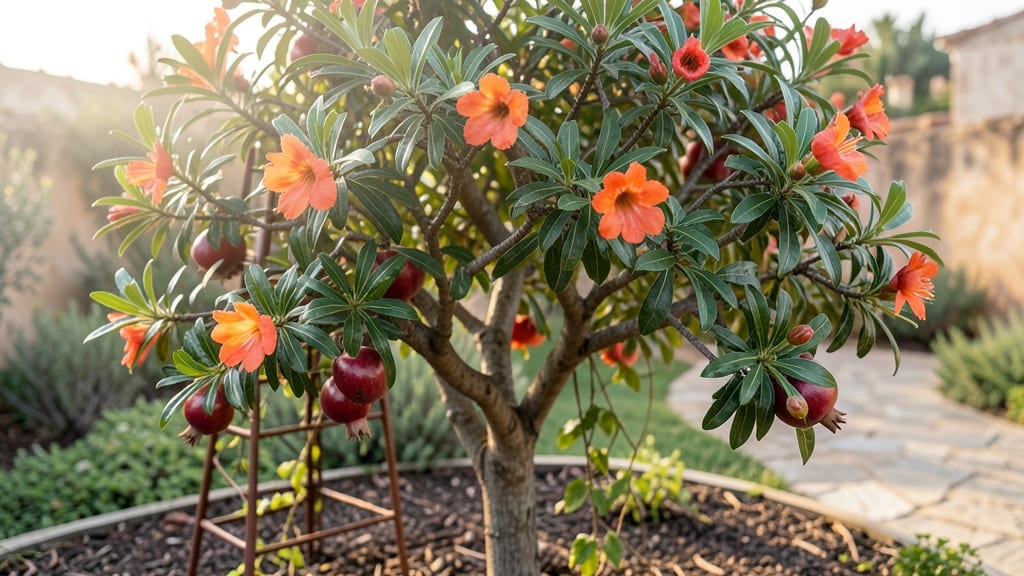
Growing a Russian pomegranate fruit tree in the Pacific Northwest means you can finally enjoy homegrown pomegranates without fear of winter’s bite. This hardy variety thrives where traditional pomegranates struggle, and with the right pruning, it rewards you with vibrant red fruit every fall.
The key? Pruning in late winter to shape the tree and protect it from damp Pacific Northwest winters—something I learned the hard way after losing my first tree to rot.
You’ll need sharp pruning shears, a clean workspace, and a clear day to work. The goal is to open the center of the tree for airflow while keeping branches strong enough to support heavy fruit. Start by removing dead or crossing branches first—this is where most mistakes happen.
Russian pomegranates respond well to pruning, so don’t be shy about shaping them into a manageable size, especially if your yard gets heavy rain or wind.
What you’ll end up with is a sturdy, productive tree that survives our wet winters and still bursts with fruit by October. The harvest isn’t just beautiful—it’s practical, too, with seeds that stay firm and juicy even after months in storage.
Plus, the deep red flowers in early summer add a dramatic splash of color that neighbors will envy. Once you master the pruning rhythm, you’ll wonder why you didn’t try this sooner.
This method works just as well in Seattle as it does in Portland, though coastal areas may need extra protection from salt spray. The same principles apply whether you’re pruning a young sapling or an established tree—just adjust the scale.
Ready to transform your yard into a pomegranate powerhouse? Let’s get those shears out and shape this tree for success.
📚 In This Guide
- What you need
- Instructions
- Tips and common mistakes
- Wrapping up and next steps
What you need
- ● Pruning shears: Bypass pruners (sharp, 7-9 inch blades) for clean cuts on small branches.
- ● Loppers: 20-24 inch for thicker branches (up to 2 inches in diameter).
- ● Pruning saw: Curved-tooth for large, woody branches (3+ inches thick).
- ● Disinfectant (70% isopropyl alcohol or bleach solution): To sterilize tools between cuts and prevent disease.
- ● Garden gloves: Heavy-duty, cut-resistant (thorns on Russian pomegranates are sharp!).
- ● 5-gallon bucket: For collecting pruned branches and debris.
- ● Rubbing alcohol or hydrogen peroxide: For cleaning tools post-pruning.
- ○ Pruning sealant (optional but helpful): Tree wound dressing (like Tanglefoot Tree Wound Pruning Seal) for large cuts.
- ● Burlap or frost cloth: To wrap young trees or protect newly pruned areas during late winter freezes.
- ● Mulch (wood chips or straw): 2-3 inches around the base to insulate roots.
- ○ Anti-desiccant spray (optional): Wax-based (like Dormant Oil) to prevent winter drying.
Instructions for cold-hardy pruning of Russian pomegranate trees
Here's how I prepare my Russian pomegranates for Pacific Northwest winters—keeping them healthy and productive year after year.
Time Your Pruning for Late Winter Dormancy
Prune your Russian pomegranate in late winter, just as buds begin to swell but before new growth starts. In the Pacific Northwest, this typically falls between mid-February and early March, when daytime temperatures hover around 45-50°F. Pruning too early can leave cuts vulnerable to frost damage, while waiting too long risks encouraging premature growth that won't survive cold snaps.
I always check the buds first—they should look plump and ready to burst, but not yet open. If you see any green shoots, wait a week or two. This timing ensures the tree enters dormancy strong and recovers quickly in spring. Russian pomegranates are more cold-resistant than their Mediterranean cousins, but proper pruning still makes all the difference in our chilly climate.
Remove Dead, Weak, and Crossing Branches
Start by inspecting the tree for dead or diseased branches—these will be brittle, dark, or missing bark. Cut these out completely at the branch collar, the swollen area where the branch meets the trunk. Next, remove any weak, thin branches that won't produce fruit or support themselves. These are often pale green or rubbery when bent.
Look for crossing or rubbing branches—these create wounds where disease can enter. If two branches grow too close, remove the smaller one or the one growing inward. Use clean, sharp pruning shears to make 45-degree cuts just outside the branch collar. Avoid leaving stubs, as they invite rot and weaken the tree. I always sanitize my tools with rubbing alcohol between cuts to prevent spreading any hidden pathogens.
Thin Out Overcrowded Growth for Airflow
Russian pomegranates produce dense growth, but too many branches compete for sunlight and nutrients. Step back and look for areas where branches are too close together. Remove one-third of the oldest branches to open up the center of the tree. This improves airflow, reducing the risk of fungal diseases like powdery mildew, which thrives in Pacific Northwest humidity.
Focus on suckers—those vigorous shoots growing from the base or along the trunk. These drain energy from the main structure. Cut them off at the ground level. For fruiting branches, aim to leave 3-5 strong, outward-facing branches per main stem. You'll see the tree's natural shape emerge as you thin—this isn't about drastic reshaping, but about encouraging balanced growth.
Shape for Cold Protection and Sun Exposure
Russian pomegranates benefit from a rounded, open canopy that allows sunlight to reach the center. This helps prevent frost damage in winter by reducing cold air pockets. Shorten any branches that grow too long or hang downward, cutting them back to a bud or lateral branch that faces outward. Avoid heavy pruning—never remove more than 25% of the tree's foliage in one season.
Pay special attention to the lower branches. In our region, these often get buried under snow or soggy mulch. If they're weak or diseased, remove them entirely. For the remaining branches, make sure they're spaced 8-12 inches apart to prevent overcrowding. A well-shaped tree will recover faster in spring and produce more fruit. I like to step back every few cuts to check the balance—it's easy to overdo it!
Clean Up and Protect the Tree for Winter
After pruning, rake up all the debris and dispose of it in the trash—not the compost pile—to prevent disease. Next, apply a 2-3 inch layer of mulch around the base of the tree, keeping it 6 inches away from the trunk. Use shredded bark or straw, which insulates roots from freezing temperatures. Water the tree deeply before the first hard frost to ensure roots stay hydrated.
For extra protection in our cold winters, I wrap the trunk of young trees with tree guard or burlap. This prevents sunscald, which can occur when winter sun warms the bark, followed by a sudden freeze. Older trees usually handle our winters fine, but a little extra care in the first few years sets them up for long-term success. By spring, you'll see fresh, vigorous growth—proof that your pruning paid off.
Tips & tricks for perfect Russian pomegranate pruning
These practical tips will help you navigate the nuances of pruning Russian pomegranates in our Pacific Northwest climate—where timing and technique make all the difference.
Bud Check is Non-Negotiable: In Step 1, when you're determining if it's time to prune, focus on the buds rather than just the calendar. The buds should be plump and swollen but not yet open—this is your clear signal that the tree is ready. I've learned the hard way that waiting until buds open means you're too late, and the tree will already be pushing new growth vulnerable to late frosts. A quick visual check with a magnifying glass helps if buds are hard to see against the branches.
Tool Sanitation Prevents Disease: The instructions emphasize sanitizing tools between cuts in Step 2, but here's what nobody tells you—use rubbing alcohol on a paper towel, not just water. I once skipped this for a whole tree and ended up with a fungal outbreak that took months to clear. For extra protection, especially in humid Pacific Northwest winters, I keep a small bottle of 70% isopropyl alcohol in my tool pouch. This simple step can save your tree from serious problems down the road.
Visualize the Canopy Shape: When you're shaping the tree in Step 4, step back every 5-10 minutes to check your progress. Russian pomegranates naturally grow in a rounded shape, but it's easy to get carried away with removing branches. Aim for an open center that lets sunlight reach all the way to the trunk. I like to imagine an upside-down cone—this helps me maintain the proper spacing between branches. Remember, you can always remove more later, but you can't put branches back once they're gone.
Mulch Depth Matters: The instructions mention applying a 2-3 inch layer of mulch in Step 5, but here's the critical detail: use a straight-edged tool to create a clean, level mulch line. Piling mulch against the trunk creates moisture pockets that invite rot. Keep that 6-inch clearance from the trunk and create a gentle slope away from the base. In our wet winters, this simple adjustment prevents more problems than you'd think. I also like to use straw mulch because it breaks down more slowly than shredded bark in our rainy climate.
Pro Tips for Russian Pomegranate Fruit Tree
- These practical tips will help you navigate the nuances of pruning Russian pomegranates in our Pacific Northwest climate—where timing and technique make all the difference.
- Bud Check is Non-Negotiable: In Step 1, when you're determining if it's time to prune, focus on the buds rather than just the calendar.
- Tool Sanitation Prevents Disease: The instructions emphasize sanitizing tools between cuts in Step 2, but here's what nobody tells you—use rubbing alcohol on a paper towel, not just water.
Frequently asked questions
Got questions about growing and pruning your Russian pomegranate fruit tree in the Pacific Northwest? You’re not alone! Here are some of the most common concerns—and their answers—to help you keep your tree thriving year-round.
How cold-hardy is the Russian pomegranate tree, really?
The Russian pomegranate (Punica granatum ‘Russian’) is one of the hardiest varieties, surviving temperatures as low as -15°F (-26°C) with proper care. In the PNW, mulch heavily in winter and plant in a south-facing spot to maximize sun exposure. Young trees may need winter protection like burlap wraps or frost cloth.
When’s the best time to prune my Russian pomegranate in the PNW?
Prune late winter or early spring (February–March) before new growth starts. Avoid pruning in fall—it stimulates tender growth that won’t survive PNW winters. Focus on removing dead, crossing, or weak branches to improve airflow and sunlight penetration. Never prune after mid-summer—it can stress the tree before winter.
Why aren’t my Russian pomegranates ripening fully?
Underripe fruit often stems from insufficient sunlight or heat. PNW’s cooler climate can slow ripening, so choose the sunniest spot possible. Thin fruit early in the season to reduce competition for resources. If birds or pests are a problem, use netting once fruit forms. Patience helps—some varieties need 100+ days to fully ripen!
Can I grow a Russian pomegranate in a container in the PNW?
Yes! Use a large, well-draining pot (at least 18–24 inches wide) and move it indoors or to a garage during winter if temps drop below 20°F (-7°C). Choose a dwarf variety if space is limited. Ensure it gets 6+ hours of sun daily, even in containers, and water deeply but avoid soggy soil.
What pests should I watch for on my Russian pomegranate tree?
The biggest threats in the PNW are aphids, scale insects, and fruit-sucking bugs. Early signs include sticky residue (honeydew) or curled leaves. Spray with neem oil or insecticidal soap for mild infestations. For severe cases, consult a local arborist. Birds love the fruit, so use netting once harvest time arrives!
Wrapping up and next steps
Growing a Russian pomegranate fruit tree in the Pacific Northwest is totally doable—even with our chilly winters! 🌱 With the right cold-hardy pruning techniques, you’ll protect your tree, boost fruit production, and enjoy vibrant blooms year after year. Remember: timing, sharp tools, and patience are your best friends.
Ready to take the next step? Start by observing your tree’s growth this season and adjust your pruning schedule as needed. Before winter hits, give your Russian pomegranate a little extra love—your future harvest will thank you! 🍇✨