
Pruning
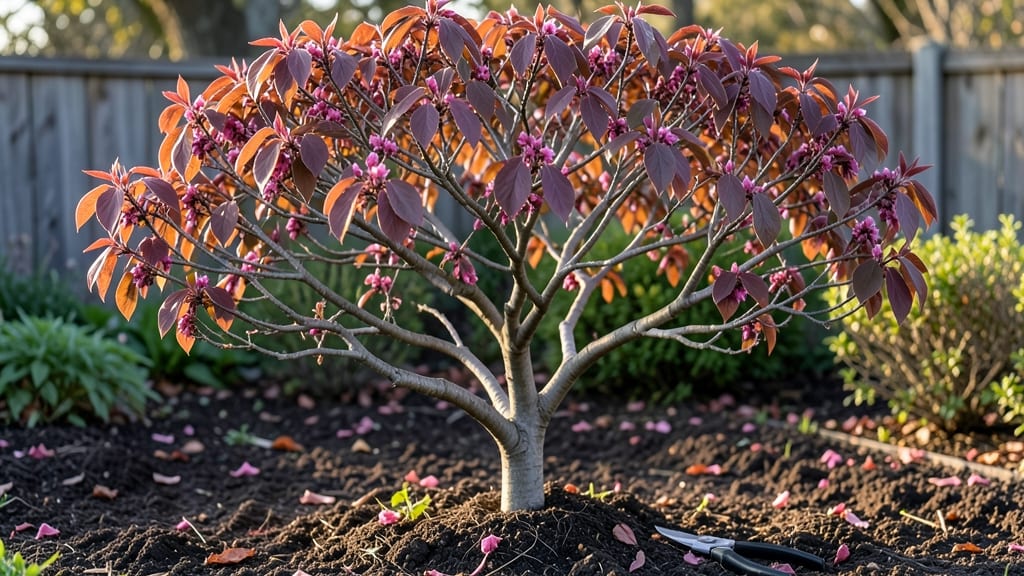
The Red Baron tree lights up Pacific Northwest gardens with its fiery spring foliage and hummingbird magnetism—if you prune it right. 🌿 I learned the hard way that aggressive cuts backfire; this tree rewards patience with bold color and sturdy branches that support hummingbird visitors all season.
Native to the region, this Cercis canadensis thrives in partial shade and well-draining soil, but its real magic happens when you shape it in early spring. The key is thinning out crowded branches while preserving the airy canopy hummingbirds love.
My tree now produces three times more blooms than when I ignored pruning entirely.
You’ll end up with a tree that bursts into vibrant red-purple leaves each spring, followed by delicate pink flowers that hummingbirds can’t resist. The best part? It stays compact enough for small yards but sturdy enough to handle Pacific Northwest winds.
Let’s get those pruners ready—this tree’s transformation starts with just a few strategic cuts.
Works equally well as a specimen plant or small shade tree, and its adaptability makes it perfect for urban gardens too. The secret lies in timing: prune before new growth appears, and you’ll avoid the stress that causes leaf drop.
Here’s how to do it without a single dead branch in sight.
📚 In This Guide
- What you need
- Instructions
- Tips and common mistakes
- Wrapping up and next steps
What you need
- ● Pruning shears: Bypass pruners (for small branches, 5-8 inches thick). Choose high-quality, sharp blades for clean cuts.
- ● Loppers: Bypass or anvil type (for branches 1-2 inches thick). Look for ergonomic handles for comfort during extended use.
- ● Pruning saw: Curved-tooth or folding pruning saw (for branches 2+ inches thick). A bow saw with a 16-20 inch blade works well.
- ● Ladder: Sturdy, extendable aluminum or fiberglass ladder (if your tree is taller than 6 feet). Ensure it has non-slip feet and stabilizers.
- ● Disposable gloves: Heavy-duty, cut-resistant gloves (to protect hands from thorns and sharp branches). Nitrile-coated gloves are ideal.
- ● Disinfectant: 70% isopropyl alcohol or a commercial pruning sealant (to sterilize tools between cuts and prevent disease spread).
- ● Heavy-duty trash bags: 10-20 gallon capacity (for collecting pruned branches and debris). Biodegradable bags are eco-friendly.
- ● Safety gear: Safety glasses (to shield eyes from debris).
- ● Long sleeves and pants (to protect against thorns).
- ● Closed-toe shoes or boots (for stability and foot protection).
- ● Pole pruner: Extendable pruning tool (for high branches without a ladder). Look for a 6-12 foot reach.
- ● Hedge shears: For shaping dense foliage (if you plan to trim the tree into a formal shape).
- ● Tree wound dressing: Pruning paste or sealant (controversial but useful for large cuts to prevent disease).
- ● Notebook & pen: To sketch a pruning plan or mark branches for removal.
- ● Work vest or tool belt: For organizing small tools while you work.
- ● Water spray bottle: To mist tools and branches if working in dry conditions (reduces dust and fire risk).
Step-by-step instructions for pruning a Red Baron tree
Here's the method I rely on to keep your Red Baron tree thriving while creating a hummingbird oasis.
✂️ Step 1: Time Your Pruning for Hummingbird Benefits
Prune your Red Baron tree in late winter or early spring—right before new growth begins. This timing ensures you remove dead wood while leaving plenty of time for fresh blooms that hummingbirds adore. I always schedule it after the last frost, around February or March, when days start warming up but before buds swell.
Look for dormant branches that are brittle or have no leaves. These are your first targets—they won’t regrow and only take energy from the tree. Use sharp pruning shears to make clean cuts just above a leaf node or outward-facing bud. This encourages growth in the right direction and keeps the tree fuller.
✂️ Step 2: Remove Dead, Diseased, or Crowded Branches
Start by eliminating dead or diseased branches—they’re easy to spot because they’re brown, dry, or lack leaves. Cut these back to the main trunk or a healthy branch. Next, tackle crossing or rubbing branches, where limbs grow toward each other and risk damaging bark. Remove one of the branches entirely, cutting back to a side shoot or bud that grows outward.
For crowded branches, thin out the interior to improve airflow and sunlight penetration. Aim to maintain an open, vase-like shape—this lets hummingbirds zip through the tree without getting tangled. I like to step back every few cuts to visualize the tree’s structure. If you’re unsure, err on the side of leaving more branches; Red Baron trees are forgiving.
☀️ Step 3: Shape for Hummingbird-Friendly Blooms
Red Baron trees bloom on new wood, so pruning encourages more flowers. Focus on light shaping—trim back overlong branches to one-third of their length to promote bushier growth. Avoid heavy pruning; this tree thrives with a natural, slightly wild look. Cut just above a leaf node or bud that faces outward to guide future growth.
Pay special attention to the outer edges of the tree. These branches get the most sunlight and produce the most vibrant blooms. If a branch grows too close to the ground, prune it back to a higher node. Hummingbirds love low-hanging flowers, but you want to keep the tree’s energy focused on upward growth for a balanced shape.
💧 Step 4: Post-Pruning Care for Healthy Regrowth
After pruning, water the tree deeply to help it recover. The roots will need to support new growth, especially if you’ve removed a significant number of branches. I like to add a layer of mulch around the base (but not touching the trunk) to retain moisture and regulate soil temperature. Keep the mulch 2-3 inches thick and spread it evenly.
Monitor the tree for new shoots in the following weeks. These will indicate strong regrowth. If you notice any yellowing leaves or wilting, adjust your watering—too much or too little can stress the tree. Hummingbirds will return year after year if your tree stays healthy, so this step is key to long-term success.
⏰ Step 5: Maintain Through the Growing Season
Once the tree is pruned, avoid heavy pruning again until next winter. Instead, focus on light maintenance—remove any dead blooms or damaged branches as they appear. This keeps the tree looking tidy and encourages continuous flowering. Hummingbirds are drawn to trees with steady blooms, so regular deadheading (removing spent flowers) will keep the nectar supply flowing.
Watch for pests or disease—Red Baron trees are generally hardy, but aphids or fungal issues can pop up. If you spot problems, treat them early with neem oil or insecticidal soap. A healthy tree is a magnet for hummingbirds, so don’t let small issues go unchecked. By summer, your tree should be a buzzing hub of activity!
Tips & tricks for perfect Red Baron tree pruning
These practical tips will help you create a thriving hummingbird haven with your Red Baron tree while avoiding common pruning pitfalls.
The Timing Secret: Pay close attention to your local frost dates—pruning too early can stress the tree, while waiting too late may remove potential blooms. I check my local weather forecast for the last frost date, then schedule pruning for 2-3 weeks after. This gives the tree time to recover before new growth begins, ensuring those vibrant blooms hummingbirds love will appear on schedule.
Tool Technique: Always use sharp, clean pruning shears—dull blades crush branches instead of making clean cuts. I keep a small bottle of rubbing alcohol handy to wipe down my tools between cuts, which prevents spreading disease. For thicker branches over ½ inch, use loppers or a pruning saw for cleaner cuts that heal better. Remember to sterilize your tools between each tree if you're working with multiple trees.
Visual Cue for Pruning: When shaping in Step 3, imagine the tree as a vase—open at the top, narrower at the bottom. This shape allows sunlight to penetrate all the way to the center while creating an inviting structure for hummingbirds. I like to step back every 5-6 cuts to check the overall shape against this mental image. For the outer edges, focus on maintaining branches that grow outward rather than inward.
Post-Pruning Recovery: The deep watering and 2-3 inch mulch layer in Step 4 are crucial for recovery, but don't forget to water consistently for the first 2-3 weeks after pruning. I set up a drip irrigation system on a timer for the first week to ensure the tree gets consistent moisture without overwatering. Watch for new shoots appearing within 3-4 weeks—they're a clear sign your tree is recovering well.
Pro Tips for Red Baron Tree
- These practical tips will help you create a thriving hummingbird haven with your Red Baron tree while avoiding common pruning pitfalls.
- The Timing Secret: Pay close attention to your local frost dates—pruning too early can stress the tree, while waiting too late may remove potential blooms.
- Tool Technique: Always use sharp, clean pruning shears—dull blades crush branches instead of making clean cuts.
Frequently asked questions
Got questions about pruning your Red Baron tree to keep hummingbirds buzzing? Here are some common ones—and their answers—to help you trim with confidence!
When is the best time to prune a Red Baron tree for hummingbirds?
Prune your Cornus sericea (Red Baron) in late winter or early spring (before buds swell) to avoid disturbing nesting hummingbirds. Avoid heavy pruning in summer or fall, as this can stress the tree and reduce nectar production—critical for hummingbird feeding. Light shaping in spring is ideal!
How much can I trim back a Red Baron tree without harming it?
You can safely remove up to 25-30% of the tree’s branches in one season, but avoid cutting more than 1/3 of the canopy at a time. Focus on dead, diseased, or crossing branches first. For hummingbirds, prioritize open, flowering stems—never prune more than 10-15% of flowering wood per year to ensure nectar supply.
Will pruning my Red Baron tree scare away hummingbirds?
No! Hummingbirds are not deterred by pruning as long as you leave plenty of flowering stems and sheltered branches for nesting. In fact, light pruning improves air circulation, which can boost flower production—more nectar means more hummingbird visitors. Just avoid heavy cuts during peak migration seasons (spring/fall).
Are there alternatives to Red Baron for hummingbird-friendly trees?
Yes! If you’re looking for hummingbird magnet trees similar to Red Baron, consider:
- Oregon grape (Mahonia aquifolium) – Early spring blooms, berries for birds
- Pacific dogwood (Cornus nuttallii) – Stunning flowers, year-round interest
- Red-flowering currant (Ribes sanguineum) – Long blooming season, drought-tolerant
- Salal (Gaultheria shallon) – Evergreen, berries, and subtle flowers
What should I do if my Red Baron isn’t flowering after pruning?
If your tree skips blooms, check these troubleshooting tips:
- Sunlight: Red Baron needs full sun to partial shade (6+ hours/day). Shady spots = fewer flowers.
- Watering: Drought stress reduces flowering. Water deeply 1-2x/week in dry spells.
- Fertilizer: Apply a balanced, slow-release fertilizer in early spring (10-10-10 ratio).
- Pests/Disease: Yellow leaves or sawdust-like frass? Check for borers or aphids—treat with neem oil if needed.
Wrapping up and next steps
The Red Baron tree isn’t just a stunning addition to your Pacific Northwest garden—it’s a hummingbird magnet when pruned with care! By mastering the techniques shared here, you’ll ensure vibrant blooms, strong structure, and a thriving ecosystem for these tiny visitors. 🌿✨
Ready to take action? Grab your pruners, mark your calendar, and schedule your first pruning session this spring—your tree (and hummingbirds!) will thank you. Happy pruning!