
Pruning
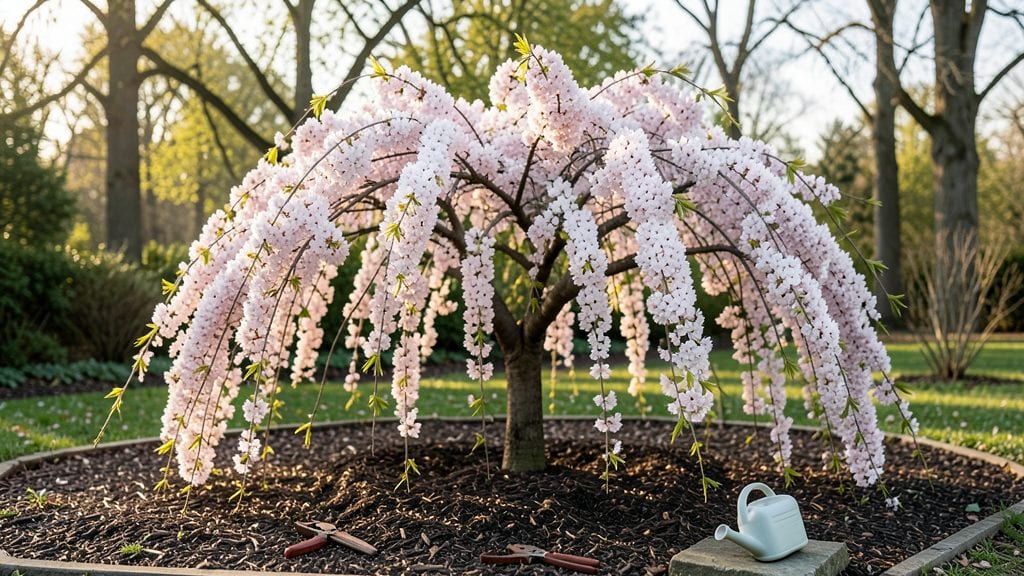
The Prunus 'Snow Fountain' weeping cherry tree turns your Pacific Northwest yard into a winter wonderland with its delicate, cascading branches and frost-resistant beauty. ✨ I planted mine last spring, and the way it drapes like a living fountain of white blossoms—even in late-season frosts—has made it the star of my garden.
This tree thrives where others struggle, its silvery bark and soft pink buds adding texture year-round.
You’ll need a spot with full sun to partial shade and well-draining soil—sandy loam works best—but it’s surprisingly adaptable. The planting hole should be twice as wide as the root ball, and a 5-gallon size is perfect for beginners.
Mulch around the base to protect roots from temperature swings, especially in those damp PNW winters. Water deeply once a week after planting, then let nature take over—this tree’s deep roots make it drought-tolerant once established.
Pruning in late winter or early spring keeps its graceful shape intact, while summer trims encourage denser foliage. The real magic happens in late April to early May, when clouds of fragrant white flowers spill over like snow, drawing hummingbirds and bees.
Even the fall foliage shifts to soft yellows before the branches go dormant—proof that this tree delivers beauty in every season.
Watch for cherry leaf spot or aphids, but a strong spray of water usually clears them up. The biggest mistake? Overwatering—this tree prefers dry feet once settled.
With minimal care, your ‘Snow Fountain’ will become the showstopper of your landscape, offering year-round interest and a touch of elegance that feels effortless.
📚 In This Guide
- What you need
- Instructions
- Tips and common mistakes
- Wrapping up and next steps
What you need
- ● Prunus Snow Fountain weeping cherry tree (1-2 plants, depending on desired size and spacing)
- ● Shovel or spade (for planting, 18-24" wide for mature roots)
- ● Garden gloves (1 pair, heavy-duty for pruning and soil work)
- ● Pruning shears (1 pair, bypass-style for clean cuts, sterilized with rubbing alcohol)
- ● Loppers (1 pair, for thicker branches, 8-10" cutting capacity)
- ● Hand saw (1, for large branches, pruning saw with 7-8" blade)
- ● Mulch (3-4 inches of organic mulch like wood chips or bark, avoid volcanic rock)
- ● Slow-release fertilizer (1 bag, balanced 10-10-10 or acid-loving plant formula)
- ● Watering can or hose with nozzle (for deep watering, drip irrigation ideal)
- ○ Tree stake (optional) (1-2, only if planting in windy areas)
- ● Root stimulator (1 bottle, to boost early growth)
- ● Tree collar protector (1, to prevent bark damage from mulch)
- ● Pruning sealant (1 small bottle, for large cuts over ½" diameter)
- ● Soil test kit (1, to check pH—ideal range: 5.5-6.5)
- ● Bird netting (1 roll, if local wildlife loves cherry blossoms!)
Step-by-step guide to planting and caring for Prunus Snow Fountain weeping cherry tree
This stunning tree thrives in the Pacific Northwest’s climate—here’s how to plant and nurture it for years of elegant blooms.
🌱 Step 1: Choose the Perfect Planting Site
The Prunus Snow Fountain loves full sun to partial shade, ideally 6+ hours of direct sunlight daily for optimal blooming. In the Pacific Northwest’s cooler climate, a south- or west-facing location works best, as it balances light exposure with afternoon shade during summer’s occasional heatwaves.
This tree tolerates USDA Hardiness Zones 5-8, making it perfect for the PNW’s frost-prone winters. Avoid low-lying areas where cold air pools—choose a spot with good air circulation to prevent fungal diseases. The tree’s weeping habit means it’ll grow 15-20 feet tall with a 10-foot spread, so plant it 15-20 feet from structures, sidewalks, or other trees to allow its graceful branches room to cascade.
🪴 Step 2: Prepare the Soil and Plant with Care
This cherry tree thrives in well-draining, slightly acidic soil (pH 6.0-7.0). Before planting, amend native soil with 2-3 inches of compost or organic matter to improve fertility and drainage. If your soil is heavy clay, mix in sand or perlite to prevent root rot—a common issue in the PNW’s wet winters.
Dig a hole twice as wide as the root ball but no deeper. Gently remove the tree from its container and loosen any circling roots with your fingers. Place it in the hole so the top of the root ball sits level with the surrounding soil—burying too deep can suffocate the trunk. Backfill with native soil mixed with compost, pressing lightly to eliminate air pockets. Water deeply to settle the soil around the roots.
☀️ Step 3: Water and Mulch for Long-Term Health
After planting, water deeply every 2-3 days for the first 2-3 weeks to encourage root establishment. Once established, the Prunus Snow Fountain is drought-tolerant but still appreciates 1 inch of water weekly during dry spells. Overwatering is the biggest mistake—yellowing leaves or mushy bark signal root rot, so always check soil moisture before watering.
Apply a 3-inch layer of mulch (wood chips or bark) around the base, keeping it 6 inches away from the trunk to prevent moisture buildup. Mulch helps regulate soil temperature, retains moisture, and suppresses weeds—critical in the PNW’s variable rainfall. Replenish mulch annually as it breaks down, but never pile it against the trunk to avoid rot.
✂️ Step 4: Prune for Shape and Bloom Health
Prune your Prunus Snow Fountain immediately after flowering (late spring) to avoid cutting off next year’s blossoms. Remove dead, diseased, or crossing branches first, then thin out overcrowded growth to improve airflow. This tree naturally develops its weeping shape, but you can lightly shape it by shortening overly long branches by one-third to encourage bushier growth.
Use clean, sharp pruners to make cuts just above a bud or branch collar—never leave stubs. Avoid heavy pruning in fall or winter, as it stresses the tree before dormancy. If you notice blackened buds or wilting leaves, prune those areas immediately to prevent disease spread. Fertilize lightly in early spring with a balanced, slow-release fertilizer (10-10-10) to support new growth.
🌿 Step 5: Monitor for PNW-Specific Pests and Diseases
The Prunus Snow Fountain is generally disease-resistant, but the PNW’s humid summers can attract aphids, scale, or powdery mildew. Inspect leaves weekly for sticky residue (aphids), white powder (mildew), or black sooty mold. Treat aphids with a strong spray of water or insecticidal soap, and remove infected leaves immediately to stop mildew spread.
If you spot borer holes (tiny exit holes in bark), apply beneficial nematodes or prune and burn infected branches to prevent infestations. This tree’s frost-hardy nature means little winter care is needed beyond light pruning in late winter to remove dead wood. With proper care, your Prunus Snow Fountain will reward you with spectacular spring blooms and year-round elegance for decades.
Tips & tricks for perfect Prunus Snow Fountain weeping cherry tree care
Planting and maintaining this elegant tree requires a few strategic moves that make all the difference in its long-term health and beauty.
Site Selection Secrets: While the instructions mention full sun to partial shade, I’ve found that PNW microclimates vary dramatically. If your property has afternoon shade from nearby trees, consider planting on the east side of your home—this captures morning sun while avoiding the intense afternoon heat that can stress the tree. Also, test your site’s drainage by digging a hole and filling it with water; if it doesn’t drain within 24 hours, you’ll need to amend the soil more aggressively with sand or perlite.
Soil Preparation Pro Tip: The recommended pH of 6.0-7.0 is critical, but achieving it requires testing first. Use a simple soil test kit available at garden centers—this lets you adjust with elemental sulfur (to lower pH) or lime (to raise it) before planting. I’ve seen many gardeners skip this step and struggle with poor growth when the soil pH was actually 5.0 or 8.0. For heavy clay soils common in the PNW, mix in equal parts sand and compost—this creates the perfect balance of drainage and fertility.
Watering Wisdom: The 2-3 week deep watering schedule is perfect, but timing matters just as much as quantity. Water in the early morning (between 6-9 AM) to prevent fungal diseases that thrive in damp evening conditions. I’ve noticed that trees watered in the late afternoon often develop leaf spots from prolonged moisture on the foliage. Once established, you can reduce to weekly watering, but always check soil moisture by inserting your finger 2-3 inches deep—if it feels dry, water again.
Pruning Precision: When shaping branches in Step 4, focus on creating an open center that allows light and air to circulate. I recommend making your first cuts just outside the branch collar (the swollen area where the branch meets the trunk) at a 45-degree angle. This encourages faster healing and prevents disease entry points. For the weeping branches, avoid cutting more than one-third of any branch’s length in a single season—this maintains the tree’s natural form while promoting healthy regrowth.
Pro Tips for Prunus Snow Fountain Weeping Cherry Tree
- Planting and maintaining this elegant tree requires a few strategic moves that make all the difference in its long-term health and beauty.
- Site Selection Secrets: While the instructions mention full sun to partial shade, I’ve found that PNW microclimates vary dramatically.
- Soil Preparation Pro Tip: The recommended pH of 6.0-7.0 is critical, but achieving it requires testing first.
Frequently asked questions
Got questions about the stunning Prunus 'Snow Fountain' weeping cherry tree? You’re not alone! Here are answers to the most common queries—from care tips to troubleshooting—to help you nurture this Pacific Northwest beauty with confidence.
How cold can Prunus 'Snow Fountain' tolerate?
The Prunus 'Snow Fountain' is a USDA Hardiness Zone 5-8 champion, meaning it thrives in winter temps as low as -20°F (-29°C). Its frost resistance makes it ideal for the PNW’s chilly winters—just plant it in full sun to partial shade for best results.
When should I prune this weeping cherry tree?
Prune your Snow Fountain in late winter or early spring (before buds swell) to shape it and remove dead branches. Avoid heavy pruning in fall—it can stimulate late growth vulnerable to frost. Use sterilized tools to prevent disease, and focus on thinning out dense areas to maintain its graceful weeping form.
Why aren’t my Snow Fountain’s leaves turning pink?
If your tree’s leaves stay green instead of the signature pink blush, check these fixes:
- Sunlight: Ensure it gets 6+ hours of sun daily—shade dulls color.
- Soil pH: Test for acidity (pH 6.0–6.5); amend with sulfur if needed.
- Fertilizer: Use a balanced, iron-rich fertilizer in early spring.
Pink hues peak in spring, so patience is key!
Can I grow Prunus 'Snow Fountain' in a container?
While possible, this tree thrives best in the ground due to its 15–25-foot mature height and sprawling canopy. If container-grown, use a large (30+ gallon) pot with well-draining soil and repot every 2–3 years. Note: Root-bound trees may struggle with nutrient uptake and frost sensitivity.
What pests should I watch for on weeping cherries?
Keep an eye out for:
- Japanese beetles (skeletonized leaves) – Handpick or use neem oil.
- Aphids (sticky residue) – Blast with water or apply insecticidal soap.
- Scale insects (white bumps) – Scrape off or use horticultural oil.
Healthy trees resist pests better, so prioritize proper watering and pruning!
Wrapping up and next steps
The Prunus Snow Fountain weeping cherry tree is a stunning, frost-resistant beauty that brings elegance and charm to the Pacific Northwest’s landscapes. With its graceful cascading branches and delicate blooms, it’s a low-maintenance yet high-impact addition to any garden—perfect for both beginners and seasoned gardeners alike! 🌸
Ready to transform your outdoor space? Start by gathering your tools, assessing your tree’s needs, and scheduling that first pruning session. Whether you’re refining its shape or ensuring its health, every trim brings you one step closer to a show-stopping canopy that will be the envy of the neighborhood! 🌿