
Pruning
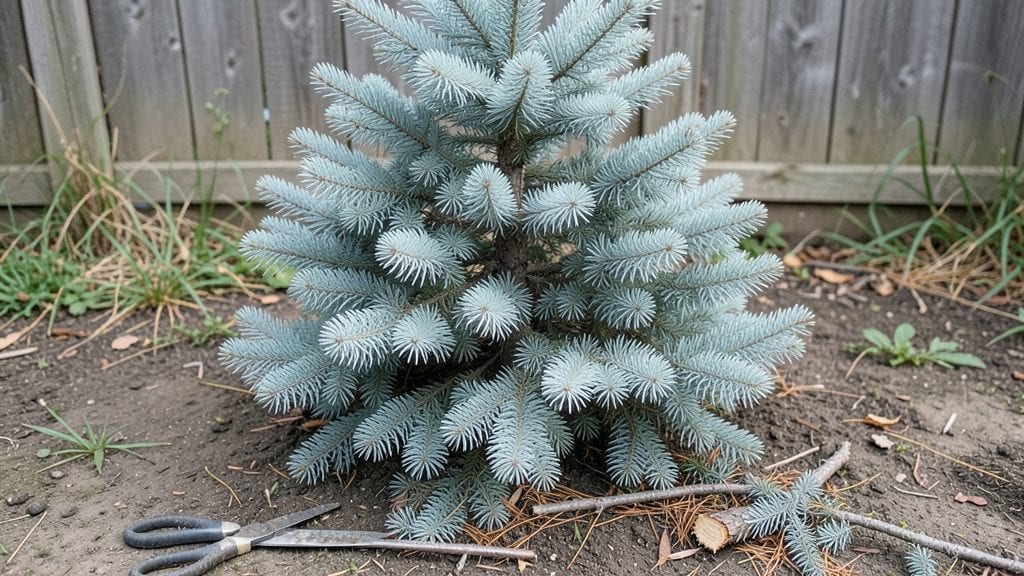
Pruning your Colorado Blue Spruce tree isn’t just about keeping it tidy—it’s about unlocking its natural resilience and keeping those signature blue-green needles vibrant all year. 🌲 I learned the hard way that skipping pruning leads to dense, crowded branches where pests and diseases hide, so I now treat it like a seasonal health check.
The key is timing: late winter or early spring, when the tree is dormant but ready to bounce back with fresh growth.
You’ll need sharp bypass pruners (dull blades tear bark), a sturdy ladder if your tree’s over 6 feet tall, and safety gear—gloves to protect from sap and goggles for flying debris.
Most pruning happens in just four strategic cuts: removing deadwood, thinning crowded branches, shaping for symmetry, and cleaning up broken limbs. Think of it like giving your tree a haircut that promotes airflow and sunlight penetration—both critical for that signature Colorado Blue color.
After pruning, your tree will reward you with lush, even growth and fewer brown patches from poor air circulation. Water deeply for the first week to help it recover, then monitor for any signs of stress like yellowing needles.
The goal isn’t perfection—it’s balance. Over-pruning weakens the tree, so never remove more than 25% of the foliage in one session, and always cut just outside a branch collar to prevent damage.
This method works whether your tree is a young sapling or a mature centerpiece. For larger trees, consider hiring a professional—safety first. But for most homeowners, a little patience and the right cuts will keep your Colorado Blue Spruce thriving for decades. Ready to get started?
📚 In This Guide
- What you need
- Instructions
- Tips and common mistakes
- Wrapping up and next steps
What you need
- ● Pruning shears or lopers – Sharp, bypass-style shears (for small branches, ¼" to ½" cuts) or loppers (for thicker branches, up to 2" diameter).
- ● Pruning saw – A curved-tooth saw for branches over 2" in diameter (avoid dull blades to prevent tearing).
- ● Ladder or extension pole – A sturdy fiberglass or aluminum ladder (rated for your height) or a 10–12 ft. telescoping pole for high branches.
- ● Disposable gloves – Nitrile or leather gloves (thick enough to protect against sap and splinters).
- ● Cleaning supplies – Rubbing alcohol (70%+) or bleach solution (1:9 ratio) to sterilize tools between cuts (prevents disease spread).
- ● Heavy-duty trash bags – For collecting pruned branches (2–3 large bags, depending on tree size).
- ● Safety gear – Safety goggles and closed-toe shoes (sap and falling debris can be hazardous).
- ● Pole pruner – Extends reach for higher branches without a ladder.
- ● Tree wound dressing – Pruning sealant (controversial but useful for large cuts on older trees).
- ● String or measuring tape – To mark cuts or maintain symmetry.
- ● Work gloves with grip – For extra comfort when handling slippery branches.
Instructions for pruning Colorado Blue Spruce trees
Here's how I prune these stunning evergreens—keeping them healthy and picturesque all year.
🌿 Step 1: Assess and Plan Your Pruning Strategy
Start by examining your Colorado Blue Spruce from all sides. Look for dead branches (they'll be brittle and brown) or those growing inward toward the center—these compete for sunlight and weaken the tree. I always prune in late winter or early spring before new growth begins, but light shaping can happen anytime except during drought or extreme heat.
Use a sharp pruning saw for thick branches over ½ inch in diameter and bypass pruners for smaller growth. Never remove more than ¼ of the tree's total foliage in one session—this stresses the tree and invites disease. Mark your cuts with a piece of twine if you're working alone to maintain balance.
✂️ Step 2: Remove Dead, Damaged, or Crossing Branches
Begin with the obvious—any dead, broken, or diseased branches get the first cut. Make your cut just outside the branch collar (the swollen area where the branch meets the trunk) at a 45-degree angle. This ensures proper healing. For live branches growing inward, cut the smaller of the two competing branches at its base.
Watch for mushroom-like growths at branch junctions—this signals decay. If you find it, prune that branch completely and disinfect your tools with 70% isopropyl alcohol between cuts to prevent spreading. I always work from the bottom up to avoid climbing hazards and make cleanup easier.
🌱 Step 3: Thin Out Overcrowded Foliage for Airflow
Colorado Blue Spruces develop dense growth, so thinning is key. Focus on the inner third of the tree where branches grow too close together. Selectively remove 10-20% of the smallest, weakest branches in each section to improve airflow and sunlight penetration. You'll see healthier, more vibrant blue-green needles after this step.
Use your pruners to make clean cuts just above a healthy bud or side branch. Avoid leaving stubs—these invite pests and disease. If you're unsure which branches to remove, step back and imagine the tree's natural shape. The goal is to maintain its pyramidal form while encouraging outward growth.
☀️ Step 4: Shape the Tree for Balance and Aesthetics
Now for the fun part—shaping! Gently guide the tree's natural form by trimming the outermost tips of branches to encourage fuller growth. For a more formal look, trim the top branches slightly longer than those below to maintain the tapered silhouette Colorado Blue Spruces are known for.
Use your hand as a guide—never remove more than ⅓ of a branch's length in one cut. For larger branches, make three cuts: First, undercut the branch about 6 inches from the trunk, then top-cut about 1 inch beyond the undercut, and finally, remove the branch cleanly. This prevents bark from tearing.
🪴 Step 5: Clean Up and Monitor Recovery
After pruning, rake up all debris and dispose of it in a sealed bag—never leave clippings under the tree. Spruce trees are prone to sphaeropsis tip blight, and wet debris can spread spores. Water the base of the tree deeply to help it recover, especially if you've done significant pruning.
Keep an eye on the tree in the weeks following pruning. Healthy new growth should appear within 4-6 weeks. If you notice yellowing needles or excessive sap, you may have over-pruned. In that case, let the tree recover for a year before attempting more shaping.
Tips & tricks for pruning Colorado Blue Spruce trees
A few key insights that'll help you prune like a pro without stressing your tree.
The Timing Secret: Late winter or early spring is ideal because the tree is dormant but about to burst with new growth. Between us, I've seen people prune in summer and end up with stressed trees—avoid extreme heat or drought periods completely. If you must shape lightly, do it anytime except those peak stress seasons.
The 25% Rule: Never remove more than ¼ of the tree's foliage in one session. I learned this the hard way after accidentally taking too much from a young spruce—it took two years to recover. Think of it like a haircut: you wouldn't shave your head bald in one visit! For mature trees, spread pruning over multiple years if needed.
Branch Collar Technique: When cutting branches over ½ inch thick, make your cut just outside the branch collar at a 45-degree angle. This swollen area contains healing cells that protect the tree. I've seen people cut flush with the trunk, which creates wounds that never close properly. Trust me on this—your tree will thank you with healthier growth.
Cleanup is Critical: After pruning, rake up all debris and dispose of it in sealed bags. I can't stress this enough—wet clippings left under the tree spread sphaeropsis tip blight like wildfire. Also, disinfect your tools with 70% isopropyl alcohol between cuts if you encounter any decay. This simple step prevents spreading diseases to healthy branches.
Pro Tips for Pruning Colorado Blue Spruce Tree
- A few key insights that'll help you prune like a pro without stressing your tree.
- The Timing Secret: Late winter or early spring is ideal because the tree is dormant but about to burst with new growth.
- The 25% Rule: Never remove more than ¼ of the tree's foliage in one session.
Frequently asked questions
Got questions about pruning your Colorado Blue Spruce? You’re not alone! Here are answers to the most common concerns—from timing to tools and everything in between.
When is the best time to prune a Colorado Blue Spruce?
The ideal time is late winter or early spring (before new growth starts) to minimize stress. Avoid pruning in summer or fall, as this can expose the tree to pests or disease. If you must prune in summer, do so early in the morning to reduce water loss.
Can I prune a Colorado Blue Spruce in winter?
Yes, but only if it’s not freezing (temperatures above 32°F). Cold weather can damage the tree. If you prune in winter, focus on removing dead branches—avoid heavy cuts. Spring pruning is still the safest bet for shaping or rejuvenation.
What if I prune too much at once?
Over-pruning stresses the tree, leading to stunted growth, disease, or even death. For Colorado Blue Spruces, never remove more than 15-20% of the foliage in a single session. If your tree looks sparse, space cuts over 2-3 years instead of all at once.
Should I use shears or a saw for thick branches?
Use bypass pruners for small branches (up to ½ inch thick) and a pruning saw for thicker limbs. Never use hedge trimmers—they tear bark and damage the tree. Always make clean cuts just outside the branch collar (the swollen area where the branch meets the trunk).
What if my Colorado Blue Spruce turns brown after pruning?
Brown needles after pruning are normal if it’s old growth (common in spruces). However, if new growth turns brown, it could signal stress, disease (like needle cast), or over-pruning. Water deeply, avoid fertilizing, and monitor for pests. If issues persist, consult a local arborist.
Pro Tip:
Mark your pruning schedule with a calendar reminder—Colorado Blue Spruces thrive with consistent, light maintenance rather than occasional heavy cuts. A little effort now keeps your tree healthy and stunning for decades!
Wrapping up and next steps
Pruning your Colorado Blue Spruce doesn’t have to be intimidating—just strategic!
By focusing on deadwood removal, shape refinement, overgrowth thinning, and wind-damage prevention, you’ll keep your tree lush, healthy, and stunning year-round. 🌲✨ Remember, timing and sharp tools are your best friends, and a little effort now saves big headaches later.
Ready to give your spruce the TLC it deserves? Grab your pruners, mark your calendar for late fall or early spring, and get pruning! Your tree—and your curb appeal—will thank you.