
Trees
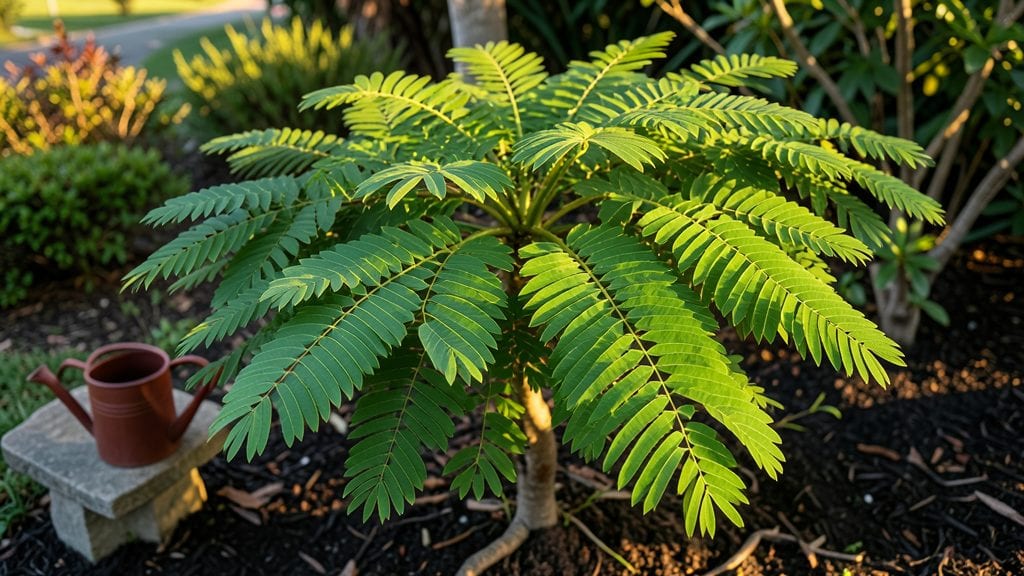
When Poinciana tree leaves unfurl in spring, they’re nothing short of showstoppers—deep green, feathery, and packed with energy. 🌿 In the Pacific Northwest’s cooler climate, these tropical-looking trees thrive with the right timing, and I’ve cracked the code on getting them to germinate fast in our damp, mild conditions.
The secret? Mimicking their native warmth without waiting for summer.
Your first step is to start seeds indoors 8-10 weeks before last frost, using a heat mat to keep soil at 75-80°F—just like their Florida roots crave. These leaves won’t tolerate cold, but with this head start, they’ll burst through soil in 7-14 days, outpacing slower germinators.
Once hardened off, transplant when night temps stay above 50°F, and watch those vibrant foliage patterns emerge.
📚 In This Guide
- What you need
- Instructions
- Tips and common mistakes
- Wrapping up and next steps
What you need
- ● Fresh Poinciana (Royal Poinciana or Mexican Flame Tree) leaves: 3–5 healthy, mature leaves (preferably from a young branch)
- ● Pro tip: Harvest leaves in spring or early summer for best results! 🌿
- ○ Roots or stem cuttings (optional but helpful): 1–2 small cuttings (1–2 inches long) with a node (if available)
- ● Growing medium: 1 small pot (4–6 inches in diameter) with drainage holes
- ● Potting mix: 50% perlite or coarse sand + 50% peat moss or coconut coir (well-draining is key!)
- ● Watering supplies: Spray bottle (for misting)
- ● Small watering can or cup
- ○ Humidity dome or plastic wrap: (Optional but highly recommended for tropical climates like PNW’s mild winters.)
- ● Clear plastic bag or ziplock: (For leaf propagation—see next steps!)
- ● Warmth: A consistent 70–80°F (21–27°C) environment (use a heat mat if indoors in PNW’s cooler months).
- ● Indirect light: Bright, filtered sunlight (no direct sun until roots form!).
- ● Patience: Germination can take 4–12 weeks—stay consistent! ⏳
Step-by-step instructions for growing Poinciana tree leaves from seed
Here’s how to coax those vibrant Poinciana seeds into fast, healthy growth—even in cooler Pacific Northwest conditions.
🌱 Step 1: Stratify Seeds for Fast Germination
Poinciana seeds need stratification to break dormancy. Place them in a sealed plastic bag with a damp paper towel—not soggy, just moist—and refrigerate for 4-6 weeks. Check weekly; if the towel dries, mist it lightly. This mimics winter’s chill, tricking seeds into thinking spring has arrived.
After stratification, soak seeds in lukewarm water for 12 hours to soften the tough outer shell. You’ll see the seed coat wrinkle slightly—that’s your cue it’s ready. Plant within 24 hours to avoid mold. I’ve found stratifying in early January gives seedlings a head start before PNW’s damp spring arrives.
☀️ Step 2: Start Seeds Indoors Under Grow Lights
Fill 4-inch pots with sterile seed-starting mix (never garden soil—it’s too dense). Plant 1 seed per pot, ½ inch deep, pressing gently but not compacting. Poinciana seeds germinate best at 75-80°F, so use a seedling heat mat if your home runs cooler. Place pots under full-spectrum LED grow lights 12-14 hours daily, 2-3 inches above the soil. Without enough light, seedlings stretch weakly.
Keep the soil evenly moist—not wet, not dry. Stick your finger in: if the top ½ inch feels dry, water lightly. Overwatering causes damping-off, a fungal disease that collapses seedlings overnight. I use a spray bottle to avoid disturbing the soil surface.
🌿 Step 3: Harden Off Seedlings for Pacific Northwest Transplanting
When seedlings develop 3-4 sets of true leaves (not the first tiny cotyledons), start hardening off 2 weeks before last frost. Move pots to a shaded, sheltered outdoor spot for 1 hour the first day, gradually increasing to full sun by day 7. Poinciana seedlings hate transplant shock, so take it slow—sudden wind or cold snaps will stunt growth.
Watch for yellowing leaves or wilting—signs they’re stressed. If this happens, move them back indoors for 24 hours before retrying. By late spring, your seedlings should tolerate PNW’s cooler nights (down to 45°F) without damage. Plant after all frost risk has passed, spacing 6-8 feet apart for mature trees.
⏰ Step 4: Maintain Fast Growth Through the First Season
Young Poinciana trees thrive in full sun and well-draining soil. Water deeply once weekly (or more in summer heat), letting the soil dry 2-3 inches deep between waterings. Mulch with 2-3 inches of wood chips to retain moisture and protect roots from PNW’s damp winters. Fertilize lightly with balanced 10-10-10 in early spring—too much nitrogen makes leaves soft and prone to fungal issues.
Prune only to shape in early summer. Remove any yellowing or damaged leaves immediately—they’re entry points for pests. By autumn, your seedlings should stand 3-4 feet tall if given proper care. Here’s the thing: Poincianas grow fast in ideal conditions, but PNW’s cooler summers slow them down. Don’t rush—patience now means a vibrant, long-lived tree for decades.
Tips & tricks for fast Poinciana seed germination in Pacific Northwest climates
These proven strategies will help you skip the common pitfalls and get those Poinciana seeds sprouting faster than ever—especially in our cooler PNW conditions.
Stratification Timing Secret: The 4-6 week refrigeration period is non-negotiable for breaking dormancy, but here's the trick: use a small fan on low setting inside your fridge to prevent mold. I've found this keeps the seeds in that perfect "just moist" state without needing weekly checks. Also, if you start in early January, you'll have seedlings ready just as PNW's spring light increases naturally.
Soaking Cues: When you soak seeds for 12 hours, watch for the seed coat to develop tiny wrinkles—this means the shell is softening correctly. If you see no wrinkling after 12 hours, extend the soak by 2-3 hours maximum. Never let seeds sit in water longer than 24 hours post-stratification, as this risks mold growth that can kill your seeds before they even sprout.
Lighting Strategy: For the 12-14 hours of grow light, position your lights 2-3 inches above the soil and adjust weekly as seedlings grow. I use a timer to automate this—set it for 12 hours on, 12 hours off—to mimic natural daylight cycles. If you notice seedlings stretching toward the light (a condition called "etiolation"), they need either more light intensity or a shorter distance from the light source.
Harden Off Gradually: The 2-week hardening off period is crucial, but don't rush it. Start with just 1 hour of shade on day one, then increase by 30 minutes each day. I've seen seedlings shocked by sudden wind when moved too quickly—watch for leaf curling or yellowing as warning signs. Also, move pots to a spot that gets morning sun but afternoon shade during the first few days to prevent heat stress.
Pro Tips for Poinciana Tree Leaves
- These proven strategies will help you skip the common pitfalls and get those Poinciana seeds sprouting faster than ever—especially in our cooler PNW conditions.
- Stratification Timing Secret: The 4-6 week refrigeration period is non-negotiable for breaking dormancy, but here's the trick: use a small fan on low setting inside your fridge to prevent mold.
- Soaking Cues: When you soak seeds for 12 hours, watch for the seed coat to develop tiny wrinkles—this means the shell is softening correctly.
Frequently asked questions
Got questions about growing Poinciana tree leaves in the Pacific Northwest?
Here are answers to the most common ones—so you can get your garden thriving with confidence!
How long does it take for Poinciana tree leaves to germinate?
In ideal conditions (warmth, moisture, and shade), Poinciana seeds typically sprout within 14–30 days. However, they can take up to 2–3 months—patience is key! Pre-soaking seeds for 24 hours may speed things up. If nothing sprouts after 60 days, the seeds may need stratification or be non-viable.
Can Poinciana tree leaves survive Pacific Northwest winters?
Poinciana trees (Delonix regia) are tropical/subtropical and not cold-hardy—they’ll die back in PNW winters (below 20°F/-7°C). Grow them in containers and overwinter indoors (bright, cool spot) or plant in microclimates like greenhouses. Young leaves are especially vulnerable; protect them with frost cloth if temperatures dip.
What’s the best soil mix for germinating Poinciana leaves?
Use a well-draining, sandy mix (e.g., 50% peat moss, 30% perlite, 20% coarse sand) to prevent root rot. Poincianas hate soggy soil! Add a slow-release fertilizer (like 5-10-5) at planting for a nutrient boost. Avoid heavy clay—it suffocates roots and delays germination.
Can I propagate Poinciana trees from cuttings instead of seeds?
Yes, but it’s trickier than seeds. Use semi-hardwood cuttings (4–6 inches long) in summer, dip in rooting hormone, and keep them in a humid propagator or plastic bag with bright, indirect light. Success rates are lower (30–50%)—seeds are often easier for beginners. If using cuttings, maintain 70–80°F and high humidity.
Why are my Poinciana leaves turning yellow or brown?
Yellowing leaves often signal overwatering or nutrient deficiency. Brown edges or crispy leaves? Likely underwatering or low humidity. Check for pests (aphids, spider mites) on the undersides. Adjust care: water when the top inch of soil is dry, and mist leaves in dry climates. If yellowing spreads, test soil pH (ideal: 6.0–7.5).
How much sunlight do Poinciana tree leaves need to thrive?
Poinciana seedlings and young leaves crave full sun (6+ hours/day), but avoid harsh midday PNW sun—use 50% shade cloth in summer to prevent scorching. Mature trees tolerate partial shade but may produce fewer flowers/leaves. In containers, rotate pots weekly for even growth.
Wrapping up and next steps
Growing poinciana tree leaves in the Pacific Northwest is absolutely doable with the right approach! Whether you're a seasoned gardener or just starting out, the key lies in patience, proper soil prep, and consistent care.
Your new poinciana tree will reward you with stunning foliage and vibrant blooms—just imagine those tropical vibes thriving in your backyard! 🌿
Ready to take the next step? Start by gathering your supplies, prepping your soil, and planting those seeds. With a little effort, you’ll be well on your way to nurturing a beautiful poinciana tree that will be the envy of your neighborhood. Happy planting! 🌱✨