
Pruning
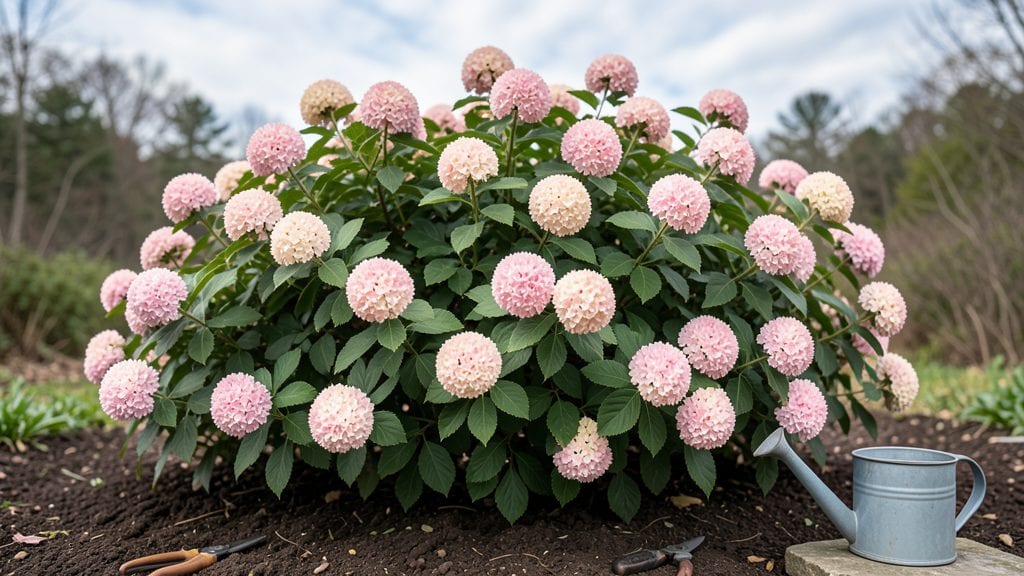
The pink snowball tree (Viburnum opulus) turns your Pacific Northwest garden into a frosty winter wonderland. Its cascading white blooms appear before spring even arrives, defying the gray skies that linger through late winter.
I planted mine three years ago, and every February, neighbors stop to admire how it transforms our yard into a soft, snowy scene—without a single flake actually falling.
This isn’t just a tree; it’s a design anchor that works in borders, mixed shrub beds, or as a standalone statement. Pair it with evergreens like dwarf rhododendrons or boxwood to create contrast, or tuck it near bleeding hearts for a springtime explosion of color.
In my own garden, it’s the first thing visitors notice—those football-sized clusters of blossoms draw the eye like a magnet.
What makes it special is how it elevates every season: spring blooms, summer berries, and fiery fall foliage. Prune lightly after flowering to keep its shape tidy, and watch how it frames pathways or softens fences.
The key is placing it where its arching branches can spill over edges, creating that dreamy, cascading effect that feels effortless but is actually intentional.
For Pacific Northwest gardeners, this tree is a no-brainer—it thrives in our damp, cool climate, handles frost like a champ, and keeps your landscape lively when everything else is still dormant. Once you see it in bloom, you’ll understand why it’s a staple in so many gardens here.
📚 In This Guide
- What you need
- Instructions
- Tips and common mistakes
- Wrapping up and next steps
What you need
- ● Pruning shears: Bypass pruners (sharp, not anvil-type) with 5- to 7-inch blades for clean cuts. Pro tip: ✂️ Sanitize blades with rubbing alcohol before and after use!
- ● Loppers: 1 pair (18–24 inches) for thicker branches (½ inch or larger). Look for ratcheting or bypass-style for precision.
- ● Hand pruners: Small, ergonomic pair (4-inch blades) for delicate trimming.
- ● Gloves: Heavy-duty, gardening gloves (nitrile-coated for grip and protection from thorns).
- ○ Pruning saw: Optional but handy for branches over 2 inches thick (bow saw or folding pruning saw).
- ● Disposable pruning bags: 2–3 mesh or plastic bags (10–15 gallon capacity) for debris collection.
- ● Timing: Prune in early spring (March–April) or late winter before buds swell. Avoid pruning after June to prevent winter dieback.
- ● Weather: Choose a dry, overcast day (humidity can spread disease).
- ● Safety gear: Safety glasses (to shield from debris) and long sleeves/pants (thorns are sharp!).
- ● Cleaning supplies: Rubbing alcohol (70% or higher) or bleach solution (1 part bleach to 9 parts water) for sterilizing tools.
- ● Ladder: Extendable or step ladder (if tree exceeds 6–8 feet).
- ● Marking twine: Colored twine to flag branches for removal before cutting.
- ● Tree wound sealant: Not necessary for viburnums (they seal cuts naturally), but handy if you’re also working on other species.
- ● Notebook/pencil: To jot down notes on branch structure or pruning goals.
Step-by-Step guide to planting and caring for a pink snowball tree
Here's how to establish this stunning Pacific Northwest favorite with minimal fuss.
Choose the Perfect Planting Location
The pink snowball bush (Viburnum bodnantense 'Dawn') thrives in partial shade to full sun, but in hotter inland PNW areas, afternoon shade prevents leaf scorch. I always test the spot by observing how long sunlight lingers—morning sun with afternoon shade is ideal for most gardens. The tree's cascading blooms perform best when planted where they'll be visible from multiple angles, so avoid tight corners or against walls.
Soil should drain well but retain moisture—this plant hates soggy roots. If your yard has heavy clay, amend with 2-3 inches of compost mixed into the top 12 inches of native soil. A simple pH test (aim for 6.0-7.0) ensures optimal nutrient uptake. I dig a hole twice as wide as the root ball but only as deep as the container's base level—planting too deep suffocates the roots.
Prepare and Plant the Tree
Remove the tree from its container and loosen any circling roots with your fingers—this encourages outward growth. Place it in the hole so the top of the root ball sits 1-2 inches below the surrounding soil level (the tree will settle slightly). Backfill with native soil mixed with 1 cup of slow-release fertilizer (10-10-10 works well), tamping gently as you go to eliminate air pockets.
Water deeply immediately after planting—2-3 gallons total—to help soil settle around the roots. I like to create a 12-inch wide watering basin around the base to direct future irrigation. Mulch with 2-3 inches of shredded bark, keeping it 6 inches away from the trunk to prevent rot. This mulch ring insulates roots in winter and conserves moisture in summer.
Establish Watering and Fertilizing Routines
For the first 4-6 weeks, water twice weekly until the soil feels 2-3 inches deep—this encourages strong root establishment. After that, deep water once weekly unless rainfall provides 1 inch total. The pink snowball's deep taproot makes it surprisingly drought-tolerant once established, but young plants need consistent moisture to prevent leaf drop.
Fertilize lightly in early spring (just as buds swell) with ¼ cup of balanced fertilizer, then again in early fall to support next year's blooms. I avoid high-nitrogen fertilizers—they promote leafy growth at the expense of flowers. Instead, I use a low-nitrogen, high-phosphorus blend (like 5-10-5) to encourage flowering. Prune only to remove dead wood or crossing branches in late winter—this tree blooms on old wood, so aggressive pruning reduces next year's flowers.
Protect Against Frost and Pests
The pink snowball's late-winter blooms (January-February) make it a PNW standout, but those early flowers are frost-sensitive. I wrap young trees in frost cloth on cold nights (below 25°F) and remove it during the day to prevent overheating. Mature trees handle frost better, but a thick mulch layer (up to 4 inches) insulates roots during freeze-thaw cycles.
Watch for aphids on new growth—these tiny pests suck sap and distort leaves. I spray affected branches with neem oil (1 tablespoon per gallon of water) in early morning to avoid harming beneficial insects. For scale insects, wipe infested areas with a rubbing alcohol-soaked cloth (70% isopropyl). Regularly inspect the undersides of leaves where pests hide—early intervention prevents infestations from spreading.
Prune and Maintain for Long-Term Health
Prune immediately after flowering (March-April) to shape the tree while preserving next year's blooms. Remove no more than 25% of the plant in any single season—this keeps the tree healthy without sacrificing flowers. I focus on opening the center to improve airflow and sunlight penetration, which reduces disease risk.
Every 3-4 years, give the tree a rejuvenation prune by cutting back one-third of the oldest stems at the base. This encourages vigorous new growth and maintains the tree's compact, multi-stemmed form. The pink snowball responds well to pruning, but I never cut into old wood—always prune just above a bud or lateral branch. After major pruning, apply 1 inch of compost around the base to replenish nutrients.
Tips & tricks for perfect pink snowball tree planting
These essential insights will help your pink snowball tree thrive for years with minimal effort.
Location is Everything: When evaluating sunlight in Step 1, consider the tree's mature height—it will eventually reach 8-10 feet. Choose a spot where the blooms will be visible from your house or patio. I've found that planting near a south-facing window creates a stunning winter display that brightens dark winter days. For urban gardens, test the location for at least 24 hours to observe actual sunlight patterns before planting.
Root Care During Planting: In Step 2, pay special attention to the root structure when loosening circling roots. The pink snowball's fibrous root system benefits from gentle handling—avoid tearing roots, as they're more delicate than you might expect. I like to use a small hand trowel to carefully separate any tightly bound roots while keeping the root ball intact. This attention to detail prevents transplant shock and encourages vigorous growth.
Watering Wisdom: The 4-6 week watering routine in Step 3 is crucial, but don't rely solely on the schedule. Test soil moisture by inserting your finger 2-3 inches deep—if it feels dry, water immediately. I've seen many gardeners overwater during this period, thinking more is better. The pink snowball's deep taproot actually prefers slightly drier conditions once established, so let the soil dry slightly between waterings after the initial 6 weeks.
Pruning Precision: When pruning in Step 5, focus on creating an open center rather than just shaping the tree. The pink snowball's natural growth habit is multi-stemmed, so avoid removing more than 25% of the plant in any season. I've learned the hard way that aggressive pruning can reduce next year's spectacular blooms—always prune just above a bud or lateral branch to encourage new growth in the right places.
Pro Tips for Pink Snowball Tree
- These essential insights will help your pink snowball tree thrive for years with minimal effort.
- Location is Everything: When evaluating sunlight in Step 1, consider the tree's mature height—it will eventually reach 8-10 feet.
- Root Care During Planting: In Step 2, pay special attention to the root structure when loosening circling roots.
Frequently asked questions
about the Viburnum bodnantense (Pink Snowball Tree) can help you care for this stunning winter bloomer like a pro. Here are answers to the most common queries:When is the best time to prune my Pink Snowball Tree?
The ideal time to prune is right after flowering (late winter to early spring). Avoid pruning in fall, as it removes next year’s blooms. Light shaping can be done in late spring or summer, but avoid heavy cuts. Pro tip: Never prune in winter—it exposes the plant to cold damage!
How hard can I prune my Pink Snowball Tree?
This tree is forgiving but benefits from moderate pruning. Remove no more than 1/3 of the plant in a single session. Focus on:
- Dead or crossing branches
- Overcrowded growth
- Shaping to open the center for airflow
Will pruning affect next year’s pink blooms?
Yes! The Pink Snowball Tree blooms on old wood, so prune lightly to preserve flower buds. Heavy pruning reduces next year’s blooms. If you must prune more aggressively, do it gradually over 2–3 years. Pro tip: Mark branches with bloom potential before cutting!
What’s a good alternative if I don’t want to prune?
If pruning feels overwhelming, consider low-maintenance alternatives like:
- Winter Jasmine (Jasminum nudiflorum) – Bright yellow winter blooms, minimal pruning
- Camellia (Camellia spp.) – Evergreen with spring blooms, prune after flowering
- Mahonia (Mahonia aquifolium) – Yellow winter flowers, drought-tolerant
Why are my leaves turning brown after pruning?
Brown leaves post-pruning are usually normal stress, but check for:
- Over-pruning (reduce cuts next time)
- Pests (inspect for aphids or mites)
- Underwatering (keep soil moist but not soggy)
Wrapping up and next steps
The pink snowball tree isn’t just a stunning addition to your Pacific Northwest garden—it’s a resilient, low-maintenance beauty that thrives with the right care. By mastering pruning techniques, you’ll encourage vibrant blooms and a healthy structure, ensuring years of frosty-white cascades. 🌸
Ready to transform your outdoor space? Start small: pick a sunny spot, gather your tools, and schedule your first pruning session this spring. With patience and practice, your pink snowball tree will reward you with breathtaking color and effortless elegance!