
Pruning
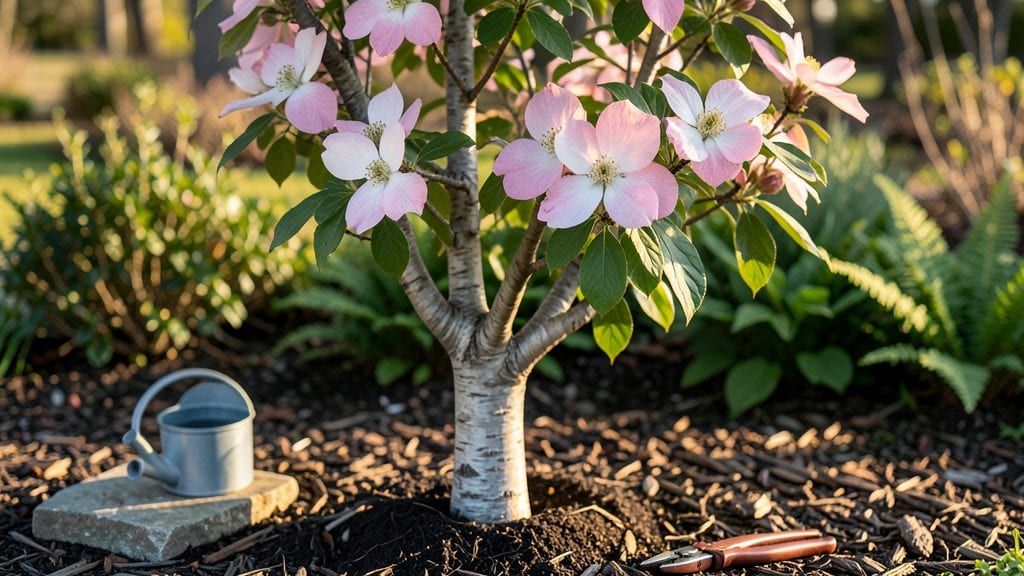
These pink dogwood tree images can’t capture the real magic—my garden’s frost-resistant blooms turn spring into a Pacific Northwest dream, shifting from bare branches to a soft pink canopy. 🌸 that makes neighbors pause and ask, “What is that?”
The secret lies in their placement: near a front walkway or as a backdrop for perennials, where their 4-6 foot spread creates instant drama.
These trees thrive in partial shade, making them perfect for understory plantings or alongside evergreens like rhododendrons. Their late-spring blooms (May-June) align perfectly with native ferns and hellebores, while their fall foliage—deep red or purple—adds warmth to autumn gardens.
The real trick? Pruning spent blooms in early summer keeps energy focused on next year’s flowers, not seed production.
Imagine your garden in June: the air thick with the scent of blooming dogwood, their petals catching morning light like scattered rose petals. Pair them with white azaleas for contrast or blueberry bushes for texture, and you’ve got a low-maintenance combination that outperforms any bed of annuals.
Their disease-resistant nature means fewer headaches than roses or hydrangeas, just pure, reliable beauty season after season.
Whether you’re designing a cottage-style border or a modern minimalist garden, pink dogwoods adapt—single specimens make bold focal points, while clusters create natural hedges. The key is patience: it takes 3-5 years for mature blooms, but once established, they’ll outlast trendy perennials by decades.
Ready to make yours the talk of the neighborhood?
📚 In This Guide
- What you need
- Instructions
- Tips and common mistakes
- Wrapping up and next steps
What you need
- ● Camera: DSLR, mirrorless, or high-quality smartphone with a minimum 12MP resolution (e.g., iPhone 12+, Samsung Galaxy S21+).
- ● Tripod: Lightweight but sturdy (e.g., Manfrotto Pixi Evo or Joby GorillaPod for flexibility).
- ● Lenses: Wide-angle lens (16-35mm) for landscape shots.
- ○ Macro lens (60mm or 100mm) for close-up blooms (optional but highly recommended).
- ● Reflector: 5-in-1 collapsible reflector (e.g., Neewer 43-inch) to enhance soft lighting.
- ● Memory cards: Minimum 32GB (fast Class 10/UHS-I for burst shots).
- ● Extra batteries: 2-3 spares (PNW weather drains power quickly!).
- ● ND filters: For long-exposure shots of flowing petals.
- ● Remote shutter: To avoid camera shake (e.g., Vello ShutterBoss).
- ● Pruning shears: Bypass-style (e.g., Felco F-2) if trimming branches for composition.
- ● Weatherproof gear: Rain cover for camera/lens, quick-dry towels.
- ● Editing software: Lightroom/Photoshop for post-processing (free alternatives: Darktable or GIMP).
How to select and plant a frost-resistant pink dogwood tree in the Pacific Northwest
This stunning tree thrives in our region’s climate—here’s how to choose and plant it for maximum beauty.
🌱 Step 1: Choose the Right Variety for Your Site
Pacific Northwest gardeners should prioritize Cornus florida ‘Rubra’ or Cornus nuttallii for their superior frost tolerance and vibrant pink blooms. Look for 2-3 gallon container-grown trees at nurseries—they establish faster than bare-root stock in our damp climate. Avoid trees with yellowing leaves or mushy stems, as these signal root rot or disease.
Check the USDA Hardiness Zones 6-8 label on the tag—our region spans these zones, and these varieties handle our winters without bud damage. I always verify the tree’s mature height (20-30 feet) to ensure it fits your landscape. Planting too close to structures risks future pruning headaches.
🪴 Step 2: Prepare the Planting Site for Optimal Growth
Dogwoods demand well-draining soil—amend heavy clay with 3 inches of compost mixed into the top 12 inches of soil. Test your site’s pH (ideal range: 5.0-6.5) using a soil kit. In our region’s acidic soils, a sulfur amendment (if pH exceeds 6.5) prevents nutrient deficiencies that cause poor flowering.
Dig a hole twice as wide as the root ball but no deeper—dogwoods hate sitting below grade where roots suffocate. Loosen the roots gently if pot-bound, then place the tree so the top of the root ball sits 1-2 inches above ground level. This prevents water pooling at the base during our frequent winter rains.
☀️ Step 3: Plant and Water for Strong Establishment
Backfill with native soil mixed with 50% compost to encourage root spread. Water deeply (about 10 gallons) immediately after planting to eliminate air pockets. Mulch with 3 inches of wood chips, keeping it 6 inches away from the trunk to prevent rot. In our cool, wet climate, proper mulching mimics the forest floor conditions dogwoods prefer.
Stake only if your site has strong winds—dogwoods establish deep roots quickly. Water 2-3 times weekly for the first month, then taper to once weekly once new leaves appear. Overwatering in winter causes root rot, so reduce to monthly deep waterings during dormancy.
✂️ Step 4: Prune and Maintain for Long-Term Health
Prune immediately after flowering (late spring) to remove dead, crossing, or weak branches. Dogwoods bloom on old wood, so avoid heavy pruning in winter. Sterilize pruners with 70% isopropyl alcohol between cuts to prevent bacterial spread in our damp climate.
Fertilize lightly in early spring with 10-10-10 (½ cup per tree) if growth appears slow. Our region’s rich soils often need no amendment, but dogwoods respond well to organic mulch top-dressing annually. Watch for anthracnose fungus—common in PNW’s humid summers—by removing fallen leaves promptly.
Tips & tricks for perfect pink dogwood planting in the Pacific Northwest
These pro tips will help you select and plant a thriving pink dogwood that flourishes in our region's unique climate.
Variety Selection: When choosing between Cornus florida ‘Rubra’ and Cornus nuttallii, consider your site's exposure. ‘Rubra’ handles partial shade better, while Cornus nuttallii thrives in full sun but needs consistent moisture. I've found that Cornus nuttallii produces larger blooms in our region's coastal climates, but both varieties handle our winters beautifully. The 2-3 gallon container size is ideal because it establishes faster in our damp soils—bare-root stock often struggles with the moisture.
Soil Preparation: That 3 inches of compost mixed into the top 12 inches of soil isn't just about drainage—it creates the perfect microbial environment for root development in our acidic PNW soils. If your soil test shows pH above 6.5, don't skip the sulfur amendment! I've seen dogwoods planted in unamended acidic soil still struggle to flower properly. The key is getting that pH between 5.0-6.5 before planting. For heavy clay soils common in our region, consider adding 10% perlite to improve aeration without compromising moisture retention.
Planting Position: The 1-2 inches above ground level placement might seem minor, but it's critical for preventing winter waterlogging. In our region's frequent winter rains, having the root flare visible above soil level prevents rot that can kill young trees. I've lost too many dogwoods planted too deep—always check that root flare after backfilling. And remember, that twice-as-wide hole gives roots room to spread horizontally, which is especially important in our windy coastal areas.
Long-Term Care: The monthly deep waterings during dormancy are non-negotiable in our climate. I've seen dogwoods planted in winter die from overwatering—roots need that dry period to harden off. For pruning, mark your calendar for immediately after flowering in late spring. This timing prevents removing next year's flower buds, which form on old wood. And that 70% isopropyl alcohol for sterilizing pruners? It's worth the small effort to prevent anthracnose spread, which is rampant in our humid summers.
Pro Tips for Pink Dogwood Tree Images
- These pro tips will help you select and plant a thriving pink dogwood that flourishes in our region's unique climate.
- Variety Selection: When choosing between Cornus florida ‘Rubra’ and Cornus nuttallii, consider your site's exposure.
- Soil Preparation: That 3 inches of compost mixed into the top 12 inches of soil isn't just about drainage—it creates the perfect microbial environment for root development in our acidic PNW soils.
Frequently asked questions
about pink dogwood trees—whether you're dreaming of planting one or already have a blooming beauty in your yard!When is the best time to plant a pink dogwood tree?
The ideal time to plant a pink dogwood tree is in early spring or fall, when temperatures are mild and the tree can establish roots before extreme heat or cold. Avoid planting in late summer or winter, as frost or drought can stress young trees. If you’re in the Pacific Northwest, aim for March–April or September–October for the best success.
How do I care for a pink dogwood tree in winter?
Pink dogwood trees are frost-resistant, but they still need care! Mulch around the base (3–4 inches) to insulate roots, and avoid heavy snow buildup on branches, which can break them. Water deeply before the first freeze if your area has dry winters. Prune dead or damaged branches in late winter or early spring to encourage healthy growth.
How tall does a pink dogwood tree grow, and where should I plant it?
Mature pink dogwood trees typically reach 15–25 feet tall with a spread of 20–30 feet, making them perfect as a specimen tree or focal point. Plant it in full sun to partial shade, with at least 6–8 feet of clearance from structures or other plants. Well-draining, acidic soil (pH 4.5–6.0) is ideal—avoid soggy spots!
Why aren’t my pink dogwood flowers blooming?
If your tree isn’t flowering, check these common issues:
- Age: Young trees (under 3–5 years) may not bloom yet.
- Light: Too much shade can reduce flowering—ensure it gets at least 4–6 hours of sunlight daily.
- Nutrition: A soil test can reveal deficiencies (e.g., phosphorus or nitrogen). Fertilize in early spring if needed.
- Stress: Over-pruning, drought, or pests (like borers) can stunt blooms.
Give it time and proper care—healthy trees often rebound!
What are some pink dogwood tree alternatives for small yards?
If space is limited, consider these compact or dwarf varieties with similar beauty:
These options deliver stunning color without overwhelming your landscape!
Wrapping up and next steps
The pink dogwood tree isn’t just a stunning addition to the Pacific Northwest’s landscape—it’s a resilient, frost-resistant beauty that brings joy and color to gardens year after year. 🌸 Whether you’re admiring its delicate blooms or planning your next pruning session, this tree offers both practicality and natural charm.
Ready to make your outdoor space even more vibrant?
Take the next step: schedule a pruning session or explore more tips to keep your dogwood thriving! 🌿 With the right care, your tree will continue to be the star of your garden for seasons to come.