
Pruning
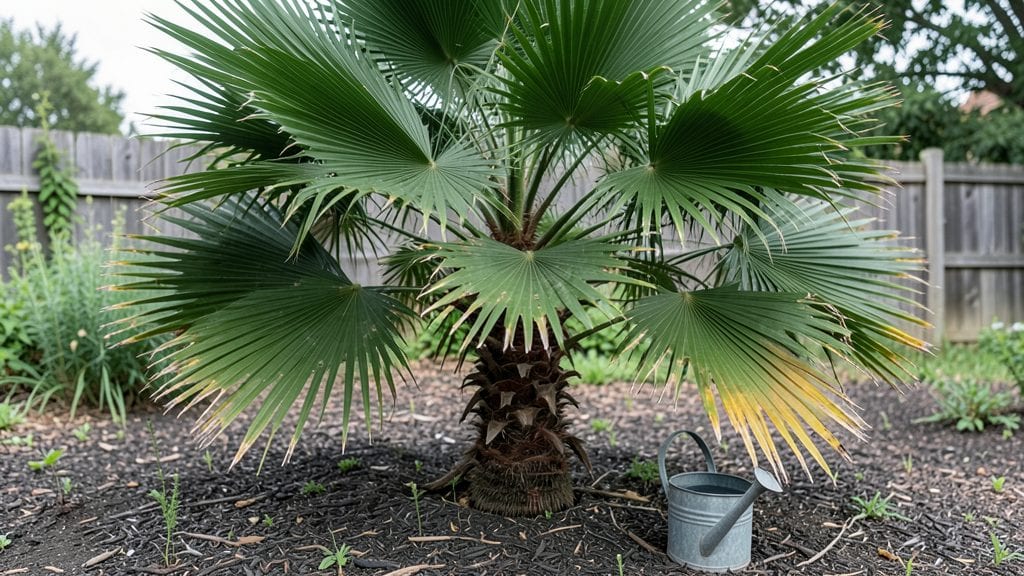
Keeping palm trees alive outdoors in cool climates feels impossible until you learn their secret—palm tree outdoor care starts with mimicking their tropical roots, even when temperatures drop.
I’ve nursed palms through winters in zone 6 by treating them like delicate houseplants when frost threatens, and they’ve rewarded me with year-round tropical vibes on my patio. The key isn’t coddling them constantly—it’s understanding when to shield, when to feed, and when to let them toughen up naturally.
Most people overwater or overprotect, but palms actually need well-draining soil and bright indirect light—think morning sun and afternoon shade in hotter months. A 5-gallon container works for small varieties like pygmy palms, while larger species need 15+ gallons of space.
The soil mix should be sandy and slightly acidic, and you’ll want to fertilize lightly every 6-8 weeks during growing season. Pruning is minimal—just remove dead fronds at the base with clean shears, and you’re golden.
What you’ll end up with is a palm that thrives despite your climate, with glossy fronds year-round and a trunk that grows stronger each season. Even in cooler zones, you can grow Mexican fan palms or windmill palms that handle brief cold snaps better than most.
The trick is watching for early signs of stress—yellowing fronds mean too much water, while brown tips signal dry air. With these adjustments, your palm will look like it belongs in a beachside resort, not your backyard.
This approach works for containers, in-ground plantings, or even large pots on patios. The same principles apply whether you’re growing a 10-foot tall Canary Island date palm or a 3-foot dwarf palm—just scale the care. Let’s get those fronds flapping in the breeze, no matter where you live.
📚 In This Guide
- What you need
- Instructions
- Tips and common mistakes
- Wrapping up and next steps
What you need
- ● Pruning Tools: Sharp bypass pruners (for small fronds, 1 pair)
- ● Loppers (for thicker stems, 1 pair, 20–24" reach)
- ● Pole saw (for high fronds, 6–10 ft, extendable)
- ● Pruning saw (for large, woody stems, 12–18")
- ● Safety Gear: Heavy-duty gloves (cut-resistant, 1 pair)
- ● Safety goggles (to shield from debris)
- ● Sturdy ladder (if pruning tall palms, 12–20 ft, with stabilizers)
- ● Cleanup Supplies: Heavy-duty trash bags (20–30 gallon, 2–3 bags)
- ● Disinfectant spray (70% isopropyl alcohol or bleach solution, 1 bottle)
- ● Cold Protection (Cool Climates): Burlap wraps (for young palms, 3–5 ft wide, 1–2 rolls)
- ● Frost cloth (lightweight, 1–2 sheets, 10x12 ft)
- ● Mulch (straw or pine needles, 2–3 cubic feet)
- ● Fertilization: Slow-release palm fertilizer (10–10–10 or 8–2–12 NPK ratio, 5–10 lbs)
- ● Organic compost (for soil enrichment, 1–2 bags)
- ○ Optional Extras: Tree banding (for young trunks, 1 roll)
- ● Drip irrigation kit (for consistent watering, 1–2 emitters)
- ● Palm-specific fungicide (for disease prevention, 1 bottle)
Step-by-step guide to year-round palm tree outdoor care
Here’s how I keep palms thriving in cooler climates—no tropical shortcuts needed.
Select the Right Palm Variety for Your Climate
Not all palms tolerate chilly nights. Choose cold-hardy species like Windmill Palm (Trachycarpus fortunei) or Needle Palm (Rhapidophyllum hystrix), which survive down to 10°F with proper care. Avoid tropical varieties like Coconut Palms unless you’re in Zone 10+. I always verify a palm’s hardiness zone before planting—this prevents costly mistakes.
If your area dips below 20°F, opt for potted palms that can be moved indoors during winter. The key is matching the palm’s native range to your microclimate. For example, Chinese Windmill Palms thrive in Zones 6-10, while Mediterranean Fan Palms handle Zones 8-11. Check the USDA zone map to avoid disappointment.
Plant in Well-Draining Soil with Full Sun Exposure
Palms despise soggy roots, so amend native soil with 3-4 inches of coarse sand or perlite to improve drainage. I dig a hole twice as wide as the root ball but only as deep—planting too deep suffocates roots. The soil should feel light and airy, almost like a cake mix, not compacted clay.
Position your palm in a spot with at least 6 hours of direct sunlight daily. South-facing exposures work best in cooler climates. If your yard lacks full sun, choose dwarf varieties like Pygmy Date Palm, which tolerate partial shade. Watch for yellowing fronds—a sign of either overwatering or insufficient light.
Water Deeply but Infrequently, Adjusting for Seasons
Water deeply once a week in summer, letting the soil dry 3-4 inches down between waterings. Stick your finger in the soil—if it’s dry at that depth, it’s time to water. Overwatering is the #1 killer of palms, leading to root rot and brown, crispy fronds. I use a soaker hose to deliver water slowly at the base, avoiding wetting the fronds.
In winter, reduce watering to every 2-3 weeks unless your climate stays mild. Palms in containers dry out faster, so check soil moisture weekly. If the top 1-2 inches feel dry, water lightly. Mulch with 2-3 inches of wood chips to retain moisture and insulate roots—this mimics their natural habitat.
Protect Against Frost and Winter Drought
Before temperatures drop below 30°F, wrap the trunk and fronds of young palms with burlap or frost cloth. I also apply a 2-inch layer of straw mulch around the base to shield roots. Mature palms handle cold better, but their fronds can still suffer frost burn—look for brown, papery edges as a warning sign.
Move potted palms to a sheltered location (like a garage or covered patio) if frost is forecasted. If you must leave them outside, group pots together to create a microclimate that traps warmth. Avoid fertilizing in winter—palms go dormant, and feeding them triggers weak, frost-sensitive growth.
Prune and Fertilize for Healthy Growth
Prune dead or yellow fronds at the base with sterilized pruners in early spring. Never remove more than one-third of the fronds at once—this ensures the palm can still photosynthesize. I disinfect my tools with rubbing alcohol to prevent fungal spread. Healthy fronds should be green, upright, and leathery to the touch.
Fertilize once in spring with a balanced, slow-release palm fertilizer (look for 6-6-6 or 8-2-12 ratios). Over-fertilizing causes salt buildup, which burns roots. Water deeply after applying fertilizer to rinse excess salts away. Avoid high-nitrogen fertilizers—they promote lush fronds but weak trunks.
Tips & tricks for perfect palm tree outdoor care
These essential strategies will help you keep your palms lush and healthy even when temperatures drop.
Climate Matching: When selecting your palm variety, consider microclimates within your yard. A south-facing wall can create a warmer zone perfect for marginally hardy palms like Mediterranean Fan Palms, even if your general zone is cooler. I've successfully grown Chinese Windmill Palms in Zone 7 by planting them against a brick wall that absorbs and radiates heat. This microclimate strategy can extend your palm's hardiness by 1-2 zones.
Soil Preparation: The 3-4 inches of coarse sand or perlite recommendation is non-negotiable for preventing root rot. I always test soil drainage by digging a hole, filling it with water, and timing how long it takes to drain completely. If water remains after 30 minutes, you need more sand or consider raised beds. For container palms, ensure pots have drainage holes and use a cactus/succulent mix instead of regular potting soil.
Winter Protection: For the 2-inch straw mulch layer mentioned, I recommend using straw rather than wood chips for winter insulation. Straw provides better air circulation around the trunk, preventing moisture buildup that can lead to fungal issues. When wrapping fronds, leave the top open to allow some airflow—this prevents condensation buildup that can cause frost damage. The key is creating a balance between protection and ventilation.
Fertilizer Timing: The spring fertilization timing is crucial, but don't stop there. I apply a second, lighter feeding in early summer (around June) using half the recommended dose. This supports new growth without overburdening the plant before winter. Always water thoroughly after fertilizing to prevent salt buildup in the root zone. I've seen palms suffer from fertilizer burn when gardeners skip this critical step.
Pro Tips for Palm Tree Care Outdoor
- These essential strategies will help you keep your palms lush and healthy even when temperatures drop.
- Climate Matching: When selecting your palm variety, consider microclimates within your yard.
- Soil Preparation: The 3-4 inches of coarse sand or perlite recommendation is non-negotiable for preventing root rot.
Frequently asked questions
Got questions about keeping your palm tree happy in cooler climates? You’re not alone!
Here are answers to the most common concerns—from pruning to winter prep—so your outdoor oasis stays lush year-round.
Can palm trees survive winter in cold climates?
Most palm trees thrive in USDA Zones 9-11, but some cold-hardy varieties (like the Windmill Palm or Needle Palm) tolerate brief dips below freezing. Wrap the trunk with burlap, mulch the root zone, and avoid overhead watering before frost. If temps drop below 20°F, consider moving potted palms indoors or to a sheltered spot.
When is the best time to prune palm trees?
Prune dead or brown fronds year-round, but wait until spring or early summer (when new growth starts) for major trimming. Avoid pruning in fall/winter—it stresses the tree and leaves it vulnerable to cold. Never remove more than 1/3 of the fronds at once! Use sterilized tools to prevent disease.
How often should I water my palm tree in cool weather?
Palm trees need less water in cooler months—water deeply every 1-2 weeks (or when the top 2-3 inches of soil are dry). Overwatering causes root rot, especially in clay soil. Drainage is key! Ensure pots have holes, and outdoor palms are planted on a slight slope to avoid soggy roots.
What are good alternatives to palm trees for cold climates?
If palms are too risky, try these drought-tolerant, tropical-looking plants:
- Yucca – Spiky, low-maintenance, and thrives in USDA Zone 5+.
- Dracaena (Dragon Tree) – Hardy to Zone 8, with arching fronds.
- Cordyline (Ti Plant) – Colorful, palm-like foliage for Zones 7-11.
- Bamboo (Cold-Hardy Varieties) – Adds height and texture without palm drama.
Bonus: Ornamental grasses (like Miscanthus) mimic palm movement with zero frost worries!
Why are my palm tree fronds turning yellow or brown?
Yellow/brown fronds usually signal overwatering, underwatering, or pests. Check these fixes:
- Overwatering: Let soil dry between waterings; improve drainage.
- Underwatering: Water deeply until it drains from the bottom.
- Pests (e.g., palm weevils): Look for sawdust-like frass or holes in the trunk. Treat with neem oil or contact a pro ASAP—infestations can kill trees quickly!
- Nutrient deficiency: Fertilize in spring/summer with a palm-specific formula (high in potassium and magnesium).
Pro tip: Never remove healthy green fronds—they photosynthesize and feed the tree!
Wrapping up and next steps
Caring for palm trees in cooler climates is totally doable—with the right knowledge and a little love! 🌿 From choosing the right species to mastering pruning, watering, and protection, these tropical beauties can thrive even in chilly weather. Remember: consistency is key, and patience will reward you with lush, vibrant growth.
Ready to give your palm tree the best care? Start by reviewing your pruning schedule and prepping for seasonal shifts—whether it’s wrapping young trees or adjusting watering habits. With these tips, your palm will stay happy and healthy year-round! 🌟