Pests and Diseases
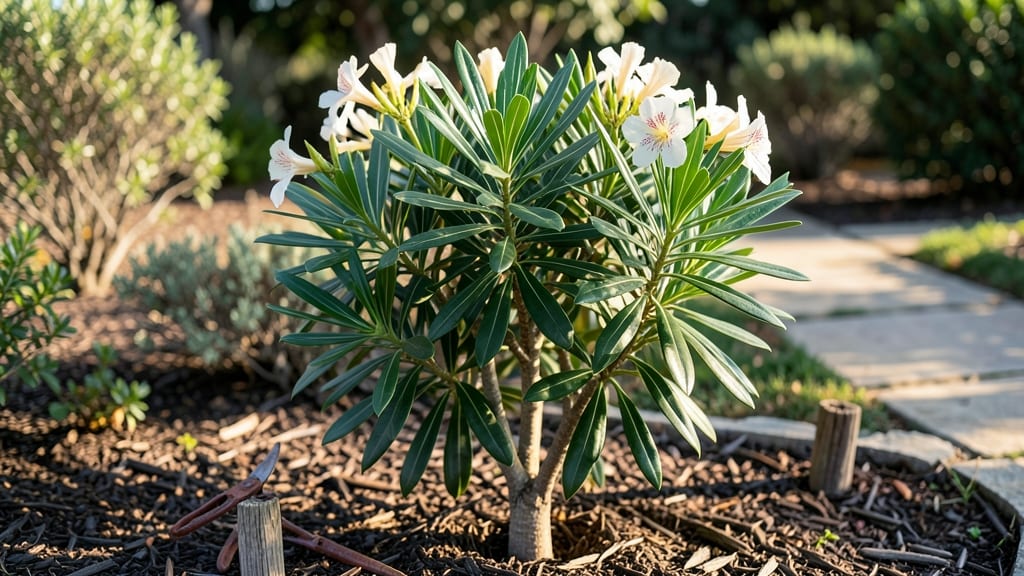
Oleander tree leaves aren’t just beautiful—they’re downright dangerous if you don’t handle them right. 🌿 Every gardener who grows these striking evergreens needs to know how to remove fallen leaves safely, especially when kids or pets might be around.
The sap contains toxins that can cause skin irritation or worse, so proper disposal is non-negotiable.
Start by wearing thick gloves and long sleeves—no exceptions. Grab a sturdy trash bag rated for yard waste, then rake or sweep up every leaf, stem, and even those stubborn twigs. The key is containment: never compost oleander clippings, and double-bag anything that touches the plant.
Even small amounts of sap can linger on tools or clothing, so clean everything thoroughly afterward with soap and water.
📚 In This Guide
- What you need
- Instructions
- Tips and common mistakes
- Wrapping up and next steps
What you need
- ● Nitrile or latex gloves (thick, chemical-resistant, 2-3 pairs for prolonged handling)
- ● Long-sleeved shirt and long pants (preferably lightweight, breathable fabric)
- ● Safety goggles (to protect against sap irritation)
- ● N95 respirator mask (for dust/sap exposure, especially if burning leaves)
- ○ Disposable coveralls (optional but recommended for heavy cleanup)
- ● Heavy-duty trash bags (thick, leak-proof, 5-10 gallon size, 2-3 bags)
- ● Pruning shears or loppers (for cutting branches, bypass blades for clean cuts)
- ● Garden rake or broom (for sweeping up fallen leaves/debris)
- ● Wheelbarrow or sturdy bin (for hauling waste, minimum 2 cubic feet)
- ● Plastic or metal container with lid (for soaking leaves in water if disposing of sap)
- ● Local hazardous waste facility (call ahead—some accept toxic plant waste)
- ● Professional landscaping service (if removal is extensive)
- ● Incineration (if legal in your area) (only for small quantities, never burn in open pits)
Instructions for safely removing oleander tree leaves
Here's how to handle toxic oleander leaves without risking exposure or harm.
✂️ Step 1: Gather Protective Supplies
Before touching any oleander leaves, put on thick, long-sleeved gloves and safety goggles. I always double-check that my gloves are intact—even a small tear means oleander sap can touch your skin. Grab a sturdy trash bag with a drawstring closure and a pair of heavy-duty pruning shears or loppers (oleander branches are tough).
Wear old clothes you won't mind staining or discarding—oleander sap can permanently discolor fabrics. I keep a bucket of soapy water nearby to rinse tools immediately after use. The key here is containment: you want all leaves and debris sealed away before they can spread toxic residue.
💧 Step 2: Collect Leaves and Small Debris
Start by picking up whole leaves one at a time, placing them directly into the trash bag. Oleander leaves release toxins when crushed or damaged, so avoid tearing them. I work from the bottom of the tree upward, shaking branches gently to dislodge loose leaves. For smaller debris, use a dustpan and brush to sweep up fragments without creating airborne particles.
If you're dealing with a large quantity, consider using a leaf blower set to low speed to gather debris into piles—just be sure to contain those piles immediately with the trash bag. Never rake or sweep oleander leaves into a pile where they might blow away. The goal is to minimize exposure at every stage.
🪴 Step 3: Remove Larger Branches and Leaves
Use your pruning shears to cut larger branches, working from the bottom up. Cut just above a leaf node or bud to encourage new growth (if that's your goal). Place cut branches directly into the trash bag—never leave them on the ground where pets or children might access them. I like to cut branches into 12-inch sections for easier handling, but this step is optional if you're comfortable managing whole branches.
After cutting, wipe down your shears with a damp cloth to remove any sap residue. Don't use water alone—oleander sap is sticky and won't wash away easily. A mild soap solution works best. This prevents sap from drying on your tools and contaminating future cuts.
🧹 Step 4: Clean Up and Dispose Properly
Once all leaves and branches are collected, seal the trash bag tightly. Double-bag if you're dealing with a large quantity—oleander toxins can degrade plastic over time. Label the bag clearly with "Oleander Toxic Waste" to remind anyone handling it of the danger. I also mark the date to track when disposal is needed.
Wash your gloves, goggles, and any contaminated clothing immediately with hot, soapy water. Rinse tools thoroughly with soap and water, then disinfect with a 10% bleach solution (1 part bleach to 9 parts water) to kill any remaining toxins. Never compost oleander leaves or branches—they can leach toxins into the soil and harm other plants.
⚠️ Step 5: Prevent Future Exposure
After cleanup, wash your hands with soap and water for at least 30 seconds, even if you wore gloves. Oleander toxins can absorb through skin, so this step is non-negotiable. I also recommend rinsing your face and any exposed skin areas with water to remove any accidental splashes.
If you have pets or children, monitor them closely after removal. Oleander toxins can linger on surfaces or in soil for days. Consider covering the area with a tarp while you dispose of the waste to prevent accidental contact. Finally, store your tools in a sealed container until your next use to avoid cross-contamination.
Tips & tricks for safe oleander leaf removal
Handling oleander leaves safely takes a little extra care—but these practical tips will help you avoid common pitfalls and work more efficiently.
Protective Gear Check: Before you start, do a thorough inspection of your gloves for even the smallest tears or holes. Oleander sap can penetrate through microscopic openings, so I always test mine by flexing fingers—if it feels tight or sticky, replace them. For extra protection, consider wearing disposable coveralls over your clothes, especially if you're working near pets or children. Between us, I've seen gloves fail mid-task, and that's when accidents happen.
Containment Strategy: In Step 2, when collecting leaves, I recommend using a second trash bag inside your primary bag as an extra barrier. This double-bagging system prevents any potential leaks if the outer bag tears during disposal. For large quantities, work in sections—fill one bag completely, then start a new one immediately. I've learned this the hard way after having wind scatter leaves across my yard when I tried to handle too much at once.
Tool Maintenance: After cutting branches in Step 3, I take an extra minute to soak my pruning shears in a bucket of soapy water for 10 minutes before disinfecting. This removes stubborn sap residue that can dry and make future cuts difficult. I keep a separate bucket just for this purpose—it's worth the extra effort to prevent cross-contamination with other gardening tools.
Disposal Timeline: Schedule your oleander removal for a day when you can immediately dispose of the waste at an approved hazardous waste facility. Many municipal facilities only accept toxic plant waste on specific days, so check their schedule in advance. I always call ahead to confirm they accept oleander—some places require special handling. Never leave toxic waste sitting overnight, even in sealed bags.
Pro Tips for Oleander Tree Leaves
- Handling oleander leaves safely takes a little extra care—but these practical tips will help you avoid common pitfall...
- Protective Gear Check: Before you start, do a thorough inspection of your gloves for even the smallest tears or holes...
- Containment Strategy: In Step 2, when collecting leaves, I recommend using a second trash bag inside your primary bag...
Frequently asked questions
Got questions about oleander leaves?
You’re not alone—these striking but toxic plants raise plenty of concerns. Here are answers to the most common queries to keep your home and family safe.
Are oleander leaves toxic to pets?
Yes! All parts of the oleander tree—including leaves, flowers, and stems—contain deadly cardiac glycosides. If ingested, even small amounts can cause severe vomiting, weakness, or heart failure in pets like dogs and cats. Keep them far from curious paws or paws!
How do I safely remove oleander leaves?
Wear gloves and long sleeves to avoid skin contact. Use pruners to cut leaves/stems, then double-bag the debris and dispose of it in sealed trash (never compost!). Wash your tools with soap and water afterward. Never burn oleander—toxic fumes can be released!
Can I grow oleander in my yard if I have kids?
We strongly advise against it. Oleander’s toxicity is a serious risk, especially for children who might chew leaves or touch sap. Opt for non-toxic alternatives like bougainvillea, hibiscus, or jasmine for vibrant, safe landscaping. Curiosity + kids = danger zone!
What are signs of oleander poisoning in humans?
Symptoms include nausea, dizziness, irregular heartbeat, or blurred vision. If exposure occurs, seek emergency medical help immediately. Avoid touching your face after handling oleander, and wash skin thoroughly. Never induce vomiting unless directed by poison control.
How do I identify oleander leaves?
Oleander leaves are long, narrow, and leathery (3–8 inches), with a smooth edge and shiny green color. They grow in clusters along thick, woody stems. If you’re unsure, snap a photo and compare it to trusted sources—when in doubt, assume it’s toxic and keep it away!
Wrapping up and next steps
Understanding the risks of oleander tree leaves is crucial—these plants contain deadly toxins that can harm pets, children, and even adults if ingested or improperly handled. Always prioritize safety by wearing gloves, using protective gear, and disposing of leaves responsibly.
Now that you’re equipped with the right knowledge and tools, take action to secure your space and protect your loved ones!
Next step: Inspect your yard for oleander trees and follow the removal guidelines to keep your home safe. 🌿 Stay vigilant!