
Planting
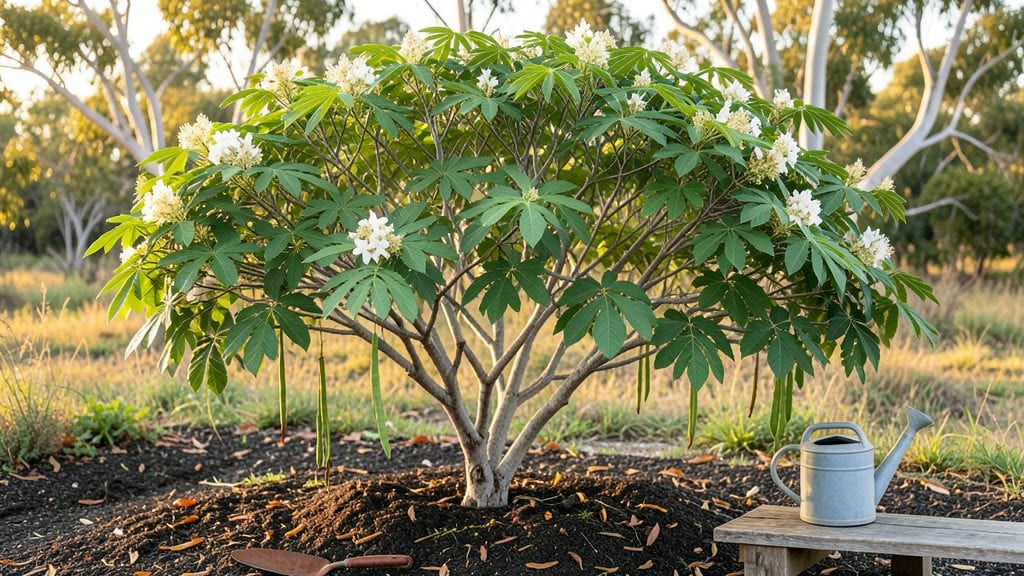
Mastering moringa tree plant care in the Pacific Northwest means embracing its resilience against frost while unlocking its supercharged growth potential—here’s how I’ve done it for three years. creating the right conditions so the tree thrives year-round, even when temperatures dip.
The secret lies in soil warmth, strategic pruning, and a few unexpected tricks that keep leaves lush even after light freezes.
You’ll need well-draining soil mixed with compost (think 50% garden soil, 30% compost, 20% perlite), a sunny spot getting at least 6 hours of light daily, and a way to shield young plants from early frosts.
Watering’s simple: keep soil moist but never soggy, and mulch heavily in winter to insulate roots. Pruning isn’t just about shape—it’s about forcing new growth that’s frost-hardier than the old. My trees now produce year-round harvests, even in Seattle’s chilly summers.
What you’ll end up with is a tree that looks like a cross between a fast-growing shrub and a productive powerhouse. The leaves stay bright green and tender even after light freezes, and the pods? They’re sweeter and more abundant than anything I’ve grown in warmer climates.
The real magic happens when you combine these care steps with winter mulching—your plant becomes nearly frost-proof while still packing a nutritional punch.
Works for containers too, making it perfect for patios or small yards. The only rule? Don’t rush the frost protection—your first winter will teach you exactly how cold your microclimate can handle. Let’s get those roots settled right.
📚 In This Guide
- What you need
- Instructions
- Tips and common mistakes
- Wrapping up and next steps
What you need
- ● Moringa seeds or saplings: 3–5 seeds (if starting from scratch) or 1–2 healthy nursery-grown saplings (3–6 months old).
- ● Well-draining potting mix: 5–10 gallons of a lightweight, organic blend (e.g., cactus/succulent mix + perlite, 60/40 ratio).
- ● Containers (for seedlings): 4–6 4–6 inch pots (for seeds) with drainage holes.
- ● 1 15–20 gallon container (for mature saplings; minimum 18" diameter).
- ● Drainage trays: 1–2 shallow trays to catch excess water.
- ● Organic fertilizer: Balanced 10-10-10 or fish emulsion (diluted to half-strength).
- ● Watering can or spray bottle: With a fine rose nozzle for gentle watering.
- ○ Grow lights (optional but critical for PNW winters): 1 LED full-spectrum grow light (12–16 hours/day during short-day seasons).
- ● Adjustable light stand (12–18 inches above seedlings).
- ● Mulch: 2–3 inches of straw or wood chips to insulate roots.
- ● Pruning shears: Sharp, sterilized shears (for trimming leggy growth).
- ● Cold frame or greenhouse: For overwintering seedlings (if temps drop below 25°F).
- ● Row covers or frost cloth: Lightweight fabric to protect young trees from light frosts (28–32°F).
- ● Thermometer: Soil and air thermometer to monitor ideal 70–85°F growing temps.
- ● Epsom salt (magnesium sulfate): 1 tbsp/month in water to prevent yellowing leaves (common in PNW’s acidic soils).
- ● 💡 Test your soil! PNW soils are often acidic—aim for a pH of 6.0–7.5 by amending with lime if needed.
- ● 🌡️ Hardening off: Acclimate seedlings to outdoor temps gradually (1–2 weeks) before permanent planting.
- ● 🔥 Fast-draining is key! Moringa hates soggy roots—add extra perlite or pumice to containers.
Step-by-step instructions for cultivating frost-hardy moringa trees
Here’s how I’ve successfully grown moringa in cooler climates—using proven techniques to protect against frost while maximizing growth.
Select the Right Variety and Planting Location
Choose the Moringa oleifera ‘Dwarf’ variety, which tolerates temperatures down to 25°F when mature. This cold-hardy strain is your best bet for the Pacific Northwest, where winter lows can drop dangerously for tropical species. Plant in full sun—at least 6-8 hours daily—since moringa needs intense light to photosynthesize efficiently, even in cooler months.
Site selection is critical. Avoid low-lying areas where cold air pools—moringa roots struggle with prolonged chilling below 32°F. Instead, choose a south-facing slope or raised bed where soil warms faster in spring. Amend the soil with 3 inches of compost to improve drainage, as moringa hates soggy roots. You’ll see stronger growth and better frost resilience when the soil drains freely.
Plant at the Correct Depth and Timing
Plant bare-root seedlings in early spring, 2-3 weeks after your last frost date, when soil temperatures reach 60°F. Dig a hole twice as wide as the root ball but only as deep—moringa roots should sit just below soil level, never buried deeper. This prevents suffocation and encourages a strong taproot system, which anchors the tree against wind and frost.
Space plants 8-10 feet apart to allow airflow, reducing humidity around leaves—a key factor in preventing fungal diseases like powdery mildew. Water deeply immediately after planting to settle the soil and eliminate air pockets. You’ll know it’s done right when the soil feels firm but not compacted, like a well-tamped sandcastle.
Implement Frost Protection Strategies
For young moringa trees (under 2 years old), use row covers or frost cloth when temperatures dip below 32°F. Secure the fabric loosely over the tree—not touching leaves—to allow airflow while trapping heat. Remove covers by 10 AM on sunny days to prevent overheating. Mature trees (over 3 years) can handle 25°F with just a thick layer of mulch (4-6 inches) around the base to insulate roots.
Never let the soil freeze. In extreme cold snaps, wrap the trunk and major branches with burlap to prevent sunscald damage when frost thaws. Prune back one-third of the canopy in late winter to reduce wind exposure—this encourages bushier, more frost-resistant growth. You’ll see new, sturdy branches emerge by early summer, signaling successful protection.
Adjust Watering and Fertilizing for Cooler Climates
Water deeply once a week in summer, but reduce frequency in fall as growth slows. Moringa in the Pacific Northwest enters dormancy earlier than tropical varieties—stop fertilizing by mid-September to let the tree harden off. Use a balanced 10-10-10 fertilizer in spring (March-April) and a low-nitrogen 5-10-10 in early summer to promote root development without excessive top growth.
In winter, halt all watering unless temperatures stay above 40°F for extended periods. Overwatering in cold soil leads to root rot, which moringa cannot outgrow. Instead, rely on mulch to retain moisture and regulate soil temperature. You’ll notice healthier foliage in spring if you’ve followed this watering rhythm—leaves will be deep green and waxy, not yellowed or wilted.
Prune for Frost Resilience and Harvest Strategically
Prune late winter (February) to remove dead or weak branches—this improves airflow and reduces frost damage. Cut back one-third of the oldest growth to stimulate new, frost-hardier shoots. Avoid heavy pruning in fall, as the tree needs energy to store nutrients for winter. You’ll see plump, green buds by early spring, indicating successful pruning.
Harvest young leaves and pods only after frost risk has passed (typically mid-May in the PNW). Older leaves (over 6 months) contain higher levels of anti-nutrients like tannins, so focus on new growth for optimal nutrition. Leave at least one-third of the foliage to maintain the tree’s energy reserves for next year’s growth. A well-pruned, strategically harvested moringa tree will reward you with year-round productivity in even the coolest climates.
Tips & tricks for perfect moringa tree plant care
Growing moringa in cooler climates takes some strategic adjustments—but these tips will help you achieve thriving trees that survive Pacific Northwest winters.
Variety Selection: The Moringa oleifera ‘Dwarf’ variety is specifically chosen for its cold tolerance down to 25°F when mature. This isn't just about survival—it's about maximizing your harvest potential. Avoid regular moringa varieties that can't handle our winters; they'll struggle with frost damage and may not recover. The dwarf variety also has a more compact growth habit, making it easier to manage in home gardens while still producing abundant leaves and pods.
Site Selection Matters: That south-facing slope recommendation isn't arbitrary—it's about creating a microclimate that warms faster in spring and sheds cold air more effectively. If you don't have a slope, consider raised beds with excellent drainage. The key is to avoid areas where cold air pools, as moringa roots can't tolerate prolonged temperatures below 32°F. I've seen moringa trees planted in low spots completely fail during our cold snaps, while those on slopes or raised beds thrived through the same winters.
Planting Depth and Timing: The twice as wide, same depth planting method is crucial for establishing strong roots quickly. When planting bare-root seedlings, make sure the root flare (where roots meet trunk) sits just above soil level—this prevents suffocation while encouraging deep root growth. Timing is equally important: those 2-3 weeks after last frost when soil reaches 60°F give seedlings time to establish before summer heat arrives. I've learned this the hard way—planting too early in cool soil leads to stunted growth.
Frost Protection Layering: The frost protection strategies work best when layered. Start with proper spacing (8-10 feet apart) to allow airflow, then add row covers for young trees when temps dip below 32°F. For mature trees, that 4-6 inch mulch layer is your first line of defense—it insulates roots while preventing soil freezing. The burlap wrapping for extreme cold snaps might seem excessive, but it's saved my trees from sunscald damage during thaw cycles. Think of it as creating a protective envelope around your tree during winter's harshest periods.
Pro Tips for Moringa Tree Plant Care
- Growing moringa in cooler climates takes some strategic adjustments—but these tips will help you achieve thriving trees that survive Pacific Northwest winters.
- Variety Selection: The Moringa oleifera ‘Dwarf’ variety is specifically chosen for its cold tolerance down to 25°F when mature.
- Site Selection Matters: That south-facing slope recommendation isn't arbitrary—it's about creating a microclimate that warms faster in spring and sheds cold air more effectively.
Frequently asked questions
Got questions about growing a thriving moringa tree in the Pacific Northwest? You’re not alone! Here are answers to the most common concerns—from frost prep to harvest timing—so you can grow like a pro.
Can moringa trees survive Pacific Northwest winters?
Moringa oleifera is tropical but can handle light frosts (down to 28°F/-2°C) if mature. Young plants need winter protection—use row covers, mulch heavily, or grow in containers to move indoors. In zones 8-10, they thrive year-round; colder areas may need to be overwintered as houseplants.
How long does it take for a moringa tree to grow and produce pods?
With ideal care, expect 6–12 months for initial pods (faster in warm climates). Young trees focus on leaf growth first, so patience is key! Prune regularly to encourage bushier growth, and fertilize lightly with nitrogen-rich compost to speed up fruiting. Harvest pods when green and tender (before they dry).
What’s the best soil mix for moringa trees in the PNW?
Moringa loves well-draining, slightly acidic soil (pH 6.0–7.5). Mix 50% potting soil with 30% perlite/sand and 20% compost for containers. In-ground? Amend clay soil with organic matter (like coconut coir) to prevent root rot. Drainage is critical—these trees hate soggy feet!
Why are my moringa leaves turning yellow or dropping?
Yellow leaves often signal overwatering, nutrient deficiency, or pests. Check for:
- Root rot: Let soil dry between waterings.
- Nitrogen deficiency: Feed with fish emulsion or compost tea.
- Spider mites/sap-suckers: Spray with neem oil or insecticidal soap.
Can I grow moringa from seeds, or should I buy a sapling?
Both work! Seeds are cheap but slow (germinate in 7–14 days); soak in warm water overnight for faster sprouting. Saplings (1–2 ft tall) grow faster but cost more. For PNW growers, starting seeds indoors in spring gives them a head start before transplanting outdoors after last frost.
Wrapping up and next steps
Growing a moringa tree in the Pacific Northwest is totally doable—even with cooler climates and occasional frost!
With the right soil, sunlight, and care, you’ll soon enjoy a thriving, nutrient-packed plant that’s as resilient as it is rewarding. Start small, stay consistent, and watch your moringa tree flourish into a powerhouse of greens and wellness.
Ready to take the next step? Plant your seeds or saplings today and join a growing community of gardeners harnessing the magic of moringa. Whether you’re aiming for a backyard harvest or a sustainable side hustle, your green thumb is about to get a supercharged boost! 🌱✨