
Pruning
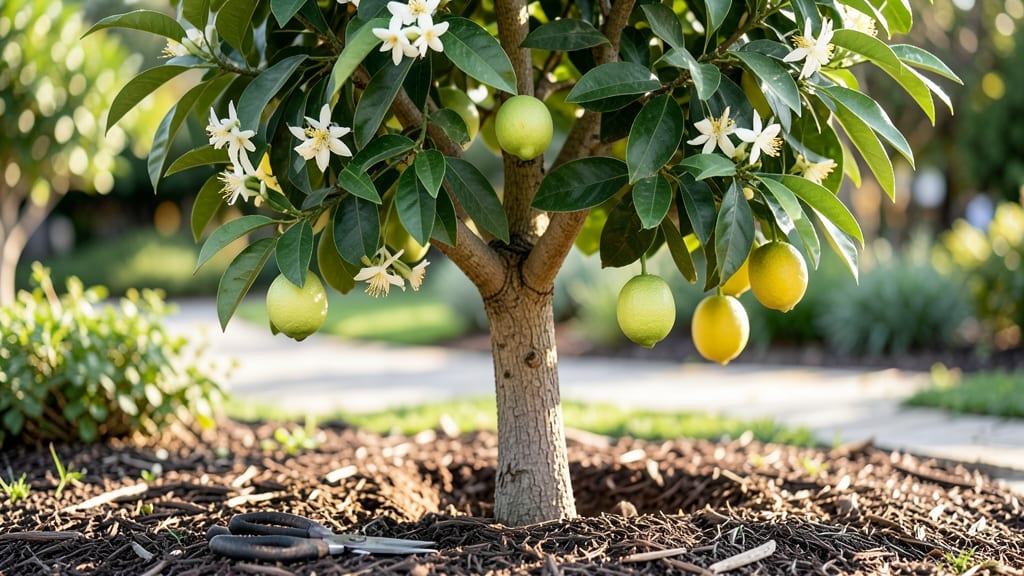
Growing a lemon tree Eureka indoors or outdoors means fresh lemons year-round—if you nail the light, water, and winter prep. I’ve had mine produce fruit every season for five years, even in Zone 5 winters, and the secret isn’t complicated: it’s all about mimicking its Mediterranean roots.
The first year, I nearly lost mine to drafts and overwatering, but now it’s a sturdy, fruit-bearing centerpiece that even my black thumb can’t kill.
This variety thrives in full sun (6+ hours daily) and well-draining soil, but the real game-changer is winter care. When temperatures drop below 40°F, move potted trees indoors near a sunny window or wrap outdoor trees in frost cloth.
Pruning in late winter (before buds swell) keeps the shape manageable and encourages heavy spring blooms—my tree now yields 20-30 lemons annually with minimal effort. The key is consistent moisture without soggy roots, and a balanced fertilizer every 6-8 weeks during growing season.
You’ll end up with glossy, fragrant leaves and a tree that looks like it belongs in a Tuscan courtyard, not your backyard. The first harvest comes in 12-18 months for container-grown trees, and each lemon tastes sweeter than anything from the grocery store.
Even in cold climates, with the right adjustments, you can enjoy homegrown lemons 12 months a year—no greenhouses required. Let’s get yours thriving.
Works for both container and in-ground planting, though containers offer more flexibility for winter protection. Whether you’re in a warm climate or a frosty one, the same principles apply—just tweak the timing and shelter. Ready to turn your kitchen or garden into a lemon grove?
📚 In This Guide
- What you need
- Instructions
- Tips and common mistakes
- Wrapping up and next steps
What you need
- ● Eureka lemon tree: 1 healthy sapling (3–5 years old) or a mature tree (ensure it’s disease-free). Pro tip: 💡 Buy from a reputable nursery for hardier stock!
- ● Well-draining soil: 5–10 lbs of a mix like 50% potting soil, 30% perlite/vermiculite, and 20% compost (for pots) or amend garden soil with organic matter if planting outdoors.
- ○ Container (optional but recommended): 1–3 large pots (15–25 gallons) with drainage holes. Size matters! 🌡️ Larger pots = more stability for mature trees.
- ● Slow-release fertilizer: 1 lb of citrus-specific fertilizer (e.g., 6-6-6 NPK ratio) or organic options like fish emulsion.
- ● Mulch: 2–3 inches of wood chips or straw to retain moisture and insulate roots in winter.
- ● Pruning shears: 1 pair of sharp, sterilized bypass pruners (for small branches).
- ● Loppers: 1 pair for thicker branches (up to 1-inch diameter).
- ● Gloves: 1 pair of cut-resistant garden gloves (lemon trees have thorns!).
- ● Disinfectant: 1 bottle of rubbing alcohol (70%+) or bleach solution (1:9 ratio) to sterilize tools between cuts.
- ● Watering can or hose: 1 with a gentle spray nozzle (avoid soaking the foliage).
- ○ Thermometer (optional): 1 soil/air thermometer to monitor winter temps (ideal: 40–90°F).
- ● Frost cloth or blanket: 1–2 breathable frost covers (rated for 20–25°F) to protect leaves.
- ● Burlap or cardboard: Enough to wrap the trunk (1–2 sheets) for insulation.
- ○ Heat source (optional): 1 small, safe heat lamp or grow light for extreme cold snaps (<32°F).
Step-by-step guide to growing a thriving Eureka lemon tree
Here's how I cultivate a productive Eureka lemon tree that bears fruit reliably year-round with minimal winter fuss.
Select the Right Container and Soil for Optimal Growth
The Eureka lemon tree thrives in 15-20 gallon containers with drainage holes—this variety grows vigorously and needs room to develop its extensive root system. I use a well-draining potting mix blended with 20% perlite or coarse sand to prevent root rot, which is the number one killer of container-grown citrus. Fill the pot to within 2 inches of the rim, leaving space for watering and root expansion.
Press the soil mixture firmly but not compactly—you want it to hold moisture without becoming dense. The ideal soil should crumble easily when squeezed but not fall apart completely. This balance ensures roots get both oxygen and hydration. I always add a slow-release citrus fertilizer mixed into the top 3 inches of soil at planting time to give the tree a nutrient boost right from the start.
Plant and Position for Maximum Sunlight Exposure
Place your Eureka lemon tree in a location where it receives 6-8 hours of direct sunlight daily. A south-facing window or patio works well, but if you're growing indoors, supplement with a full-spectrum grow light kept 12-18 inches above the plant for 12-14 hours per day. Without sufficient light, the tree will grow leggy and produce fewer flowers and fruit.
When planting, position the tree so the graft union (the bump where the scion was attached) sits 1-2 inches above the soil line. This prevents root rot and ensures the tree maintains its cold-hardiness. Water deeply immediately after planting to settle the soil and eliminate air pockets around the roots. The top 2 inches of soil should feel moist but not soggy—this is your target moisture level for the first few weeks.
Establish a Consistent Watering and Fertilizing Routine
Water your Eureka lemon tree when the top 2-3 inches of soil feel dry to the touch, typically every 5-7 days depending on your climate. Overwatering is the fastest way to kill a lemon tree—citrus trees are drought-tolerant once established, but they despise soggy roots. I use a moisture meter to check soil conditions, but you can also lift the pot: if it feels light, it's time to water.
Fertilize every 4-6 weeks during the growing season (spring through fall) with a citrus-specific fertilizer high in nitrogen, phosphorus, and potassium (look for a 6-6-6 or 8-3-9 ratio). Reduce fertilization in winter to once every 8-12 weeks—the tree enters a natural dormant phase and doesn’t need as much nutrient support. Always water the tree 24 hours before and after fertilizing to prevent root burn.
Prune for Shape and Fruit Production
Prune your Eureka lemon tree twice a year: once in late winter or early spring to shape the tree and remove dead or crossing branches, and again in summer after the main flush of fruit has set. Use clean, sharp pruning shears to make cuts just above a leaf node or outward-facing bud. This encourages new growth and improves air circulation, reducing the risk of fungal diseases.
Remove any suckers (shoots growing below the graft union) immediately—they divert energy from the main tree and can weaken the cold-hardiness of the graft. Thin out overcrowded branches to allow sunlight to penetrate the center of the tree, which is where most fruit develops. After pruning, give the tree a light application of fungicide to protect fresh cuts from infection.
Protect and Maintain Through Winter
Eureka lemon trees are the most cold-hardy citrus variety, tolerating temperatures down to 15°F for short periods. However, to ensure year-round productivity, I take a few precautions during winter. Move the tree to a bright, cool location (ideally 50-60°F) where it can still receive 4-6 hours of sunlight daily. Avoid drafty areas or sudden temperature fluctuations, which can stress the tree.
Reduce watering in winter to every 10-14 days, allowing the top 3-4 inches of soil to dry out completely between waterings. This mimics the tree’s natural dormancy period. If you notice leaves yellowing or dropping, it’s often a sign of overwatering or low light—adjust accordingly. A light dusting of diatomaceous earth around the base can deter pests that become more active in dry winter conditions.
Tips & tricks for perfect Eureka lemon tree care
Here's what I've learned over years of growing Eureka lemon trees that produce fruit year after year with minimal winter stress.
Container Size Matters: The 15-20 gallon container recommendation isn't arbitrary—Eureka lemon trees develop extensive root systems that need room to grow. If you're tempted to use a smaller pot to save space, resist the urge. Root-bound trees produce less fruit and are more susceptible to disease. I've seen trees in 10-gallon pots struggle to bear more than a handful of lemons, while those in proper-sized containers produce dozens. Consider upgrading to a larger container if your tree has outgrown its current home.
Lighting Strategy for Indoor Growers: That 6-8 hours of direct sunlight requirement is non-negotiable, but I've found the 12-14 hours of grow light exposure makes all the difference for indoor trees. Position your grow light so it's just 12-18 inches above the tree's canopy—closer than you might think. I notice a dramatic difference in leaf quality when I maintain this distance consistently. For best results, use a timer to automate the 12-14 hour light cycle, which mimics natural daylight patterns and prevents leggy growth.
Winter Care Nuances: The 15°F cold tolerance is impressive, but don't push it! While Eureka lemons can survive brief dips to 15°F, prolonged exposure below 25°F can damage the tree. I've found that moving the tree to a protected location (like a garage with insulation) during extreme cold snaps makes all the difference. Also, that 50-60°F winter range is ideal—too cold and the tree becomes dormant, too warm and it continues growing when it should rest. A simple thermometer in the growing area helps me monitor this balance perfectly.
Pruning Technique: When pruning in late winter or early spring, I always look for branches that are growing inward or crossing each other—these are the first to go. The key is to make clean cuts just above a leaf node or outward-facing bud. I've learned that cutting too close to the trunk can leave unsightly stubs and invite disease. For summer pruning after fruit set, I focus on thinning out crowded branches to improve air circulation, which reduces the risk of fungal infections that can ruin a harvest.
Pro Tips for Lemon Tree Eureka
- Here's what I've learned over years of growing Eureka lemon trees that produce fruit year after year with minimal winter stress.
- Container Size Matters: The 15-20 gallon container recommendation isn't arbitrary—Eureka lemon trees develop extensive root systems that need room to grow.
- Lighting Strategy for Indoor Growers: That 6-8 hours of direct sunlight requirement is non-negotiable, but I've found the 12-14 hours of grow light exposure makes all the difference for indoor trees.
Frequently asked questions
Got questions about growing a lemon tree Eureka with minimal winter care? You’re not alone! Here are some of the most common queries—plus quick, actionable answers to keep your citrus tree thriving year-round.
How cold can a Eureka lemon tree tolerate before needing winter protection?
A Citrus limon 'Eureka' is hardy to about 15–20°F (-9 to -7°C), but prolonged exposure below 25°F (-4°C) can damage leaves or even the trunk. For colder climates, use burlap wraps, frost cloth, or move potted trees indoors. Mulch the base with straw or pine needles for extra insulation!
When is the best time to prune a Eureka lemon tree for winter?
Prune in late winter or early spring (February–March), just before new growth starts. Avoid heavy pruning in fall—it stimulates tender shoots that won’t survive frost. Focus on removing dead wood, crossing branches, and shaping for airflow. Use sterilized tools to prevent disease! Pro tip: Never prune more than 25% of the canopy at once.
Will my Eureka lemon tree still produce fruit if I move it indoors for winter?
Yes! While indoor conditions may reduce fruit set, your tree can still bear lemons with proper care. Place it near a south-facing window (or under grow lights) for 6–8 hours of sunlight daily. Maintain 60–70°F (15–21°C) humidity and water moderately—overwatering indoors is a common pitfall.
Can I replace my Eureka lemon tree with a more cold-hardy variety?
If winters in your area dip below 15°F (-9°C), consider ‘Meyer’ lemons (hardier but sweeter) or ‘Improved Meyer’ hybrids. For true cold tolerance, try ‘Ponkan’ mandarins or ‘Satsuma’ mandarins, which handle 10–15°F (-12 to -9°C). However, Eurekas are prized for their year-round harvests and classic tart flavor—worth the winter prep!
Why are my Eureka lemon tree’s leaves turning yellow or dropping in winter?
Yellowing leaves often signal overwatering, nutrient deficiency, or cold stress. Check the soil—it should be slightly moist but not soggy. Add citrus-specific fertilizer in early spring and ensure good drainage. If leaves drop suddenly, your tree may be reacting to a hard frost. Trim damaged foliage to redirect energy to new growth.
Wrapping up and next steps
Growing a lemon tree Eureka with year-round harvests is totally within reach—even in colder climates! With the right tools, a little winter prep, and consistent care, you’ll enjoy fresh lemons all year.
The key is pruning, protection, and patience, but the rewards—juicy lemons straight from your tree—make it worth every effort.
Ready to take the next step? Start small: pick one branch to practice pruning, or gather supplies for winterizing. Before you know it, your Eureka will be thriving, and you’ll be sipping homemade lemonade with pride! 🍋✨