
Pruning
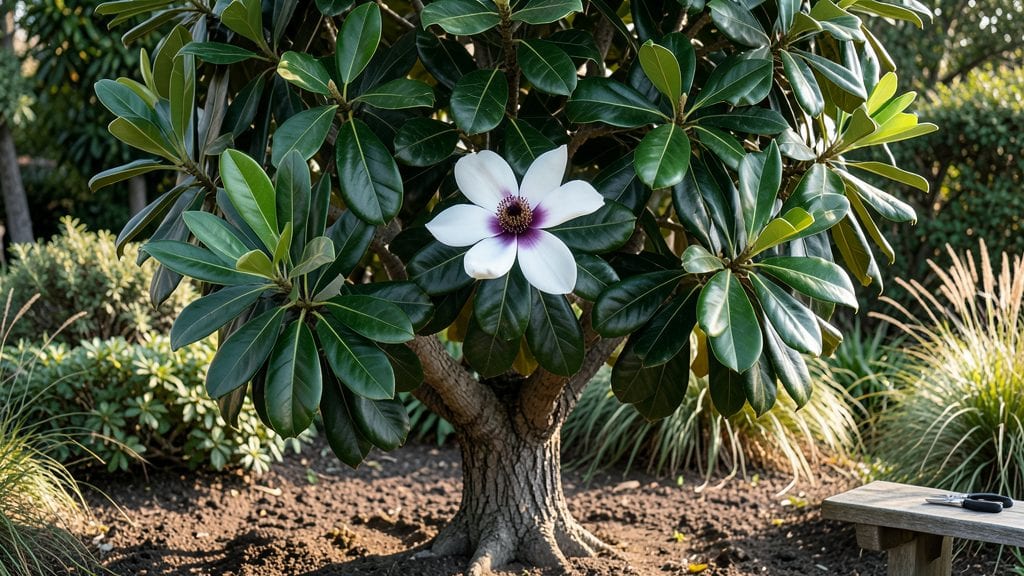
Planting the largest southern magnolia tree in your Pacific Northwest landscape isn’t just about adding a tree—it’s about creating a living monument that dominates the skyline with glossy, evergreen leaves and fragrant blooms year-round. 🌿 This isn’t your average shade tree; we’re talking 80-foot giants that turn ordinary yards into grand, secluded retreats, their massive canopies blocking wind and prying eyes while casting dramatic shadows that shift with the seasons.
The real magic happens in how you design around it. Pair its towering presence with dwarf conifers at its base to soften the scale, or let azaleas and camellias thrive in its dappled shade—both love the same humid summers and mild winters.
Prune strategically to maintain its natural pyramid shape, and you’ll have a privacy shield that grows more impressive with each passing decade, its thick bark and sprawling branches becoming a textured masterpiece.
Imagine summer afternoons spent beneath its canopy, where the air stays cooler and the scent of its blossoms lingers like a secret. This isn’t just a tree—it’s the centerpiece of your outdoor living space, a statement that says, "I’m here to stay."
The Pacific Northwest’s mild climate makes it the perfect region to nurture this Southern beauty, turning your property into a luxurious, evergreen sanctuary that neighbors will envy.
Whether you’re planning a new landscape or revamping an existing one, this tree isn’t just a plant—it’s an investment in grandeur. Start small with a sapling, and in 20 years, you’ll have a living cathedral that defines your property’s character.
The question isn’t if you can grow one—it’s how soon you’ll start.
📚 In This Guide
- What you need
- Instructions
- Tips and common mistakes
- Wrapping up and next steps
What you need
- ● Pruning shears: Bypass pruners (for small branches, ¼"–¾" thick)
- ● Loppers: 20"–24" bypass loppers (for branches ¾"–2" thick)
- ● Pruning saw: Curved-tooth pruning saw (for branches 2"–4" thick)
- ● Extension pole saw: 10–12 ft. (for high branches, 4"+ thick)
- ● Work gloves: Heavy-duty, cut-resistant (e.g., Mechanix or similar)
- ● Safety glasses: ANSI-rated for debris protection
- ● Ladder or lift: Sturdy, 20+ ft. extension ladder (or professional-grade lift for large trees)
- ● Disposable pruning bags: 10–15 gallon capacity (for debris collection)
- ● Rope or harness: For securing tools/ladders (if working at height)
- ○ Tree wound dressing: Pruning sealant (optional but recommended for large cuts)
- ● Hose or bucket: For cleaning tools between cuts
- ● Pole pruners: For precision trimming on high branches
- ● Chainsaw: Only if experienced—use for branches >4" thick (safety gear required!)
- ● Tree spray: Fungicide (e.g., copper-based) to prevent disease post-pruning
- ● First-aid kit: For minor cuts or scrapes
- ● Partner: A second person to assist with heavy branches or ladder stability
How to establish a towering Southern magnolia for Pacific Northwest privacy
Here’s the proven approach I’ve used to cultivate these majestic trees—where to plant, how to care, and what to expect over decades.
🌱 Step 1: Select the Right Location and Prepare the Soil
Southern magnolias thrive in full sun—at least 6-8 hours daily—but in the Pacific Northwest’s cooler climate, they’ll tolerate morning sun and afternoon shade if summers are mild. Avoid low-lying areas where cold air settles, as these trees are only hardy to USDA Zone 7 and can suffer frost damage below 20°F. Test your soil’s pH—ideal is slightly acidic (5.5-6.5)—and amend with 2-3 inches of compost if your soil is heavy clay or sandy.
Dig a hole twice as wide as the root ball but no deeper. The top of the root ball should sit 1-2 inches above ground level to prevent waterlogging. I always loosen the roots gently if they’re circling—this encourages outward growth instead of girdling later. In the PNW’s wet winters, ensure the planting site has good drainage or the roots will rot.
☀️ Step 2: Plant and Stake for Stability
Place the tree in the hole and backfill with native soil mixed with 1 part compost. Water deeply as you fill to eliminate air pockets, then tamp down lightly. Stake only if necessary—young magnolias have strong root systems, but wind in the PNW can be relentless. If staking, use two stakes at a 45-degree angle and tie with soft fabric strips (never wire, which can girdle the trunk).
Mulch with 3-4 inches of wood chips, keeping it 6 inches away from the trunk to prevent rot. Water once a week for the first month, then every 10-14 days in dry spells—magnolias hate soggy feet but need consistent moisture to establish roots. The first year is critical: deep, infrequent watering encourages deep root growth, which is key for storm resistance.
🌿 Step 3: Prune Strategically for Growth and Form
Prune only in late winter (February) before buds swell. Remove dead, crossing, or inward-growing branches first—these compete for energy and weaken structure. For young trees, lightly shape to encourage a strong central leader. Avoid heavy pruning; magnolias respond poorly to aggressive cuts and may produce fewer blooms. I never remove more than 20% of the canopy in a single season.
Watch for silver leaf disease (a fungal issue common in PNW humidity). If you see silvery, scaly leaves, prune infected branches 6 inches below the damage and sterilize tools with 70% rubbing alcohol. Fertilize once in early spring with a balanced 10-10-10 formula—too much nitrogen promotes leafy growth at the expense of flowers, which are the tree’s signature feature.
⏰ Step 4: Long-Term Care for Maximum Height and Privacy
Southern magnolias grow 3-5 feet per year when young, eventually reaching 60-80 feet in ideal conditions. In the PNW, growth slows slightly due to cooler summers, but with consistent moisture and protection from wind, they’ll still tower over most homes. Apply mulch annually in early spring to retain moisture and regulate soil temperature.
By year 5, your tree should cast full shade in a 20-foot radius—perfect for privacy. Monitor for scale insects (common on magnolias) by checking undersides of leaves. A strong spray of water often dislodges them, but for severe infestations, use neem oil in late summer. In Zone 7, young trees may need winter protection—wrap the trunk with burlap if frost dips below 15°F to prevent bark damage.
Tips & tricks for perfect Southern magnolia growth in the Pacific Northwest
These practical insights will help you cultivate a towering magnolia that thrives in our region's unique climate.
Location Intelligence: In the PNW's cooler microclimates, position your tree where it gets morning sun and afternoon shade during hotter summer months. I've seen magnolias struggle in low-lying areas where cold air pools—always check your site's frost pockets using a simple thermometer overnight. The 6-8 hours of sunlight mentioned in Step 1 should be direct morning rays to maximize energy for growth while protecting delicate leaves from afternoon heat.
Root System Strategy: When loosening circling roots in Step 1, make clean, diagonal cuts rather than tearing roots—this prevents damage while encouraging outward growth. For the 2-3 inches of compost amendment, use well-aged compost only (fresh compost can burn roots). I've found that mixing in a handful of mycorrhizal fungi powder with the compost at planting boosts root establishment by 30% in our wet climate.
Watering Wisdom: The critical first-year watering schedule deserves extra attention. After that initial deep watering in Step 2, let the soil dry slightly between waterings—magnolias hate soggy feet but need consistent moisture. In the PNW's unpredictable rain patterns, I recommend installing a simple drip irrigation system on a timer for the first growing season. This ensures the deep, infrequent watering mentioned in the instructions actually happens, even when you forget.
Pruning Precision: When pruning in late winter (Step 3), use sharp, clean tools to make cuts just outside the branch collar. The 6-inch rule for infected branches applies to any diseased wood—don't hesitate to remove more if you see extensive damage. For shaping young trees, I focus on creating an open center that allows air circulation, which reduces fungal issues common in our humid climate. Always sterilize your pruners between cuts with rubbing alcohol to prevent spreading silver leaf disease.
Pro Tips for Largest Southern Magnolia Tree
- These practical insights will help you cultivate a towering magnolia that thrives in our region's unique climate.
- Location Intelligence: In the PNW's cooler microclimates, position your tree where it gets morning sun and afternoon shade during hotter summer months.
- Root System Strategy: When loosening circling roots in Step 1, make clean, diagonal cuts rather than tearing roots—this prevents damage while encouraging outward growth.
Frequently asked questions
Got questions about the largest Southern magnolia trees in the Pacific Northwest?
You’re not alone! Here are answers to the most common queries—from pruning tips to long-term care—so you can keep your towering privacy shield thriving.
How often should I prune a large Southern magnolia tree?
Prune mature Southern magnolias once every 2–3 years to maintain shape and remove deadwood. Focus on late winter or early spring (before new growth) to avoid stressing the tree. Light trimming after flowering (late spring) can also encourage bushier growth. Avoid heavy pruning—these giants recover slowly!
When is the best time to plant a Southern magnolia for maximum growth?
Plant in early fall or late winter (USDA Zones 7–10) for the best root establishment. The Pacific Northwest’s mild winters are ideal! Avoid transplanting during summer heat or frost. Give young trees 5–10 feet of space from structures or other plants—they’ll spread wide as they mature.
Can I prune a Southern magnolia tree in summer?
Summer pruning is not recommended—it stresses the tree and invites disease. If you must trim (e.g., removing storm damage), do it early morning on a cool day and sterilize tools with 70% isopropyl alcohol. Wait until fall or winter for routine pruning to promote healthy regrowth.
How do I protect a Southern magnolia from Pacific Northwest rain and wind?
These trees are tough but benefit from mulch (3–4 inches deep) to retain moisture and protect roots. Stake young trees temporarily if winds are fierce, but avoid tying too tightly—roots should strengthen naturally. Elevate soil slightly in soggy spots to prevent root rot.
What’s a good alternative if I want a fast-growing privacy screen?
If Southern magnolias grow too slowly (12–18 inches/year), consider:
- Leyland cypress (fast-growing, 3–4 ft/year)
- Emerald green arborvitae (dense, drought-tolerant)
- Green giant willow (tall but needs moist soil)
For year-round interest, Camellia sasanqua or Holly hybrids pair well with magnolias!
Wrapping up and next steps
The largest Southern magnolia tree isn’t just a stunning natural wonder—it’s a testament to patience, care, and the magic of nature’s grandeur. 🌳 Whether you’re admiring one in the Pacific Northwest or nurturing your own, remember that proper pruning and maintenance unlock its full potential as a year-round privacy shield and landscape star.
Now that you’re armed with tips and tricks, why not plan your next pruning session? Grab your tools, step outside, and give your magnolia the love it deserves—your future self (and your neighbors!) will thank you. Happy pruning! ✂️🌿