Trees
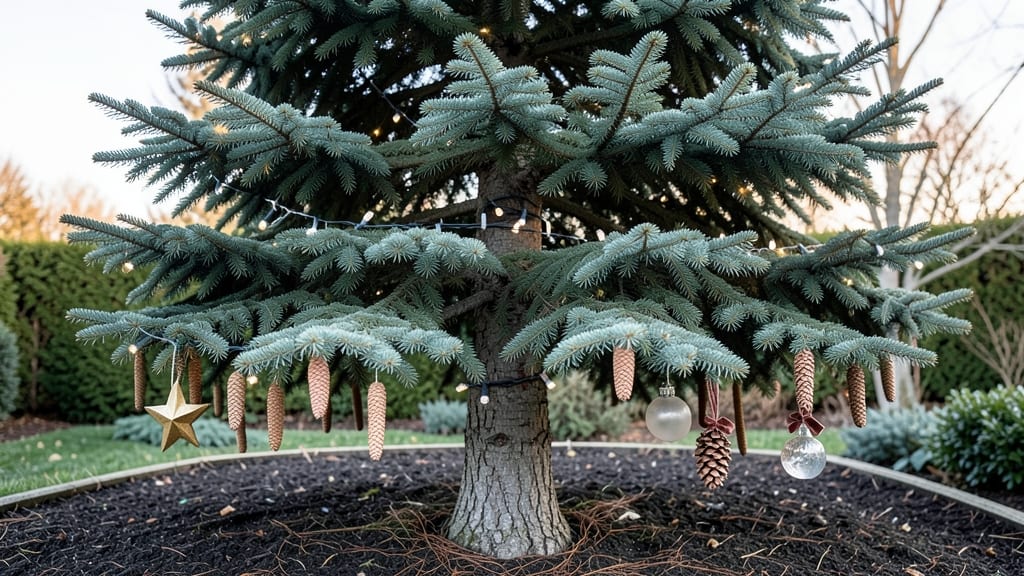
A huge white Christmas tree in your Pacific Northwest garden isn’t just a holiday centerpiece—it’s a year-round statement that thrives through frost and rain. I’ve seen these stunning evergreens stand tall even after winter storms, their silvery branches catching the light like frozen lace.
The key isn’t just planting one; it’s placing it where it becomes the heart of your outdoor space, whether as a focal point near your patio or framing a cozy seating area.
These trees work their magic in two ways: their frost-resistant foliage stays vibrant even when temperatures dip, and their architectural shape adds drama to any landscape.
Pair it with drought-tolerant shrubs like heather or boxwood for contrast, and string warm white lights through the branches for an effect that glows like moonlight. The best part? With minimal pruning, it keeps its majestic form from Thanksgiving through New Year’s—and beyond.
📚 In This Guide
- What you need
- Instructions
- Tips and common mistakes
- Wrapping up and next steps
What you need
- ● Tree: Abies procera (Noble Fir) or Picea glauca 'Conica' (Dwarf Alberta Spruce) – 1 mature specimen (10-15 ft tall) or 3-5 smaller trees (5-8 ft) for a cluster effect.
- ● Soil: 50 lbs of acidic, well-draining potting mix (pH 4.5-6.0). Mix with 20 lbs of peat moss or pine bark for moisture retention.
- ● Fertilizer: 10 lbs of slow-release evergreen fertilizer (12-12-12 NPK ratio).
- ● Mulch: 10+ cubic feet of pine straw or cedar mulch to protect roots from frost.
- ● White lights: 500+ ft of LED string lights (waterproof, 16-21 gauge).
- ● Ornaments: 100+ pieces of white glass baubles, silver tinsel, or faux snow accents.
- ● Tree skirt: 1 white faux-snow or burlap skirt (12-15 ft diameter).
- ● Snow spray: 1 can of water-based artificial snow (for instant winter flair!).
- ● Shovel & trowel (for digging).
- ● Wheelbarrow (for hauling soil/mulch).
- ● Pruners (sterilized, for shaping).
- ● Measuring tape (to mark planting depth).
- ● Garden gloves (for protection).
- ● Weather check: Plant on a cloudy day or evening to reduce transplant shock.
How to grow a frost-resistant white Christmas tree in the Pacific Northwest
Here’s how to cultivate a stunning, year-round white Christmas tree that thrives in PNW winters.
Select the Right Tree Species for Your Climate
The Pacific Northwest’s cold winters and wet springs demand frost-resistant evergreens that maintain their white foliage year-round. I recommend Abies concolor (white fir) or Picea glauca 'Conica' (dwarf Alberta spruce), both of which handle 20°F temperatures without browning. Avoid blue spruce varieties—they often lose their silvery hue in winter.
Check your hardiness zone (PNW ranges from Zone 6-8). If you’re in Zone 7 or colder, opt for the Concolor—its needles stay vibrant even after heavy snow. For milder areas, the dwarf Alberta spruce grows slowly but retains its dense, white-tipped branches. Buy from a local nursery specializing in cold-hardy evergreens to ensure your tree won’t struggle with transplant shock.
Prepare the Planting Site for Year-Round Success
Choose a spot with partial shade to full sun—white evergreens tolerate shade better than their green counterparts but still need 4-6 hours of sunlight daily for best color retention. The soil should drain well; PNW winters bring heavy rain, and soggy roots lead to root rot. Amend heavy clay soil with 2-3 inches of compost and a 1-inch layer of gravel at the bottom of the planting hole to improve drainage.
Dig a hole twice as wide as the root ball but no deeper. This encourages roots to spread horizontally rather than settling into a deep, compacted layer. If planting multiple trees, space them 8-10 feet apart to allow airflow and prevent fungal diseases. I always plant in early fall so roots establish before winter—just make sure to water deeply before the first frost.
Plant and Mulch for Winter Protection
Remove the tree from its container and loosen any circling roots gently with your fingers. Place it in the hole so the top of the root ball sits 1-2 inches below ground level—this prevents the trunk from drying out in summer heat. Backfill with native soil, tamping lightly every 6 inches to remove air pockets.
Water immediately after planting to settle the soil, then apply 3-4 inches of mulch (avoid cedar chips—they acidify soil) around the base, keeping it 6 inches away from the trunk. This mulch layer insulates roots in winter and retains moisture in summer. In the PNW, where winters are damp but cold, I add an extra 1-inch layer of straw mulch in late fall for added frost protection.
Maintain Year-Round Health and Color
Water deeply once a week during the first growing season, then taper to every 2-3 weeks once established—white evergreens are drought-tolerant but appreciate consistent moisture. In winter, avoid overwatering; let the soil dry slightly between waterings to prevent fungal issues. Fertilize lightly in early spring with a slow-release, balanced fertilizer (10-10-10) to encourage new growth without burning the needles.
Prune in late winter or early spring before new growth begins. Remove only dead or crossing branches—never cut into old wood, as white evergreens heal slowly. If you notice brown tips in winter, it’s likely winter burn from salt spray or dry winds. To prevent this, mist the tree lightly with water in late fall before the first hard freeze, or wrap young trees in burlap for the season.
Protect Against PNW-Specific Threats
The Pacific Northwest’s wet winters create ideal conditions for needle cast diseases and aphid infestations. Inspect trees monthly for yellowing needles (a sign of fungal infection) or sticky residue (aphids). Treat preventatively in early spring with a neem oil spray—it’s organic, safe for pets, and effective against both pests and diseases.
Deer and elk are also drawn to young evergreens. If you’re in a rural area, install a 6-foot-high deer fence around the tree until it matures. I’ve seen mature white firs survive browsing, but seedlings are often stripped to the ground. For extra protection, wrap the trunk in plastic tree guards (available at garden centers) during the first two growing seasons.
Tips & tricks for perfect frost-resistant white Christmas trees
Growing a stunning white Christmas tree in the Pacific Northwest takes a few strategic moves—here's what I've learned from years of trial and error.
Species Selection Matters: When choosing between Abies concolor and Picea glauca 'Conica', consider your microclimate. The white fir handles 20°F temperatures beautifully but grows taller, while the dwarf Alberta spruce stays compact but prefers slightly milder winters. For maximum winter resilience, ask your nursery which species thrives best in your specific hardiness zone—some local varieties might not be listed in catalogs.
Timing is Everything: The instructions mention planting in early fall, but the exact timing depends on your first frost date. I've found that planting 4-6 weeks before your average first frost gives roots enough time to establish before winter. Check your local weather patterns—some years, that early fall window might be shorter than others. If you're unsure, plant on the earlier side; roots can handle cooler soil better than they can handle being transplanted in winter.
Soil Preparation Secret: The 1-inch layer of gravel at the bottom of the planting hole is non-negotiable in PNW's wet climate. I've seen trees struggle when planted in pure compost or clay without this drainage layer. For extra insurance, mix in 10% perlite with your compost amendment—it creates air pockets that prevent waterlogging, which is especially critical during our rainy winters.
Winter Protection Upgrade: While the instructions suggest 3-4 inches of mulch, I recommend adding an extra 2-inch layer of straw mulch in late fall specifically for frost protection. This creates an insulating barrier that prevents soil temperature fluctuations, which can stress young roots. Just remember to pull back the mulch in early spring to avoid smothering the tree as it wakes up.
Pro Tips for Huge White Christmas Tree
- Growing a stunning white Christmas tree in the Pacific Northwest takes a few strategic moves—here's what I've learned from years of trial and error.
- Species Selection Matters: When choosing between Abies concolor and Picea glauca 'Conica', consider your microclimate.
- Timing is Everything: The instructions mention planting in early fall, but the exact timing depends on your first frost date.
Frequently asked questions
Got questions about keeping a huge white Christmas tree thriving in the Pacific Northwest’s frosty climate? Here are answers to the most common queries—from setup to long-term care!
What’s the best time to plant a white Christmas tree for year-round beauty?
Plant in early fall (September–October) or late winter (February–March) for optimal root growth. This gives the tree time to establish before summer heat or winter frost hits. Avoid planting in extreme cold—wait until soil temps are above 40°F (4°C) for best success.
How cold can a white Christmas tree handle in the PNW?
Most frost-resistant varieties (like Abies concolor or Picea glauca ‘Conica’) tolerate temps down to -20°F (-29°C) once established. Young trees may need mulch or burlap wraps in harsh winters. Water deeply before the first freeze to prevent root damage!
Can I keep a white Christmas tree small, or will it grow into a giant?
Size depends on the variety! Dwarf cultivars (like ‘Prostrata’ or ‘Little Gem’) stay under 10 feet, while standard types grow 30–50 feet. Prune annually to control shape—focus on removing inward-growing branches in late winter to encourage airflow and prevent snow damage.
How do I protect a white Christmas tree from heavy PNW snow and wind?
Stake young trees to prevent toppling and wrap trunks in tree guard to block windburn. Shake off snow gently (or let it melt naturally) to avoid branch breakage. For mature trees, prune lower branches to reduce snow buildup—aim for a pyramidal shape for natural shedding.
What’s the best alternative if my white Christmas tree turns brown?
Brown needles often signal overwatering, underwatering, or fungal issues. Check soil moisture (it should be evenly damp but not soggy) and inspect for spider mites or needle cast. If severe, prune affected branches and apply neem oil. For stubborn cases, consider a resistant hybrid like Abies nordmanniana.
Still stumped? Drop your question below—we’re happy to help your tree stay lush and snowy-white all year!
Wrapping up and next steps
A huge white Christmas tree isn’t just a holiday centerpiece—it’s a symbol of year-round elegance and resilience, especially in the Pacific Northwest’s frost-kissed climate. Whether you’re drawn to its evergreen charm or its ability to thrive in cold weather, this tree brings magic to any landscape. 🌲❄️
Ready to bring this winter wonder into your yard? Start by researching local nurseries or reputable growers specializing in frost-resistant varieties. With the right care, your white Christmas tree will be the talk of the neighborhood—and a stunning focal point for seasons to come!