
Pruning
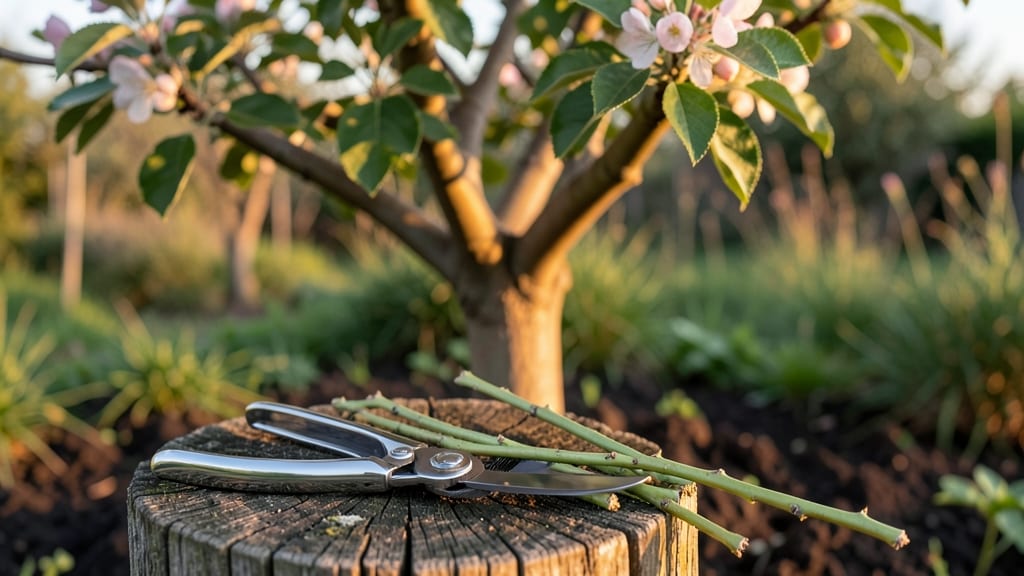
Pruning young apple trees in their first few years determines whether they’ll bear fruit for decades—or become tangled messes. ✂️ I’ve watched saplings transform from awkward sticks into sturdy frames just by following three simple rules: when to cut, where to cut, and how much to remove.
The key isn’t just trimming branches—it’s teaching the tree to grow strong, open, and productive from the start.
You’ll need just three tools: sharp pruning shears, a saw for thicker branches, and rubbing alcohol to sterilize cuts. Timing matters most—prune in late winter or early spring while the tree is still dormant.
This isn’t about heavy pruning; think of it as sculpting a framework where sunlight and air can reach every branch. Within a year, you’ll see the difference in growth and fruit potential.
The goal is a tree with an open center and branches spaced evenly along the trunk. Each cut should remove no more than a quarter of the tree’s foliage, and always cut at a 45-degree angle just above an outward-facing bud.
Skip the guesswork: focus on removing crossing branches, dead wood, and any growth pointing inward. You’ll end up with a tree that grows taller, stronger, and far more productive than one left to its own devices.
This method works for any young apple variety, from dwarf to standard-sized trees. The first few years set the foundation for the next 20—so don’t rush. Grab your tools, and let’s get started on a tree that will feed your family for years.
📚 In This Guide
- What you need
- Instructions
- Tips and common mistakes
- Wrapping up and next steps
What you need
- ● Pruning shears: Bypass pruners (sharp, clean, and 5- to 8-inch blades) for small branches (up to ½-inch thick).
- ● Pruning saw: A folding pruning saw (for branches thicker than ¾-inch).
- ● Gloves: Heavy-duty, cut-resistant gloves (to protect from thorns and rough bark).
- ● Disinfectant: A 70% isopropyl alcohol or bleach solution (1 part bleach to 9 parts water) to clean tools between cuts.
- ● Rubbing alcohol or hand sanitizer: For sanitizing hands before and after pruning.
- ● Sealing wax or pruning paste: To coat large cuts (over ½-inch) and prevent disease entry.
- ● Loppers: For branches between ½-inch and 1½-inch thick (if you don’t have a pruning saw).
- ● Tarp or drop cloth: To collect fallen branches and debris.
- ● Notebook & pen: To sketch your tree’s structure before pruning (great for beginners!).
- ● Choose a dormant season (late winter or early spring, before buds swell) for pruning.
- ● Check the weather forecast—prune on a dry, calm day (no rain for 24 hours after).
- ● Ensure your tree is healthy (no signs of disease or pest infestation before pruning).
Step-by-step guide for pruning young apple trees
Young apple trees need careful pruning to develop strong branches and a healthy shape.
🌱 Step 1: Identify and Remove Dead or Damaged Branches
Start by examining your young apple tree for any branches that are dead, broken, or diseased. Dead branches will be dry and brittle, while diseased ones may show discoloration, fungal growth, or oozing sap. Use sharp pruning shears to make clean cuts just outside the branch collar—the swollen area where the branch meets the trunk.
This step is crucial because removing dead or damaged branches prevents the spread of disease and allows the tree to focus its energy on healthy growth. If you're unsure whether a branch is dead, scratch the bark with your fingernail—if there's green underneath, it's still alive and should stay.
✂️ Step 2: Prune to Encourage an Open Center and Strong Structure
Next, shape the tree by pruning to create an open center. Young apple trees should have a central leader (main upward-growing branch) with well-spaced scaffold branches—these are the main branches that will form the tree's structure. Remove any branches that are growing inward or crossing over others, as these can rub against each other and create wounds.
Cut back branches that are too close together to reduce competition for sunlight and nutrients. Aim to leave scaffold branches spaced about 12-18 inches apart along the trunk. This spacing helps the tree develop a strong framework and improves airflow, which reduces the risk of fungal diseases.
☀️ Step 3: Thin Out Excess Growth to Improve Airflow and Light Penetration
Thinning out excess growth is key to ensuring your young apple tree gets enough sunlight and air circulation. Look for branches that are growing too densely or shading the center of the tree. These branches should be removed entirely, cutting them back to a lateral branch or bud that faces outward.
Focus on removing about 20-30% of the tree's total growth during this step. This might sound like a lot, but it encourages the tree to develop a more open canopy, which makes it easier to manage in the long run. You'll see new, stronger growth filling in the gaps as the tree responds to the pruning.
⏰ Step 4: Prune at the Right Time for Best Results
Timing matters when pruning young apple trees. The best time to prune is late winter or early spring, just before the tree starts to bud. This allows you to see the tree's structure clearly and makes it easier to identify which branches need to be removed. Avoid pruning in the fall, as this can stimulate new growth that won't have time to harden off before winter.
If you must prune during the growing season, do so early in the morning or late in the evening to minimize stress on the tree. Always use clean, sharp tools to make precise cuts, and sterilize your pruners with rubbing alcohol between cuts to prevent the spread of disease.
🪴 Step 5: Clean Up and Monitor Your Tree
After pruning, collect and dispose of all the cut branches. If they're diseased, bag them and throw them away to prevent spreading pathogens to other plants. Rake up any fallen leaves or debris around the base of the tree to keep the area clean and reduce the risk of pests or diseases.
Monitor your tree over the next few weeks to ensure it's recovering well. You should see new growth emerging from the pruned areas, and the tree's overall structure should look more balanced and open. If you notice any signs of stress, such as wilting leaves or oozing sap, give the tree extra care by watering deeply and avoiding further pruning until it recovers.
Tips & tricks for pruning young apple trees
A few key tricks will help you prune like a pro and set your young apple tree up for a lifetime of strong growth.
Tool Tip: Invest in a good pair of bypass pruning shears—they make clean cuts that heal faster than jagged ones. For thicker branches (over ½ inch), use a pruning saw instead of forcing shears. I learned this the hard way after struggling with stubborn branches that tore instead of cutting cleanly. Always sterilize your tools between cuts with rubbing alcohol to prevent spreading disease from one branch to another.
Visual Cue for Step 2: When spacing scaffold branches 12-18 inches apart, imagine a basketball hoop—this is roughly the right distance. You want branches to reach outward like spokes on a wheel, creating that open center. This spacing isn't just about looks; it's about sunlight reaching all parts of the tree and air circulating to prevent fungal issues. If you're unsure, measure from the trunk to each branch—consistency is key!
Thinning Strategy: The 20-30% thinning rule in Step 3 might seem aggressive, but trust me on this. I've seen trees where gardeners were too timid, and the result was a dense canopy that shaded the center and invited pests. Focus on removing branches that grow straight up or inward—they're the biggest culprits. You'll notice new growth filling the gaps within weeks, creating a more balanced tree structure.
Seasonal Timing: Late winter or early spring is ideal because dormant trees show their structure clearly, and you can see exactly what needs removing. But if you must prune during the growing season, do it early morning when the tree is cool and hydrated. I've pruned in summer heat, and the tree showed stress signs immediately. Always make cuts just outside the branch collar—this is where the tree's natural healing begins.
Pro Tips for Prune Young Apple Trees
- A few key tricks will help you prune like a pro and set your young apple tree up for a lifetime of strong growth.
- Tool Tip: Invest in a good pair of bypass pruning shears—they make clean cuts that heal faster than jagged ones.
- Visual Cue for Step 2: When spacing scaffold branches 12-18 inches apart, imagine a basketball hoop—this is roughly the right distance.
Frequently asked questions
Got questions about pruning young apple trees? You’re not alone! Here are some of the most common concerns—and their answers—to help you prune with confidence.
When is the best time to prune a young apple tree?
The ideal time is late winter or early spring (just before buds swell), while the tree is still dormant. Avoid pruning in fall, as wounds may not heal before winter. For newly planted trees, a light pruning at planting time (to remove damaged branches) is fine, but major shaping waits until the following dormant season.
How much should I cut off a young apple tree?
For young trees (under 3 years old), aim to remove no more than 20-25% of the foliage in a single pruning session. Focus on:
- Dead, diseased, or crossing branches
- Suckers (shoots growing from the base)
- Water sprouts (fast-growing vertical shoots)
Will pruning my young apple tree reduce fruit production?
Not if done correctly! Pruning encourages better fruit production by redirecting energy to stronger branches and larger fruit. However, over-pruning (especially in the first few years) can stress the tree, delaying fruiting. Young trees prioritize growth—focus on structure first, and fruit will follow in 3-5 years.
What if I prune at the wrong time of year?
Pruning during active growth (spring/summer) can stimulate weak, watersprout-heavy growth and make the tree vulnerable to pests/disease. If you must prune outside the dormant season, do so only to remove dead/diseased wood. For heavy pruning, wait until late winter. Pro tip: If you’ve already pruned at the wrong time, don’t stress—just adjust your approach next dormant season!
Can I use hedge trimmers or shears instead of pruning saws?
For young apple trees, hand pruners or loppers are best for branches under 1.5 inches thick. Hedge trimmers can tear bark and create jagged wounds that heal poorly. For thicker branches (rare in young trees), use a bypass pruning saw. Always make cuts at a 45-degree angle, just above a bud or branch collar.
Wrapping up and next steps
Pruning young apple trees might seem daunting at first, but with the right tools, timing, and technique, you’ll set your tree up for a lifetime of healthy growth and bountiful harvests. 🌱 Remember, the key is to shape with confidence—removing dead wood, thinning crowded branches, and opening the canopy to sunlight.
Start small, stay consistent, and soon you’ll watch your tree thrive!
Ready to take the next step? Monitor your tree’s progress after pruning and adjust as needed. Before you know it, you’ll be enjoying homegrown apples straight from your well-cared-for orchard! 🍏