How To
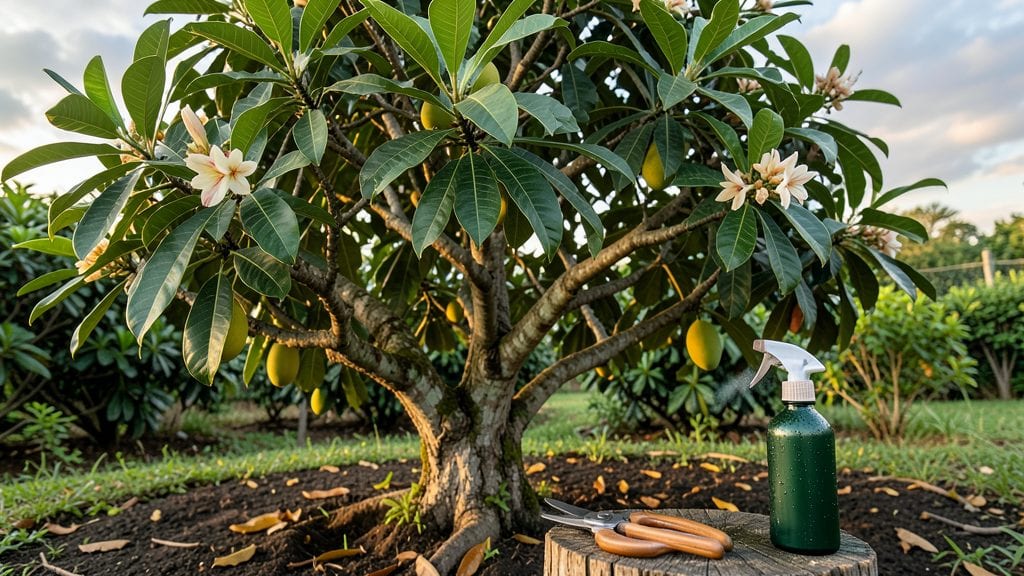
Pruning a mango tree isn’t just about shaping—it’s the secret to bigger fruit and a healthier tree year after year. 🌱 I’ve watched my own mango tree go from scraggly to productive simply by learning when and how to trim, and the difference in harvest size is jaw-dropping.
The key isn’t aggressive cutting but strategic pruning to open the canopy and redirect energy where it matters most.
Timing matters most: prune lightly after harvest to remove dead wood, then do the bulk of shaping during late winter or early spring before new growth starts.
You’ll focus on three things—thinning crowded branches, opening the center for airflow, and cutting back water sprouts—to keep the tree’s energy flowing toward fruit production rather than wild, unproductive growth.
📚 In This Guide
- What you need
- Instructions
- Tips and common mistakes
- Wrapping up and next steps
What you need
- ● Pruning shears or loppers: Choose bypass pruners (for small branches, ¼"–½" thick) or loppers (for thicker branches, ½"–2" thick). Pro tip: Sharpen blades before use for clean cuts! ✨
- ● Pruning saw: A curved-tooth pruning saw for branches over 2" in diameter. Look for a 10–12" blade with non-slip grips.
- ● Disinfectant (70% isopropyl alcohol or bleach solution): Mix 1 part bleach to 9 parts water to sterilize tools between cuts and prevent disease spread.
- ● Gloves: Wear cut-resistant gloves (e.g., heavy-duty leather or gardening gloves) to protect your hands from thorns and sap.
- ● Safety glasses: Essential! Branches can snap unexpectedly—shield your eyes from debris.
- ● Ladder or sturdy step stool: Ensure it’s tall enough to reach the tree’s canopy safely. Extension ladders (16–24 ft) work best for mature trees.
- ● Heavy-duty trash bags or bucket: For collecting pruned branches and debris. Aim for 2–3 large bags (30-gallon capacity) or a 5-gallon bucket for smaller jobs.
- ○ Tree wound paint or pruning sealant: Optional but recommended for cuts over ½" in diameter. Use a copper-based or latex sealant (e.g., Tanglefoot Tree Wound Pruning Seal).
- ● Pole pruner: For high branches (10–30 ft reach). A bypass-style pole pruner is ideal.
- ● Rope or harness: If working on very tall trees, secure yourself to the trunk with a tree climber’s harness or a sturdy rope.
- ● Marking spray or tape: Use water-soluble spray paint to mark branches for removal before cutting.
- ● Compost bin or mulch: Repurpose pruned branches as mulch or compost for your garden.
- ● First-aid kit: Include antiseptic wipes, bandages, and tweezers for minor cuts or thorn pricks.
Instructions for pruning a mango tree: year-round growth secrets
Here's my battle-tested method for pruning mango trees that boosts fruit production and keeps your tree healthy.
✂️ Step 1: Prune for Structure in Late Winter
Start by removing dead, diseased, or crossing branches—these compete with healthy growth and invite pests. Use clean, sharp pruners to make cuts just above a leaf node or outward-facing bud. I always prune in late winter (just before new growth starts) because the tree is dormant, so it recovers faster.
Focus on opening the canopy to let sunlight reach the center. Mango trees need good air circulation, and a dense interior leads to fungal issues. Cut back any suckers (shoots growing from the base or trunk) immediately—they drain energy from fruit production. You'll see stronger branches emerge within weeks of this first prune.
☀️ Step 2: Thin Out Overcrowded Branches in Early Spring
When new growth appears in early spring, step back and look for branches growing toward the center of the tree. These shade out the interior, reducing fruit yield. Remove 20-30% of the canopy by selecting the thinnest, weakest branches—never take more than a third at once, or you'll shock the tree.
I target branches that are thinner than a pencil or growing straight up (they won’t bear fruit). Make cuts at a 45-degree angle just outside the branch collar (the swollen area where the branch meets the trunk). This ensures the wound heals properly. After thinning, your tree will have more sunlight exposure, which is critical for fruit development.
🌿 Step 3: Light Pruning During Fruit Development
Once flowers appear (usually late spring), switch to light maintenance pruning. Remove only sparse, weak growth or branches that rub against each other. Avoid heavy cuts now—you don’t want to stress the tree while it’s focusing on fruit. I also trim back any water sprouts (fast-growing, vertical shoots) that pop up after flowering.
Watch for suckers again—they’ll appear at the base or along the trunk. These are a sign the tree is stressed. Snip them off immediately, but don’t overdo it. The goal here is balance: enough pruning to keep the tree open, but not so much that it drops flowers or fruit. You’ll know you’re doing it right if the tree still has plenty of green leaves after pruning.
⏰ Step 4: Post-Harvest Cleanup in Fall
After harvesting (usually late summer to fall), prune to remove any dead or damaged branches from the season. This is also the time to shape the tree for next year’s growth. I focus on reducing branch density in the lower canopy to make harvesting easier. Mangoes can get heavy, and a well-pruned tree supports fruit better.
Don’t cut back too aggressively—mango trees are sensitive to heavy pruning after harvest. Instead, lightly trim to encourage new growth for next year’s flowers. You’ll see new shoots emerge in early spring, which means your tree is ready for another cycle. This final prune sets the stage for a bigger, healthier crop the following season.
Tips & tricks for pruning a mango tree
Pruning a mango tree isn't just about cutting branches—it's about understanding how to encourage healthier growth and bigger fruit. Here's what I've learned after years of trial and error.
Timing is Everything: The late winter timing in Step 1 is critical because your tree is dormant and can recover quickly. If you prune too early, you risk damaging new growth that hasn't emerged yet. I've seen trees stressed when pruned in late fall or early spring before they're ready. Also, avoid pruning during flowering or fruiting—this is when the tree is most vulnerable.
Branch Selection Strategy: When thinning in Step 2, focus on branches that are thinner than a pencil or growing straight up. These branches won't bear much fruit and compete with stronger branches for nutrients. I use my fingers to gently test branch strength—if it bends easily, it's likely a candidate for removal. Remember, you're aiming to remove 20-30% of the canopy, not more.
Cutting Technique Matters: The 45-degree angle cut just outside the branch collar in Step 2 is crucial for proper healing. I've made the mistake of cutting too close to the trunk or at awkward angles, which led to poor wound closure. Always make clean cuts with sharp pruners, and avoid leaving stubs. Proper cuts allow the tree to seal wounds naturally and prevent disease entry points.
Seasonal Pruning Balance: The light maintenance in Step 3 during fruit development is often overlooked. I learned this the hard way—over-pruning during this phase can cause the tree to drop flowers or fruit. Limit yourself to only removing sparse growth or branches that rub together. Think of this as a gentle touch-up rather than a major renovation. The goal is to maintain airflow without stressing the tree.
Pro Tips for Prune A Mango Tree
- Pruning a mango tree isn't just about cutting branches—it's about understanding how to encourage healthier growth and bigger fruit.
- Timing is Everything: The late winter timing in Step 1 is critical because your tree is dormant and can recover quickly.
- Branch Selection Strategy: When thinning in Step 2, focus on branches that are thinner than a pencil or growing straight up.
Frequently asked questions
Got questions about pruning your mango tree? You’re not alone! Here are some of the most common concerns—plus clear, actionable answers to keep your tree thriving and fruiting like a pro.
When is the best time to prune a mango tree?
The ideal window is late winter or early spring (just before new growth starts), but you can also prune lightly after harvest to improve airflow. Avoid heavy pruning during monsoon season—wet conditions slow healing and invite pests. For tropical climates, prune when the tree isn’t flowering or fruiting to minimize stress.
How much can I cut off my mango tree without harming it?
For young trees (under 5 years), limit pruning to 20-30% of the canopy per year. Mature trees can handle up to 30-40%, but never remove more than 1/3 of the foliage in a single session. Focus on dead wood, crossing branches, and water sprouts—these cuts won’t stunt fruit production if done right.
What if I prune at the wrong time and my tree stops fruiting?
Don’t panic! Mango trees are resilient. If you pruned during flowering or fruiting, your tree might skip a season to recover, but it’ll bounce back stronger next year. To help, fertilize with potassium-rich compost and ensure it gets full sun. Over time, proper pruning (done at the right season) will boost fruit yield by 20-30%.
Can I prune a mango tree without sharp tools?
Absolutely not! Dull shears cause ragged cuts that heal poorly and invite disease. Use a pruning saw for thick branches (over 2 inches) and bypass pruners for smaller cuts. Always sterilize tools with rubbing alcohol between cuts to prevent bacterial spread. Pro tip: Seal large cuts with pruning sealant to speed up healing.
What should I do if my mango tree has too many water sprouts?
Water sprouts (fast-growing, weak shoots) steal energy from fruit production. Remove them completely at the base—don’t leave stubs! The best time to tackle them is early spring before they drain your tree’s resources. For stubborn sprouts, apply a growth regulator (like paclobutrazol) to redirect energy to the main branches.
How do I know if I’ve over-pruned my mango tree?
Watch for these red flags: yellowing leaves, stunted growth, or no new shoots after 6 weeks. If your tree looks bare or stressed, it’s a sign you’ve cut too much. To recover, reduce watering slightly, add balanced fertilizer, and avoid pruning for a full year. Patience is key—mango trees rebound with proper care!
Wrapping up and next steps
Pruning your mango tree isn’t just about trimming—it’s about unlocking its full potential for bigger, sweeter fruit and a healthier tree! 🌱 By following the right techniques—whether shaping young branches, thinning dense growth, or cleaning up dead wood—you’re setting the stage for a bountiful harvest.
Remember, consistency is key, so schedule your pruning sessions and observe your tree’s response over time.
Now that you’re armed with the know-how, roll up your sleeves and get pruning! 🌟 Start with small adjustments, monitor your tree’s growth, and soon you’ll be rewarded with lush foliage and juicy mangoes. Happy pruning—and happy harvesting!