
Planting
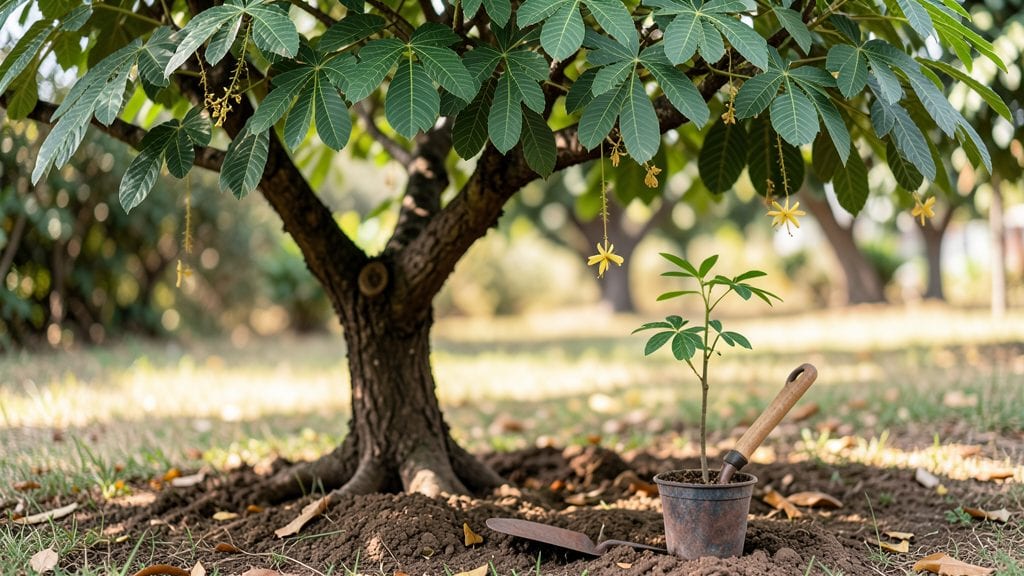
Planting a tamarind tree in your yard means sweet-tart fruit straight from your own branches—even if you're not in a tropical climate. 🌱 I’ve grown these resilient trees in Zone 9a, where they thrive with just a little extra winter care, and the first harvest always tastes like a vacation.
The key starts with the right soil mix: sandy loam with good drainage is non-negotiable, or you’ll watch roots rot before the tree even thinks about fruiting.
You’ve got two paths to start: seeds or saplings. Seeds take 12-18 months to bear fruit, but they’re cheaper and let you grow from scratch. Saplings (even mail-order ones) fruit faster—sometimes within 2-3 years—but cost more upfront.
Either way, plant in full sun (6+ hours daily) and space trees 20-30 feet apart unless you’re okay with pruning later. That first watering should soak 12 inches deep to encourage strong root growth.
Early care is where most beginners stumble. Overwatering kills tamarinds faster than drought—let the top 2 inches of soil dry between waterings once established. Mulch with wood chips to lock in moisture and keep roots cool.
Within 6 months, you’ll spot those signature feather-like leaves, and by year 3, you might just get your first crop of pods. The real magic? These trees live for decades, so every pruning and feeding now pays off in fruit for generations.
For cooler climates, protect young trees with burlap wraps in winter or move potted specimens indoors. Tamarinds hate frost, but with the right spot and care, they’ll reward you with pounds of fruit—perfect for curries, drinks, or sharing with neighbors who’ll ask how you grew something so exotic.
Let’s get that tree planted right the first time.
📚 In This Guide
- What you need
- Instructions
- Tips and common mistakes
- Wrapping up and next steps
What you need
- ● Tamarind seeds or sapling: 1-3 seeds (if starting from scratch) or a healthy 1-2 year old sapling (available at nurseries or online).
- ● Well-draining potting mix: 5-10 gallons, depending on pot size (ideal blend: 60% garden soil, 20% compost, 20% perlite/sand).
- ● Container or planting hole: For pots: 5-gallon container minimum (10+ gallons for mature trees). Ensure drainage holes are present.
- ● For ground planting: Hole twice as wide and deep as the root ball.
- ● Watering can or hose: With a gentle spray nozzle for seedlings.
- ● Fertilizer: Balanced organic fertilizer (10-10-10 NPK ratio) or compost tea for young plants.
- ● Pruning shears: For trimming excess growth or damaged branches (sterilize with rubbing alcohol).
- ● Mulch: 2-3 inches of organic mulch (straw, wood chips, or leaves) to retain moisture.
- ● Grow lights: LED full-spectrum lights for indoor seedlings (12-16 hours/day).
- ● Humidity dome: Clear plastic cover to retain moisture around seedlings.
- ● Soil moisture meter: To monitor watering needs without over-saturating.
- ● Tree support stake: 4-6 ft tall for young saplings in windy areas.
- ● Pest control: Neem oil or insecticidal soap (preventative measure for aphids/mealybugs).
- ● Climate control: For cooler climates: Greenhouse, cold frame, or row covers for winter protection.
- ● For containers: Wheelbarrow or dolly for easy moving indoors during frost.
- ● Location: Full sun (6+ hours/day) or partial shade (4+ hours) in warmer zones. Avoid frost-prone areas unless using protective measures.
- ● Soil pH: Slightly acidic to neutral (6.0-7.5). Test soil with a pH kit if unsure.
- ● Patience: Tamarind trees take 3-5 years to bear fruit! 🍈
- ● Local regulations: Check if tamarind trees are permitted in your area (some regions restrict invasive species).
Step-by-Step instructions for planting a tamarind tree
With the right approach, you can grow this tropical fruit tree even in cooler climates—here’s how.
🌱 Step 1: Choose the Right Tamarind Variety and Planting Time
Select a cold-hardy tamarind variety like Tamarindus indica ‘Golden Rain’ if you live in USDA zones 9-11. For cooler climates (zones 7-8), opt for container-growing or microclimate spots near south-facing walls. Plant in early spring, after the last frost, when soil temperatures reach at least 60°F—this gives roots time to establish before summer heat.
Tamarinds thrive in well-draining soil with a pH of 6.0-7.5. If your native soil is heavy clay, amend it with 3-4 inches of compost and 10% perlite to improve aeration. I always dig a hole twice as wide as the root ball but only as deep—planting too deep suffocates roots and causes stress. Loosen the sides of the hole with a shovel to encourage root spread.
🪴 Step 2: Prepare the Planting Site and Transplant
Remove the tamarind from its nursery pot and gently loosen the root ball if it’s tightly bound. Inspect roots for any circling or damaged sections—trim these with clean pruners to prevent future girdling. Place the tree in the hole so the top of the root ball sits level with the surrounding soil (never buried deeper). This ensures proper water drainage and prevents rot.
Backfill the hole with native soil mixed with 1 cup of bone meal for phosphorus (critical for root development). Tamp the soil lightly around the base to eliminate air pockets, then water deeply until moisture reaches 6 inches down. You’ll know it’s enough when water pools slightly at the surface but drains within 10 minutes. Mulch with 2-3 inches of wood chips, keeping mulch 6 inches away from the trunk to avoid moisture buildup.
☀️ Step 3: Establish Watering and Light Requirements
Tamarinds need full sun (6-8 hours daily) to fruit well, but in hot climates, afternoon shade protects leaves from scorching. If growing in containers, move pots to a sheltered spot during 90°F+ days to prevent leaf drop. Water deeply every 3-4 days during the first year, ensuring the top 8 inches of soil stay moist—tamarinds hate drought stress but despise soggy roots.
Check soil moisture by sticking your finger 2 inches down; if dry, water until it runs through the drainage hole. Fertilize monthly with a balanced 10-10-10 formula during growing season (spring-fall), but reduce to half-strength in winter. Over-fertilizing burns roots, and tamarinds are sensitive to salt buildup. You’ll see new growth within 4-6 weeks if conditions are right.
✂️ Step 4: Prune for Shape and Fruit Production
Prune in late winter (before buds swell) to remove dead, crossing, or weak branches. Tamarinds fruit on new wood, so avoid heavy pruning—limit cuts to 20% of the canopy per year. Shape the tree into an open vase form by thinning interior branches to improve airflow and sunlight penetration. Use sterilized pruners to make clean cuts just outside the branch collar.
Watch for pods forming in 3-5 years (young trees focus on roots first). If you live in a cooler climate, protect the tree in winter by wrapping the trunk with burlap and covering the root zone with 4 inches of straw mulch. Even in mild winters, tamarinds drop leaves to conserve energy—don’t panic, as they’ll regrow in spring.
⏰ Step 5: Monitor for Pests and Adjust Care
Tamarinds attract aphids and scale insects, which thrive on new growth. Spray infested areas with neem oil (1 tbsp per gallon of water) weekly until pests disappear. For fungal issues like powdery mildew, improve airflow by pruning densely packed branches and avoid overhead watering. Yellowing leaves often signal overwatering or nutrient deficiency—check soil moisture and adjust fertilizer if needed.
Harvest pods when they turn brown and slightly wrinkled (usually fall-winter). Ripe tamarinds are sweet and pulp easily; unripe ones are tart and fibrous. Store unripe pods in a cool, dry place for 1-2 weeks to ripen. With patience, your tamarind will reward you with harvests for decades—just give it time and consistent care.
Tips & tricks for planting a tamarind tree
A few key strategies will help you avoid common pitfalls and set your tamarind up for long-term success—especially in cooler climates.
Soil Preparation Secret: The 6.0-7.5 pH range is crucial for tamarinds, but if your soil tests outside this range, don't panic. For acidic soil, mix in 1-2 cups of lime per hole, while alkaline soil benefits from 1 cup of sulfur per hole. I've seen dramatic improvements after just one season of soil amendment—test your soil first to know exactly what to add. The 3-4 inches of compost and 10% perlite mentioned in Step 1 aren't just about drainage; they also create a perfect microbial environment that helps roots establish faster.
Transplanting Technique: When loosening the root ball in Step 2, be gentle but thorough—you're essentially untangling the tree's future growth pattern. If you notice roots circling tightly, make a vertical cut down the center to prevent girdling, which can strangle the tree as it grows. The 10-minute drainage test after watering is your best indicator of proper soil moisture—if water pools longer, your hole needs more perlite or sand for better drainage.
Watering Wisdom: The 3-4 day watering schedule in Step 3 works for ideal conditions, but in hotter climates (especially during 90°F+ days), you might need to water every 2-3 days instead. A simple trick: stick a wooden skewer 2 inches down—if it comes out dry, it's time to water. Overwatering is a silent killer for tamarinds, so always check before adding more moisture. The top 8 inches staying moist is more important than any fixed schedule.
Winter Protection: For cooler climates, the 4 inches of straw mulch around the root zone in Step 4 creates an insulating blanket that maintains consistent soil temperatures. I've found that wrapping the trunk with burlap isn't just about wind protection—it also prevents temperature swings that can stress the tree. If you're in zone 7 or colder, consider adding a layer of bubble wrap around the trunk before the burlap for extra insulation during extreme cold snaps.
Pro Tips for Plant Tamarind Tree
- A few key strategies will help you avoid common pitfalls and set your tamarind up for long-term success—especially in cooler climates.
- Soil Preparation Secret: The 6.0-7.5 pH range is crucial for tamarinds, but if your soil tests outside this range, don't panic.
- Transplanting Technique: When loosening the root ball in Step 2, be gentle but thorough—you're essentially untangling the tree's future growth pattern.
Frequently asked questions
Got questions about growing your own tamarind tree? You’re not alone! Here are answers to the most common concerns—from timing to troubleshooting—so you can plant with confidence.
When is the best time to plant a tamarind tree?
The ideal window is early spring (after the last frost) or late summer (before fall rains). Tamarinds thrive in warm soil, so avoid planting in cold months. If you’re in a frost-free zone, plant anytime—but spring gives roots time to establish before summer heat.
Can tamarind trees survive in cooler climates?
Yes! While they love heat, tamarinds tolerate USDA Zones 9-11. In cooler areas (Zones 7-8), plant in a protected spot (like near a south-facing wall) or grow in a large container that can be moved indoors in winter. Mulch heavily to insulate roots.
How long does it take for a tamarind tree to bear fruit?
Patience is key! Mature trees (5–7 years old) produce fruit, but container-grown trees may take longer. With proper care, you could see pods in 3–5 years. Prune lightly to encourage airflow, and fertilize annually with citrus-specific nutrients for faster growth.
What pests or diseases should I watch for?
Tamarinds are tough but can face aphids, scale insects, or fungal issues in humid climates. Prevent pests by:
- Spraying neem oil monthly (natural insect repellent).
- Ensuring good drainage to avoid root rot.
- Pruning dead branches to improve airflow.
Are there dwarf tamarind varieties for small spaces?
Not exactly—but you can prune aggressively to keep a standard tamarind compact (6–10 ft tall). For true dwarf options, consider Tamarindus indica ‘Nana’ (rare but available from specialty nurseries). Alternatively, grow in a 20+ gallon pot with regular root pruning.
Wrapping up and next steps
Planting a tamarind tree is a rewarding journey—whether you’re drawn to its fragrant flowers, tangy fruit, or lush foliage! 🌱 With the right soil, climate adjustments, and a little patience, you can grow this tropical gem even in cooler regions. Start small, stay consistent with care, and soon you’ll enjoy the sweet (and sour!) fruits of your labor.
Ready to take the next step? Monitor your tree’s growth, prune as needed, and share your progress with fellow gardening enthusiasts! Happy planting—your tamarind tree awaits! 🌿