
Planting
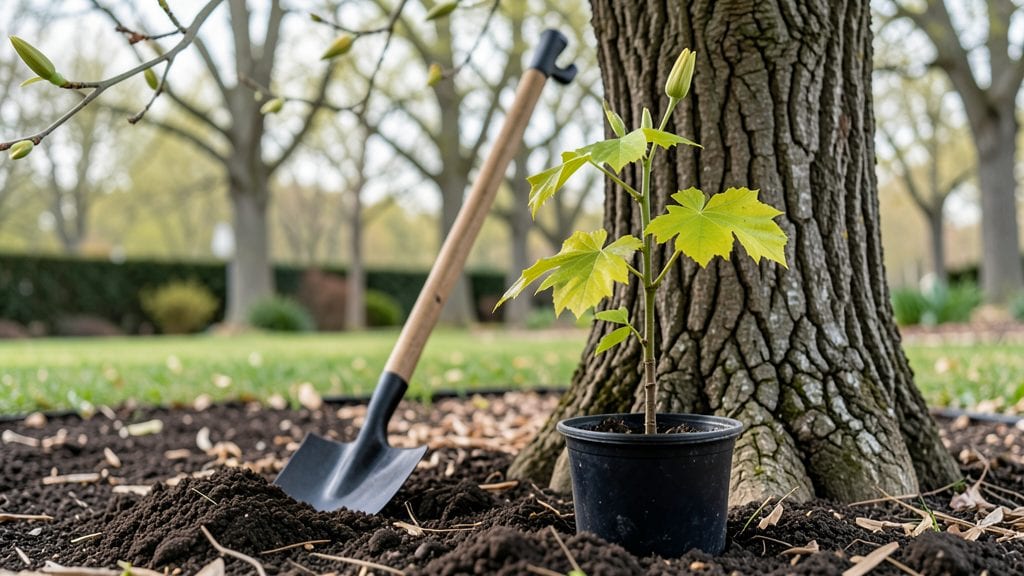
Planting a tulip tree in your Pacific Northwest garden means fast-germination results if you time it right—just don’t wait until spring. The secret lies in fall planting when soil stays cool and moist, giving those tiny roots a head start before winter.
I’ve planted mine in October for years, and the difference in early growth is noticeable.
Start with well-draining soil and a spot that gets full sun to partial shade—tulip trees hate soggy feet but love room to stretch. Dig a hole twice as wide as the root ball but only as deep, then loosen the roots if they’re circling.
A 3- to 5-gallon sapling is ideal for beginners, though seeds take patience (and a cold stratification trick).
After planting, water deeply to settle the soil, then mulch with wood chips to keep moisture in. These trees grow 2-3 feet per year when happy, so give them space—20-30 feet apart for mature size.
The first few years focus on watering weekly during dry spells, and watch for those iconic tulip-shaped leaves by spring.
Urban gardeners can try container planting in large pots (at least 18 inches deep) with good drainage, though they’ll need winter protection. The biggest mistake?
Planting too deep or in compacted soil—both stunt growth. With the right spot and care, your tulip tree will be a shade-providing giant in no time.
📚 In This Guide
- What you need
- Instructions
- Tips and common mistakes
- Wrapping up and next steps
What you need
- ● Tulip tree seeds or saplings: For seeds: 3–5 viable seeds (freshness = higher germination rates!)
- ● For saplings: 1 healthy 1–2 year-old tree (5–7 ft tall, bare-root or container-grown)
- ● Well-draining soil: Mix of 60% topsoil, 30% compost, and 10% perlite/sand (pH 6.0–7.0 ideal).
- ● Planting site: Full sun to partial shade (6+ hours of sunlight daily).
- ● Space: 40–50 ft wide (roots spread widely!).
- ● Shelter from strong winds (PNW’s coastal breezes can stress young trees).
- ● Watering supplies: Garden hose with soaker nozzle or drip irrigation.
- ● 5–10 gallons of water (for initial planting + first 2 weeks).
- ● Mulch: 3–4 inches of wood chips or shredded bark (keep 6" away from trunk).
- ● Shovel or trowel: For digging holes (12–18" deep for seeds, twice the root ball for saplings).
- ● Garden gloves: To protect hands from thorns (yes, tulip trees have them!).
- ● Pruners: For trimming dead branches (sterilize with rubbing alcohol).
- ○ Stakes & ties (optional but helpful): If planting in windy areas, use 2–3 stakes per sapling.
- ● pH testing kit: To confirm soil acidity (PNW soils can be acidic—amend if needed!).
- ● 🌡️ Best planting time: Early spring (March–April) or fall (September–October) for PNW’s mild climate.
- ● ❄️ Cold stratification (for seeds): Chill seeds in a damp paper towel in the fridge for 60–90 days before planting.
- ● ☀️ Sunlight check: Test your site for minimum 6 hours of direct sun (use a sun calculator app if unsure!).
- ● 🚫 Avoid: Planting near sidewalks or driveways (roots are invasive!).
Step-by-Step guide to planting a tulip tree in the Pacific Northwest
Here’s how to get your tulip tree off to a strong start with proven techniques for our region’s cooler, wetter climate.
Choose the Right Location and Prepare the Soil
The Pacific Northwest’s acidic, often compacted soil can challenge young tulip trees, so pick a spot with at least 6 hours of sunlight daily—morning sun with afternoon shade works best in hotter inland areas. Avoid low spots where water pools, as tulip trees hate soggy roots. Test your soil’s pH: aim for 6.0–7.0 (they tolerate slightly acidic but not alkaline). If your soil is heavy clay, amend with 2–3 inches of compost mixed into the top 12 inches of soil.
Dig a hole twice as wide as the root ball but only as deep—planting too deep can suffocate the tree. Loosen the sides of the hole with a shovel to encourage root spread. If planting in fall, do it 4–6 weeks before the first frost to let roots establish before winter; spring planting works too, but water deeply after planting to help roots adjust.
Handle the Root Ball and Plant Correctly
Remove the tree from its container and gently tease apart any circling roots—this prevents girdling as the tree matures. Place the root ball in the hole so the top is level with the surrounding soil (never mound soil around the trunk). Backfill with the native soil you removed, tamping lightly every 2–3 inches to eliminate air pockets. Avoid compacting too hard, or you’ll restrict root growth.
Water deeply right after planting to settle the soil and eliminate air gaps. The top 6 inches of soil should feel moist but not soggy. Mulch with 2–3 inches of wood chips, keeping the mulch 6 inches away from the trunk to prevent rot. This mimics the forest floor where tulip trees naturally grow and helps retain moisture in our region’s dry summers.
Support Early Growth with Water and Light
Tulip trees need consistent moisture for the first 2 years, especially in our Pacific Northwest summers when rain may be sporadic. Water once a week (or more often in hot spells) until the soil is 6 inches deep and damp—stick your finger in to check. Overwatering is just as harmful as drought, so avoid soggy soil. Young trees benefit from drip irrigation or soaker hoses to deliver water slowly at the roots.
Fertilize lightly in early spring with a balanced, slow-release fertilizer (10-10-10 or similar). Too much nitrogen early on encourages leafy growth at the expense of root development. Watch for yellowing leaves—this often signals overwatering or poor drainage, not fertilizer burn. If leaves appear pale, a soil test can confirm nutrient deficiencies.
Prune and Protect for Long-Term Health
Prune only to remove dead, diseased, or crossing branches in late winter or early spring. Tulip trees are fast-growing and don’t need heavy pruning, but you can shape them lightly if desired. Avoid pruning in fall, as new growth may not harden off before winter. If your tree is young and leggy, prune back 1/3 of the tallest branches to encourage bushier growth.
In the Pacific Northwest, watch for aphids or scale insects, which thrive in our mild, humid climate. Spray with neem oil or insecticidal soap if you spot sticky residue on leaves (aphid honeydew). Young trees may also need staking if winds are strong—use 2–3 stakes tied loosely to the trunk to avoid girdling. Remove stakes once the tree is 3–4 feet tall and sturdy.
Tips & tricks for planting a tulip tree
Here's how to give your tulip tree the fastest, strongest start in our Pacific Northwest climate—where timing and soil prep make all the difference.
Soil Prep is Everything: In Step 1, if your soil tests below 6.0 pH, mix in 1 pound of garden lime per 100 square feet of planting area to raise the pH slightly. This helps prevent nutrient deficiencies that can stunt growth. I've seen trees planted in unamended acidic soil struggle for years—don't skip this step if your test shows low pH. The 2-3 inches of compost should be well-aged to avoid nitrogen spikes that burn young roots.
Root Ball Secrets: When teasing apart circling roots in Step 2, focus on the outer edges of the root ball where roots naturally spread. I've found that cutting through any thick, dense roots with a clean knife (sterilized with rubbing alcohol) helps them establish faster. Just avoid cutting into healthy, white roots—they're actively growing. Also, if your tree comes in a plastic pot, score the sides of the container before removing it to encourage roots to spread outward immediately.
Watering Wisdom: That first deep watering after planting in Step 2 should deliver about 1 gallon of water per inch of trunk diameter. For a 2-inch diameter tree, that's 2 gallons. Use a hose with a gentle spray nozzle to avoid compacting the soil. In our region's wet winters, you might not need to water again until spring, but during dry summers, those weekly waterings in Step 3 should go deeper—aim for 6-8 inches deep with each watering to encourage deep root growth.
Fast-Germination Boost: For an extra growth kick, mix 1 tablespoon of mycorrhizal fungi into the backfill soil when planting. These beneficial soil organisms help roots absorb water and nutrients more efficiently. You can find them at garden centers in powder or granule form. I've noticed trees treated this way show new growth 2-3 weeks earlier than untreated ones. This is especially helpful if you're planting in fall—those extra weeks of root establishment before winter make all the difference.
Pro Tips for Plant A Tulip Tree
- Here's how to give your tulip tree the fastest, strongest start in our Pacific Northwest climate—where timing and soil prep make all the difference.
- Soil Prep is Everything: In Step 1, if your soil tests below 6.0 pH, mix in 1 pound of garden lime per 100 square feet of planting area to raise the pH slightly.
- Root Ball Secrets: When teasing apart circling roots in Step 2, focus on the outer edges of the root ball where roots naturally spread.
Frequently asked questions
about planting tulip trees—especially in the Pacific Northwest—can make all the difference between a thriving giant and a struggling sapling. Here are answers to the most common queries to help you grow with confidence!When is the best time to plant a tulip tree in the PNW?
The ideal window is early spring (March–April) or fall (September–October), when soil temps are cool but not frozen. Avoid planting in late fall or winter—tulip trees hate soggy, frozen ground. Spring planting gives roots time to establish before summer heat, while fall lets them settle before winter dormancy.
Can I plant a tulip tree in winter?
While bare-root tulip trees can handle mild PNW winters (like in Zone 6–9), planting in freezing temps risks root damage. If you must plant in winter, choose a bare-root sapling, soak roots in water for 1–2 hours, and plant before the first hard frost. Mulch heavily (4–6 inches) to insulate roots. Spring planting is always safer!
How close can I plant a tulip tree to my house or driveway?
Tulip trees grow 60–70 feet tall with sprawling roots—give them space! Plant at least 20–30 feet from structures to avoid root intrusion into foundations or sewer lines. For driveways, maintain a 15-foot buffer to prevent cracked pavement. Their roots spread wider than their canopy, so plan ahead!
What pests or diseases should I watch for in PNW tulip trees?
The PNW’s damp climate can invite tulip tree scale (a sap-sucking insect) and canker diseases. Prevent pests by inspecting leaves for sticky residue (scale) and pruning infected branches. For canker, sterilize pruners with rubbing alcohol and avoid wounding bark. Healthy soil (rich in compost) boosts resistance—mulch annually to deter fungal issues.
Is there a faster-growing alternative to tulip trees for the PNW?
If you want quick shade but don’t have decades to wait, consider:
- Douglas fir (fast-growing, native, 50–70 ft tall)
- Bigleaf maple (colorful, 30–50 ft, tolerates wet soil)
- Emerald green arborvitae (evergreen, 30–40 ft, low-maintenance)
Wrapping up and next steps
Planting a tulip tree in your Pacific Northwest garden is a rewarding way to add height, shade, and beauty to your landscape—plus, with the right tricks, you can speed up germination and enjoy faster growth! 🌱 By choosing the perfect location, preparing the soil, and timing your planting just right, you’ll set your tree up for long-term success.
Now that you’re armed with the know-how, there’s no better time to dig in—literally—and watch your garden transform!
Next step: Mark your planting spot, gather your tools, and start digging! 🌟 For extra confidence, check out local nurseries for Pacific Northwest-adapted tulip tree varieties or join gardening forums to share your progress with fellow green thumbs.