Propagation
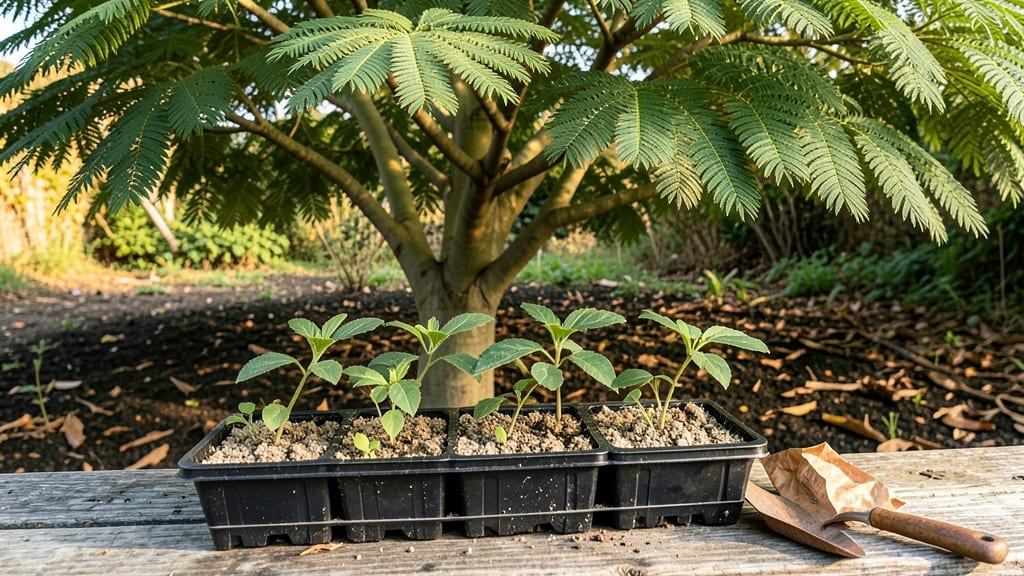
Growing jacaranda trees from seed is a slow but rewarding journey that starts with a single pod and ends with a stunning purple canopy over your patio. 🌿 I’ve learned the hard way that these tropical beauties demand patience—some seeds take months to sprout, and early growth can be painfully slow.
But when those first deep green leaves appear, it’s worth every wait.
The key to success begins with fresh seeds from a mature pod, planted in a well-draining mix of sand and peat moss. You’ll need a warm spot—jacarandas mimic their native tropical climate by refusing to germinate below 65°F.
A heat mat or sunny windowsill helps, but consistency is everything. Expect to wait 4-12 weeks before any sign of life emerges.
Once sprouted, those delicate seedlings need bright indirect light and gentle watering—never soggy soil. Transplant carefully after 3-4 inches of growth, and prepare for years of nurturing before the tree matures.
The payoff? A vibrant purple bloom in spring that turns heads and fills the air with a sweet, intoxicating fragrance.
Challenges like slow germination or leggy growth are normal—this isn’t a fast plant. But with the right conditions, your jacaranda will reward you with decades of shade and color. Here’s how to set it up right from the start.
📚 In This Guide
- What you need
- Instructions
- Tips and common mistakes
- Wrapping up and next steps
What you need
- ● Jacaranda seeds: Fresh, viable seeds (preferably from a mature, healthy tree). Aim for 5–10 seeds to increase your chances of success.
- ● Seed-starting mix: A well-draining, sterile potting mix (look for a blend labeled for seedlings or cacti/succulents). You’ll need about 2–3 cups per seed tray.
- ● Seed trays or small pots: Shallow containers (4–6 inches wide) with drainage holes. 4–6 trays will give you space for multiple seeds.
- ● Plastic wrap or humidity dome: To create a mini greenhouse effect and retain moisture.
- ● Spray bottle: For gentle watering (a 16–20 oz misting bottle works perfectly).
- ● Grow lights or sunny windowsill: Jacaranda seeds need bright, indirect light (6–8 hours daily). A LED grow light is ideal if natural light is limited.
- ○ Heat mat (optional but helpful): A seedling heat mat set to 75–85°F speeds up germination (especially in cooler climates).
- ● Seed scarification tools: Sandpaper (100–120 grit) or a knife to lightly nick the seed coat (boosts germination).
- ● Fungicide: A mild seed/fungicide treatment (like hydrogen peroxide or cinnamon powder) prevents mold.
- ● Plant labels: To track seed varieties and planting dates.
- ● Fertilizer: A balanced, water-soluble fertilizer (5-5-5 or 10-10-10) for when seedlings sprout (use half-strength at first!).
- ● Transplant pots: 3–4 inch pots for when seedlings outgrow their trays.
Step-by-step instructions for growing jacaranda trees from seed
Here's how to nurture these tropical beauties from seed to showstopping purple blooms.
🌱 Step 1: Harvest and Prepare Jacaranda Seeds
Jacaranda seeds must be fresh from pods—store-bought seeds rarely germinate. When pods turn brown and split open naturally, collect the winged seeds immediately. Remove any damaged seeds by gently twisting them; viable seeds will feel firm and plump. Soak the remaining seeds in warm water for 24 hours to soften the tough outer shell and speed up germination.
After soaking, rub the seeds gently between your palms to remove the outer coating. This mimics natural weathering and helps the seedling break through faster. Place them in a paper towel, dampen lightly, and fold the towel to create a cozy germination chamber. Keep it in a warm, dark place (around 75-80°F) where you can check daily for sprouting.
💧 Step 2: Plant Sprouted Seeds in Germination Trays
Once the radicle (tiny white root) appears—usually within 7-14 days½ inch deep in a seedling tray filled with a light, airy mix of 50% peat moss and 50% perlite. Jacaranda seedlings are delicate, so avoid compacted soil. Use a small spoon or pencil to create individual holes, then place one seed per cell with the pointed end facing downward.
Cover the tray with clear plastic wrap to retain moisture and warmth, but leave a small gap for airflow. Place the tray under grow lights set to 12 hours of light daily—jacarandas need consistent light to prevent leggy growth. Keep the soil lightly moist (never soggy) by misting the surface every 2-3 days until you see the first true leaves emerge.
☀️ Step 3: Transplant Seedlings to Individual Pots
When seedlings develop their second set of true leaves (about 4-6 weeks after planting), it's time to repot them into 4-inch diameter pots with a well-draining mix of 60% potting soil, 20% perlite, and 20% coarse sand. Jacarandas hate wet feet, so add a layer of ½-inch gravel at the bottom of each pot for extra drainage.
Gently remove the seedling from the tray, supporting the stem with your finger to avoid snapping the delicate root system. Plant it at the same depth as before, then water thoroughly to settle the soil. Place the pots in a bright, indirect light spot, gradually introducing them to morning sun over 7-10 days to harden their leaves. Avoid direct afternoon sun, which can scorch young seedlings.
🪴 Step 4: Gradually Acclimate to Outdoor Conditions
After 3 months, when seedlings reach 12-18 inches tall and show signs of new growth, begin the hardening process. Move pots to a sheltered outdoor area for 1-2 hours daily, increasing exposure by 1 hour every 3 days. Choose a spot with partial shade and protection from wind, which can stress tender stems.
Watch for dark green, glossy leaves as a sign of healthy acclimation. Once seedlings tolerate full sun for 6+ hours daily without wilting, they're ready for their permanent home. Plant in well-draining soil with a slightly acidic pH (6.0-7.0), spacing them 15-20 feet apart to allow for mature growth. Mulch around the base with 2 inches of organic mulch to retain moisture and regulate soil temperature.
⏰ Step 5: Maintain Growth for Long-Term Health
Jacarandas thrive in USDA Zones 9-11, but young trees need winter protection in cooler climates. Wrap the trunk with burlap and cover the root zone with 4-6 inches of mulch before the first frost. Water deeply once a week during the growing season, allowing the top 2 inches of soil to dry between waterings. Overwatering is the fastest way to kill these drought-tolerant trees.
Fertilize in early spring with a balanced 10-10-10 fertilizer, applying ½ cup per tree around the drip line. Avoid high-nitrogen fertilizers, which promote leafy growth at the expense of flowers. Prune only to remove dead or crossing branches—jacarandas bloom on old wood, so heavy pruning reduces future flowers. With patience, your seedlings will mature into the iconic purple-canopied trees you've always admired.
Tips & tricks for perfect jacaranda tree growth
These game-changing insights will help you transform those delicate jacaranda seeds into thriving trees with stunning purple blooms.
Seed Selection and Preparation: The 24-hour warm water soak is non-negotiable for breaking jacaranda seeds' tough shells. I've learned the hard way that skipping this step results in germination rates below 20%. After soaking, the gentle rubbing between palms mimics natural weathering—don't rush this; it's what helps the seedling emerge faster. For extra insurance, place your soaked seeds in a sealed plastic bag with a damp paper towel for the 24 hours to maintain consistent moisture levels.
Germination Environment: Maintaining that 75-80°F temperature range during germination makes all the difference. I use a small seedling heat mat under my germination tray to ensure consistent warmth. The dark environment is crucial too—jacaranda seeds need complete darkness to trigger sprouting. If you notice mold developing after 7-10 days, gently brush it off and increase airflow slightly by adjusting the plastic wrap.
Transplanting Technique: When moving seedlings to their 4-inch pots, I always use the "finger support method"—wrap your finger around the stem as you lift to prevent root damage. The ½-inch gravel layer at the bottom is your secret weapon against root rot. For the soil mix, I recommend sifting the potting soil through a fine mesh screen to eliminate any compacted clumps that could impede root growth.
Acclimation Strategy: The gradual outdoor exposure is where most beginners fail. Start with just 1-2 hours in partial shade and increase by only 1 hour every 3 days. I've seen seedlings go from thriving to wilting in hours when moved too quickly. Watch for those dark green, glossy leaves—they're your best indicator of healthy acclimation. For wind protection, I use small garden stakes with attached mesh fabric to create mini windbreaks around each seedling.
Pro Tips for Growing Jacaranda Trees From Seed
- These game-changing insights will help you transform those delicate jacaranda seeds into thriving trees with stunning purple blooms.
- Seed Selection and Preparation: The 24-hour warm water soak is non-negotiable for breaking jacaranda seeds' tough shells.
- Germination Environment: Maintaining that 75-80°F temperature range during germination makes all the difference.
Frequently asked questions
Got questions about growing jacaranda trees from seed? You’re not alone—this process can feel tricky! Here are answers to the most common queries to help you navigate the journey from seed to sapling with confidence.
How long does it take for jacaranda seeds to germinate?
Jacaranda seeds typically take 2–4 weeks to germinate, but patience is key! Soak them first to soften the hard outer shell, then keep the soil consistently moist (not soggy) in a warm spot (70–80°F). Some seeds may take longer—up to 6–8 weeks—so don’t lose hope if sprouts are slow to appear.
Can I grow a jacaranda tree indoors before transplanting outdoors?
Start seeds indoors 8–12 weeks before your last frost date to give seedlings a head start. Use a sunny windowsill or grow lights, and transplant outdoors only after nighttime temperatures stay above 50°F. Harden off seedlings gradually to avoid shock.
Why aren’t my jacaranda seeds sprouting? Troubleshooting tips?
If seeds refuse to sprout, check these fixes:
- Hard seed coat: Try nicking the seed gently with a knife or sandpaper to break dormancy.
- Cold stratification: Place seeds in a damp paper towel in the fridge for 4–6 weeks to mimic winter.
- Poor soil: Jacarandas love well-draining soil—amend with perlite or sand if needed.
- Rot risk: Overwatering can drown seeds; keep soil moist but not waterlogged.
How fast do jacaranda trees grow from seed?
Seed-grown jacarandas are slow starters—expect 6–12 inches per year in their first few years. With ideal conditions (full sun, well-draining soil, and minimal pests), they’ll mature into a 30–50 ft. tree in 10–20 years. Patience pays off with those iconic purple blooms!
Are there faster alternatives to growing jacarandas from seed?
If you’re eager for color, consider these options:
- Bare-root saplings: Nurseries often sell 1–3 ft. jacarandas ready for planting (faster blooms in 3–5 years).
- Grafted trees: Some specialty growers offer pre-blooming varieties, though they’re pricier.
- Layering/cuttings: If you have an existing jacaranda, propagate from branches (though success rates vary).
Wrapping up and next steps
Growing jacaranda trees from seed is a rewarding journey that blends patience with the joy of nurturing life. With the right materials, care, and a dash of persistence, you’ll soon be greeted by those iconic purple blooms—even if it takes years! 🌱✨
Now that you’re armed with knowledge, why not take the next step? Start with a few seeds, create a cozy germination setup, and watch your little saplings grow.
Before you know it, you’ll have a stunning jacaranda tree to call your own—and maybe even share with neighbors for a burst of color! 🌳💜