
Trees
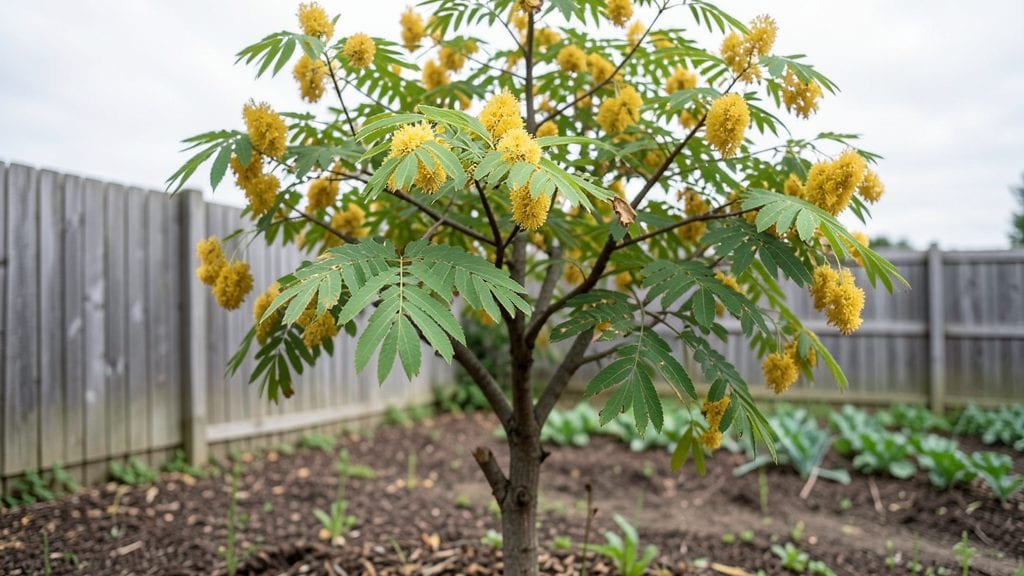
Golden rain trees (Koelreuteria paniculata) bring year-round hummingbird magic to Pacific Northwest gardens with almost no fuss. 🌟 I planted mine five years ago, and now it’s the star of my yard—bursting with golden foliage in summer, fiery red seed pods in fall, and even a touch of winter interest.
The best part? These trees thrive where others struggle, handling our damp winters and dry summers like a champ.
They’re not picky about soil—just make sure it drains well—and they’ll grow in full sun or partial shade, though more sun means more vibrant foliage. Watering’s easy too: deep soak once a week in summer, then let nature take over.
Pruning? Just shape it in late winter before new growth starts, and you’re done. Even pests rarely bother them, which is a relief after my battle with aphids last season.
What you’ll love most is the hummingbird frenzy that starts in early spring and never really stops. Those tiny seed pods? They’re like neon beacons for birds, and the golden leaves create a dazzling backdrop for any garden.
By midsummer, your tree will be a sunlit canopy, drawing pollinators and turning heads—all while needing less attention than most shrubs.
Perfect for urban yards, large landscapes, or even containers in small spaces. Whether you’re a beginner or a seasoned gardener, this tree delivers low-maintenance beauty with high-impact results. Ready to grow one that works as hard as you do?
📚 In This Guide
- What you need
- Instructions
- Tips and common mistakes
- Wrapping up and next steps
What you need
- ● Golden rain tree (Koelreuteria paniculata) – Choose between: Seeds (requires stratification & patience!)
- ● 1-3 year-old sapling (fastest option, 3-6 ft tall)
- ● Mature tree (10+ ft, for instant impact)
- ● Well-draining soil mix – Combine: 60% native soil
- ● 30% compost
- ● 10% perlite or sand (critical for PNW’s wet winters!)
- ● Organic fertilizer – Balanced 10-10-10 or fish emulsion (spring/fall)
- ● Mulch – 3-4 inches of wood chips or pine bark (retains moisture, deters weeds)
- ● Garden tools: Shovel or trowel (for saplings)
- ● Hoe (for soil prep)
- ● Pruning shears (sharp, sterilized)
- ● Watering supplies: Hose with soaker nozzle (deep watering = happy roots!)
- ● Watering can (1-2 gallon capacity, for seedlings)
- ○ Optional (but helpful!): Tree stake (if planting in windy areas)
- ● pH test kit (ideal range: 6.0–7.5)
- ● Hummingbird feeder (for instant pollinator attraction 🐦)
- ● Sunlight – Full sun (6+ hours/day) or partial shade (PNW’s filtered light works!)
- ● Spacious site – Mature trees reach 25–40 ft tall; plant 20+ ft from structures.
- ● Patience (for seeds!) – Germination takes 3–6 weeks; full bloom in 5–7 years.
Step-by-Step instructions for planting golden rain trees
Here’s how to establish these stunning trees with minimal fuss—perfect for PNW gardens.
🌱 Step 1: Choose the Right Location and Soil
Golden rain trees (Koelreuteria paniculata) thrive in full sun to part shade, ideally 6+ hours of sunlight daily. In the Pacific Northwest’s mild climate, a south-facing spot with morning sun and afternoon shade works beautifully. Avoid low-lying areas where cold air settles—these trees hate soggy roots.
Amend the soil with 2-3 inches of compost mixed into the top 12 inches of native soil. These trees tolerate a wide range of soil types but grow best in well-draining, slightly alkaline soil (pH 6.0–7.5). If your soil is heavy clay, add sand or perlite to improve drainage. A quick test: squeeze a handful—if it forms a tight ball, it’s too dense.
☀️ Step 2: Plant at the Correct Time and Depth
Plant your golden rain tree in early spring, just as new growth begins, or in early fall before the first frost. The PNW’s wet winters mean fall planting can lead to root rot, so spring is the safer bet. Dig a hole twice as wide as the root ball but only as deep—the top of the root ball should sit 1 inch above ground level to prevent waterlogging.
Gently loosen the roots if they’re circling in the container, then place the tree in the hole. Backfill with native soil mixed with compost, tamping lightly to remove air pockets. Water deeply to settle the soil, then add 2-3 inches of mulch around the base (but keep it 6 inches away from the trunk to prevent rot).
💧 Step 3: Water Deeply and Establish a Routine
Water once a week for the first month, soaking the soil to a depth of 12 inches. You’ll know it’s enough when water runs out the drainage holes if planted in a container, or when the top 2 inches of soil feel moist. Overwatering is the biggest mistake—these trees are drought-tolerant once established, but young roots need consistent moisture.
After the first month, reduce watering to every 2–3 weeks unless you’re in an extended dry spell. The PNW’s frequent rain means you’ll likely water less than in drier climates. A good rule: water when the soil feels dry 2 inches below the surface. If leaves yellow or wilt, it’s a sign of either too much or too little water.
✂️ Step 4: Prune for Shape and Health
Prune in late winter or early spring before new growth starts. Remove dead, diseased, or crossing branches first, then shape the tree by cutting back overly long branches by 1/3. Golden rain trees flower on new wood, so don’t worry about pruning too aggressively—just avoid cutting into old wood if you want those iconic golden blooms.
Thin out the center to improve airflow, which reduces the risk of fungal diseases. Use clean, sharp pruners and make cuts just outside the branch collar (the swollen area where the branch meets the trunk). Seal larger cuts with pruning sealant if they’re over ½ inch thick, but smaller cuts don’t need it—the tree will heal naturally.
🪴 Step 5: Maintain for Long-Term Beauty
Fertilize once a year in early spring with a balanced, slow-release fertilizer (10-10-10). Sprinkle it around the drip line (the edge of the tree’s canopy) and water it in. Avoid high-nitrogen fertilizers—they promote leafy growth at the expense of flowers, which are what make these trees so special.
Monitor for pests like aphids or spider mites, which can appear on new growth. A strong spray of water usually clears them up, but for stubborn infestations, use neem oil or insecticidal soap. These trees are generally low-maintenance, but a quick check every 2–3 months keeps them looking their best. With minimal care, your golden rain tree will reward you with year-round interest—spring blooms, summer shade, and fiery fall foliage.
Tips & tricks for perfect golden rain tree planting
A few simple tricks will help your golden rain tree thrive in the Pacific Northwest with minimal effort.
Location and Soil Prep: In Step 1, don't overlook testing your soil's drainage before planting. Fill a jar halfway with soil and water, then shake vigorously. If water separates clearly within 10 seconds, your soil drains well. If not, mix in more sand or perlite to create that ideal loose, crumbly texture. The 2-3 inches of compost you add should be well-aged—fresh compost can burn young roots. Real talk: I've seen new gardeners skip this step and end up with struggling trees.
Planting Depth Secret: When planting in Step 2, the 1-inch elevation above ground level is crucial—it prevents water from pooling around the trunk. I've seen too many gardeners bury the root ball too deep, which can suffocate the tree. After planting, gently press the soil around the roots with your hands rather than stomping—this prevents compaction that roots hate. The mulch ring should be like a donut around the tree, not touching the trunk.
Watering Wisdom: The first month's weekly watering in Step 3 is non-negotiable, but here's what nobody tells you: water slowly and deeply each time, not just a quick sprinkle. You want that 12-inch depth reached, not just surface moisture. In the PNW's damp climate, you might actually need to adjust your schedule—check soil moisture before watering rather than sticking to the weekly plan. A moisture meter makes this easy but a simple finger test works too.
Pruning Pro Tip: In Step 4, when cutting back branches by 1/3, focus on creating an open center rather than just making everything uniform. This improves airflow and prevents fungal issues. I always prune on a dry day—wet tools and branches spread diseases faster. And here's a game-changer: use a clean, sharp pair of pruners for each cut. Dull blades tear wood, inviting infections. The branch collar is your guide—never cut flush with the trunk, always leave that swollen area intact.
Pro Tips for Golden Rain Trees
- A few simple tricks will help your golden rain tree thrive in the Pacific Northwest with minimal effort.
- Location and Soil Prep: In Step 1, don't overlook testing your soil's drainage before planting.
- Planting Depth Secret: When planting in Step 2, the 1-inch elevation above ground level is crucial—it prevents water from pooling around the trunk.
Frequently asked questions
Got questions about growing and caring for golden rain trees? You’re not alone! Here are some of the most common queries from gardeners in the Pacific Northwest—and beyond. Whether you’re a beginner or just want to troubleshoot, we’ve got you covered.
How fast do golden rain trees grow, and when will I see those stunning yellow blooms?
Golden rain trees (Koelreuteria paniculata) are fast growers, often adding 3–5 feet per year in ideal conditions. With patience, they typically bloom between ages 3–5, though some may take longer. Young trees focus on leaf and branch growth first—so hang tight!
Are golden rain trees cold-hardy enough for the Pacific Northwest’s winters?
These trees thrive in USDA Zones 5–9, making them perfect for PNW winters. They handle down to -20°F (-29°C) once established, though young trees may need mulch protection in harsh freezes. Their deciduous nature also means they shed leaves in winter, reducing snow load stress.
Why aren’t my golden rain tree’s flowers attracting hummingbirds like they should?
Hummingbirds love golden rain trees, but a few factors might be holding them back:
- Timing: Blooms peak in late summer to early fall—if you’re seeing flowers earlier, they may not be fully open.
- Location: Plant near sunny, sheltered spots (hummingbirds avoid windy areas).
- Pests: Check for aphids or spider mites, which can deter birds.
Can I grow a golden rain tree in a container, or is it better to plant it in the ground?
While possible, container growth is tricky—these trees get large (20–40 feet tall) and need deep roots. If you must pot one, use a 50+ gallon container with well-draining soil and regular pruning to control size. For long-term health, in-ground planting is ideal, especially in the PNW’s rainy climate.
How do I prune a golden rain tree to encourage more blooms or a fuller shape?
Prune in late winter or early spring before new growth starts:
- Remove dead, diseased, or crossing branches first.
- Thin out overcrowded areas to improve airflow (helps blooms!).
- Avoid heavy top-heavy cuts—focus on shaping rather than drastic size reduction.
Wrapping up and next steps
Transforming your Pacific Northwest garden into a hummingbird haven with golden rain trees is easier—and more rewarding—than you think! 🌿 These stunning, low-maintenance trees bring year-round color, wildlife appeal, and effortless beauty to any outdoor space.
Whether you’re a seasoned gardener or just starting out, your next step is simple: grab your gloves, pick a sunny spot, and plant one today—your future feathered visitors will thank you!
Pro Tip: 💡 Share your golden rain tree journey with fellow gardeners or local birdwatching groups—inspiration spreads faster when we connect! 🐦