Flowers
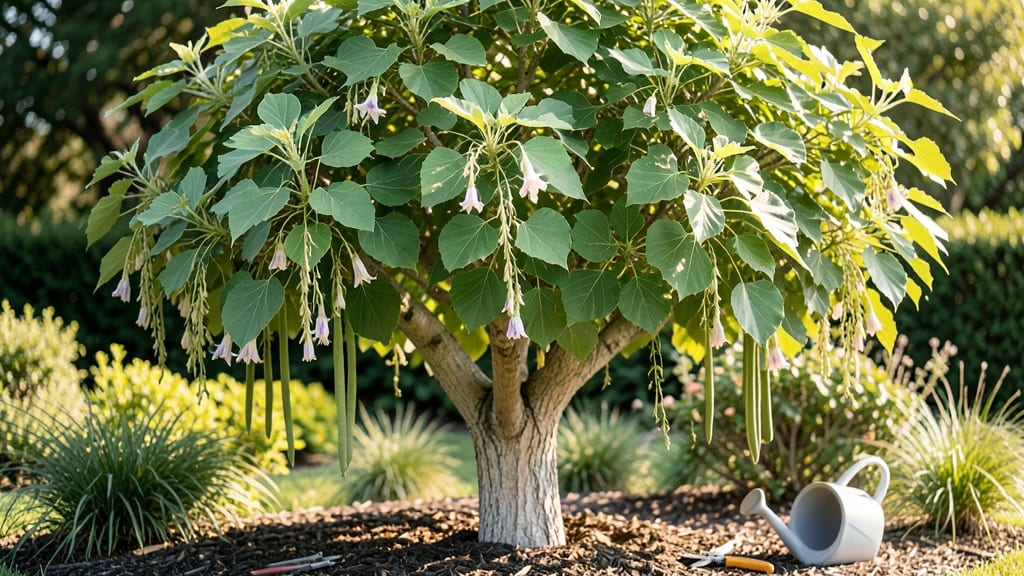
Catalpa tree flowers transform your yard into a hummingbird haven with their fragrant, bell-shaped blooms that appear like clockwork every summer. 🌿 I learned the hard way that these trees need patience—planting too early or in the wrong spot delays those showstopping flower displays by years.
The payoff, though, is worth it: clusters of white, lavender, or pink flowers that perfume the air and attract pollinators by the dozen.
These trees thrive in full sun but tolerate partial shade, making them versatile for different yard layouts. The soil doesn’t need to be fancy—just well-draining and slightly acidic—but they reward you with low-maintenance growth once established.
Pruning in late winter keeps them shaped and encourages healthier blooms the following season. My catalpa now stands as the centerpiece of my backyard, and the hummingbirds never leave.
You’ll notice the first buds forming in early summer, with flowers opening over several weeks for continuous color. The fragrance alone makes it worth growing, but the vibrant foliage and towering height add year-round interest.
Even the seed pods—though unusual—have their own charm, swaying in the breeze like nature’s wind chimes. With the right care, your catalpa will become the talk of the neighborhood.
Whether you’re planting from seed or a young tree, the key is consistency in watering and pruning. Catalpas handle urban pollution and poor soil better than many ornamentals, making them perfect for city gardens too. Let’s get yours growing strong for years of hummingbird visits and fragrant summer air.
📚 In This Guide
- What you need
- Instructions
- Tips and common mistakes
- Wrapping up and next steps
What you need
- ● Catalpa seeds (or a young Catalpa speciosa or Catalpa bignonioides sapling from a nursery) – 1–3 seeds or 1–2 plants for optimal growth.
- ● Well-draining potting mix (for seedlings) – 5–10 gallons, depending on container size.
- ● Garden soil (for transplanting) – Amend with compost (2–3 shovels) for fertility.
- ● Organic mulch (e.g., wood chips or straw) – 2–3 inches to retain moisture and suppress weeds.
- ● Watering can or hose with a gentle spray nozzle for seedlings.
- ● Garden gloves – To protect hands from thorns and soil.
- ● Trowel or small shovel – For digging and transplanting.
- ○ Pruning shears – To trim dead branches or shape the tree (optional but helpful).
- ● Measuring tape – For spacing plants 15–20 feet apart (if planting multiple trees).
- ● Fertilizer (balanced 10-10-10 or slow-release granular) – 1–2 cups per planting hole.
- ● A sunny location with 6+ hours of direct sunlight daily (catalpas thrive in full sun!).
- ● Well-draining soil (pH 6.0–7.5). Catalpas tolerate clay but prefer loamy soil.
- ● Patience! Seeds may take 1–2 years to flower, while saplings bloom faster (3–5 years).
- ● Hummingbird-friendly zone – Plant where these pollinators visit (USDA Zones 4–9).
- ● Epsom salt (1 tbsp in water) – For magnesium boost during early growth.
- ● Tree stakes & ties – To support young saplings in windy areas.
- ● Hummingbird feeder – Place nearby to attract pollinators to your blooms!
- ● Slow-release fertilizer spikes – For low-maintenance nutrient delivery.
How to cultivate catalpa tree flowers for hummingbirds and fragrance
Here's how to grow these showstopping blooms that attract pollinators and fill summer air with sweet scent.
🌱 Step 1: Select the Right Catalpa Variety for Your Climate
Northern gardeners should choose Catalpa speciosa (northern catalpa) for hardiness down to -30°F, while southern climates thrive with Catalpa bignonioides (southern catalpa) which handles 90°F+ summers. I always check the USDA hardiness zone map first—planting the wrong variety leads to stunted growth or winter dieback.
Look for established 1-gallon nursery trees rather than bare-root stock. Their root systems are already established, meaning faster flowering in 3-5 years instead of 5-7. The key is finding a specimen with a straight trunk and multiple lateral branches—these develop into the best bloom displays. Avoid trees with yellowing leaves or excessive sap oozing from the trunk.
☀️ Step 2: Plant in Full Sun with Well-Draining Soil
Catalpas demand 6+ hours of direct sunlight daily—any less and you'll get sparse, weak blooms. I dig the planting hole twice as wide as the root ball but only as deep as the container's base. This prevents soil compaction around critical root zones. The reason for the wide hole is to encourage lateral root growth, which stabilizes the tree and improves nutrient uptake.
Amend heavy clay soil with 2 inches of compost mixed into the bottom 6 inches of the hole. Catalpas hate soggy roots, so if your site drains poorly, build a 12-inch mound in the hole before placing the tree. Water deeply after planting until moisture reaches 12 inches down—you'll see the soil surface darken noticeably when saturated.
💧 Step 3: Water Deeply During Establishment (First 2 Years)
Newly planted catalpas need 1-2 inches of water weekly during their first growing season. I use a soaker hose buried 2 inches deep to deliver water slowly at the root zone. Watering from above wastes moisture through evaporation and can spread fungal spores to the leaves. The goal is to keep the soil evenly moist but not soggy—think of a wrung-out sponge.
After the first year, reduce watering to every 10-14 days unless your region experiences 2+ weeks without rain. Mature catalpas develop deep taproots that access groundwater, making them remarkably drought-tolerant once established. Watch for wilting leaves in extreme heat—this is your signal to water deeply again.
✂️ Step 4: Prune for Airflow and Bloom Display
Prune catalpas in late winter (just before buds swell) to remove dead, crossing, or inward-growing branches. I never cut more than 25% of the canopy in any single year—aggressive pruning reduces next season's flower production. The best blooms develop on 2-3 year old wood, so avoid heavy heading cuts that remove older branches.
Shape the tree into a vase-like form by opening the center to improve airflow. This prevents fungal diseases like anthracnose that turn leaves black and drop prematurely. Thin out crowded branches first, then make clean cuts just outside the branch collar. Sterilize pruners between cuts with 70% isopropyl alcohol to prevent spreading disease.
🪴 Step 5: Fertilize for Vigorous Growth and Flowering
Apply a balanced 10-10-10 fertilizer in early spring when new leaves emerge. I use 1/2 pound per inch of trunk diameter spread evenly in a 3-foot radius. Water the area thoroughly after applying to prevent root burn. Catalpas respond best to slow-release fertilizers—never use quick-release formulas that cause salt buildup in the root zone.
In late summer, switch to a low-nitrogen, high-phosphorus formula (5-10-10) to encourage next year's flower buds. The key is timing: fertilizing in fall can stimulate late-season growth that won't harden off before winter. Stop all fertilization 6 weeks before your first frost date to allow the tree to prepare for dormancy.
Tips & tricks for perfect catalpa tree flowers
These proven strategies will help you cultivate a catalpa tree that bursts with fragrant, hummingbird-loving blooms year after year.
Variety Selection Wisdom: When choosing between Catalpa speciosa and Catalpa bignonioides, consider not just your climate but your specific goals. The northern catalpa produces larger flowers and more abundant blooms, while the southern variety often flowers earlier in the season. I always verify hardiness zones using the USDA map—planting the wrong variety in extreme climates can lead to poor growth or winter damage. For maximum impact, select a tree with a well-developed root system in a 1-gallon container, as these establish faster and begin flowering in just 3-5 years.
Soil Preparation Strategy: The wide planting hole technique in Step 2 isn't just about preventing soil compaction—it's about creating an ideal root environment. The extra width encourages lateral root growth, which stabilizes the tree and improves nutrient uptake. For heavy clay soils, I recommend mixing in 2 inches of compost into the bottom 6 inches of the hole. This creates a nutrient-rich zone right where the roots will establish. If drainage is poor, building a 12-inch mound before planting creates a natural drainage pathway for excess water.
Watering Mastery: The 1-2 inches of water weekly during establishment might seem straightforward, but timing matters just as much as quantity. I've found that watering deeply in the morning allows the soil to absorb moisture before evaporation becomes an issue. Using a soaker hose buried 2 inches deep delivers water directly to the root zone without wetting the leaves, which helps prevent fungal diseases. After the first year, let the tree's deep taproots do the work—water only when the top 2 inches of soil feel completely dry to the touch.
Pruning Precision: Late winter pruning is crucial for both tree health and flower production, but the 25% canopy rule is non-negotiable. I always prioritize removing dead, crossing, or inward-growing branches first, as these create competition for resources. When shaping the tree, focus on creating a vase-like form that opens the center for better airflow. This simple structural adjustment can dramatically reduce fungal diseases like anthracnose. Remember to sterilize your pruners between cuts with 70% isopropyl alcohol—this small step prevents spreading disease from one branch to another.
Pro Tips for Catalpa Tree Flowers
- These proven strategies will help you cultivate a catalpa tree that bursts with fragrant, hummingbird-loving blooms year after year.
- Variety Selection Wisdom: When choosing between Catalpa speciosa and Catalpa bignonioides, consider not just your climate but your specific goals.
- Soil Preparation Strategy: The wide planting hole technique in Step 2 isn't just about preventing soil compaction—it's about creating an ideal root environment.
Frequently asked questions
Got questions about catalpa tree flowers?
You’re not alone! Here are answers to the most common queries to help you grow these stunning, hummingbird-loved blooms with confidence.
When do catalpa tree flowers bloom, and how long do they last?
Catalpa flowers typically bloom in late spring to early summer (May–June in most regions), producing fragrant, bell-shaped clusters that last 2–3 weeks. While the flowers themselves are short-lived, the tree’s seed pods (which resemble string beans) add seasonal interest in fall. For extended blooms, plant in a sunny, sheltered spot to protect flowers from wind and rain.
Why aren’t hummingbirds visiting my catalpa tree flowers?
Hummingbirds adore catalpas—but if they’re skipping yours, check these fixes:
- Timing: Ensure flowers are fully open (morning/evening is best for pollinators).
- Location: Plant near other nectar sources (like bee balm or salvia) for a "buffet effect."
- Pesticides: Avoid chemicals—hummingbirds are sensitive to them.
- Water: A shallow birdbath nearby can attract them to your yard.
Are catalpa tree flowers toxic to pets or kids?
While catalpa flowers and leaves are non-toxic to humans and pets, the tree’s seed pods can cause mild stomach upset if ingested in large quantities. Keep an eye on curious pets or children, but don’t panic—catalpas are generally safe for landscapes. Always supervise kids/pets around new plants!
Can I grow catalpa tree flowers in containers, or do they need a yard?
Catalpas are large trees (30–50 feet tall) and thrive best in open ground with deep roots. However, dwarf varieties like ‘Nana’ can work in large containers (20+ gallons) for 1–2 years before transplanting. For containers, use a well-draining mix and prune aggressively to control size. Expect limited blooms in pots—they’re not ideal long-term!
Why are my catalpa flowers falling off before opening?
Dropping buds usually signals stress. Common culprits:
- Underwatering: Catalpas need 1–1.5 inches of water weekly (more in heatwaves).
- Over-fertilizing: Too much nitrogen = lush leaves, fewer flowers. Use a balanced 10-10-10 fertilizer sparingly in spring.
- Temperature shock: Late frosts (<32°F) can damage buds. Cover young trees with frost cloth if frost is forecasted.
- Pests: Aphids or Japanese beetles can stress the tree. Spray with neem oil if you spot them.
Wrapping up and next steps
Growing catalpa tree flowers is a rewarding journey that brings beauty, fragrance, and life to your garden while attracting hummingbirds and butterflies. 🌸 With the right care—sunlight, well-drained soil, and patience—you’ll soon enjoy their stunning bell-shaped blooms and lush foliage.
Whether you’re a beginner or a seasoned gardener, these trees offer a low-maintenance yet high-impact addition to any landscape.
Ready to transform your outdoor space? Start by gathering your supplies, choosing the perfect spot, and planting your catalpa tree with confidence. Your future hummingbird haven awaits—go plant those seeds (or saplings) today! 🌱