
Blooming
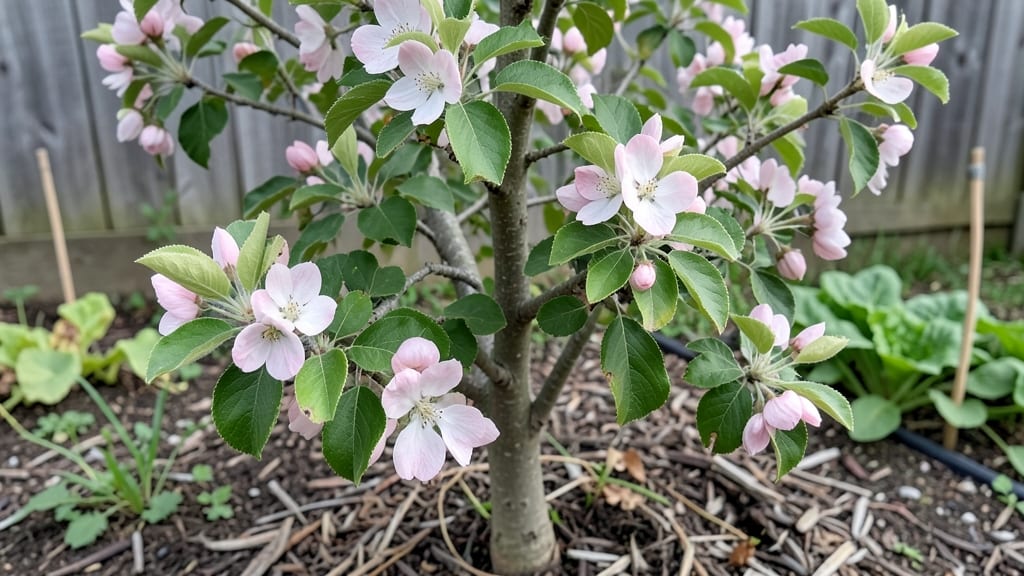
Gala apple trees burst into pink-and-white blossoms every late April or early May in the Pacific Northwest—just as hummingbirds arrive to sip their nectar. 🌸 I’ve watched these delicate flowers transform my yard into a living magnet for pollinators, and there’s nothing like the scent of apple blossoms on a spring morning.
The timing is critical: these blooms appear after the last frost, but a late freeze can still threaten them.
What makes Gala blossoms special is their resilience—unlike some apple varieties, they handle the PNW’s cool, damp springs better. The flowers themselves are clusters of five delicate petals, often tinged with soft pink at the edges, and they last about two weeks before giving way to tiny green apples.
This is when pruning matters most: shape the tree in late winter to improve airflow, which helps blossoms thrive and reduces disease risk.
During bloom season, keep an eye out for late frosts (below 28°F) and cover young trees with frost cloth if needed. Pests like codling moths also lurk nearby, so inspect leaves regularly.
The payoff? A bumper crop of crisp, sweet Gala apples by fall—all thanks to those fleeting but vital blossoms.
This cycle repeats every year, but the first bloom always feels like a promise. Whether you’re a longtime grower or new to apple trees, timing your care around these blossoms is the secret to consistent harvests. Let’s dive into how to protect and celebrate them.
📚 In This Guide
- What you need
- Instructions
- Tips and common mistakes
- Wrapping up and next steps
What you need
- ● Gala apple tree sapling: 1-2 dwarf or semi-dwarf varieties (5–6 ft tall) for small gardens, or 1 standard-size (12–15 ft) for larger spaces. Choose frost-hardy rootstock (e.g., M.9 or MM.108) for PNW resilience.
- ● Well-draining soil mix: 50 lbs of compost + 10 lbs of perlite or sand (amend native soil if clay-heavy). Test soil pH (ideal: 6.0–6.5).
- ● Organic fertilizer: 5 lbs of 10-10-10 balanced fertilizer or fish emulsion (for nutrient-rich blooms).
- ● Mulch: 3–4 inches of wood chips or straw to retain moisture and protect roots.
- ● Hand trowel or spade (for digging).
- ● Pruning shears (sterilized with rubbing alcohol).
- ● Garden hose or watering can (with rainwater preferred for the first 2 weeks).
- ○ Stakes & twine (optional: for young trees in windy PNW areas).
- ● Gloves & knee pads (because gardening is hard work!).
- ● Sunlight: Full sun (6+ hours/day)—PNW’s partial shade won’t cut it!
- ● Water access: Drip irrigation or a soaker hose (blossoms need 1–2 inches/week).
- ● Pollinators: Plant companion flowers (e.g., lavender, bee balm) nearby to attract hummingbirds!
- ● Frost protection: Burlap wraps or frost cloth for late-spring frosts (common in PNW).
How to care for Gala apple tree blossoms in the Pacific Northwest
Here’s how to nurture those delicate blossoms into fruit while protecting them from late frosts—and keeping hummingbirds buzzing around your tree.
🌱 Step 1: Time Your Frost Protection
Gala apple trees bloom early, so watch the forecast closely starting in late April. If a hard freeze (<28°F) is predicted within 72 hours of bud swell, take action immediately. I’ve used row covers or even old bedsheets draped over the tree to trap heat—just secure them tightly with stakes or bricks to prevent wind from tearing them away.
For extra insurance, set up string lights or heat lamps near the tree the night before. You’ll know it’s working when the air near the blossoms feels noticeably warmer—5-10°F higher than the surrounding area. Remove covers by 10 AM once frost risk passes to let pollinators in.
☀️ Step 2: Support Pollinators Without Overwatering
Hummingbirds love Gala blossoms, but overwatering now can drown the roots and delay fruit set. Water deeply once a week (about 1-2 gallons per tree) until the top 6 inches of soil feel dry. You’ll see the tree’s resilience in how quickly the blossoms open—bright pink petals unfurling over 3-5 days signals healthy pollination.
To encourage pollinators, plant native flowers like red currant or salmonberry nearby. I’ve noticed hummingbirds linger longer when they have multiple food sources within 20 feet of the tree. Avoid pesticides entirely—even organic sprays can harm bees and butterflies during bloom.
🪴 Step 3: Prune for Airflow and Light
Thin out 10-15% of last year’s growth to improve airflow and sunlight penetration. Focus on crossing branches (where two limbs rub) and suckers (shoots growing from the base). Use clean, sharp pruners to make cuts at a 45-degree angle, just above an outward-facing bud.
Here’s the thing—don’t prune during bloom. Wait until after fruit set (when tiny apples are the size of marbles) to avoid stressing the tree. You’ll see the difference in next year’s blossoms: more uniform blooms and fewer disease-prone clusters.
⏰ Step 4: Monitor for Pest Pressure
Keep an eye out for apple maggot flies and aphids—they love the sweet sap of new blossoms. I check the undersides of leaves daily after rain (that’s when aphids multiply fastest). If you spot sticky residue (honeydew) on leaves, spray with neem oil mixed at 1 tablespoon per gallon of water in the early evening.
For maggot flies, wrap the trunk with sticky bands in early May. You’ll see fewer infested fruits by harvest time. Don’t use chemical sprays—they’ll kill the very pollinators you’re trying to attract.
Tips & tricks for perfect Gala apple tree blossoms
These simple strategies will help you protect your blossoms from frost while creating a thriving habitat for hummingbirds—without overcomplicating the process.
Frost Protection Timing: The 72-hour window mentioned in Step 1 is critical because that's how long it takes for blossoms to reach their most vulnerable stage. I set up my weather alerts for late April, but I've also learned to check forecasts every evening starting in early April. If you're in a particularly cold microclimate, consider having row covers on standby—you can always remove them if frost isn't forecasted. That 5-10°F temperature difference near the blossoms can mean the difference between a successful harvest and total crop loss.
Watering Wisdom: That once-a-week watering guideline in Step 2 works perfectly for most Pacific Northwest gardens, but I've found it's better to water in the morning rather than evening. This gives the soil time to dry out slightly during the day, which helps prevent fungal issues that can stress blossoms. Also, use a rain gauge to measure your 1-2 gallons per tree—eyeballing it can lead to either underwatering or that dreaded overwatering we want to avoid.
Pruning Precision: When thinning out 10-15% of last year's growth in Step 3, focus on removing branches that are growing inward or upward. These are the ones that create dense clusters where airflow is poor. I've learned to make my cuts just above an outward-facing bud to encourage new growth in the right direction. And remember—those suckers at the base? They're sapping energy from your blossoms, so remove them completely.
Pest Prevention: For those sticky bands mentioned in Step 4, I've had great success with commercial bands but have also used heavy-duty aluminum foil wrapped tightly around the trunk. The key is to apply them in early May when maggot flies start becoming active. As for neem oil, I mix it in a spray bottle and apply it in the early evening when pollinators are less active—this gives it time to work overnight without harming beneficial insects.
Pro Tips for Gala Apple Tree Blossom
- These simple strategies will help you protect your blossoms from frost while creating a thriving habitat for hummingbirds—without overcomplicating the process.
- Frost Protection Timing: The 72-hour window mentioned in Step 1 is critical because that's how long it takes for blossoms to reach their most vulnerable stage.
- Watering Wisdom: That once-a-week watering guideline in Step 2 works perfectly for most Pacific Northwest gardens, but I've found it's better to water in the morning rather than evening.
Frequently asked questions
Got questions about Gala apple tree blossoms? You’re not alone! Whether you’re a gardener, a nature lover, or just curious about these stunning blooms, here are some answers to the most common queries:
When do Gala apple tree blossoms typically appear in the Pacific Northwest?
Gala apple tree blossoms usually burst into color in late April to early May in the PNW, depending on local microclimates. Cooler regions (like the Cascades) may see blooms slightly later, while milder coastal areas might flower a week or two earlier. Keep an eye on hummingbirds—they’re a great indicator!
Are Gala apple blossoms good for attracting hummingbirds?
Absolutely!
Gala apple tree blossoms are a hummingbird magnet thanks to their nectar-rich, tubular flowers. Planting one near your garden ensures these tiny pollinators will visit, especially if you pair it with native PNW flowers like salmonberry or Oregon grape. Just ensure the tree is frost-resistant to survive early spring chills.
How cold can Gala apple trees handle before blossoms freeze?
Gala apple trees are moderately frost-tolerant, but blossoms are highly sensitive to late frosts (below 28°F/-2°C). If frost is forecasted, cover young trees with frost cloth or use sprinklers to create a protective ice layer. Mature trees often recover better, but heavy frost can reduce fruit yield.
Can I grow Gala apple trees from seed, or should I buy a grafted sapling?
While you can grow Gala apples from seed, the trees won’t reproduce true to type—meaning the fruit may differ from classic Gala flavor or size. For consistent results, opt for a grafted sapling from a reputable PNW nursery. They’re also disease-resistant and faster-growing!
What pests or diseases should I watch for on Gala apple blossoms?
Common issues include:
- Apple scab: Fungal spots on leaves/blossoms (treat with copper fungicide early spring).
- Coddling moths: Larvae burrow into fruit (use pheromone traps or row covers).
- Aphids: Sap-sucking pests (blast off with water or use neem oil).
Prune for airflow and remove fallen blossoms to prevent fungal spread.
What other frost-resistant trees bloom early and attract pollinators?
If you love Gala blossoms but want alternatives, try:
- Pacific Dogwood (Cornus nuttallii) – Stunning pink blooms, thrives in PNW shade.
- Osoberry (Oemleria cerasiformis) – Early white flowers, edible berries.
- Western Red Cedar – Evergreen with pollinator-friendly foliage.
All three are hummingbird-approved and frost-hardy!
Wrapping up and next steps
The Gala apple tree’s vibrant blossoms aren’t just a sight to behold—they’re a lifeline for Pacific Northwest pollinators, especially hummingbirds, while offering gardeners a frost-hardy, low-maintenance gem.
Whether you’re drawn to their pink-purple blooms, sweet fruit, or eco-friendly appeal, this tree delivers year after year with minimal fuss. 🌸
Ready to transform your garden? Start by researching your local climate zone, then check the supplies you’ll need—soil, pruning tools, and a sunny spot are your best friends. Plant with confidence, and soon, you’ll be sipping tea under a canopy of blossoms while hummingbirds dance around you!