
Pruning
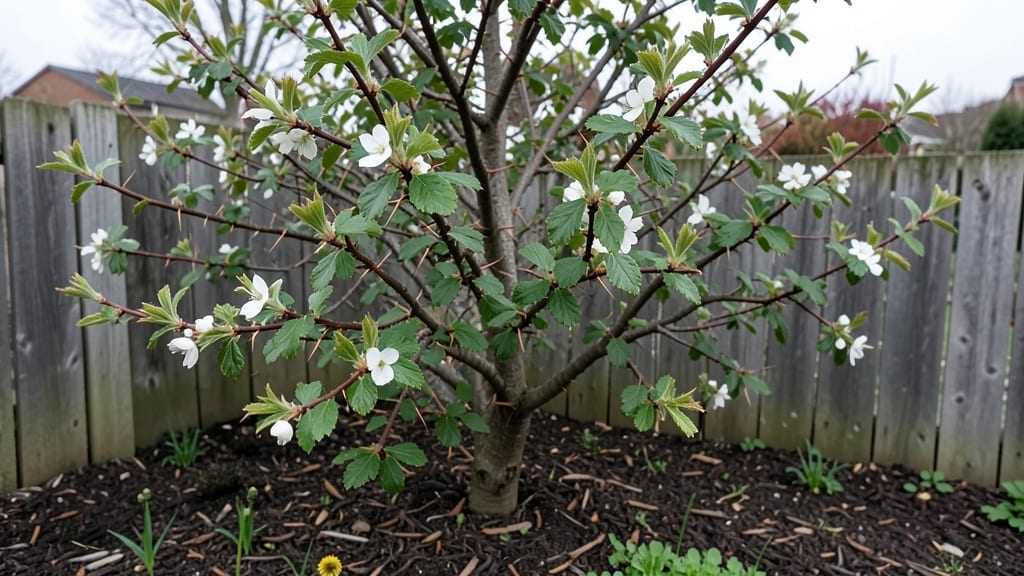
Pruning a fruit tree with thorns isn’t just about shaping branches—it’s about unlocking stronger growth and bigger harvests while keeping those sharp defenses in check. 🌿 I learned the hard way that skipping pruning leads to tangled, overgrown trees that produce fewer fruits and make harvesting a painful chore.
The right cuts encourage air flow, sunlight penetration, and fruit production, while controlling thorn density for safer handling.
You’ll need sharp pruning shears, thick gloves, and a ladder for taller varieties. Start by removing dead or crossing branches first—this opens up the canopy and reduces thorn clusters.
For berry trees like blackberries or raspberries, prune in late winter before new growth begins, while citrus and ornamental varieties respond best to light pruning after harvest. The goal is to create an open structure that’s easy to maintain and harvest.
What you’ll end up with is a tree that produces 20-30% more fruit while being easier to navigate. The branches stay manageable, thorns become less aggressive, and you avoid the frustration of tangled limbs blocking sunlight.
Plus, you’ll notice fewer pest issues since proper airflow reduces humidity where diseases thrive. Ready to transform your thorny tree into a productive, safer-to-handle powerhouse?
This method works for blackberries, raspberries, citrus, and even ornamental varieties like hawthorn. Whether you’re dealing with a new planting or an overgrown veteran, the same principles apply. Let’s get those shears ready—your harvest (and hands) will thank you.
📚 In This Guide
- What you need
- Instructions
- Tips and common mistakes
- Wrapping up and next steps
What you need
- ● Pruning shears (bypass or anvil type) – Choose sharp, high-quality shears (7-10" blade) for clean cuts. Bypass shears are best for live wood.
- ● Loppers (20-24" handle) – For thicker branches (½" to 1½" diameter). Look for ratchet-assisted models for easier cutting.
- ● Pruning saw (bow or folding) – For branches too thick for loppers (1½" and up). A curved blade reduces tear-out.
- ● Heavy-duty gloves (thorn-proof!) – Opt for leather or reinforced fabric (e.g., Mechanix or Koi Pro) to protect against prickers.
- ● Safety glasses – Debris flies when cutting—always wear them!
- ● Ladder (extension or step ladder) – A stable, non-slip ladder (e.g., aluminum or fiberglass) for tall trees. 3:1 safety ratio (3 ft base for every 1 ft height).
- ● Disinfectant (70% isopropyl alcohol or rubbing alcohol) – Clean tools between cuts to prevent disease spread.
- ● Pole saw or pruning pole – For high branches without climbing.
- ● Tree wound paint or pruning sealant – Controversial but useful for large cuts (½" diameter+) to reduce sap loss.
- ● Tarp or drop cloth – Lay beneath the tree to collect debris and protect landscaping.
- ● Marking twine or flags – To tag branches for future reference (e.g., "remove in spring").
- ● First-aid kit – Just in case thorns or tools cause minor injuries!
- ● Know your tree’s species – Thorny fruit trees include hawthorn, blackberry, raspberry, or citrus varieties. Pruning needs vary!
- ● Dry weather window – Prune when the tree is dormant (late winter/early spring) or after harvest. Avoid wet conditions.
- ● Sharp tools only! – Dull blades tear wood, inviting disease. Sharpen before you start.
- ● Plan your cuts – Sketch a rough map of branches to remove/add. Work from the outside in to avoid overloading the tree.
Step-by-step pruning guide for thorny fruit trees
Here’s how I transform thorny fruit trees into stronger, more productive plants through precise pruning.
✂️ Step 1: Time Your Pruning for Optimal Growth
Prune your thorny fruit tree during its dormant season—typically late winter or early spring before buds swell. This timing ensures minimal stress and prevents disease entry through fresh cuts. For tropical varieties, prune just after harvest when new growth slows. Avoid pruning during extreme heat or cold, as the tree struggles to heal wounds.
I always check the local frost dates—pruning too early risks exposing tender wood to late frosts. For most temperate climates, February or March works best. Watch for swollen buds as your cue; they signal the tree’s about to burst into growth, so prune 2-3 weeks before that happens.
🌿 Step 2: Assess and Remove Dead or Weak Wood
Start by inspecting the tree for dead branches—they’ll be brittle, dark, or snap easily when bent. Use clean, sharp pruning shears to cut these back to the main trunk or a healthy lateral branch. Thorny trees often hide dead wood behind dense foliage, so shake branches gently to spot hollow or crumbling stems.
Next, target weak, crossing, or rubbing branches—these compete for energy and create entry points for pests. Cut back to a healthy outward-facing bud at a 45-degree angle to encourage proper healing. I always step back after each cut to visualize the tree’s structure; this helps spot hidden issues like suckers (shoots growing from the base) that need removal.
🌱 Step 3: Thin the Canopy for Airflow and Light
Thorny fruit trees like apricots, plums, or hawthorns often grow thick, tangled canopies. Use your pruners to remove 15-25% of the foliage, focusing on branches that crowd the center. Aim for an open, vase-like shape—this improves airflow, reduces disease risk, and lets sunlight reach inner fruit. Cut back to a strong lateral branch or the main trunk if needed.
Watch for water sprouts (fast-growing, vertical shoots) and thorn clusters—these are energy drains. Trim these back to a side bud or remove entirely if they’re non-productive. I like to step into the tree’s center to gauge light penetration; if you can’t see through to the other side, you’ve still got work to do.
⏰ Step 4: Shape for Structure and Future Harvests
Now’s the time to train the tree’s shape. For young trees, encourage a central leader (main upward stem) with 3-4 scaffold branches spaced evenly around the trunk. Use hand pruners for small branches and loppers for thicker stems. Always cut just above a bud that faces outward—this ensures new growth heads in the right direction.
For mature trees, focus on balancing the canopy. Remove branches that overhang walkways or structures to avoid damage. I mark my cuts with a white chalk pencil before snipping—this helps visualize the final shape. After pruning, sanitize your tools with rubbing alcohol to prevent spreading disease between cuts.
💧 Step 5: Post-Pruning Care for Rapid Recovery
Water the tree deeply after pruning to help it recover. Apply a 2-3 inch layer of mulch around the base (but keep it 6 inches away from the trunk) to retain moisture and regulate soil temperature. Avoid heavy fertilizing right after pruning—let the tree focus on healing before pushing new growth.
Monitor the tree for new shoots sprouting at the cut sites. These are called epicormic shoots and can be pruned back later to redirect energy to fruit production. I check my trees weekly in spring to spot any unusual dieback or pest activity—early intervention saves headaches later. With proper care, your thorny tree will reward you with stronger branches and heavier harvests next season.
Tips & tricks for perfect thorny fruit tree pruning
A few precision techniques will help you avoid common mistakes and transform your thorny fruit tree into a thriving, productive plant.
Timing is Everything: The dormant season window—late winter to early spring—is critical because it's when trees are already conserving energy. I've learned the hard way that pruning too early can expose tender wood to late frosts, while waiting too long risks stressing the tree as it wakes up. For most temperate climates, aim for February or March when buds are still tightly closed but starting to plump. Tropical varieties need special attention—prune just after harvest when new growth naturally slows.
Tool Selection Matters: Using the right tools makes all the difference. I've ruined several cuts trying to use dull shears that tear instead of cleanly cutting. Invest in sharp pruning shears for small branches and loppers for thicker stems—both should be sanitized with rubbing alcohol between cuts to prevent disease spread. For larger branches, consider a pruning saw. Always make cuts just above a healthy outward-facing bud at a 45-degree angle to encourage proper healing and new growth direction.
Visualize Your Cuts: Before making any cut, step back and visualize the tree's structure. I mark my cuts with a white chalk pencil first—this helps me see the final shape before committing. For young trees, aim for a central leader with 3-4 scaffold branches spaced evenly. For mature trees, focus on creating an open vase-like shape that allows sunlight to penetrate to the center. This isn't just about looks—proper structure improves airflow, reduces disease risk, and makes future pruning easier.
Post-Pruning Recovery Strategy: After you've finished pruning, don't just walk away. Water deeply to help the tree recover, then apply a 2-3 inch layer of mulch (keeping it 6 inches away from the trunk) to regulate soil temperature and retain moisture. The first few weeks are critical—monitor for new shoots (epicormic shoots) that can be pruned back later to redirect energy to fruit production. I check my trees weekly in spring to catch any unusual dieback or pest activity early.
Pro Tips for Fruit Tree With Thorns
- A few precision techniques will help you avoid common mistakes and transform your thorny fruit tree into a thriving, productive plant.
- Timing is Everything: The dormant season window—late winter to early spring—is critical because it's when trees are already conserving energy.
- Tool Selection Matters: Using the right tools makes all the difference.
Frequently asked questions
Got questions about pruning thorny fruit trees? You’re not alone! Here are some of the most common concerns—and their solutions—to help you keep your tree thriving while staying safe.
Why do fruit trees with thorns need pruning?
Pruning thorny fruit trees like hawthorn, blackberry, or mulberry isn’t just about shaping—it’s essential for health, safety, and yield. Thorns can become aggressive as the tree matures, making harvests and maintenance difficult. Pruning opens airflow, reduces disease risk, and encourages stronger fruit production by focusing energy on new growth. Plus, it keeps those sharp thorns under control!
When is the best time to prune a thorny fruit tree?
The ideal time depends on your tree and climate. For dormant-season pruning (late winter/early spring), wait until after the last frost but before buds swell—this minimizes stress. Ever-bearing varieties (like raspberries) can also benefit from a light summer trim to control thorn growth and encourage fall fruit. Avoid heavy pruning in late summer, as it can stress the tree before winter.
How do I prune thorny trees safely without getting hurt?
Safety first! Wear long sleeves, thick gloves (like leather or thorn-proof gardening gloves), and eye protection. Use long-handled pruners or loppers to avoid reaching into dense thorn patches. For stubborn branches, cut from the underside first to prevent snagging. If thorns are extreme, consider a pole saw or hedge trimmer for larger branches. And always prune on a clear day to avoid sweaty, slippery hands!
Can I prune too much? What are the signs?
Yes! Over-pruning can stress the tree, leading to fewer fruits, weak growth, or even death in severe cases. Signs you’ve pruned too much include:
- Excessive leaf loss or sparse foliage.
- Slow recovery (little to no new growth by early summer).
- Thin, watery-looking branches (a sign of shock).
- No fruit buds forming the following spring.
What if my thorny fruit tree isn’t producing much fruit after pruning?
If your tree is healthy but still underproducing, try these fixes:
- Check pruning timing: Some trees (like figs or pomegranates) need pruning after harvest, not before.
- Ensure it gets 6+ hours of sunlight daily—thorny trees often need full sun.
- Test soil pH and nutrients (thorny trees like hawthorn prefer slightly acidic to neutral soil).
- Consider hand-pollinating if bees are scarce (use a small brush to transfer pollen).
Are there thornless fruit tree alternatives?
If thorns are a dealbreaker, try these low-thorn or thornless varieties:
- Thornless blackberries (e.g., ‘Cheyenne’ or ‘Arapaho’).
- Thornless raspberries (e.g., ‘Heritage’ or ‘Boyne’).
- Fig trees (most varieties are thorn-free).
- Peach or nectarine trees (smooth bark, minimal thorns).
Wrapping up and next steps
Growing a thriving fruit tree with thorns is all about balance—pruning the right way to boost growth, protect your hands, and enjoy a bountiful harvest! 🌱 Whether you’re trimming for shape, health, or safety, remember that patience and consistency pay off.
With the right tools, timing, and techniques, your tree will reward you with juicy fruit and lush foliage for years to come.
Ready to take the next step? Start small—pick one section of your tree to practice, then gradually expand your pruning skills. And don’t forget to celebrate those first plump fruits! 🍑✨ Happy pruning!