
Size
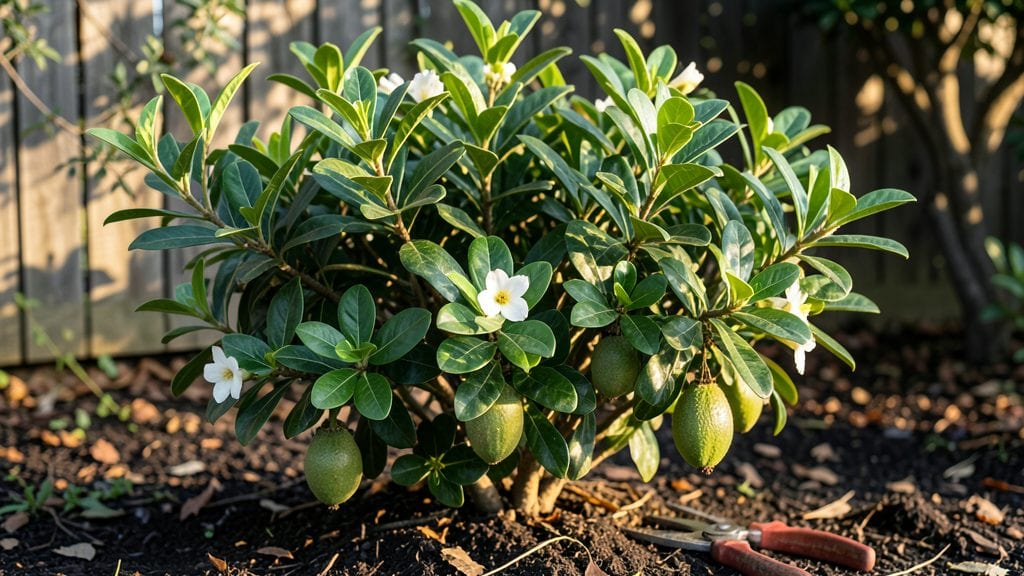
Growing a feijoa tree in your Pacific Northwest garden means harvesting exotic, honey-scented fruit that tastes like a mix of pineapple and vanilla. 🌿 I planted mine in early spring after realizing how perfectly it thrives in our cool, wet climate—unlike most tropical fruits.
The key is mimicking its native Brazilian habitat with well-draining soil and partial shade during summer heatwaves.
You'll need a sunny spot with at least 6 hours of light daily, though afternoon shade helps in hotter inland areas. Start with a young tree (they're slow to establish) and amend your soil with compost to improve drainage—the feijoa hates soggy roots.
Water deeply once a week after establishment, and mulch heavily to protect roots from our damp winters.
By year three, you'll see glossy, oval leaves and—if all goes well—tiny, fragrant white flowers that develop into those unusual fruits. The first harvest might be modest, but with proper pruning (open the center for airflow), your tree will reward you with pounds of fruit per season within five years.
Patience pays off with feijoas!
This tree handles our winters surprisingly well (down to 15°F with protection), making it the PNW's best-kept fruit secret. Just watch for scale insects and keep birds from snacking on the fruit before you do.
The effort? Totally worth it for that first taste of tropical flavor in your own backyard.
📚 In This Guide
- What you need
- Instructions
- Tips and common mistakes
- Wrapping up and next steps
What you need
- ● Feijoa Plant: 1 young feijoa sapling (3–5 feet tall) from a Feijoa sellowiana variety (e.g., ‘Unique,’ ‘Coolidge,’ or ‘Apollo’).
- ● OR feijoa seeds (collect from ripe fruit or order online).
- ● Soil & Amendments: 5–10 gallons of well-draining potting mix (for containers) or loamy garden soil (for in-ground planting).
- ● 1–2 cups of compost or aged manure (to enrich soil).
- ○ Optional: Perlite or sand (1 part) to improve drainage in heavy clay soils.
- ● Container (if growing in a pot): 1 large fabric grow bag (15–20 gallons) OR a plastic pot (18–24 inches in diameter) with drainage holes.
- ● Planting Tools: 1 trowel (for digging holes).
- ● 1 garden fork (to loosen soil).
- ● 1 pruning shears (for trimming roots or shaping the tree).
- ● Mulch: 2–3 inches of wood chips, straw, or bark mulch (to retain moisture and regulate soil temperature).
- ● Fertilizer: 1 balanced fertilizer (10-10-10 or 20-20-20), or a citrus-specific fertilizer (feijoas love slightly acidic soil).
- ○ Optional: Epsom salt (1 tbsp per gallon of water) for magnesium boosts (especially in PNW soils).
- ● Watering Supplies: 1 hose with a gentle spray nozzle or a watering can (for deep watering).
- ○ 1 drip irrigation kit (optional, for consistent moisture).
- ● Protection (for young plants): 1 frost cloth (for late spring/early fall frosts in the PNW).
- ● 1 tree guard (to protect from deer or rabbits).
- ● A sunny spot with 6+ hours of direct sunlight daily (feijoas thrive in full sun!).
- ● Well-draining soil (feijoas hate soggy roots—amend clay soil with compost or sand).
- ● Patience! Feijoas grown from seed take 3–5 years to bear fruit, while grafted saplings may fruit in 2 years.
- ● Cold hardiness: Choose a microclimate protected from harsh winds (PNW’s Zone 7–10, but some varieties tolerate brief dips to 15°F).
Step-by-step guide to planting a feijoa tree in your Pacific Northwest garden
Feijoas thrive in the PNW’s mild climate—here’s how to plant one that will reward you with fruit for decades.
🌱 Step 1: Choose the Right Location and Planting Time
Feijoas need full sun—at least 6-8 hours daily—so pick a spot with southern exposure where they’ll get maximum warmth. In the Pacific Northwest, plant in early spring after the last frost date, typically mid-April to May. The soil should be warmer than 50°F for roots to establish without shock.
Feijoas tolerate a range of soil types but prefer well-draining, slightly acidic soil (pH 6.0-7.0). If your garden soil is heavy clay, amend it with 3 inches of compost mixed into the top 12 inches before planting. I like to dig a hole twice as wide as the root ball but no deeper—this encourages roots to spread horizontally rather than settling too low.
🪴 Step 2: Plant the Tree at the Correct Depth and Stake for Support
Remove the feijoa from its container and loosen the roots gently if they’re circling. Place the tree in the hole so the top of the root ball sits level with the surrounding soil—burying too deep can suffocate the trunk. Feijoas are shallow-rooted, so don’t worry about depth beyond this baseline.
Fill the hole with soil, pressing lightly to remove air pockets, then water deeply to settle everything. I always stake young feijoas with a 5-foot wooden stake tied loosely to the trunk with soft fabric strips (never wire—it can girdle the bark). This prevents wind damage while the roots establish, usually within 6-12 months. Mulch with 3 inches of wood chips around the base, keeping it 6 inches away from the trunk to prevent rot.
☀️ Step 3: Water Deeply and Monitor Soil Moisture
Water the feijoa deeply right after planting, soaking the soil to 12 inches down. After that, water once a week unless you’ve had more than an inch of rain—feijoas hate soggy roots but can’t tolerate drought either. You’ll know moisture is right when the top 2 inches of soil feel damp but not wet. Overwatering in the PNW’s rainy season is the #1 killer of young feijoas.
In the first year, check soil moisture every 3-4 days by sticking your finger 1 inch deep. If it’s dry, water slowly until it runs out the drainage holes. Feijoas are drought-tolerant once established, but young trees need consistent moisture to grow strong. Avoid wetting the leaves—water at the base to prevent fungal diseases like powdery mildew.
✂️ Step 4: Prune for Shape and Airflow in Late Winter
Feijoas bloom on new wood, so prune once a year in late winter (February) before buds swell. Remove any dead, crossing, or inward-growing branches first—these compete for energy and block airflow. I also thin out 20-30% of the canopy to let sunlight reach the center of the tree, where fruit develops best.
Never prune in fall or summer—you’ll cut off next year’s flower buds. After pruning, apply a balanced 10-10-10 fertilizer around the drip line (the edge of the tree’s canopy) to support new growth. Feijoas respond well to light feeding, but too much nitrogen makes them grow leaves instead of fruit. A handful of fertilizer per tree is plenty.
🌿 Step 5: Protect from Late Frosts and Encourage Fruit Set
Feijoas are hardy to 15°F, but late spring frosts (common in the PNW) can damage blossoms. If frost is forecast after buds open, drape frost cloth over the tree or run a small fan to circulate warm air. Once flowers appear, hand-pollinate by gently shaking branches on sunny, still days—feijoas rely on bees, but PNW weather can limit pollinators.
Thin fruit when it’s golf-ball sized, leaving 6-8 inches between each piece. This ensures larger, sweeter feijoas and prevents branches from breaking under the weight. Harvest when the fruit gives slightly when squeezed and smells fragrant—usually late summer to early fall in the PNW. Ripe feijoas taste like a mix of pineapple and strawberry, but unripe ones are bitter.
Tips & tricks for growing a thriving feijoa tree in the Pacific Northwest
Here's what I learned after years of growing feijoas in the PNW—these tricks make all the difference between a struggling tree and a fruit-bearing treasure.
Sunlight Strategy: That 6-8 hours of daily sun is non-negotiable, but here's the thing: feijoas in the PNW need southern exposure to maximize warmth. If your yard only gets western sun, consider planting near a south-facing wall or fence—the extra reflected heat can make a real difference. I've seen feijoas in shaded spots grow leaves but never fruit, even after years.
Soil Prep Secret: When amending heavy clay soil with the 3 inches of compost, I always mix in a handful of perlite or coarse sand to improve drainage. Feijoas hate soggy roots, and this extra step prevents the #1 cause of young tree failure in our rainy climate. Think of it as insurance against winter waterlogging.
Staking Wisdom: That 5-foot wooden stake is crucial, but here's my pro move: I use two stakes tied together in a "V" shape for extra stability. The fabric strips should be adjustable—feijoa trunks can grow thicker than expected. And never use wire! I learned that the hard way when a young tree's bark was permanently damaged.
Winter Protection Hack: For late spring frosts (which happen more often than you'd think), I've found that wrapping the tree trunk with bubble wrap during bloom time adds an extra layer of insulation. It's not pretty, but it works—last year's frost damage was minimal compared to my neighbor's bare tree.
Pro Tips for Feijoa Tree Grow A Garden
- Here's what I learned after years of growing feijoas in the PNW—these tricks make all the difference between a struggling tree and a fruit-bearing treasure.
- Sunlight Strategy: That 6-8 hours of daily sun is non-negotiable, but here's the thing: feijoas in the PNW need southern exposure to maximize warmth.
- Soil Prep Secret: When amending heavy clay soil with the 3 inches of compost, I always mix in a handful of perlite or coarse sand to improve drainage.
Frequently asked questions
Got questions about growing feijoa trees in your garden? You’re not alone! Here are answers to the most common concerns—from planting tips to troubleshooting—so you can cultivate this cold-hardy gem with confidence.
Can feijoa trees survive cold winters in the Pacific Northwest?
Feijoa trees (Acca sellowiana) thrive in USDA Zones 7–10, making them perfect for the PNW’s mild winters. While young trees may need winter protection (like burlap wraps or mulch), mature feijoas are surprisingly resilient. Choose cold-hardy varieties like ‘Unique’ or ‘Coolidge’ for extra reliability.
How long does it take for a feijoa tree to bear fruit?
Patience is key! Feijoa trees typically take 3–5 years to produce fruit after planting, though some may take up to 7 years, especially in cooler climates. Planting two trees ensures cross-pollination and faster fruiting. Pro tip: Prune lightly in early spring to encourage growth and fruit production.
Do feijoa trees need full sun, or can they grow in partial shade?
Feijoas love full sun (6–8 hours daily), but they’ll tolerate partial shade—especially in hotter PNW summers. In shadier spots, expect smaller yields. For best results, plant in a south- or west-facing location with well-draining soil. Bonus: They’re drought-tolerant once established!
What pests or diseases should I watch for with feijoa trees?
Feijoas are generally low-maintenance, but keep an eye out for aphids, scale insects, or fungal issues (like powdery mildew) in humid conditions. Treat pests with neem oil or insecticidal soap. Improve airflow by pruning and avoid overhead watering to prevent disease. Quick fix: Mulch around the base to deter weeds and retain moisture.
Are feijoa trees self-pollinating, or do I need more than one?
Feijoas require cross-pollination, so plant at least two trees (preferably different varieties) for a bountiful harvest. Bees love them! If space is limited, opt for dwarf varieties like ‘Apollo’ or ‘Gemini.’ Fun fact: Their fragrant flowers attract pollinators year-round.
Can I grow a feijoa tree in a container?
Yes! Dwarf feijoa varieties thrive in 15–20 gallon containers with well-draining soil. Use a mix of potting soil and perlite, and repot every 2–3 years. Place the container in full sun and water regularly. Container hack: Move pots indoors during harsh winters if temps drop below 10°F.
Wrapping up and next steps
Growing a feijoa tree in your Pacific Northwest garden is a rewarding adventure that brings exotic flavors and stunning foliage right to your doorstep! 🌱 With the right location, soil prep, and care, you’ll enjoy cold-hardy fruit year after year.
Whether you’re a seasoned gardener or just starting out, this tropical treasure thrives with patience and a little know-how.
Ready to take the next step? Start by selecting your feijoa variety and marking a sunny spot in your garden—your future harvest (and neighbors’ envy!) awaits. Happy planting! 🌟