
Pruning
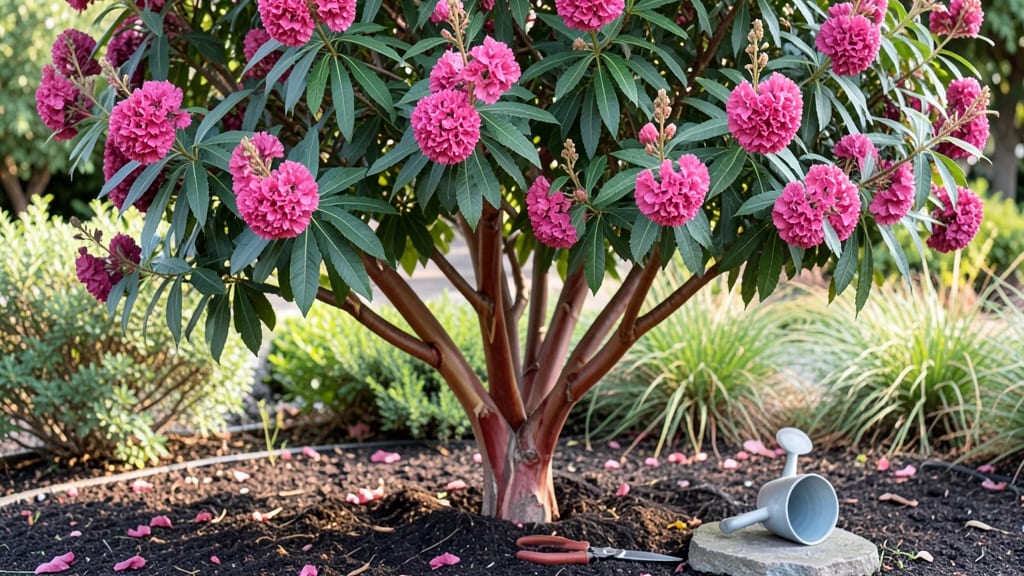
The dark pink crape myrtle tree turns your yard into a cloud of romance from late spring through fall—if you prune it right. 🌸 I’ve watched these trees go from sparse blooms to jaw-dropping floral displays just by timing the cuts, and I’m sharing exactly how to coax that second (and third) flush of flowers.
This variety thrives in full sun and well-draining soil, but the real magic happens with your pruners. Most gardeners stop after the first bloom, but crape myrtles reward patience with a second flush of flowers if you prune correctly in early spring.
The secret? Cutting back to strong buds, not just random branches—it’s simpler than it sounds.
You’ll end up with a tree that looks like it’s always in peak bloom, not just for a few weeks. The dark pink blooms contrast beautifully against the peeling bark and lush green foliage, making it a showstopper in any landscape.
Plus, it’s tough enough to handle drought once established, so maintenance stays light.
Whether you’re starting with a bare-root sapling or reviving an overgrown tree, the same principles apply. Let’s get those blooms coming back year after year—no guesswork, just proven techniques that work for both beginners and seasoned gardeners.
📚 In This Guide
- What you need
- Instructions
- Tips and common mistakes
- Wrapping up and next steps
What you need
- ● Pruning shears: Bypass shears (sharp, clean, and 10-12 inches long) for clean cuts.
- ● Loppers: Bypass or anvil type (for thicker branches, 18-24 inches long).
- ● Hand pruners: Bypass type (for small branches, 6-8 inches long).
- ● Saw: Pruning saw (for branches 1.5+ inches thick).
- ● Disinfectant: 70% isopropyl alcohol or bleach solution (1 part bleach to 9 parts water) to sterilize tools.
- ● Gloves: Heavy-duty gardening gloves (to protect from thorns and sap).
- ○ Pruning sealant (optional): Tree wound paint (for large cuts, 1-2 inches thick).
- ○ Rake or broom: For cleanup (optional but helpful!).
- ● Timing: Prune in late winter or early spring (before new growth starts). Avoid pruning in fall.
- ● Weather: Choose a dry, calm day (no rain for 24 hours before/after pruning).
- ● Safety gear: Safety glasses (if working near the tree’s canopy).
- ● Tree health check: Ensure your crape myrtle is healthy (no signs of disease or pests).
Instructions for reviving your dark pink crape myrtle's year-round blooms
Here's how to transform your crape myrtle from a one-season showstopper into a continuous pink masterpiece.
✂️ Step 1: Time Your Pruning for Maximum Blooms
Prune your dark pink crape myrtle right after flowering—typically in late winter or early spring before new buds form. This timing ensures you remove spent blooms while preserving next year's flower buds hidden in the leaf axils. I always wait until after the first hard frost when the tree is dormant, as pruning during active growth can stress the plant.
Here's the thing—crape myrtles bloom on new wood, so you're not just cleaning up. You're shaping next year's floral display. Use clean, sharp pruners to make cuts at a 45-degree angle just above a leaf node or bud. This angled cut helps water run off and prevents rot.
🌿 Step 2: Remove Dead, Weak, or Crossing Branches
Start by eliminating dead or diseased branches—they'll never contribute to blooms and can spread problems. Look for branches that are brown inside when cut or have peeling bark. Next, remove weak, thin branches that never seem to thicken, as they won't support heavy blooms. Finally, cut out crossing or rubbing branches—these create wounds that invite pests and diseases.
I like to step back every few cuts to visualize the tree's shape. You want an open, vase-like structure that allows sunlight to reach all branches. This isn't about making your crape myrtle look like a topiary—it's about encouraging airflow and light penetration, which directly translates to more blooms. Never remove more than 25% of the tree's canopy in one year.
☀️ Step 3: Thin Out for Better Sun Exposure
Crape myrtles need full sun (6-8 hours daily) to produce their signature blooms. If your tree has dense inner branches that block sunlight, selectively thin by removing every third branch working from the inside out. Focus on branches that are growing straight up—these compete with horizontal branches for sunlight and resources.
Watch for water sprouts—those fast-growing, vertical shoots that appear along the trunk or branches. These are energy vampires that never bloom. Cut them back to the collar (the swollen area where the branch meets the trunk) using a sharp saw for thicker stems. You'll see a noticeable difference in bloom density within one growing season after proper thinning.
💧 Step 4: Feed and Water for Continuous Blooming
After pruning, apply a balanced, slow-release fertilizer (10-10-10 ratio) in early spring when new growth begins. I use about ½ cup for mature trees, spread evenly around the drip line (the outer edge of the canopy). Water deeply right after fertilizing to help nutrients reach the roots. Crape myrtles are drought-tolerant once established, but they'll reward you with longer bloom seasons if you keep the soil consistently moist during their first year after pruning.
Here's what I've found works best: Deep watering once a week during dry spells, aiming for 1-1.5 inches of water per session. You'll know you're doing it right when water runs out the drainage holes of the root zone. Mulch with 2-3 inches of organic mulch (like shredded bark) around the base, keeping it 6 inches away from the trunk to prevent rot.
Tips & tricks for perfect dark pink crape myrtle pruning
These simple strategies will help you turn your crape myrtle into a year-round blooming star without the guesswork.
Timing is Everything: The late winter/early spring window after flowering is critical because that's when the tree's energy shifts from blooming to new growth. If you prune too early, you risk removing next year's flower buds hidden in the leaf axils. I mark my calendar for after the first hard frost—this dormant period means less stress on the tree and better healing. Confession: I skipped this timing once and ended up with sparse blooms the next season!
Tool Prep Matters: Your pruners are your most important tool—clean, sharp blades make all the difference. I disinfect mine with rubbing alcohol between cuts to prevent spreading diseases. For thicker branches, use a sharp saw instead of pruners to avoid tearing the bark. That 45-degree angle cut isn't just for looks—it helps water run off and prevents rot at the cut site. Don't make my mistake: using dull tools creates jagged cuts that invite pests.
Visualize the Structure: Step back every 5-10 cuts to check your progress. You're aiming for an open, vase-like shape that lets sunlight penetrate to the inner branches. Think of it like creating a canopy with good airflow—this prevents fungal issues while maximizing bloom potential. I find it helpful to sketch a rough outline on paper first, especially for larger trees. The goal is to remove branches that compete with each other for sunlight and resources.
Post-Pruning Care: After you've done your thinning, give your tree a deep watering to help it recover. The first year after pruning is when your tree needs consistent moisture—aim for 1-1.5 inches of water per week during dry spells. I always check the soil moisture by sticking my finger about 2 inches down; if it feels dry, it's time to water. This extra care pays off with more abundant blooms the following season.
Pro Tips for Dark Pink Crape Myrtle Tree
- These simple strategies will help you turn your crape myrtle into a year-round blooming star without the guesswork.
- Timing is Everything: The late winter/early spring window after flowering is critical because that's when the tree's energy shifts from blooming to new growth.
- Tool Prep Matters: Your pruners are your most important tool—clean, sharp blades make all the difference.
Frequently asked questions
When is the best time to prune a dark pink crape myrtle?
Prune your dark pink crape myrtle late winter or early spring (just before new growth starts). Avoid pruning in fall or winter, as this can stimulate tender new growth that may be damaged by frost. If you must prune later, do it after the first bloom cycle to avoid sacrificing flowers.
How much should I trim back my crape myrtle?
For a dark pink crape myrtle, aim to remove 1/3 of the previous year’s growth to encourage bushier blooms. Cut back to a bud or lateral branch (never leave stubs). Avoid "crape murder" (over-pruning)—this tree thrives with structure! Focus on dead, crossing, or weak branches first.
Why isn’t my dark pink crape myrtle blooming?
Lack of blooms often stems from over-pruning (cutting into old wood) or poor nutrition. Ensure it gets 6+ hours of sunlight and fertilize in early spring with a balanced, slow-release fertilizer. If branches are bare, they may be too old—prune selectively to promote new growth.
Are dark pink crape myrtles prone to pests or diseases?
These trees are drought-tolerant and pest-resistant, but watch for aphids, scale, or powdery mildew in humid climates. Treat pests with neem oil or insecticidal soap. For mildew, improve airflow by thinning dense branches and avoid overhead watering. Most issues resolve with proper pruning and care!
Can I grow a dark pink crape myrtle in a pot?
Yes! Choose a large container (at least 15-gallon) with drainage holes and use well-draining soil. Repot every 2–3 years and prune aggressively to control size. Place in full sun and water deeply when the top inch of soil is dry. Dwarf varieties (like ‘Tonto’) are ideal for containers!
Wrapping up and next steps
Transforming your dark pink crape myrtle tree into a year-round blooming star is totally within reach! With the right pruning techniques—like timing, tool care, and strategic cuts—you’ll unlock vibrant flowers and a healthier tree. Remember, patience and consistency are key, so don’t rush the process.
Ready to take the next step? Grab your pruners, mark your calendar for late winter, and give your tree the love it deserves! Your garden will thank you with a stunning display of dark pink beauty all season long. 🌸✂️