
Pruning
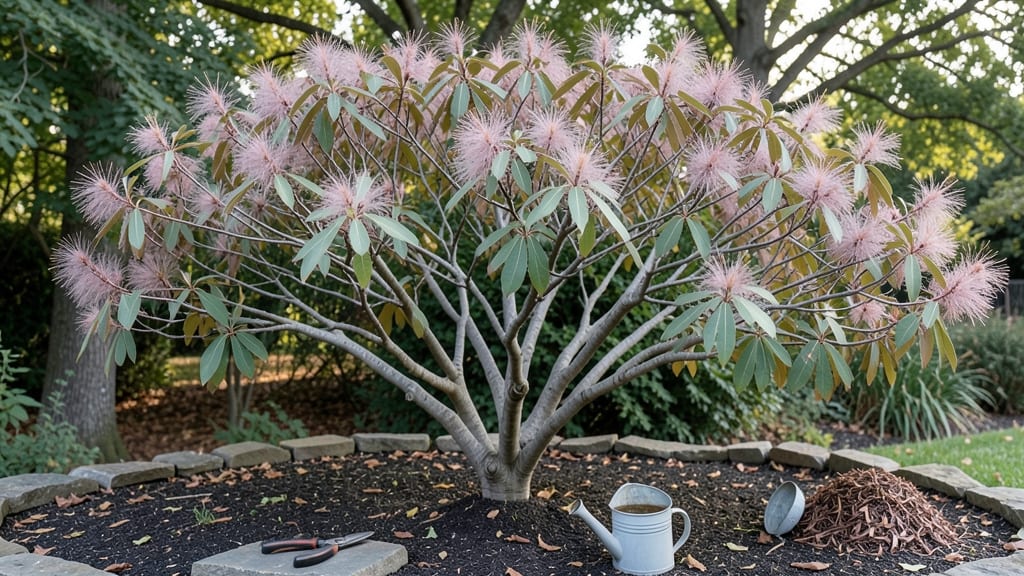
The cotinus obovatus American smoke tree brings smoky purple plumes and fiery fall foliage to Pacific Northwest gardens—thriving where others freeze. I’ve watched mine stand tall through 20-degree nights, its branches arching like a natural sculpture, while neighbors’ tender shrubs wilt.
The secret? This tree handles frost, drought, and even urban pollution better than most, making it the ultimate low-maintenance star.
It’s all about the right spot: full sun to part shade, well-draining soil, and a little patience for its slow-but-sure growth. My tree started as a 3-foot sapling and now stretches 15 feet wide—perfect for anchoring garden beds or framing patios.
The foliage shifts from deep green to fiery red-orange by autumn, while those signature smoke-like seed clusters add drama year-round.
Pruning is simple: trim back leggy branches in late winter to encourage bushier growth, and you’ll get even more of those iconic plumes. The roots spread wide but shallow, so mulch helps retain moisture while keeping the soil cool.
Once established, it’s nearly indestructible—drought-tolerant and pest-resistant, which means fewer headaches for you.
Whether you’re filling a large border or adding structure to a small yard, this tree delivers four-season interest with minimal effort. The Pacific Northwest’s changeable climate won’t phase it, and its adaptability makes it a winner for both city and country gardens.
Ready to make yours the talk of the neighborhood?
📚 In This Guide
- What you need
- Instructions
- Tips and common mistakes
- Wrapping up and next steps
What you need
- ● Pruning shears: Bypass pruners (for clean cuts on stems up to ½ inch thick). Example: Felco F-2 or Corona Tools 525.
- ● Loppers: For thicker branches (½–2 inches). Example: Fiskars PowerGear or Bahco Forester.
- ● Pruning saw: For branches thicker than 2 inches. Example: Felco F-22 or Corona Tools 10-inch pruning saw.
- ● Disinfectant: 70% isopropyl alcohol or a 10% bleach solution (to sterilize tools between cuts).
- ● Garden gloves: Heavy-duty, cut-resistant (e.g., Mechanix Wear or Fox River Garden Gloves).
- ○ Marking twine or flags: For tagging branches to remove (optional but helpful for complex pruning).
- ● Hand pruners with ratcheting mechanism: For easier cutting on stubborn branches.
- ● Extension pole: If your tree is tall (e.g., 10–15 feet), like a Felco Extendable Pole Pruner.
- ● Sealant (e.g., pruning paint): For large cuts (¼ inch or wider) to prevent disease entry.
- ● Safety glasses: Protect your eyes from debris.
- ● Wheelbarrow or bucket: To collect and dispose of pruned branches.
- ● Check the weather: Prune on a dry, overcast day (avoid rainy or windy conditions).
- ● Know your tree’s growth cycle: Late winter/early spring (before new growth) is ideal for major pruning.
- ● Review your pruning goals (e.g., shaping, rejuvenation, or removing deadwood).
Step-by-Step guide to planting and caring for Cotinus obovatus
This hardy Pacific Northwest native thrives with minimal fuss once you nail these foundational steps.
Select and Prepare the Planting Site
The American smoke tree loves sun but tolerates partial shade, making it versatile for most Pacific Northwest landscapes. Choose a location with at least 6 hours of direct sunlight daily for optimal foliage color and that signature smoky plume. In denser shade, expect slower growth and less vibrant fall hues.
Test your soil’s drainage by digging a 12-inch deep hole—if water pools after 30 minutes, amend the area with 2-3 inches of compost mixed into the top 6 inches of native soil. This tree handles a range of soil types but performs best in well-draining, slightly acidic to neutral soil (pH 6.0-7.5). I’ve seen it thrive in rocky slopes and urban planters alike.
Plant at the Right Depth and Spacing
Dig a hole twice as wide as the root ball but no deeper—planting too low suffocates roots, while too high invites drought stress. Gently loosen the root ball if roots are circling, then position the tree so the top of the root ball sits level with the surrounding soil. Backfill with native soil, tamping lightly every 2 inches to eliminate air pockets.
Space 4-6 feet apart for single specimens or 8-10 feet if using as a hedgerow. The tree’s low-maintenance nature makes it ideal for xeriscaping—once established, it requires little supplemental water. Mulch the base with 2-3 inches of organic mulch, keeping it 6 inches away from the trunk to prevent rot.
Water Deeply and Establish a Routine
Water deeply immediately after planting—soak the root zone until water drains 6 inches below the surface. Over the next 2-3 weeks, water twice weekly if rainfall is minimal, ensuring the soil stays moist but not soggy. After that, American smoke tree thrives on drought tolerance once roots establish.
During the first growing season, monitor the soil—stick your finger 2 inches down. If it feels dry, water thoroughly. Mature trees need water only during prolonged dry spells, typically once every 2-3 weeks in summer. The tree’s deep roots make it resilient to Pacific Northwest’s unpredictable rains.
Prune for Shape and Health
Prune in late winter or early spring before new growth begins. Remove dead, diseased, or crossing branches first—these compete for energy and detract from the tree’s airy, cascading habit. To encourage that signature smoky plume, lightly trim back 1/3 of the longest stems each year. Avoid heavy pruning, as this tree responds best to minimal shaping.
If you notice yellowing leaves, it’s often a sign of overwatering or poor drainage. Trim back affected branches and adjust your watering schedule. The tree’s natural resistance to pests means you’ll rarely need to intervene—just an occasional spray of neem oil if aphids appear. Regular pruning keeps the tree open and airy, reducing humidity-related issues.
Enjoy Year-Round Interest and Minimal Maintenance
The American smoke tree delivers drama with almost no effort. In spring, watch for pinkish flower plumes that transform into cottony seed heads by summer. Fall brings golden-yellow foliage, and even winter offers exfoliating bark for texture. Its zone 5-8 hardiness means it survives Pacific Northwest winters without fuss.
Fertilize only if growth stalls—apply a balanced, slow-release fertilizer in early spring. Otherwise, this tree’s adaptability means you’ll spend more time admiring it than tending to it. Plant it where you can enjoy its year-round structure, whether as a standalone specimen or in a mixed border.
Tips & tricks for perfect Cotinus obovatus planting and care
These pro tips will help you get the most out of your American smoke tree with minimal effort—because once planted right, this tree practically takes care of itself.
Sunlight Secret: While the instructions mention at least 6 hours of direct sunlight daily, I’ve found that positioning your tree where it gets morning sun and afternoon shade in hotter Pacific Northwest summers actually enhances foliage longevity. The tree’s native range includes areas with partial shade, so don’t be afraid to experiment with placement—just watch for less vibrant fall colors if you move it too far into shade.
Soil Test Hack: Before amending your soil, grab a handful of native dirt and mix it with water in a jar. If it stays clumpy after 30 minutes (like the drainage test in Step 1), you definitely need that 2-3 inches of compost. For faster results, I like to use a simple pH test kit to confirm that neutral range—most garden centers carry them for under $10. This tree’s adaptability means it’ll grow in many soils, but those ideal conditions make all the difference for that signature smoky plume.
Watering Wisdom: The 2-3 weeks of twice-weekly watering is crucial, but here’s what I’ve learned: water in the early morning to prevent fungal issues from evening moisture. And when checking soil moisture with your finger, press firmly—if it feels like a damp sponge at 2 inches down, you’re good. Too often, gardeners water when the surface feels dry, which leads to shallow root development. This tree’s deep roots need that consistent moisture deeper down.
Pruning Pro Tip: When you’re trimming back 1/3 of the longest stems each year, focus on the outermost branches first. This creates that beautiful cascading habit while maintaining an open center that lets light and air circulate. I also recommend using clean, sharp pruners—dull tools crush stems, making them more susceptible to disease. And if you’re nervous about shaping, just remember: this tree handles pruning mistakes better than most!
Pro Tips for Cotinus Obovatus American Smoke Tree
- These pro tips will help you get the most out of your American smoke tree with minimal effort—because once planted right, this tree practically takes care of itself.
- The tree’s native range includes areas with partial shade, so don’t be afraid to experiment with placement—just watch for less vibrant fall colors if you move it too far into shade.
- Soil Test Hack: Before amending your soil, grab a handful of native dirt and mix it with water in a jar.
Frequently asked questions
Got questions about the Cotinus obovatus (American Smoke Tree)?
You’re not alone—this stunning PNW native is full of surprises! Here are answers to the most common queries to help you grow, prune, and enjoy your tree like a pro.
Is the American Smoke Tree truly frost-resistant in the Pacific Northwest?
The Cotinus obovatus is exceptionally cold-hardy, thriving in USDA Zones 5–8, including the PNW’s chilly winters. Its native range spans from Canada to the Midwest, so it’s built to handle frost, snow, and even late spring freezes. Just avoid soggy soils—drainage is key!
When’s the best time to prune an American Smoke Tree for maximum fluff?
Prune after flowering (late summer to early fall) to shape the tree and encourage next year’s smoky pink plumes. Avoid heavy pruning in winter—it can stress the plant. For dramatic results, trim 1/3 of old growth every 2–3 years to keep it lush and bushy.
Can I grow an American Smoke Tree in full shade? Will it still look smoky?
While it tolerates partial shade, full shade will reduce its signature plume production and vibrant foliage. Aim for at least 4–6 hours of sunlight daily for the best "smoke show." A sunny spot with afternoon shade works well in hotter PNW summers.
What pests or diseases should I watch for with my Smoke Tree?
This tree is disease-resistant, but watch for:
- Aphids: Spray with water or insecticidal soap if clusters appear.
- Spider mites: Dry conditions attract them—keep leaves hydrated.
- Powdery mildew: Rare, but improve airflow if you spot white residue.
Are there dwarf varieties of the American Smoke Tree for small gardens?
Yes! While Cotinus obovatus itself isn’t naturally dwarf, the ‘Royal Purple’ cultivar stays compact (8–10 ft tall) and offers deep purple foliage. For even smaller spaces, consider Cotinus coggygria ‘Annan’s Purple’ (6–8 ft), though it’s slightly less cold-hardy. Both deliver smoky drama in mini form!
Wrapping up and next steps
The Cotinus obovatus—or American Smoke Tree—is a standout for Pacific Northwest gardeners, blending year-round beauty, resilience, and low-maintenance charm. 🌿 Whether you're drawn to its fiery fall foliage, delicate spring blooms, or frost-hardy nature, this tree delivers drama with minimal fuss.
With the right pruning techniques, you’ll keep it thriving for decades.
Ready to elevate your garden? Start small: pick a sunny spot, gather your tools, and give your Smoke Tree the care it deserves. Watch it transform your landscape into a seasonal masterpiece! 🌟