Pruning
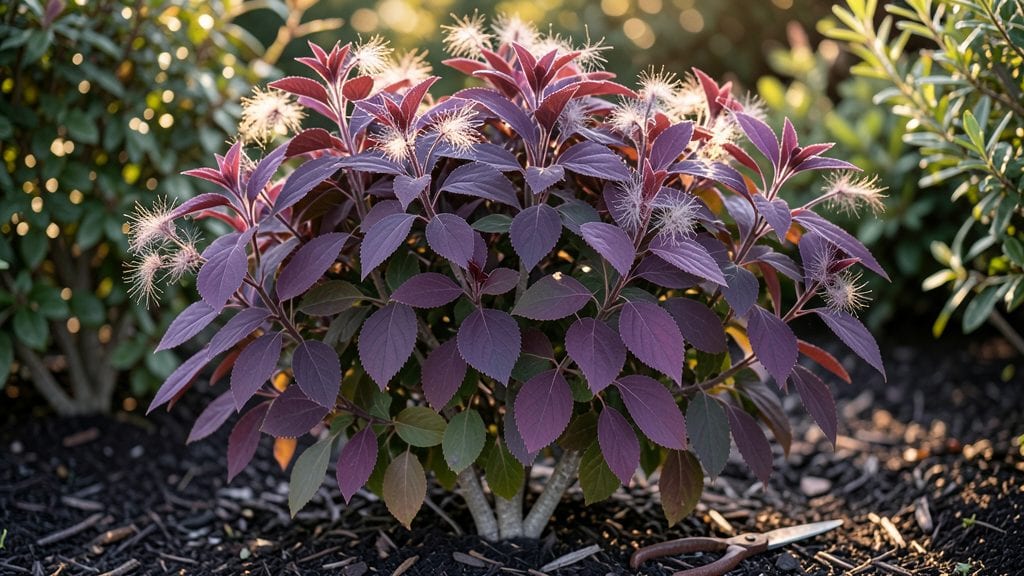
This royal purple smoke bush tree thrives in Pacific Northwest winters, its deep purple foliage and smoky seed plumes creating a showstopper that needs minimal fuss.
I’ve pruned mine for five years now, and the secret to keeping it lush isn’t complicated—just strategic cuts that encourage new growth while preserving its signature color. The key is timing: late winter or early spring, before buds swell, when the tree’s energy shifts from dormancy to renewal.
This bush handles frost like a champ, making it perfect for zones 5 through 8, and its drought tolerance means you won’t need to water it often once established. The pruning itself takes just 15-20 minutes per year, and the results—a compact, vibrant shrub—last all season.
Even better, it attracts pollinators and pairs beautifully with evergreens or perennials for year-round interest.
You’ll end up with a tree that looks like it belongs in a botanical garden, not your backyard. The foliage stays rich purple even in summer heat, and those feathery seed plumes add a dreamy, almost ethereal texture to any landscape.
Plus, it’s one of those plants that rewards patience—each year, it grows denser and more striking with almost no effort from you.
Whether you’re shaping it as a standalone specimen or trimming it to fit a smaller space, the techniques here work for both formal hedges and loose, natural forms. Let’s get those shears ready—your smoke bush is about to shine.
📚 In This Guide
- What you need
- Instructions
- Tips and common mistakes
- Wrapping up and next steps
What you need
- ● Pruning shears: Bypass pruners (sharp, 6-8" blades) for clean cuts on small branches.
- ● Loppers: 1 pair (8-10" handles) for thicker branches (up to 1.5" diameter).
- ● Pruning saw: 1 lightweight saw with a curved blade for stubborn, larger limbs.
- ● Disinfectant: 70% isopropyl alcohol or a 10% bleach solution (1 part bleach to 9 parts water) to sterilize tools between cuts.
- ● Gloves: Heavy-duty gardening gloves (cut-resistant for safety).
- ○ Tree pruning sealant: 1 small bottle (optional but helpful for sealing large cuts to prevent disease).
- ● Tarp or drop cloth: 1 large sheet (4’x6’ or bigger) to catch debris.
- ● Buckets or bags: 2-3 sturdy containers for pruned branches (for compost or disposal).
- ● Ladder or step stool: Adjustable height (6-8 ft) to reach higher branches safely.
- ● Hand pruners: Compact shears for precision trimming on delicate stems.
- ● Extension pole saw: For high branches without a ladder (if available).
- ● Plant food: Slow-release fertilizer (e.g., 10-10-10) to nourish the tree post-pruning.
- ● Mulch: Shredded bark or wood chips (2-3 inches) to protect roots after pruning.
- ● Camera or phone: To document your progress (because every pruning masterpiece deserves a snapshot!).
Instructions for pruning royal purple smoke bush trees in the Pacific Northwest
Here's the straightforward approach I've used for years to keep these stunning shrubs healthy and vibrant through our region's frost and rain.
Time Your Pruning for Late Winter or Early Spring
Prune your Royal Purple Smoke Bush between late February and early March, just as new growth begins to swell. This timing ensures you remove last year's spent blooms while avoiding the risk of frost damage to fresh cuts. In the Pacific Northwest, our winters can linger, so wait until you see buds starting to plump up—that's your cue to grab the shears.
Never prune in fall. You'll encourage tender new growth that won't survive our damp, chilly winters. I always check the forecast for a dry, above-40°F day before cutting—wet conditions spread disease, and cold snaps can stress fresh cuts.
Remove Dead, Damaged, or Crossing Branches First
Start by eliminating any branches that are dead, diseased, or rubbing against others. These are easy to spot—they'll be brown and brittle or have no leaves. Cut these back to the main stem at a 45-degree angle, about ¼ inch above a healthy bud facing outward. This shape prevents water from pooling on the cut and encourages new growth in the right direction.
Next, look for branches growing directly inward toward the center of the shrub. These create dense, shaded areas that invite pests and reduce air circulation. Simply snip them off at their base. You'll notice how much more open and breathable the center becomes immediately—this prevents future fungal issues.
Thin Out Overcrowded Areas for Better Airflow
Royal Purple Smoke Bushes naturally grow in a rounded shape, but over time, they can become too dense. Step back and look for areas where branches are growing too close together. Select 1-2 of the thickest branches in each cluster and cut them back to the main stem. This opens up the shrub and lets sunlight penetrate to the center, which is crucial for our often-shady Pacific Northwest gardens.
Don't remove more than 25% of the plant's total foliage in one pruning. You'll see healthy new shoots emerge from the base within 4-6 weeks—that's your reward for creating space. If you go overboard, the plant may struggle to recover before summer heat arrives.
Shape the Shrub for Balance and Structure
Now it's time to refine the shape. Royal Purple Smoke Bushes respond well to light shaping, so I like to maintain their natural rounded form. Use your hand as a guide—if a branch is growing too far forward or backward, trim it back to create a more balanced silhouette. Always cut just above a bud or side branch to encourage outward growth.
For taller bushes, you can also lightly trim the top to control height. Never cut more than ⅓ of the plant's height at once. The goal is to maintain that stunning purple foliage while keeping the shrub manageable. Step back frequently to check your progress—you'll see how much better the structure looks when branches are evenly spaced.
Clean Up and Monitor for New Growth
After pruning, collect all the clippings and dispose of them properly. Don't leave them on the ground—they can harbor pests and diseases that might reinfect your bush. I always wear gloves for this step, as the branches can be sharp and the foliage might irritate sensitive skin.
Water the base of the plant deeply after pruning to help it recover. You'll notice new growth emerging from the buds within 2-3 weeks. This is a good sign! Keep an eye out for any signs of stress, like yellowing leaves or wilting, which could indicate over-pruning or disease. If you see these, adjust your care accordingly—usually more water and a little patience.
Tips & tricks for pruning royal purple smoke bush trees
Here's what nobody tells you about keeping these Pacific Northwest beauties thriving through our unpredictable seasons.
Timing is Everything: The late February to early March window is critical because that's when the plant's energy shifts from dormancy to growth. If you prune too early, you risk exposing fresh cuts to late frosts—something I learned the hard way after seeing new growth blacken in a surprise freeze. And remember, those plumping buds are your best indicator, not the calendar. In our region, waiting for visible buds means you're perfectly aligned with the plant's natural cycle.
Cutting Technique Matters: That 45-degree angle with ¼ inch above a bud isn't just arbitrary—it's about directing growth and preventing water damage. I've seen too many cuts made straight across that collect water and rot. Always cut just above a bud facing outward to encourage the plant to grow away from the center. Think of it like giving your bush a roadmap for where to send its new energy.
Don't Overdo It: The 25% foliage limit in one pruning is non-negotiable for Royal Purple Smoke Bushes. I once removed 40% of a client's bush and watched it struggle through summer—yellowing leaves and stunted growth for months. Remember, these plants store energy in their roots, and you're asking them to support new growth while recovering from the cut. Patience pays off with those vibrant purple leaves by summer.
Post-Pruning Care: That deep watering after pruning isn't just a formality—it's about helping the plant recover from stress. I've noticed the biggest difference in recovery when I water immediately after cutting. And keep an eye out for those first signs of new growth in 2-3 weeks. It's like watching a plant wake up from a long nap, and it's incredibly satisfying when you've done everything right.
Pro Tips for Royal Purple Smoke Bush Tree
- Here's what nobody tells you about keeping these Pacific Northwest beauties thriving through our unpredictable seasons.
- Timing is Everything: The late February to early March window is critical because that's when the plant's energy shifts from dormancy to growth.
- Cutting Technique Matters: That 45-degree angle with ¼ inch above a bud isn't just arbitrary—it's about directing growth and preventing water damage.
Frequently asked questions
When is the best time to prune my Royal Purple Smoke Bush?
The ideal time to prune is late winter or early spring (before new growth starts), but you can also trim lightly after flowering in summer. Avoid heavy pruning in fall—it stimulates tender growth that may not survive PNW winters. Pro tip: Use sharp bypass pruners to avoid tearing the bark.
How cold-hardy is this plant, and does it need winter protection?
Royal Purple Smoke Bush thrives in USDA Zones 5–8, making it perfect for the PNW’s chilly winters. While it’s frost-resistant, young plants (under 3 years old) may benefit from a light mulch around the base to insulate roots. Established bushes handle snow and ice like a champ!
Can I shape it like a hedge, or does it need a more natural look?
This bush is flexible—you can prune it into a hedge (especially if planted in rows), but it also looks stunning in a natural, layered form. For a bushier look, prune just the tips of branches to encourage branching. Avoid over-trimming; the smoky plumes thrive with some wild structure!
What should I do if my Smoke Bush isn’t producing its signature purple smoke?
Lack of smoke plumes often means over-pruning or poor nutrient balance. Try:
- Fertilize lightly in early spring with a balanced 10-10-10.
- Prune less aggressively—focus on removing only dead or crossing branches.
- Ensure it gets full sun (6+ hours/day); shade reduces color intensity.
Are there drought-tolerant alternatives if this plant struggles in my dry PNW microclimate?
Yes! If your soil drains too quickly, consider:
- Russian Sage (Perovskia atriplicifolia) – Drought-loving, purple blooms, and deer-resistant.
- Oregon Grape (Mahonia aquifolium) – Native, evergreen, and thrives in shade.
- Ninebark (Physocarpus opulifolius ‘Little Devil’) – Similar purple foliage, tough as nails.
Wrapping up and next steps
The Royal Purple Smoke Bush Tree is a stunning, low-maintenance gem for Pacific Northwest gardens—especially with its frost-resistant nature and vibrant purple foliage. By mastering the right pruning techniques, you’ll encourage lush growth, vibrant blooms, and long-term health. 🌿✂️
Ready to transform your outdoor space? Grab your pruners, review the blueprint, and start pruning with confidence—your Royal Purple Smoke Bush will thank you with years of beauty! For extra inspiration, explore seasonal care tips or connect with local gardening communities to share your progress.