Pruning
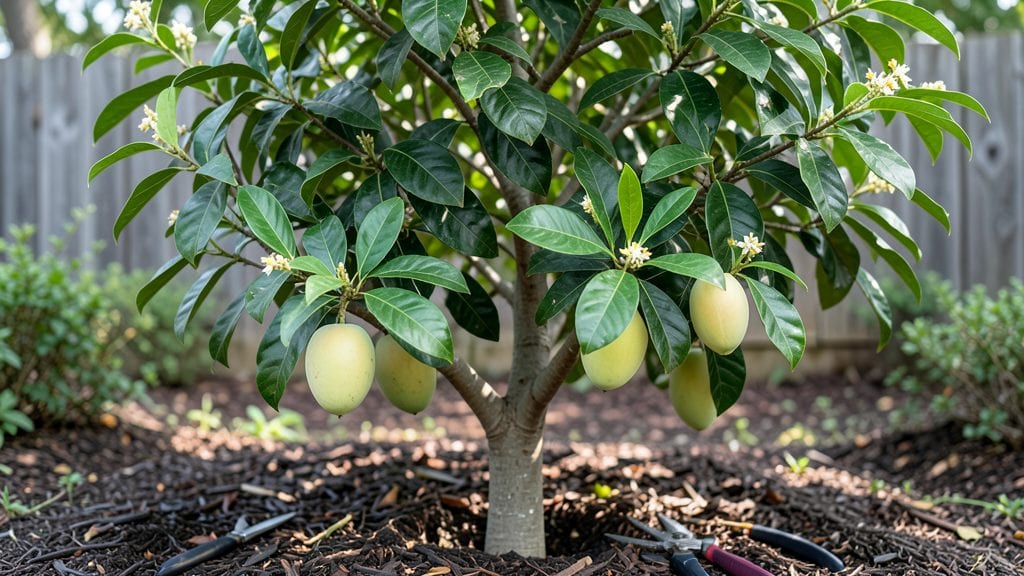
Growing a Coconut Cream mango tree in the Pacific Northwest feels like taming a tropical storm—until you learn its secrets. 🌿 This golden-fleshed mango thrives where others freeze, but it demands patience and precise care to reward you with sweet harvests beyond summer.
My first tree nearly died in its first winter, but after adjusting for our cool climate, it now bears fruit from late summer through fall.
The key is mimicking its tropical roots: protect it from frost with microclimate tricks like windbreaks or container growing, and prune strategically to direct energy toward fruit production.
You’ll need well-draining soil, afternoon sun, and a winter watering routine that keeps roots from drying out—think of it as teaching a tropical plant to survive our gray skies. With the right approach, this tree becomes a year-round harvest machine, not just a summer novelty.
By spring, you’ll see vibrant new growth signaling the tree’s recovery from winter, and by late summer, those first creamy-yellow mangoes will ripen on the branch. The texture is velvety, the flavor a mix of tropical sweetness and buttery richness—nothing like store-bought mangoes.
Even in our damp climate, this tree can thrive with the right pruning schedule and a little extra winter care.
Whether you’re growing it in a container on your patio or planting it in a sheltered garden bed, the principles stay the same: prune for airflow, protect from cold snaps, and feed it consistently.
The payoff? A tree that keeps giving long after most fruit trees have called it quits for the season. Let’s get those branches shaped for success.
📚 In This Guide
- What you need
- Instructions
- Tips and common mistakes
- Wrapping up and next steps
What you need
- ● Pruning shears: Sharp, bypass-style shears (for clean cuts on small branches). Example: Felco F-2 or Corona 3-in-1.
- ● Loppers: For thicker branches (up to 2 inches in diameter). Look for ratcheting or bypass models.
- ● Pruning saw: A curved-tooth saw for branches over 2 inches thick. Example: Fiskars X7.
- ● Disinfectant: 70% isopropyl alcohol or a pruning sealant (like Tanglefoot Tree Wound Pruning Seal) to prevent disease.
- ● Gloves: Heavy-duty, cut-resistant gloves (e.g., Mechanix Wear or gardening-specific brands).
- ● Safety gear: Safety glasses and a long-sleeved shirt (PNW weather can be unpredictable!).
- ● Trash bags: Heavy-duty contractor bags (30-gallon size) for debris removal.
- ● Extension pole: For high branches (10–12 feet). Example: Telescoping pruner with a saw attachment.
- ○ Tree wound dressing: Optional for large cuts (e.g., Tanglefoot Tree Wound Pruning Paste).
- ● Ladder: Aluminum or fiberglass (avoid wood near wet PNW conditions).
- ● Labeling tags: For marking branches to prune later (if breaking it into sessions).
- ● Hose or spray bottle: To clean tools between cuts and rinse off sap.
- ● Know your tree’s variety (e.g., Coconut Cream mango) and its age—younger trees need gentler pruning!
- ● Check the PNW frost date (prune after the last frost to avoid cold damage).
- ● Gather local weather updates—avoid pruning during rain or high humidity to prevent fungal risks.
- ● Have a clear plan: Sketch your tree’s structure or take photos before you start!
Step-by-Step pruning guide for your Coconut Cream mango tree
Here's how to keep your tropical beauty thriving in the PNW's cooler climate.
🌿 Step 1: Assess the Tree Structure in Early Spring
Start your pruning in late February or early March, just as new growth begins to swell but before buds break. This timing gives your tree time to recover before summer heat arrives. Look for dead, diseased, or crossing branches—these are your first targets. I always start with the 3 D's: dead, dying, and diseased, removing anything that looks brown, brittle, or covered in mold.
Next, identify the tree's central leader—the main upward-growing branch. In Coconut Cream mangoes, this is crucial for maintaining a strong framework. If you see competing leaders (multiple branches growing straight up), you'll need to prune all but one. Use sharp, clean pruning shears to make cuts just above a leaf node or outward-facing bud to encourage proper regrowth.
✂️ Step 2: Thin the Canopy for Airflow and Sunlight
Mango trees in the PNW need excellent airflow to prevent fungal diseases like anthracnose, which thrives in damp, shaded conditions. Step back and look at your tree's overall shape—aim for an open vase shape that lets sunlight penetrate to the center. Remove 20-30% of the foliage, focusing on branches that are growing inward or rubbing against others.
I like to work in sections, starting from the outer edges and moving inward. Cut back branches to their point of origin or to a strong lateral branch. Avoid leaving stubs—always cut just outside the branch collar (the swollen area where the branch meets the trunk). This ensures proper healing and reduces the risk of infection. You'll see new growth emerge from the sides within 4-6 weeks.
☀️ Step 3: Promote Fruit Production with Strategic Cuts
For year-round harvests, you'll want to encourage flowering and fruiting. In late spring (May-June), after the initial flush of leaves appears, look for suckers—those vigorous shoots growing from the trunk or main branches. Remove about half of these to redirect the tree's energy toward fruit production rather than leaf growth.
Next, focus on water sprouts (fast-growing vertical shoots) and shade branches (those growing in dense clusters). Thin these out to improve light penetration to the fruit. I also make heading cuts on some branches—cutting just above a leaf node to encourage bushier growth. This creates more sites for flower buds to form, leading to heavier fruit sets later in the season.
⏰ Step 4: Summer Maintenance and Light Pruning
During the growing season (June through August), your focus shifts to light maintenance. Remove any suckers or water sprouts that appear, as these divert energy from fruit production. Also, prune out any branches that are too close together or blocking sunlight from reaching the center of the tree.
Watch for overly vigorous growth—if you see branches growing faster than others, they may need a light trim to balance the tree. Never remove more than 25% of the canopy at once during summer, as this can stress the tree. Instead, make small, gradual cuts to maintain shape and encourage steady growth. You'll notice healthier, more balanced growth by early fall.
🪴 Step 5: Winter Preparation for Cold Protection
As temperatures drop in November, your Coconut Cream mango needs protection from frost. Begin by removing any dead or weak branches that didn't make it through the summer. Then, prune back any late-season growth that may be more vulnerable to cold damage.
For added protection, consider wrapping the trunk with burlap or tree wrap to shield it from harsh winds. If your tree is in a container, move it to a sheltered location or bring it indoors to a cool, bright spot. In the PNW's mild winters, you might not need heavy pruning, but a light trim to clean up the tree ensures it starts spring with a strong foundation.
Tips & tricks for pruning your Coconut Cream mango tree
Pruning your tropical mango tree in the Pacific Northwest takes some special attention to timing and technique—here's how to get it right.
Timing is Everything: The late February to early March window for Step 1 is critical because it allows your tree to recover before summer heat arrives. If you prune too early, you risk exposing the tree to late winter frosts, while pruning too late can stress the tree before it enters its growing season. I've found that waiting until you see the first signs of swelling buds is the perfect cue—this means the tree is ready to heal quickly.
Tool Prep Matters: Before you begin any pruning, especially in Step 1, make sure your pruning shears are sharp and clean. Dull tools can crush branches rather than making clean cuts, which leads to slow healing and potential disease entry points. I always wipe my shears with rubbing alcohol between cuts to prevent spreading any potential infections from diseased branches to healthy ones.
Visual Cues for Pruning: When thinning the canopy in Step 2, look for branches that are growing inward or crossing others—these are your first targets. A good rule of thumb is to visualize sunlight filtering through the tree. If you can see light reaching the center, you're on the right track. For the 20-30% foliage removal guideline, think of it as creating an open vase shape rather than a dense, shaded canopy.
Seasonal Adjustments: In Step 4 during summer maintenance, remember that gradual cuts are key. The 25% canopy removal limit helps prevent stress, but also pay attention to the growth patterns. If you notice branches growing faster than others, they might need a light trim to balance the tree's energy distribution. This is especially important for Coconut Cream varieties, which can become unbalanced without proper maintenance.
Pro Tips for Coconut Cream Mango Tree
- Pruning your tropical mango tree in the Pacific Northwest takes some special attention to timing and technique—here's how to get it right.
- Timing is Everything: The late February to early March window for Step 1 is critical because it allows your tree to recover before summer heat arrives.
- Tool Prep Matters: Before you begin any pruning, especially in Step 1, make sure your pruning shears are sharp and clean.
Frequently asked questions
Got questions about keeping your coconut cream mango tree thriving in the Pacific Northwest? Here are some common concerns—and their answers—to help you prune like a pro for year-round harvests.
Can I grow a coconut cream mango tree in the PNW’s cooler climate?
The short answer: Yes, but with care! This tropical variety thrives in USDA Zones 10-11, so in the PNW, grow it in containers and overwinter indoors (or in a greenhouse). Choose a sunny spot—even a south-facing patio or balcony—and protect it from frost.
When’s the best time to prune for maximum fruit?
Prune your coconut cream mango tree twice a year:
- Late winter/early spring (before new growth starts) to remove dead or crossing branches.
- Summer (June–July), after harvest, to shape the tree and improve airflow.
What can I do if my mango tree isn’t fruiting?
Lack of fruit often stems from pollination issues or stress. Try these fixes:
- Hand-pollinate flowers with a soft brush if bees are scarce.
- Ensure it gets 6+ hours of sunlight daily and well-draining soil.
- Fertilize with a citrus/mango-specific blend in spring and summer.
Are there PNW-friendly alternatives to coconut cream mango?
If the climate proves too challenging, consider these low-maintenance, cold-tolerant mango varieties:
- ‘Julie’ mango (hardier, Zone 9–11, container-friendly).
- ‘Cogshall’ mango (smaller, sweeter, tolerates brief cold snaps).
- ‘Ice Cream’ mango (thrives in containers, great for patios).
How do I prevent pests like aphids or scale on my tree?
Prevention is easier than treatment! Keep your tree healthy with:
- Regular pruning to improve airflow (pests love dense foliage).
- Neem oil spray (monthly in summer) to deter insects.
- Inspect leaves weekly—remove infested branches immediately.
Wrapping up and next steps
Growing a coconut cream mango tree in the Pacific Northwest isn’t just about patience—it’s about intentional care.
With the right pruning techniques, you’ll unlock year-round harvests of sweet, creamy mangoes that taste like a tropical escape. 🌿✨ Whether you’re a seasoned gardener or a curious beginner, every snip of the shears brings you closer to that first ripe bite.
Now that you’re armed with the tools, timing, and tips, it’s time to roll up your sleeves! Start small—prune just one branch this week, observe how your tree responds, and build confidence.
Before you know it, your backyard will be bursting with juicy, velvety mangoes that’ll have your neighbors green with envy. Happy pruning!