Pruning
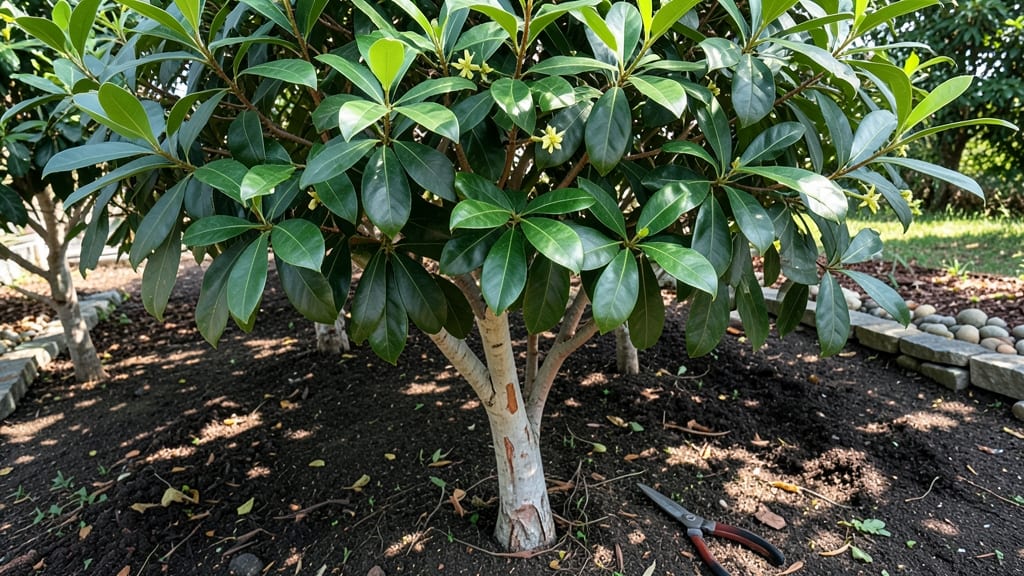
Growing a Cinnamomum zeylanicum tree in the Pacific Northwest means you're nurturing a living spice cabinet—its fragrant leaves and aromatic bark are worth every patient season. 🌿 I've learned that these trees thrive in our cool, damp climate when given the right care, especially during pruning, which keeps them lush and productive year-round.
The key is light pruning in late winter or early spring to encourage new growth, while avoiding heavy cuts that stress the tree. Pacific Northwest gardeners often struggle with fungal diseases in the damp air, so I focus on air circulation and sterilizing tools between cuts.
With the right approach, you'll see glossy new leaves by spring and a stronger tree structure for years to come.
Your cinnamon tree will reward you with fragrant foliage that smells like a holiday kitchen, plus the potential for harvesting bark for culinary use. The process isn't quick—these trees grow slowly but steadily—so think of pruning as a long-term investment in a living spice resource.
Even in containers, they adapt well to our region's climate when given proper drainage.
For those chilly, rainy winters, protect young trees with a breathable cover and avoid overwatering. The goal is to keep the tree healthy enough to bounce back strong each season. With consistent care, your cinnamon tree will become the aromatic centerpiece of your garden—or even your kitchen.
📚 In This Guide
- What you need
- Instructions
- Tips and common mistakes
- Wrapping up and next steps
What you need
- ● Pruning shears: Bypass shears (for clean cuts) or anvil shears (for thicker branches). Specs: 6–8" blades, stainless steel.
- ● Loppers: For branches ½–1½" thick. Specs: Ratcheting or bypass style, 12–16" handles.
- ● Pruning saw: Curved-tooth saw for branches >1½". Specs: 10–12" blade, non-serrated.
- ● Disinfectant: 70% isopropyl alcohol or Pruning sealant (for wound protection).
- ● Gloves: Heavy-duty, cut-resistant (e.g., Mechanix Wear or Tough Outdoors).
- ● Safety glasses: ANSI-rated for debris protection.
- ○ Ladder or step stool: Sturdy, 6–8' height (for taller trees). Optional: Extendable pole pruners to avoid climbing.
- ● Trash bags: Heavy-duty (13–20 gallon) for clippings.
- ● Sharpie or pruning marker: For labeling cuts (if training the tree).
- ● Weather check: Prune on a dry, calm day (avoid rain/snow—PNW’s dampness promotes rot).
- ● Seasonal timing: Late winter/early spring (Feb–March) for major pruning; light trims in summer (July–Aug) to shape.
- ● Local regulations: Verify if your area requires permits for tree work (e.g., Bellingham’s urban forestry code).
- ● Extension pole pruners: 10–12' reach (e.g., Fiskars X27) for high branches.
- ● Hose & nozzle: For rinsing tools post-prune (PNW’s mold risk!).
- ● Tree growth regulator: Seaweed extract spray to boost recovery after cuts.
- ● Camera or phone: Document "before/after" for tracking growth patterns.
Step-by-step pruning guide for Pacific Northwest Cinnamomum zeylanicum trees
This is how I keep my cinnamon trees thriving through rainy winters and mild summers.
✂️ Step 1: Time Your Pruning for Optimal Growth
Prune your cinnamomum zeylanicum tree late winter to early spring—just as new growth begins but before buds break. In the Pacific Northwest, aim for February to March when temperatures hover around 50-60°F. This timing ensures you remove dead wood while encouraging vigorous new growth before summer's heat.
Never prune in fall or winter when the tree is dormant—you'll risk exposing it to cold damage. Watch for swollen buds along the branches; that's your cue that spring growth is about to start. I like to mark the calendar a month before to avoid missing this critical window.
🌿 Step 2: Remove Dead, Diseased, or Crossing Branches First
Start by inspecting the tree for dead branches (no leaves, dry bark) or diseased wood (discolored, oozing sap). Use clean, sharp pruning shears to make 45-degree cuts just outside the branch collar—the swollen area where the branch meets the trunk. This prevents unsightly stubs and promotes faster healing.
Next, look for branches that cross or rub against each other. These create wounds that invite pests and disease. Remove the smaller of the two branches at its base. If you're unsure which to cut, I always go with the smaller branch—it's less disruptive to the tree's structure.
☀️ Step 3: Thin the Canopy for Better Airflow
Step back and visualize the tree's shape. You want light to penetrate the center—cinnamon trees hate dense, shaded interiors where humidity lingers. Select branches that are growing inward and cut them back to an outward-facing bud. Aim to remove no more than 25% of the foliage in one session to avoid shocking the tree.
Pay special attention to the lower branches. In the PNW's damp climate, removing these improves airflow and reduces fungal risks. Use your shears to trim back any branch that's touching the ground or blocking sunlight from reaching the base.
⏰ Step 4: Shape the Tree for Structural Balance
Now focus on refining the tree's form. Cinnamon trees respond well to open, vase-like shapes that allow light and air to circulate. Start by identifying the main scaffold branches—these are the thick, sturdy limbs that form the tree's framework. Prune any weak or overly vigorous shoots that threaten to overpower these branches.
For height control, trim the topmost branches to encourage bushier growth. Cut just above a leaf node where new growth can emerge. Avoid "heading back" (cutting back to a stub)—this creates dense, weak growth. Instead, make clean cuts that leave the tree looking natural but balanced.
🌱 Step 5: Clean Up and Monitor for Recovery
After pruning, rake up all debris and dispose of it away from the tree to prevent disease. Sterilize your pruning tools with rubbing alcohol to avoid spreading pathogens. Water the tree deeply within 24 hours to help it recover from the stress of pruning—this is especially important in the PNW's dry summer months.
Watch for new growth within 4-6 weeks. Healthy cinnamon trees will sprout fresh leaves along the pruned branches. If you see yellowing leaves or wilting, you may have over-pruned. In that case, give the tree time—it's tougher than it looks and will bounce back with proper care.
Tips & tricks for perfect Pacific Northwest Cinnamomum zeylanicum pruning
Here's what I've learned after years of keeping my cinnamon trees lush and healthy in the PNW's unique climate.
Timing is Everything: The February to March window is non-negotiable for our region. If you miss it, you risk either pruning dormant wood (which won't regrow well) or cutting back new growth too early (which can be damaged by late frosts). I set calendar reminders because February sneaks up fast—especially when we're still dealing with winter rain. Watch for those swollen buds as your definitive cue, not just the calendar date.
Tool Preparation Matters: Clean, sharp pruning shears are your best friend. I sterilize mine with rubbing alcohol between cuts to prevent spreading disease—especially important in our damp climate. Dull shears tear wood instead of making clean cuts, which creates larger wounds that take longer to heal. For thicker branches, I use a pruning saw with a fine-toothed blade to avoid crushing the branch. Always clean your tools after each use to remove any sap or debris that could harbor pathogens.
Canopy Thinning Strategy: When thinning the canopy in Step 3, I work from the inside out. Start with the center branches that are blocking light—these are the ones growing inward toward the trunk. Cut back to an outward-facing bud to encourage new growth in the right direction. Remember the 25% rule: removing more than a quarter of the foliage at once can stress the tree. In our rainy climate, this is especially critical to prevent fungal infections from taking hold in overcrowded branches.
Post-Pruning Care: That deep watering within 24 hours is crucial, especially in our dry summer months. I use a soaker hose to deliver water slowly to the root zone without wetting the leaves. After pruning, I also apply a thin layer of mulch around the base (but not touching the trunk) to help retain moisture and regulate soil temperature. This mimics the tree's natural forest environment and gives it the best chance to recover quickly.
Pro Tips for Cinnamomum Zeylanicum Tree
- Here's what I've learned after years of keeping my cinnamon trees lush and healthy in the PNW's unique climate.
- Timing is Everything: The February to March window is non-negotiable for our region.
- Tool Preparation Matters: Clean, sharp pruning shears are your best friend.
Frequently asked questions
about pruning your Cinnamomum zeylanicum (true cinnamon tree) in the Pacific Northwest—because even tropical trees need a little TLC!When is the best time to prune my cinnamon tree in the PNW?
The ideal window is late winter to early spring (February–March), just before new growth begins. This mimics the tree’s natural dormancy cycle and minimizes stress. Avoid pruning in fall—cool, wet PNW weather can slow healing and invite fungal issues. If you must prune later, do it in late summer (August–September), but keep cuts small.
Can I prune my cinnamon tree in winter if it’s dormant?
Yes, but with caution! Light pruning (removing dead or damaged branches) is safe in mild PNW winters (above 20°F). Avoid heavy pruning—cold snaps can stress the tree. If frost is forecasted, wait until temperatures stabilize. Pro tip: Use sharp, sterilized tools to prevent tearing bark, which can invite pests.
How much can I prune without harming the tree?
For established trees, aim to remove no more than 25% of the canopy per year. Focus on:
- Dead, diseased, or crossing branches
- Suckers at the base (redirect energy to the main trunk)
- Overly dense growth blocking sunlight
What’s the best way to prune thick cinnamon branches?
Use bypass pruners or a pruning saw for branches thicker than ½ inch. For larger cuts:
- Make a bottom cut (1–2 inches below the branch collar) at a slight angle.
- Cut top-down just outside the branch collar to avoid tearing.
- Seal larger wounds (over 2 inches) with pruning sealant to prevent disease.
Pro tip: Step back after pruning—check for balanced light exposure. Uneven cuts can lead to weak regrowth.
Will pruning my cinnamon tree help it survive PNW winters?
Pruning alone won’t make it winter-hardy, but it reduces stress and improves airflow, which cuts down on fungal diseases (like powdery mildew) common in damp climates. Pair pruning with:
- Mulching (3–4 inches of organic mulch around the base)
- Winter protection (burlap wrap for young trees in exposed areas)
- Avoiding overwatering (let soil dry slightly between waterings)
If your tree shows yellowing leaves or dieback, it may need more shelter—consider moving it to a microclimate with afternoon sun.
Wrapping up and next steps
The Cinnamomum zeylanicum tree thrives in the Pacific Northwest with the right pruning care—balancing growth, health, and beauty year-round! 🌿 By mastering seasonal techniques, you’ll encourage lush foliage, prevent disease, and even boost cinnamon harvests (if applicable).
Your efforts will reward you with a resilient, vibrant tree that becomes the star of your landscape.
Ready to take the next step? Start small: pick one season’s pruning tips to practice, then gradually expand your skills. Before you know it, your Cinnamomum zeylanicum will be the envy of the neighborhood—and you’ll be the pruning pro behind it! 🌟