
Pruning
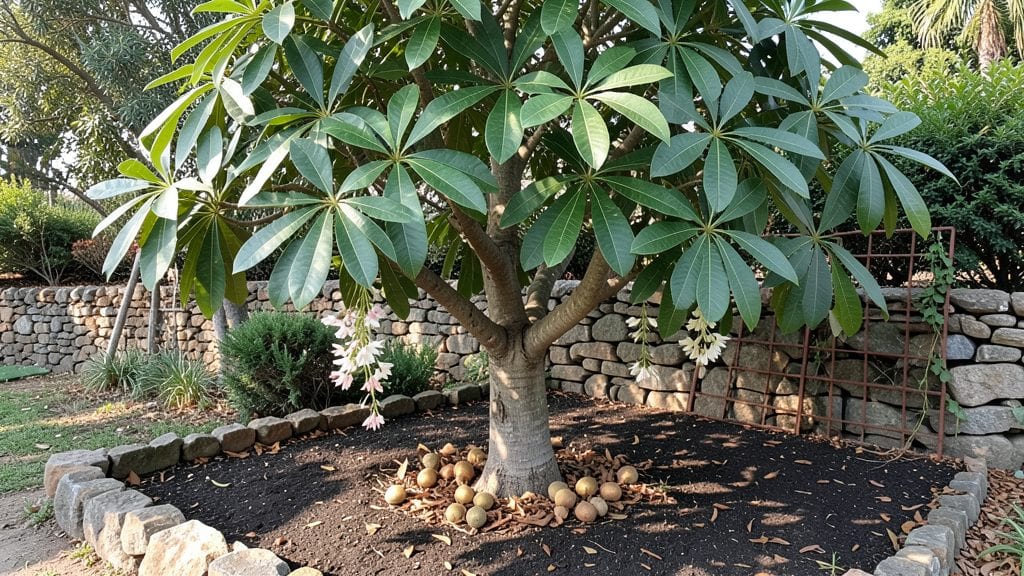
Growing a Caribbean almond tree in the Pacific Northwest means defying its tropical roots with smart pruning—this shade-loving giant thrives even in our cooler summers if you know the tricks. 🌿 The key isn’t just trimming branches; it’s shaping its growth to survive our wet winters while keeping it productive.
My first tree nearly lost its lower branches to rot before I learned how to prune for airflow and sunlight balance.
This tree needs well-draining soil and full sun to partial shade, but in PNW climates, we often plant it where it gets morning light and afternoon shade. Container growing works too—just use a 15-gallon pot with drainage holes and repot every 2-3 years.
Water deeply once a week in summer, less in winter, and watch for those signature umbrella-shaped leaves that tell you it’s happy.
With the right pruning, you’ll get edible nuts (though they’re small) and stunning fall colors—plus, it makes a 20-foot shade tree that outlasts most ornamentals. The secret is winter pruning to remove dead wood while encouraging new growth from the base.
Even in our damp climate, this tropical beauty can become your garden’s centerpiece.
Works for ground planting or large containers, and handles our winters better than you’d expect once established. Let’s get yours growing strong—PNW-style.
📚 In This Guide
- What you need
- Instructions
- Tips and common mistakes
- Wrapping up and next steps
What you need
- ● Caribbean Almond Tree Seedlings: 1-3 healthy, disease-free saplings (age 1-2 years, 3-5 ft tall)
- ● Pro tip: Look for grafted varieties for faster fruiting! 🌟
- ● Pruning Tools: 1 pair of bypass pruners (sharp, 6-8" blades)
- ● 1 pruning saw (for thicker branches, 8-10" blade)
- ● 1 loppers (for medium branches, 18-24" reach)
- ● 1 disinfectant spray (70% isopropyl alcohol or pruning sealant)
- ● Soil & Planting Supplies: 50 lbs of well-draining potting mix (or native soil amended with compost)
- ● 1 5-gallon container (for young trees) or direct planting hole (1.5x wider than root ball)
- ● 1 mulch (3-4" layer of wood chips or straw)
- ● Fertilizer: 1 lb of balanced fertilizer (10-10-10 or 6-6-6 NPK ratio)
- ● 1 tbsp of Epsom salt (for magnesium, if soil is deficient)
- ● 1 tree support stake (for young trees in windy PNW conditions)
- ● 1 hose with nozzle (for deep watering)
- ● 1 pruning shears (for detailed cuts, 4-6" blades)
- ● 1 tree wrap (to protect bark from winter sun/scratches)
- ● 1 soil moisture meter (to monitor drought stress)
Step-by-Step guide to pruning your Caribbean almond tree in the Pacific Northwest
Here's how I keep my Caribbean almond tree thriving year-round—using PNW-specific techniques to boost fruit production and protect against our damp, cooler climate.
✂️ Step 1: Time Your First Pruning for Late Winter Dormancy
Prune your Caribbean almond tree between mid-February and early March while it's still dormant but before buds begin swelling. In the Pacific Northwest, this timing avoids late-winter frost damage while giving the tree time to heal before spring growth. I look for bare branches with no green tissue—that's your cue it's safe to cut.
Use clean, sharp pruning shears to make cuts just outside the branch collar (the swollen area where the branch meets the trunk). Avoid leaving stubs—these invite disease. For larger branches over ½ inch thick, use loppers and disinfect them with rubbing alcohol between cuts to prevent bacterial spread.
☀️ Step 2: Open the Canopy for Better Airflow and Sunlight
The Caribbean almond thrives in full sun, but our PNW climate demands extra attention to airflow. Remove crossing or rubbing branches first—they create wounds where fungi can take hold. Next, thin out 20-30% of the interior branches to let sunlight reach the center of the tree.
Focus on removing branches that grow inward or downward. You'll see healthier, upward-growing branches emerge after pruning, which improves fruit production. Never remove more than ⅓ of the tree's foliage in one season—this stresses the tree and reduces next year's harvest.
🌱 Step 3: Shape for Wind Resistance and Fruit Accessibility
Caribbean almond trees in the PNW need a strong, open-center shape to withstand our frequent winds. Start by selecting 3-4 main scaffold branches spaced evenly around the trunk. These should be well-attached and at least ⅓ the diameter of the trunk—they'll support the tree's weight and structure.
Remove any water sprouts (fast-growing, vertical shoots) and suckers (shoots from the base). These compete for energy with fruit production. After shaping, step back and check for balanced weight distribution—if one side looks heavier, redistribute branches to prevent leaning.
💧 Step 4: Summer Pruning to Control Growth and Encourage Fruit
In late June or early July, do a light pruning to remove any dead, diseased, or broken branches that appear after spring growth. Also, cut back excessive new growth that's growing too vigorously—this redirects energy toward fruit development rather than leaf production.
Look for sucker growth at the base and prune it immediately. These shoots drain energy from the tree's main structure. After pruning, give the tree a deep watering to help it recover. You'll notice new, smaller leaves forming—this indicates the tree is focusing on fruit rather than just foliage.
⏰ Step 5: Prepare for Winter with a Final Pruning and Protection
In late October or early November, do a final light pruning to remove any weak or crossing branches that appeared during the growing season. This prevents winter storms from damaging the tree. After pruning, apply a 2-3 inch layer of wood chips around the base to protect roots from freezing.
Wrap the trunk with tree wrap or burlap if you're in a colder microclimate (like the Cascades foothills). This prevents sun scald and moisture loss during winter. By spring, you'll see fresh, green buds—a sign your tree is ready for another productive season.
Tips & tricks for pruning your Caribbean almond tree
Mastering the art of pruning your Caribbean almond tree in the Pacific Northwest can transform your harvest. Here's what I've learned after years of trial and error with our damp, windy climate.
Timing is Everything: The mid-February to early March window in Step 1 is critical because it gives the tree time to heal before spring growth begins. I've seen trees pruned too early suffer frost damage, and those pruned too late miss the full healing period. If you're in a colder microclimate like the Cascades, wait until after the last frost date—check your local weather patterns for guidance. This timing ensures the tree's energy goes toward fruit production rather than new growth.
Tool Sanitation Can't Be Overstated: After pruning larger branches in Step 1, I always disinfect my loppers with rubbing alcohol between cuts. This simple step prevents bacterial spread that can lead to cankers—a common disease in our wet PNW climate. Keep a small bottle of alcohol in your pruning kit and wipe tools after every 3-4 cuts. It takes just seconds but saves your tree from potential infections that could take years to show.
Visualize the Tree's Future Shape: When shaping in Step 3, I find it helpful to step back and visualize how the tree will look in 5 years. Focus on creating an open center that allows sunlight to reach all branches—this is especially important in our often-overcast PNW summers. I aim for 3-4 main scaffold branches that are well-attached and at least ⅓ the diameter of the trunk. This structure supports heavier fruit loads and better withstands our frequent winds. Think of it like building a sturdy frame for a house—what looks good now needs to last for decades.
Seasonal Pruning Calendar: Create a simple pruning calendar with these key dates: mid-February/March (Step 1), late June/early July (Step 4), and late October/early November (Step 5). Mark these on your calendar now! In our region, summer pruning (Step 4) is particularly important because it redirects energy toward fruit rather than excessive foliage growth. I also make notes about any unusual growth patterns each season—this helps me adjust my approach year to year.
Pro Tips for Caribbean Almond Tree
- Mastering the art of pruning your Caribbean almond tree in the Pacific Northwest can transform your harvest.
- Timing is Everything: The mid-February to early March window in Step 1 is critical because it gives the tree time to heal before spring growth begins.
- Tool Sanitation Can't Be Overstated: After pruning larger branches in Step 1, I always disinfect my loppers with rubbing alcohol between cuts.
Frequently asked questions
about growing and maintaining a Caribbean Almond Tree in the Pacific Northwest—because even pruning pros need a little guidance!How cold-hardy is the Caribbean Almond Tree, and can it survive PNW winters?
The Caribbean Almond Tree (Terminalia catappa) thrives in USDA Zones 10–11 but can tolerate brief dips to 25°F (-4°C) with proper care. In the PNW, grow it in containers or mulch heavily, and bring pots indoors during freezes. Young trees are most vulnerable—wrap the trunk in burlap for extra protection!
When is the best time to prune a Caribbean Almond Tree in the Pacific Northwest?
Prune late winter to early spring (February–March) before new growth starts—this mimics its natural tropical cycle. Avoid heavy pruning in fall, as wounds may not heal before winter. Light shaping in summer (after flowering) is fine, but never prune during frost.
Why are my Caribbean Almond Tree’s leaves turning yellow or dropping?
Yellowing leaves often signal overwatering, nutrient deficiency, or transplant shock. Check soil moisture—it should dry slightly between waterings. Yellow edges? Likely iron deficiency (common in alkaline PNW soil). Apply chelated iron or adjust pH. Dropping leaves? It may be adjusting to climate stress—be patient!
Are there good alternatives to Caribbean Almond Trees for PNW gardens?
If you love the look but need hardier options, try:
- Pacific Dogwood (Cornus nuttallii) – Native, drought-tolerant, and stunning blooms.
- Japanese Maple (Acer palmatum) – Cold-hardy and great for small spaces.
- Hopbush (Dodonaea viscosa) – Drought-resistant with tropical vibes.
How do I encourage more almond production from my Caribbean Almond Tree?
Almond production is low in young trees (5+ years) but improves with:
- Full sun (6+ hours daily).
- Well-draining, slightly acidic soil (pH 6.0–7.0).
- Light pruning to open the canopy for airflow.
- Fertilizing in spring with low-nitrogen, high-potassium mix (e.g., 5-10-10).
Wrapping up and next steps
Growing a Caribbean almond tree in the Pacific Northwest is totally doable with the right pruning know-how! 🌿 By mastering seasonal techniques—like open-center shaping in winter and light summer thinning—you’ll ensure year-round health, beauty, and even a bountiful harvest.
Remember, patience and consistency are key, but the rewards—lush foliage, fragrant blooms, and maybe even those prized almonds—are well worth the effort.
Ready to take the next step? Start small:
- 📝 Sketch a quick pruning plan for your tree’s shape and goals.
- 🛠️ Gather your tools (sharp shears, gloves, and sanitizer) and practice on a branch or two.
- 🌱 Observe and adjust—pruning is an art, and every tree has its own personality!