
Pruning
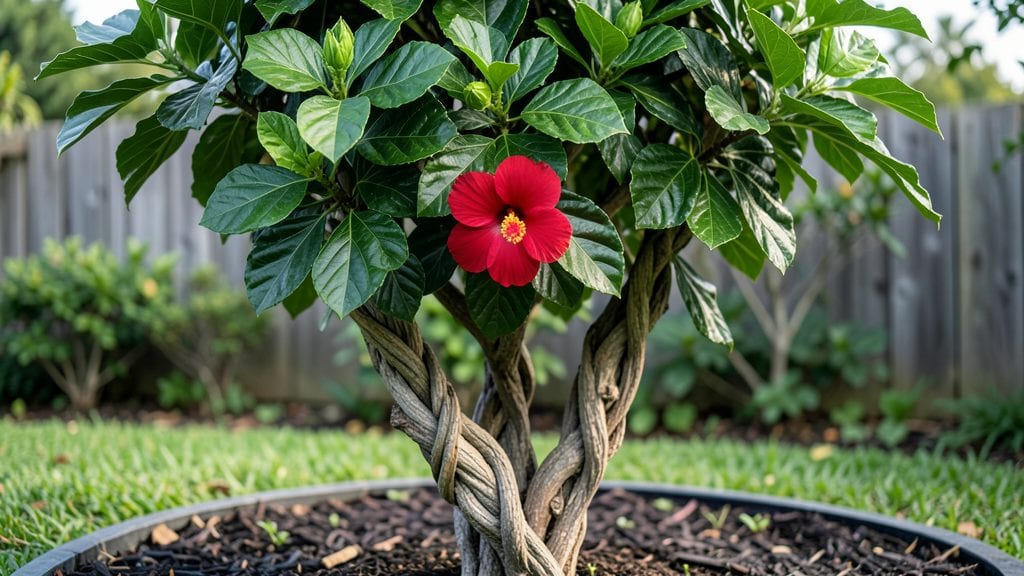
A braided hibiscus tree full grown in the Pacific Northwest’s damp climate transforms into a living sculpture with the right pruning—especially when shaped over time, like my dramatic spiral after five years. without sacrificing those cloud-like pink blooms.
The secret lies in timing: prune after flowering in late summer, before new growth starts in spring.
Mature braided hibiscus trees reach 15-20 feet tall with a 12-15 foot spread, so plan for a focal point in your landscape. They thrive in full sun to partial shade and well-draining soil—critical in PNW’s rainy winters.
The braided structure requires annual pruning to maintain shape, but don’t overdo it: too much cutting stunts flowering. Think of it like sculpting: remove 1/3 of old growth each year to encourage new, vibrant branches.
What you’ll love most? Year-round interest—silky pink blooms from summer to fall, and velvety foliage that turns gold in autumn. In winter, the bare branches showcase your braiding artistry. Just watch for aphids (spray with soapy water) and powdery mildew (improve airflow with pruning).
The payoff? A tree that’s as stunning in winter as it is in bloom season.
Works beautifully as a privacy screen, entryway statement piece, or backyard conversation starter. Once established, they’re low-maintenance—just feed with balanced fertilizer in early spring. Ready to transform your yard into a living masterpiece?
📚 In This Guide
- What you need
- Instructions
- Tips and common mistakes
- Wrapping up and next steps
What you need
- ● Pruning shears: Bypass pruners (sharp, 6-8" blades) for clean cuts on small branches.
- ● Loppers: 8-10" bypass or anvil (for thicker branches up to 1.5" diameter).
- ● Pruning saw: Curved-tooth hand saw (for branches thicker than 2" diameter).
- ● Disinfectant: 70% isopropyl alcohol or bleach solution (1 part bleach to 9 parts water) to sterilize tools between cuts.
- ● Garden gloves: Heavy-duty, cut-resistant (to protect from thorns and sap).
- ● Extension pole: 6-10 ft telescoping pole with pruners/loppers (for high branches).
- ○ Pruning sealant: Optional (e.g., tree wound paint) for large cuts to prevent disease.
- ● Trash bags: Heavy-duty, 30+ gallon (for debris disposal).
- ● Ladder: Sturdy, extendable ladder (if tree exceeds 10 ft tall).
- ● Work clothes: Long sleeves, pants, and closed-toe shoes (to avoid scratches and sap irritation).
- ● Weather check: Prune on a dry, overcast day (avoid wet or windy conditions).
- ● Timing: Best done in late winter or early spring (before new growth starts).
- ● Safety first: Ensure the area below is clear of pets, kids, and bystanders.
- ● Tree health: Inspect for diseases or pests before pruning (treat if needed).
Instructions for pruning a mature braided hibiscus tree in the Pacific Northwest
Transform your Pacific Northwest hibiscus into a lush, blooming showpiece with these expert pruning techniques.
Time Your Pruning for Maximum Blooms
Late winter or early spring, just as buds begin to swell, is the ideal time to prune your braided hibiscus. In the Pacific Northwest, this typically falls between late February and early March, when the threat of hard frost has passed but before new growth has begun. Pruning at this stage encourages robust spring blooms and maintains the tree's distinctive braided structure.
Look for tight, swollen buds along the branches as your signal to begin. Avoid pruning in fall or winter when the plant is dormant, as this can stimulate tender new growth that may not survive our region's cooler temperatures. If you must prune outside this window, do so only to remove dead or diseased wood.
Prepare Your Tools and Assess the Structure
Gather your tools: sharp, clean pruning shears for smaller branches, loppers for thicker stems, and a pruning saw if any branches exceed 1 inch in diameter. Disinfect your tools with rubbing alcohol to prevent spreading disease between cuts. Examine your hibiscus for any branches that have died back over winter or show signs of damage.
Step back and assess the overall shape. A mature braided hibiscus should have three to five main trunks that are evenly spaced and intertwined. Remove any branches that rub against each other or cross over the main structure, as these can create wounds and weaken the tree. Focus on maintaining the open, airy form that allows light and air to circulate freely.
Prune for Shape and Health
Start by removing dead, diseased, or weak branches first. Cut these back to the main trunk or a healthy lateral branch, making your cuts at a 45-degree angle just above a leaf node or bud. This encourages new growth in the right direction. Next, thin out any overcrowded branches to improve airflow and reduce the risk of fungal issues, which are more common in the Pacific Northwest's damp climate.
To maintain the braided look, avoid cutting back the main trunks unless absolutely necessary. Instead, focus on shaping the outer growth. Prune back any branches that have grown too long or leggy, cutting them just above a set of leaves or a bud that faces outward. This will encourage a fuller, bushier appearance. Aim to reduce the overall size of the tree by no more than one-third in a single pruning session to avoid shocking the plant.
Encourage Year-Round Blooms with Strategic Cuts
For continuous blooms, prune lightly throughout the growing season. After the first flush of spring flowers, trim back about one-third of the oldest wood on each branch to stimulate new growth and a second round of blooms. In the Pacific Northwest, this typically happens in late May to early June. Look for branches that have finished flowering and cut them back to just above a set of leaves or a bud.
In late summer, give your hibiscus a light trim to remove any spent blooms and shape the tree for the fall. Avoid heavy pruning at this time, as it can reduce the plant's ability to harden off for winter. Instead, focus on cleaning up the canopy and removing any branches that are growing inward or crossing over others. This keeps the tree looking tidy and encourages a strong flush of blooms in early spring.
Post-Pruning Care for a Thriving Tree
After pruning, water your hibiscus deeply to help it recover. The Pacific Northwest's cool, damp climate can stress a freshly pruned tree, so keep the soil consistently moist but not soggy. Apply a balanced, slow-release fertilizer in early spring to support new growth. Choose a fertilizer with equal parts nitrogen, phosphorus, and potassium, such as a 10-10-10 formula, to encourage overall health and blooming.
Monitor your hibiscus closely in the weeks following pruning. If you notice any signs of stress, such as yellowing leaves or wilting, adjust your watering or provide temporary shade until the plant recovers. Mulch around the base of the tree with 2-3 inches of organic mulch, such as wood chips or shredded bark, to retain moisture and regulate soil temperature. This is especially important in our region's variable weather patterns.
Tips & tricks for pruning your mature braided hibiscus
Mastering the art of pruning your Pacific Northwest braided hibiscus ensures vibrant blooms all year—here's how to elevate your technique.
Timing is Everything: The late February to early March window is critical because it aligns with the tree's natural growth cycle. If you miss this, wait until buds begin to swell—this is your plant's way of signaling it's ready. I've learned the hard way that pruning too early can expose tender growth to late frosts, while waiting too long risks losing that first flush of spring blooms. For our region's unpredictable weather, check the forecast for the last frost date and plan accordingly.
Tool Precision Saves the Tree: Using the right tool for each branch size makes all the difference. I always disinfect my pruning shears and loppers between cuts to prevent spreading fungal diseases, especially important in our damp climate. For branches over 1 inch thick, a pruning saw gives you the clean cuts needed to avoid tearing the bark. Remember to make your cuts at a 45-degree angle just above a leaf node—this encourages new growth in the right direction and prevents water from pooling on the cut.
Structural Maintenance Matters: When shaping your tree, focus on maintaining that open, airy form by removing branches that cross or rub against each other. These are called "water sprouts" and they create wounds that invite disease. I recommend working in small sections—start with the dead or diseased branches, then thin out crowded areas, and finally shape the outer growth. This systematic approach prevents over-pruning, which can shock your tree and reduce next year's blooms.
Seasonal Care Keeps It Thriving: After your main pruning, don't forget the ongoing maintenance. In late May to early June, trim back about one-third of the oldest wood to encourage a second round of blooms. And in late summer, give it a light cleanup to remove spent blooms and shape for fall. This seasonal approach keeps your hibiscus healthy and blooming consistently throughout our mild Pacific Northwest climate.
Pro Tips for Braided Hibiscus Tree Full Grown
- Mastering the art of pruning your Pacific Northwest braided hibiscus ensures vibrant blooms all year—here's how to elevate your technique.
- Timing is Everything: The late February to early March window is critical because it aligns with the tree's natural growth cycle.
- Tool Precision Saves the Tree: Using the right tool for each branch size makes all the difference.
Frequently asked questions
How tall does a full-grown braided hibiscus tree get in the Pacific Northwest?
A mature braided hibiscus (Hibiscus rosa-sinensis) typically reaches 15–25 feet tall in ideal conditions, but in the cooler Pacific Northwest climate, it may stay slightly shorter (10–15 feet) unless grown in a microclimate or container for winter protection. Pruning in late winter helps control size while encouraging bushier growth.
Can braided hibiscus survive winters in the PNW without extra care?
Most braided hibiscus varieties are tender perennials and need winter protection in the PNW (USDA Zones 8–11). Without precautions, they’ll die back to the ground. Solutions include:
- Moving potted trees indoors or to a garage.
- Wrapping the trunk with burlap and adding mulch.
- Planting in a sheltered spot near a south-facing wall.
When is the best time to prune for continuous blooms?
Prune your braided hibiscus twice a year for year-round blooms:
- Late winter/early spring (February–March): Trim dead or weak branches to shape the tree and encourage spring blooms.
- After flowering (July–August): Lightly prune to remove spent flowers and promote fall/winter blooms.
Why isn’t my braided hibiscus blooming as much as expected?
Common reasons include:
- Over-fertilizing with high nitrogen: This promotes leafy growth but fewer flowers. Use a balanced 10-10-10 or bloom-boosting fertilizer instead.
- Insufficient sunlight: Hibiscus needs 6+ hours of direct sun daily. Move it to a sunnier spot or supplement with grow lights.
- Stress from temperature swings: Protect from cold drafts or sudden heat changes.
Are there cold-hardy alternatives to braided hibiscus for the PNW?
If you want hibiscus with better cold tolerance, consider:
- Hardy hibiscus (Hibiscus moscheutos): Thrives in Zones 5–9, blooms summer-to-fall, and reaches 5–8 feet tall.
- Rose of Sharon (Hibiscus syriacus): Drought-tolerant, Zone 4–9, and blooms late summer to frost.
- Tropical hibiscus in containers: Overwinter indoors or in a greenhouse for year-round color.
Wrapping up and next steps
Growing a braided hibiscus tree full grown in the Pacific Northwest is totally doable with the right care—and pruning is your secret weapon! 🌸 With consistent trimming, you’ll enjoy vibrant blooms year-round, turning your yard into a tropical paradise.
Don’t let winter slow you down: armed with sharp tools, patience, and seasonal tips, your hibiscus will thrive even in cooler climates.
Ready to take the next step? Start small:
- 📅 Bookmark this guide for your next pruning session.
- ✂️ Grab your tools and give those branches a fresh trim this weekend!
- 🌱 Share your progress—tag us or fellow gardeners for encouragement!