
Container Gardens
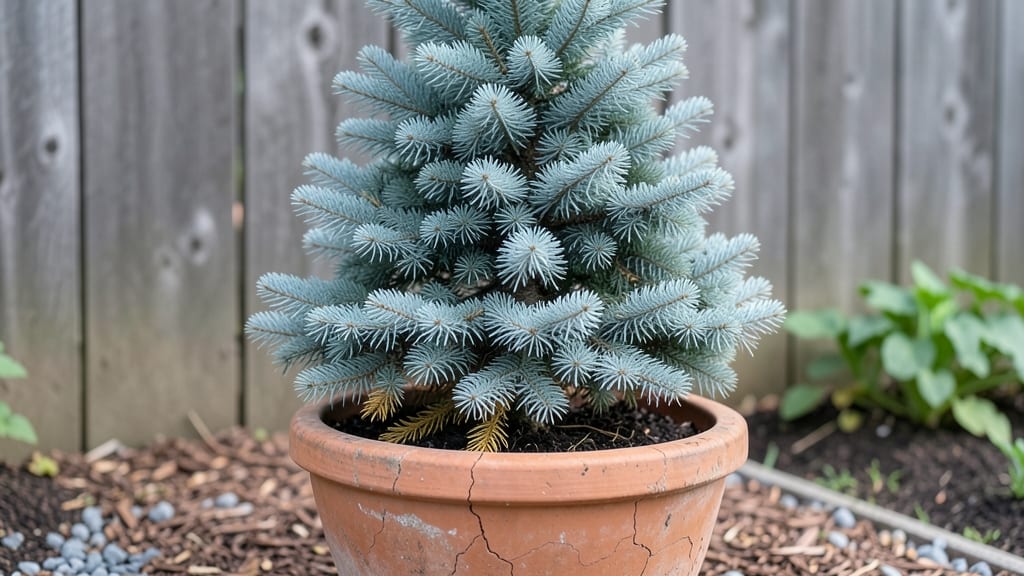
A blue spruce potted tree brings that signature mountain grandeur to patios, porches, and balconies—without the yard. I’ve grown mine for five years now, and the key to keeping it thriving in containers isn’t complicated, just consistent.
The trick lies in mimicking its natural habitat: well-draining soil, plenty of airflow, and a root system that doesn’t suffocate in summer heat.
You’ll need a container at least 18 inches wide and deep—larger is better for long-term health—and a soil mix designed for conifers (or a blend of 60% pine bark fines and 40% peat moss).
Watering’s the real game-changer: let the top 2 inches dry out between soakings, but never let it sit soggy. Overwatering in winter is how you kill these trees faster than pests ever could.
By next spring, your blue spruce will stand taller and denser than any nursery pot could offer, with that signature silvery-blue foliage turning into a showstopper. The secret’s in the pruning: just shape in early spring, and skip the shears entirely if you’re happy with its natural form.
Even in small spaces, it becomes the centerpiece that neighbors will ask about.
For those who dream of planting it out later, the transition’s smooth if you start in a container—just dig a hole twice as wide as the pot. But if you’re keeping it potted long-term, upgrade containers every 3-4 years and fertilize lightly in spring with a slow-release conifer formula.
Patience pays off: a well-cared-for blue spruce in a pot can live for decades.
📚 In This Guide
- What you need
- Instructions
- Tips and common mistakes
- Wrapping up and next steps
What you need
- ● Blue Spruce Tree: A healthy Picea pungens 'Glauca' sapling (3–5 feet tall, depending on your container size). 💡 Pro tip: Choose a tree with a sturdy root ball and vibrant blue-green needles!
- ● Container: A large, durable pot (18–24 inches in diameter) with drainage holes. Materials: Terracotta, ceramic, or high-quality plastic.
- ● High-Quality Potting Soil: 1–2 bags (2–3 cubic feet) of well-draining, acidic soil mix (pH 5.0–6.5). Example: 60% peat moss, 30% pine bark fines, 10% perlite.
- ● Drainage Layer: 2–3 inches of gravel, pumice, or expanded shale for the pot’s base.
- ● Garden Gloves (1 pair) – To protect your hands from sharp needles and soil.
- ● Trowel or Spade – For digging and layering soil.
- ● Watering Can (with a narrow spout) – To avoid disturbing the soil.
- ○ Mulch (Optional): 1–2 inches of pine bark mulch to retain moisture and regulate temperature.
- ○ Slow-Release Fertilizer (Optional): Example: 10-10-10 or a needle-specific fertilizer (apply sparingly, 2–3 times per year).
- ○ Container Stand (Optional): If your pot is heavy, a sturdy stand elevates it for better drainage and aesthetics.
- ● A sunny spot (6+ hours of direct sunlight daily) for your potted spruce.
- ● Access to a hose or water source for thorough watering.
- ● Patience! Blue spruces thrive in containers but may need 1–2 years to fully adapt to their new home.
How to grow a thriving blue spruce in containers
Mastering container culture for blue spruce transforms this majestic tree into a manageable, year-round statement piece.
Select the Right Container and Drainage System
Choose a container that's at least 24 inches wide and deep—blue spruce roots need room to establish without becoming root-bound. I prefer glazed ceramic or heavy plastic because they retain moisture better than terracotta, which can dry out too quickly in winter. The container must have multiple drainage holes at the bottom, and I always add a 2-inch layer of gravel or expanded clay to prevent soil compaction and improve aeration.
Here's the thing—blue spruce hate soggy roots. If your container lacks adequate drainage, drill additional holes or place it in a saucer with pebbles to catch excess water without letting roots sit in it. The gravel layer also helps regulate temperature fluctuations, which is critical for winter survival in containers.
Prepare the Well-Draining Soil Mix
Never use garden soil—it compacts and suffocates roots. Instead, blend 60% high-quality evergreen potting mix with 30% coarse sand or perlite and 10% composted pine bark. This ratio ensures excellent drainage while retaining enough moisture for deep-rooted conifers. I like to add a slow-release fertilizer (10-10-10) mixed into the top 6 inches of soil to provide steady nutrition without burning delicate roots.
Test your mix by squeezing a handful—it should hold together when compressed but still crumble easily. If it forms a solid clump, add more sand. The goal is a texture that mimics the tree's natural acidic forest floor environment. Blue spruce thrive in soil with a pH between 5.0 and 6.0, so if your tap water is alkaline, use rainwater or distilled water for mixing and watering.
Plant with Proper Spacing and Support
When planting your 4- to 5-foot blue spruce, dig a hole twice as wide as the root ball but no deeper. Gently loosen the roots if they're circling—blue spruce hate being root-bound. Position the tree so the top of the root ball sits 1 inch below the container rim to allow for settling. I always stake young specimens with two 2-inch-wide wooden stakes on opposite sides, tied loosely with soft garden twine to prevent wind damage during establishment.
Backfill with your prepared mix, tamping down gently in 2-inch layers to eliminate air pockets. Water thoroughly until it runs freely from the drainage holes, then let it drain completely before adding a 2-inch layer of decorative bark mulch on the surface. This mulch helps regulate soil temperature and reduces evaporation—critical for container-grown trees that dry out faster than in-ground plants.
Establish a Year-Round Care Routine
Blue spruce in containers need consistent moisture—water when the top 2 inches of soil feel dry to the touch. In summer, this might mean every 2-3 days, while winter watering reduces to once every 7-10 days. I always water deeply, soaking the entire root zone, then letting excess drain completely to prevent root rot. During winter, move containers to a protected location (like against a north-facing wall) where they're shielded from freezing winds but still receive light.
Fertilize monthly from spring through fall with a balanced evergreen fertilizer (like 12-4-8) diluted to half strength. I avoid fertilizing in winter when growth slows. Prune only to remove dead branches or shape in late winter before new growth begins. Never prune more than 10% of the tree's foliage at once—blue spruce are slow to recover from heavy pruning.
Protect During Extreme Weather Seasons
Winter is the most critical season for potted blue spruce. When temperatures drop below 15°F, wrap the container (and 6 inches of surrounding area) with burlap or frost cloth to insulate roots. I also add 1-2 inches of extra mulch on top of the soil. For temperatures below 5°F, move the container to an unheated garage or sheltered porch where it won't freeze solid. In summer, protect from intense afternoon sun by providing partial afternoon shade—blue spruce can scorch in direct midday heat.
Watch for browning needles—this is often a sign of either overwatering (yellowing) or underwatering (dry, crisp edges). Container-grown trees are more susceptible to both. If you notice new growth leaning toward the light, rotate the container quarter-turn weekly to encourage even, symmetrical growth. With proper care, your blue spruce will maintain its striking silver-blue foliage and conical shape for decades in containers.
Tips & tricks for perfect blue spruce potted tree care
Container culture for blue spruce isn't just possible—it's a game-changer for small spaces. Here's what I've learned after keeping these trees thriving for years in pots.
Container Material Matters: The 24-inch minimum size requirement is non-negotiable, but material choice affects moisture retention. Glazed ceramic containers hold moisture better than terracotta, which can dry out too quickly in winter. For maximum winter protection, I use heavy plastic containers—they're lightweight for moving but provide excellent insulation. If you choose terracotta, plan to water more frequently, especially during summer heat waves.
Drainage System Design: That 2-inch gravel layer isn't just about aeration—it's your first line of defense against root rot. I've seen blue spruce roots suffocate when planted directly in soil without this layer. For containers without pre-drilled holes, create a DIY drainage system by placing the container inside a larger saucer filled with pebbles. This creates an air gap while still catching excess water. In winter, this setup prevents freezing temperatures from damaging the roots.
Soil Mix Science: The 60/30/10 ratio of evergreen mix, sand/perlite, and pine bark isn't arbitrary—it's about mimicking the tree's natural acidic forest floor environment. Test your mix by squeezing it: it should hold together when compressed but still crumble easily. If you're using tap water with high alkalinity (common in many areas), switch to rainwater or distilled water for watering and mixing. The pH balance is critical for nutrient uptake, and blue spruce are particularly sensitive to alkaline soils.
Winter Protection Strategy: When temperatures drop below 15°F, your insulation game changes. Wrap the container AND extend the wrap 6 inches up the sides—this creates a thermal barrier that prevents temperature fluctuations. For extreme cold below 5°F, move the container to an unheated garage where temperatures stay above freezing. I've seen blue spruce survive winters in containers this way for over a decade, maintaining their vibrant silver-blue color year after year.
Pro Tips for Blue Spruce Potted Tree
- Container culture for blue spruce isn't just possible—it's a game-changer for small spaces.
- Container Material Matters: The 24-inch minimum size requirement is non-negotiable, but material choice affects moisture retention.
- Drainage System Design: That 2-inch gravel layer isn't just about aeration—it's your first line of defense against root rot.
Frequently asked questions
Got questions about keeping your blue spruce potted tree thriving? You’re not alone! Here are answers to the most common queries—from care basics to troubleshooting—so you can enjoy your evergreen beauty year-round.
How often should I water my potted blue spruce?
Water your blue spruce when the top 2-3 inches of soil feel dry. In containers, soil dries faster than in-ground—typically every 5-7 days in summer or every 10-14 days in winter. Always check the moisture level before watering to avoid over- or under-watering. Pro tip: Use a moisture meter for accuracy!
Can a blue spruce survive winter in a pot?
Yes! Blue spruces are cold-hardy, but potted trees need extra protection. Move them to a sheltered spot (like a garage or under an eave) before temperatures drop below 20°F (-7°C). Wrap the pot in burlap and mulch the soil to retain warmth. Avoid heavy snow buildup—gently brush it off to prevent branch damage.
Why are the needles turning brown on my blue spruce?
Brown needles usually signal overwatering, underwatering, or stress. Check the soil moisture first—if it’s soggy, improve drainage by adding perlite or repotting. If the soil is bone-dry, water deeply and consistently. Winter burn (dry, crispy tips) is common in harsh winters; apply an anti-desiccant spray in late fall to prevent it.
What’s the best alternative to a blue spruce in a pot?
If blue spruces aren’t your style, consider these low-maintenance evergreen alternatives for containers:
- Dwarf Alberta Spruce – Compact and hardy, perfect for small spaces.
- Japanese Black Pine – Unique texture and drought-tolerant.
- Dwarf Mugo Pine – Slow-growing and pest-resistant.
- Boxwood (e.g., ‘Green Velvet’) – Lush, rounded, and great for hedging.
How big will my potted blue spruce grow?
Growth depends on the variety and container size. Standard blue spruces can reach 30-50 feet tall in the ground, but in pots, they’re typically pruned to stay between 6-10 feet. For dwarf varieties (like ‘Glauca Globosa’), expect 3-5 feet tall and wide. Regular pruning in spring encourages bushier, more manageable growth. Pro tip: Choose a pot 2-3 times wider than the root ball for optimal growth!
Are blue spruces prone to pests or diseases?
Blue spruces are generally resilient, but watch for spider mites, bagworms, or fungal issues like needle cast. Prevent pests by keeping the tree healthy (proper watering, sunlight) and inspecting foliage regularly. Treat infestations early with neem oil or insecticidal soap. For fungal diseases, improve airflow by avoiding overcrowded pots and watering at the base.
Wrapping up and next steps
Growing a blue spruce potted tree brings year-round charm and freshness to your space, blending nature’s beauty with your home’s style. 🌲 Whether you’re a seasoned gardener or just starting, these evergreens thrive with the right care—sunlight, well-draining soil, and occasional pruning.
Their striking blue-green needles and compact size make them a versatile choice for patios, balconies, or cozy corners.
Ready to elevate your container garden? Pick your pot, plant with confidence, and enjoy the lush rewards! Start by choosing a healthy sapling from a trusted nursery, and soon, you’ll have a stunning centerpiece that turns heads—and stays vibrant all year. Happy planting! 🌿