
Pruning
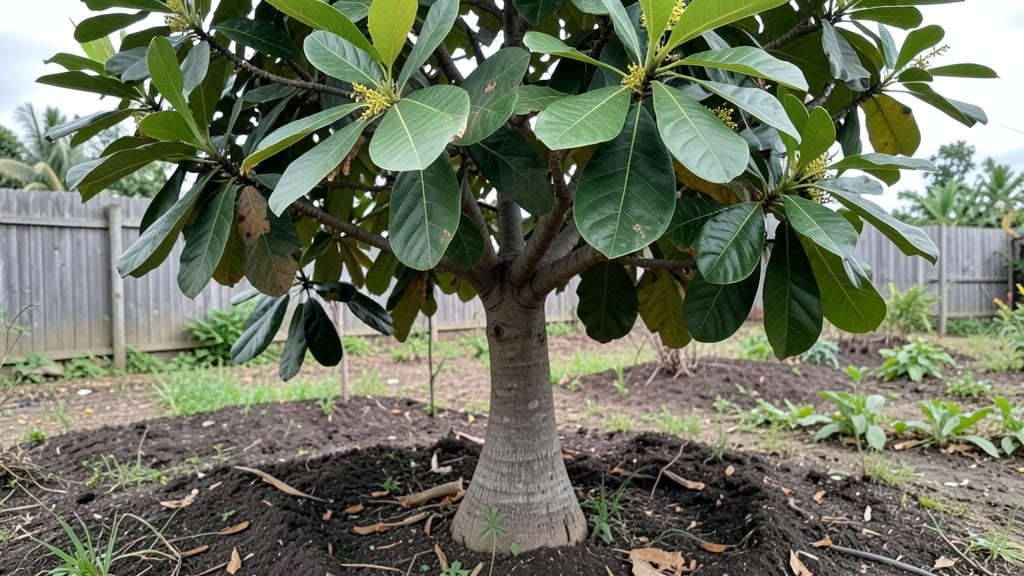
Pruning a beach almond tree (Terminalia catappa) in the Pacific Northwest isn’t just about shaping—it’s about preserving its frost-resistant resilience while keeping it thriving in coastal climates. I’ve learned the hard way that aggressive cuts in early spring can stress these trees, especially when late frosts linger.
The key is timing: prune after the last frost when new growth signals the tree has broken dormancy, but before summer’s heat peaks.
This tree’s natural shape is already dramatic—its broad, leathery leaves and sturdy branches create a tropical silhouette even in cooler zones. My 5-year-old beach almond in Portland has handled 20-degree nights without browning, but its growth pattern changes with pruning.
Thin out crowded branches first to improve airflow, then trim back any leggy growth to encourage bushier, denser foliage. Think of it as sculpting a living umbrella—open at the top, sturdy at the base.
What you’ll end up with is a tree that’s both drought-tolerant and shade-adaptable, perfect for coastal gardens where salt spray and wind test other species. The pruned branches make excellent firewood too, though that’s a bonus. Just avoid heavy pruning in fall—it leaves the tree vulnerable before winter sets in.
With the right cuts, your beach almond will reward you with glossy new leaves by summer and a canopy that outshines any ornamental.
Whether you’re working with a container-grown sapling or a mature tree in the ground, the same principles apply. The only difference? Potted trees need slightly more frequent pruning to control root-bound stress.
Start small—just 10-15% of the canopy per year—and watch how the tree responds before making bigger changes. Patience here pays off in years of low-maintenance beauty.
📚 In This Guide
- What you need
- Instructions
- Tips and common mistakes
- Wrapping up and next steps
What you need
- ● Pruning shears – Sharp, bypass-style (for cuts up to ½ inch thick). Must be clean and sterilized to prevent disease.
- ● Loppers – Bypass or anvil type (for branches ½ to 2 inches thick). Look for ratcheting models for leverage.
- ● Pruning saw – Curved-tooth saw for thick branches (2+ inches). Avoid bolt-cutters—they crush wood!
- ● Gloves – Heavy-duty, cut-resistant gloves (beach almond thorns are no joke!).
- ● Ladder – Aluminum or fiberglass (avoid wood near power lines). Extend at least 3 feet beyond the highest branch.
- ● Disinfectant – 70% isopropyl alcohol or bleach solution (1 part bleach : 9 parts water) for tools.
- ○ Pruning sealant – Tree wound dressing (optional but helpful for large cuts in cold climates).
- ● Plastic bags or bucket – For collecting debris (beach almond leaves stain!).
- ● Marking twine or tape – Colored (e.g., red/green) to flag branches for removal.
- ● Work clothes – Long sleeves/pants to protect from thorns and sun.
- ● Water & snacks – Pruning is hard work—stay hydrated!
- ● Timing – Prune during dormant season (late winter/early spring) before new growth starts.
- ● Weather check – Avoid pruning if frost is forecasted within 48 hours—beach almonds are frost-sensitive!
- ● Safety first – Clear the area of pets, kids, and bystanders (falling branches = heavy!).
- ● Tree health assessment – Inspect for disease or pests (e.g., sooty mold) before cutting.
Instructions for pruning a beach almond tree in the Pacific Northwest
Here's how to shape your frost-resistant beach almond for health and beauty—without stressing the tree.
Time Your Pruning for Optimal Growth
Prune your beach almond tree late winter to early spring, just before new growth begins. This timing—typically February through March in the Pacific Northwest—lets the tree heal before summer heat arrives. Avoid pruning in fall, as new growth won't harden off before frost, and winter pruning risks damaging buds.
Watch for the first signs of bud swell—tiny green bumps along the branches—as your cue. If you miss this window, wait until late spring (April to May), but avoid heavy pruning then if frost is still possible. The goal is to shape the tree while it's dormant but ready to burst into growth.
Remove Dead, Diseased, or Crossing Branches First
Start by inspecting the tree for dead wood—branches that are brittle, lack leaves, or snap easily when tested. Use sharp pruning shears to cut these back to the branch collar, the swollen area where the branch meets the trunk. Next, remove any branches that cross or rub against each other, as these wounds invite disease and weaken the tree.
Look for suckers—shoots growing from the base or along the trunk—and prune them off at the ground. These compete with the main structure for energy. If a branch is diseased (look for discolored bark, oozing sap, or fungal growth), cut it back 6 inches below the affected area to ensure the infection doesn’t spread. Sterilize your tools with rubbing alcohol between cuts to prevent contamination.
Thin the Canopy for Better Airflow and Light
Step back and visualize the tree’s shape. Aim for an open, vase-like form that allows sunlight to reach the inner branches and air to circulate freely. Start at the outer edges and work inward, removing branches that grow inward or downward. These often crowd the center and create shade, which encourages fungal issues.
Focus on removing too-long branches—those extending beyond the tree’s natural outline—by cutting back to a lateral branch or bud facing outward. Avoid "heading back" (cutting back to a stub), as this encourages dense, weak growth. Instead, make cuts just above a bud or branch collar to promote healthy regrowth. Limit removal to no more than 25% of the tree’s foliage in one season to avoid shocking it.
Shape the Tree for Balance and Frost Resistance
Beach almond trees thrive in the Pacific Northwest’s coastal climate, but their structure can be refined to handle frost better. Focus on raising the center of the tree slightly to allow cold air to drain away from the trunk. This means pruning lower branches that block airflow or create a "skirt" around the base.
Use your hands to guide the shape—hold them palm-up beside the trunk and trim branches that fall within your "hand width." This creates a natural, airy silhouette. For larger branches (over ½ inch in diameter), use pruning saws to avoid tearing the bark. Always make cuts at a 45-degree angle, just outside the branch collar, to prevent water from pooling and rotting the wound.
Clean Up and Monitor for Recovery
After pruning, rake up and dispose of all debris, especially diseased branches, to prevent pests or pathogens from overwintering. Sterilize your tools again with rubbing alcohol or a 10% bleach solution to ensure they’re clean for the next use. Water the tree deeply within 24 hours of pruning to help it recover, but avoid overwatering, which can stress the freshly cut areas.
Monitor the tree over the next 4-6 weeks for signs of stress, like wilting leaves or oozing sap. If you see excessive dieback, you may have pruned too aggressively. Healthy new growth should appear within 2-3 weeks, signaling the tree is healing well. If not, reduce pruning in the following year and focus on basic maintenance.
Tips & tricks for perfect beach almond tree pruning
A few key insights will help you shape your beach almond tree like a pro—without causing unnecessary stress.
Timing is Everything: The late winter to early spring window (February through March) is critical because it aligns with the tree's natural dormancy period. If you're unsure about the exact timing, look for those tiny green bumps along the branches—bud swell is your cue. In colder years, you might need to wait until late spring (April to May), but avoid pruning if frost is still a threat. Between us, I've seen trees stressed from pruning too early when buds were still vulnerable.
Tool Prep Prevents Problems: Sterilizing your pruning tools between cuts is non-negotiable, especially when dealing with diseased branches. I keep a small bottle of rubbing alcohol handy and wipe down my shears after every cut. For larger branches over ½ inch in diameter, invest in a good pruning saw—your shears will thank you. And here's what nobody tells you: always make cuts at a 45-degree angle just outside the branch collar to prevent water from pooling and causing rot.
Visualize the Vase Shape: When thinning the canopy in Step 3, step back frequently to visualize your tree's final shape. The goal is an open, vase-like form that lets sunlight reach all branches. I like to imagine holding a vase in each hand—your tree should resemble that elegant silhouette. Focus on removing branches that grow inward or downward first, as these create shade and encourage fungal issues. Remember, you're aiming to remove no more than 25% of the foliage in one season to avoid shocking the tree.
Post-Pruning Care Matters: After you've finished shaping, don't just walk away—your tree needs proper aftercare. Water deeply within 24 hours to help it recover, but avoid overwatering which can stress the fresh cuts. I've seen pruned trees suffer from too much love in the wrong way! Monitor the tree for 4-6 weeks, watching for signs of stress like wilting leaves or oozing sap. Healthy new growth within 2-3 weeks is a great sign the tree is healing well.
Pro Tips for Beach Almond Tree
- A few key insights will help you shape your beach almond tree like a pro—without causing unnecessary stress.
- Timing is Everything: The late winter to early spring window (February through March) is critical because it aligns with the tree's natural dormancy period.
- Tool Prep Prevents Problems: Sterilizing your pruning tools between cuts is non-negotiable, especially when dealing with diseased branches.
Frequently asked questions
Got questions about pruning your beach almond tree in the Pacific Northwest? You’re not alone! Here are some of the most common queries—and straightforward answers—to help you keep your tree thriving in frost-prone climates.
When is the best time to prune a beach almond tree in the PNW?
The ideal window is late winter to early spring (February–March), just before new growth begins. This timing minimizes frost damage and allows the tree to heal before summer heat. Avoid pruning in fall, as late-season cuts can stimulate tender growth vulnerable to winter freezes. Pro tip: If you must prune in summer, do it early (June) to avoid stressing the tree before frost season.
How do I protect my beach almond tree from frost damage during pruning?
Frost-resistant doesn’t mean frost-proof! Prune on mild, sunny days (above 40°F) to reduce shock. Seal larger cuts (over 1 inch) with pruning sealant to prevent bacterial entry. For young trees, wrap the trunk with burlap or frost cloth in late fall, and remove it in early spring. Pro tip: Avoid heavy pruning in late winter if a hard freeze is forecasted—wait until temperatures stabilize.
What’s the correct way to shape a beach almond tree for wind resistance?
Beach almond trees benefit from an open-center or vase shape to reduce wind resistance. Start by removing dead, crossing, or inward-growing branches first. Then, thin out branches to improve airflow—aim for a 30–50% reduction in density in windy areas. Key cut: Prune branches back to a bud or lateral branch (never leave stubs). For coastal exposure, prioritize structural integrity over aesthetics.
Can I prune a beach almond tree too much? What are the signs?
Yes! Over-pruning stresses the tree, leading to stunted growth, leaf drop, or susceptibility to pests. Watch for excessive water sprouts (fast-growing, weak branches), yellowing leaves, or dieback (dead branches). As a rule, never remove more than 25% of the canopy in one season. If you’ve already over-pruned, focus on hydration and light fertilization (use a balanced 10-10-10) to help recovery.
Are there alternatives to traditional pruning tools for beach almond trees?
While bypass pruners, loppers, and a pruning saw are essential, you can supplement with sterilized tools like:
- Felco pruners (for clean cuts on smaller branches).
- Pole pruners (for high branches without a ladder).
- Electric hedge trimmers (for shaping dense foliage—use sparingly!).
Wrapping up and next steps
Pruning your beach almond tree in the Pacific Northwest doesn’t have to be intimidating—with the right tools, timing, and techniques, you can keep it healthy, frost-resistant, and beautifully shaped! 🌿 Whether you’re trimming for aesthetics, airflow, or winter prep, remember that patience and consistency are key.
Your tree will thank you with abundant blooms and delicious nuts for years to come.
Ready to take the next step? Grab your pruners, mark your calendar for late winter, and start small! Even just a few cuts can make a big difference. Happy pruning—and enjoy the rewards of your hard work! 🌟