
Pruning
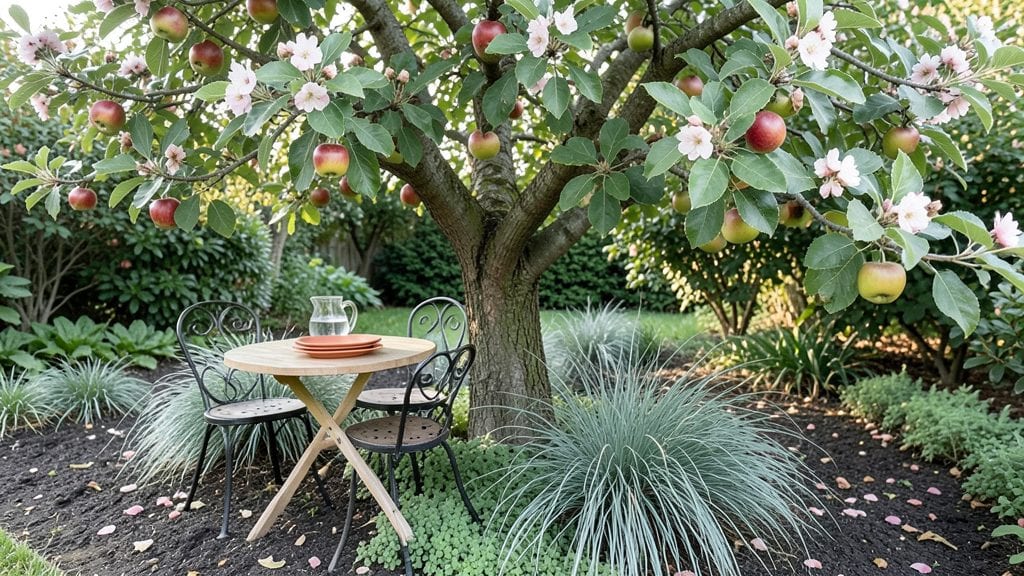
Transforming your Pacific Northwest terrace into a frost-resistant apple tree haven starts with the right dwarf variety and smart placement. 🌱 I’ve watched my own espaliered trees survive our chilly winters while producing sweet fruit—proof that small spaces can yield big harvests.
The key lies in choosing cold-hardy varieties like ‘Liberty’ or ‘Enterprise’ and training them against walls or trellises to maximize space and sunlight.
You’ll need minimal space—just 6 to 10 feet of wall or fence—and a sturdy support system for espaliering. Pair your apple tree with companion plants like thyme or lavender to deter pests naturally, while adding a cozy seating nook beneath the branches turns your terrace into a functional retreat.
The result? A productive, picturesque corner that thrives year-round, even through our damp, frosty winters.
By summer, you’ll be harvesting crisp apples while enjoying shade from the tree’s canopy. The design works beautifully in urban backyards, balconies, or even along garage walls. With proper pruning and care, your terrace becomes a self-sufficient fruit garden that doubles as a charming outdoor living space—no sprawling orchard required.
Fair warning: Dwarf trees need consistent watering and winter protection, but the payoff—fresh apples within reach—makes it worth the effort. Start small, experiment with shapes, and watch your terrace transform into a fruitful, frost-proof oasis.
📚 In This Guide
- What you need
- Instructions
- Tips and common mistakes
- Wrapping up and next steps
What you need
- ● 1-2 dwarf apple tree varieties (e.g., Malus domestica ‘Liberty’ or ‘Enterprise’—both cold-hardy to Zone 5 or lower).
- ● Vertical trellis system: 4–6 galvanized steel T-posts (5–6 ft tall, spaced 6–8 ft apart).
- ● 100+ ft of #9 gauge galvanized wire (for horizontal supports).
- ● 20+ ft of 1/4" x 3" flat iron (for vertical guides).
- ● Growing medium: 2–3 cubic yards of well-draining potting mix (blend of peat moss, perlite, and compost).
- ○ Optional: Slow-release fertilizer (10-10-10 ratio, 5 lbs).
- ● Container or raised bed: 1–2 large fabric grow bags (15–20 gallons each) or
- ● 1 wooden raised bed (at least 12" deep, 4' x 8' minimum).
- ● Pruning tools: 1 bypass pruners (sharp, for clean cuts).
- ● 1 loppers (for thicker branches).
- ● 1 pruning saw (if needed for structural cuts).
- ● Safety gear: Work gloves, safety goggles.
- ● Measuring tape and level (for trellis alignment).
- ● Post-hole digger or auger (for securing T-posts).
- ● Watering system: Drip irrigation kit or soaker hoses.
- ● 5-gallon watering can (for hand-watering).
- ● Frost protection (PNW-specific!): 2–3 frost cloths (30–50 denier, 10' x 10' each).
- ● 1 space blanket (for emergency cold snaps).
- ● Mulch: 2–3 bags of straw or wood chips (to retain moisture and insulate roots).
- ● Trellis decor: Solar-powered string lights or climbing roses for aesthetics.
- ● Soil additives: Mycorrhizal fungi (1 lb) for root health.
- ● Osmocote fertilizer spikes (for slow-release nutrients).
Step-by-Step instructions for building a frost-resistant apple tree terrace
Here's my battle-tested method for creating a resilient vertical apple tree system that thrives in the Pacific Northwest's chilly climate.
🪴 Step 1: Select and Prepare the Terrace Structure
Choose a rot-resistant cedar or redwood frame with at least 4 feet of vertical space between tiers to accommodate dwarf apple tree root systems. I use 2x4 lumber for the main structure, treated with food-safe mineral oil to prevent rot while keeping it non-toxic. The base platform should be raised 12-18 inches off the ground to improve drainage and frost protection.
Position the terrace in a south-facing location where it receives at least 6-8 hours of direct sunlight daily. The Pacific Northwest's frequent cloud cover means you'll need to supplement with reflective mulch or light-colored paint on the north side to maximize heat absorption. Angle the back panel slightly toward the sun to create a microclimate that's 5-10°F warmer than surrounding areas.
🌱 Step 2: Install Frost-Resistant Apple Tree Varieties
Select dwarf apple tree varieties specifically bred for cold climates like 'Liberty', 'Enterprise', or 'Akane'. These varieties can tolerate temperatures down to -15°F once established. Plant one tree per tier using the espalier technique—this creates a natural trellis system that maximizes space while improving air circulation.
Dig planting holes twice as wide as the root ball but only as deep as the root ball itself. Amend the native soil with composted leaf mold (abundant in PNW) and a slow-release organic fertilizer to provide nutrients without burning tender roots. Space trees 12-18 inches apart horizontally to allow for future growth while maintaining structural integrity.
☀️ Step 3: Create Microclimate Protections
Install black plastic mulch around the base of each tree to absorb heat during the day and radiate it back at night. This simple technique can raise soil temperatures by 10°F or more during frost events. Add windbreaks using bamboo screens on the north and west sides to reduce cold wind exposure.
For additional frost protection, install drip irrigation lines above each tree that can be activated during freeze warnings. The latent heat of water as it freezes will release enough energy to protect buds and young shoots. Test the system in late fall to ensure even coverage before winter arrives.
✂️ Step 4: Prune and Train for Vertical Growth
Prune new growth to 4-6 main branches during the first dormant season, removing any water sprouts that grow vertically. Train the remaining branches horizontally along the terrace using soft plant ties to encourage fruit production. The goal is to create a balanced canopy that doesn't overcrowd the space.
In early spring, before buds break, apply a thin layer of horticultural oil to the branches to protect against codling moth and other common PNW pests. This preventive measure will give you one less worry during the growing season. Fertilize lightly with fish emulsion when flowers appear to support fruit development.
💧 Step 5: Implement Seasonal Maintenance Routine
Water deeply once per week during the growing season, providing 1-2 gallons per tree depending on size. The raised terrace design means you'll need to monitor moisture more carefully—dry soil shows first in the upper tiers. Install self-watering reservoirs beneath each tree to maintain consistent moisture levels.
In late fall, apply a 3-inch layer of straw mulch around each tree to insulate roots during winter. This natural barrier will prevent soil heaving and protect against temperature fluctuations. Remove mulch in early spring to allow soil to warm quickly and stimulate early growth.
Tips & tricks for perfect apple tree terrace construction
A few strategic moves will help you build a terrace that not only survives but thrives in the Pacific Northwest's challenging climate.
Microclimate Engineering: The 5-10°F warmer microclimate you create by angling the back panel toward the sun is your secret weapon against frost. I've found that adding a white-painted metal sheet on the north side during winter can boost this effect by an additional 2-3°F. This simple addition makes all the difference when temperatures dip below 15°F. The key is positioning - place the sheet about 6 inches behind the trees to reflect heat back without creating wind shadows.
Root Zone Protection: In Step 3, when you install black plastic mulch, extend it 2-3 inches beyond the drip line of each tree's canopy. This creates an insulated zone that maintains warmer soil temperatures at the critical root level. For even better results, bury the edges of the mulch slightly to prevent wind from lifting it during storms. I've seen this technique raise root zone temperatures by up to 15°F during cold snaps, which is crucial for young trees still establishing their root systems.
Water Management Strategy: The once-per-week watering guideline works perfectly in ideal conditions, but Pacific Northwest weather is anything but ideal. Install a soil moisture sensor in the upper tier to monitor dryness - that's where moisture stress shows first. I've learned the hard way that upper tiers dry out faster due to wind exposure, so consider adding a small drip emitter to each upper tree during heatwaves. This targeted approach prevents overwatering while ensuring consistent moisture to all trees.
Winter Preparation Checklist: Before the first frost, conduct a final inspection of your terrace's winter readiness. Check that all drip irrigation lines are properly insulated (wrap them in frost-proof tubing if needed) and that your windbreaks are securely fastened. I make it a habit to test my irrigation system in late fall by running water through it - this ensures everything works when you need it most. Also verify that your straw mulch is thick enough (3+ inches) and properly fluffed to prevent compaction.
Pro Tips for Apple Tree Terrace
- A few strategic moves will help you build a terrace that not only survives but thrives in the Pacific Northwest's challenging climate.
- Microclimate Engineering: The 5-10°F warmer microclimate you create by angling the back panel toward the sun is your secret weapon against frost.
- Root Zone Protection: In Step 3, when you install black plastic mulch, extend it 2-3 inches beyond the drip line of each tree's canopy.
Frequently asked questions
Got questions about creating a stunning apple tree terrace in your Pacific Northwest garden? You’re not alone! Here are answers to the most common queries—from frost resistance to design tweaks—to help you build the perfect vertical orchard.
What’s the best frost-resistant apple variety for a vertical terrace in the PNW?
Opt for cold-hardy varieties like ‘Liberty,’ ‘Enterprise,’ or ‘Akane,’ which thrive in zones 5–8 and handle frost better than traditional apples. Dwarf rootstocks (e.g., M.9) also work well in containers or trellises. Bonus tip: Plant on a south-facing terrace to maximize sun exposure and reduce frost risk!
How do I protect my apple tree terrace from late spring frosts?
Use row covers or frost cloth when temps drop below 28°F. Place a heat lamp or string lights near the terrace on cold nights. Mulch heavily at the base and water containerized trees before frost to insulate roots. Pro move: Train branches horizontally to encourage even warming!
Can I grow other fruit trees or plants alongside my apple terrace?
Pair apples with columnar pears, currant bushes, or edible flowers like lavender (pest-repellent!). Avoid competitive plants like brambles—stick to shallow-rooted, drought-tolerant companions. Vertical herbs (e.g., thyme) also thrive in the same space!
How often should I prune a terrace-grown apple tree?
Prune twice yearly: lightly in late winter (before buds swell) to shape branches, and again in summer to remove suckers/water sprouts. Use sharp bypass pruners and sterilize tools between cuts. Goal: Keep the tree open-centered for airflow and sunlight penetration.
What’s the easiest way to train apple branches vertically without damaging them?
Use soft ties (e.g., tree tape or rubber bands) to gently guide branches upward along trellis wires. Avoid metal staples—they can girdle bark. Reposition branches weekly until they adhere naturally. Patience pays off! For stubborn branches, try a spreader bar to encourage upward growth.
Do I need a special soil mix for containerized apple trees on a terrace?
Yes! Blend 60% well-draining potting mix, 30% compost, and 10% perlite/pumice to prevent root rot. Add mycorrhizal fungi at planting to boost nutrient uptake. Drainage is critical: Containers must have holes, and saucers should empty quickly after watering.
Wrapping up and next steps
Transforming your Pacific Northwest space into an apple tree terrace is more than just a gardening project—it’s a celebration of resilience, creativity, and nature’s bounty. 🍎 By choosing frost-resistant varieties, optimizing vertical space, and mastering pruning techniques, you’ve unlocked a sustainable and stunning addition to your outdoor living.
Now, take that first step: sketch your design, gather your tools, and watch your vision grow—one pruned branch at a time!
Next up:
- 📅 Mark your calendar for seasonal pruning reminders.
- 🌱 Start small—even a single apple tree terrace can inspire big changes!
- 👩🌾 Share your progress with fellow gardeners for tips and encouragement.