
Pruning
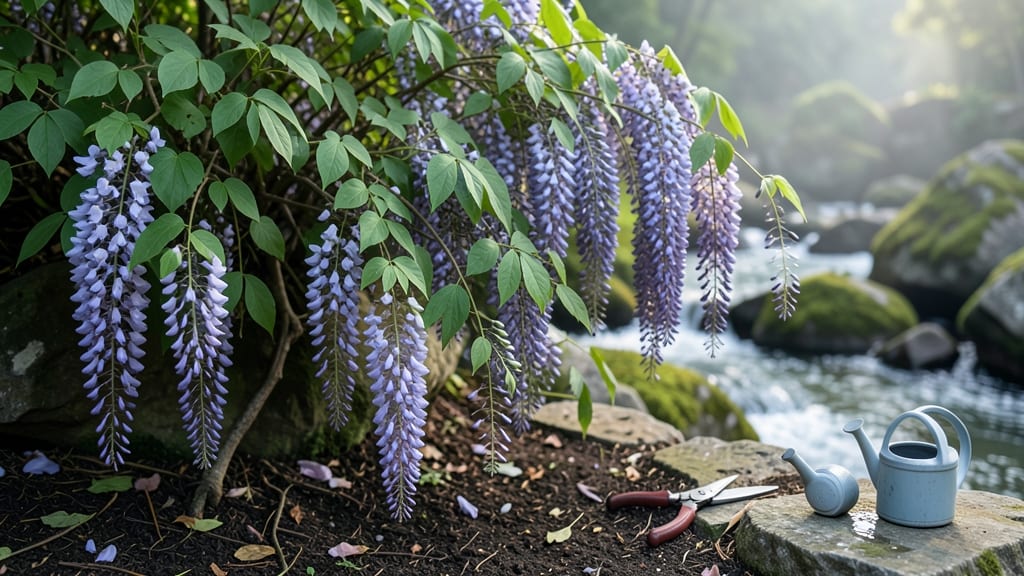
The Amethyst Falls Wisteria Tree transforms any Pacific Northwest garden into a romantic dream with its cascading lavender blooms and glossy foliage. 🌿 I planted mine last spring, and the way it drapes over the arbor already makes my backyard feel like a storybook setting.
This isn’t just a vine—it’s a living tapestry that changes with the seasons, from spring’s fragrant blossoms to autumn’s golden leaves.
What makes this wisteria special is its adaptability—whether you’re going for a cottage garden vibe, a modern minimalist look, or a whimsical climbing structure. Pair it with hydrangeas for softness, or let it climb a rustic trellis for drama.
The key is placement: give it 6-8 hours of sun and room to sprawl, or train it along a fence for a softer, more controlled look.
Year-round interest is the real magic. Prune in late winter to shape the growth, but leave some old wood for next year’s blooms. By summer, you’ll have fragrant clusters that attract hummingbirds, and in fall, the foliage turns a stunning amber.
It’s the kind of plant that makes neighbors stop and ask, “What is that?”—and then want one for themselves.
For best results, combine it with shade-tolerant perennials like ferns or hostas at its base. The contrast between its bold growth and delicate underplantings creates a layered, lush effect. Whether you’re designing a new space or refreshing an old one, this wisteria is the star that ties everything together.
📚 In This Guide
- What you need
- Instructions
- Tips and common mistakes
- Wrapping up and next steps
What you need
- ● Pruning shears: Bypass pruners (for cuts under ½ inch thick) and loppers (for thicker branches up to 1.5 inches). Pro tip: Sharpen blades before use! ✨
- ● Hand saw: Pruning saw (for branches thicker than 1.5 inches). Look for a curved blade for cleaner cuts.
- ● Gloves: Heavy-duty gardening gloves (wisteria thorns are no joke!). Opt for cushioned, thorn-proof ones.
- ● Disinfectant: 70% isopropyl alcohol or a pruning sealant (to prevent disease spread).
- ● Ladder or step stool: Sturdy and tall enough to reach the tree’s highest branches safely.
- ● Trash bags or bucket: For collecting pruned branches (wisteria debris can be heavy!).
- ● Rake or broom: To clear fallen debris from the base.
- ● Pruning paint: For sealing large cuts (1+ inch thick) to protect against pests.
- ● Knee pads: If you’ll be kneeling frequently for low cuts.
- ● Notebook & pen: To track pruning dates, notes on growth, or sketch a simple tree map.
- ● Tree ties or soft rope: For temporarily securing branches if heavy pruning is needed.
- ● Compost bin: To recycle wisteria clippings (they’re biodegradable!).
How to prune an Amethyst Falls wisteria tree in the Pacific Northwest
This year-round calendar keeps your wisteria thriving with bold purple blooms and lush foliage.
🌱 Step 1: Late Winter Pruning (January-February)
When your Amethyst Falls wisteria is fully dormant and before new growth starts, grab your pruners and get to work. This is the most critical time to shape your vine and encourage strong blooming. Look for dead, diseased, or crossing branches first—these should be removed completely to improve airflow and prevent fungal issues.
Next, focus on thinning out last year's growth. Cut back about one-third of the oldest stems to the ground, making clean cuts just above a healthy bud. The goal is to promote new growth from the base while maintaining the vine's natural structure. Avoid heavy pruning of young plants—they need all their energy to establish roots.
☀️ Step 2: Post-Bloom Maintenance (June-July)
After your Amethyst Falls wisteria finishes flowering in late spring, it's time for light maintenance. Wait until after blooms fade completely—this ensures you don't accidentally remove next year's flower buds. Trim any straggly growth that looks leggy or overcrowded, cutting back to just above a leaf node or bud.
This is also when you should address any branches that grew in awkward directions or blocked walkways. Make your cuts at a 45-degree angle about ¼ inch above a bud facing the direction you want growth to continue. Never leave stubs—this invites disease and weakens the plant. A quick watering after pruning helps reduce stress.
✂️ Step 3: Summer Light Pruning (August-September)
In late summer, focus on keeping your Amethyst Falls wisteria tidy without over-pruning. Remove any suckers that appear at the base of the plant—these drain energy from your main vine. Also trim back any new growth that looks weak or spindly, cutting it back to a stronger stem or bud.
This is the perfect time to shape your vine if it's growing against a trellis or arbor. Gently guide branches along the support and secure them with soft ties. You'll see new shoots emerge from the nodes where you trimmed—these will form next year's blooms. Avoid heavy cutting now, as the plant needs to harden off before winter.
⏰ Step 4: Winter Preparation (November-December)
As temperatures drop and leaves begin to yellow, give your Amethyst Falls wisteria a final check. Remove any remaining dead or diseased wood, and trim back any growth that looks weak or damaged by frost. This keeps the plant healthy and prevents problems from carrying over to spring.
For Pacific Northwest winters, you might want to add a layer of mulch around the base to protect roots from freezing. Water deeply before the first hard frost to help the plant establish root systems for next year's growth. Leave any remaining leaves on the vine—they provide some insulation and break down naturally to feed the soil.
Tips & tricks for pruning your Amethyst Falls wisteria tree
Here's what I learned after years of shaping my own wisteria—these tricks will keep your vine healthy and blooming beautifully.
The Right Tools Matter: Invest in sharp, clean pruners—dull blades tear stems and invite disease. I sterilize mine with rubbing alcohol between cuts to prevent spreading fungal spores. For larger branches, use loppers or a pruning saw, but make sure they're sharp too. A small brush to clean up debris after pruning saves time and keeps your workspace tidy.
Timing is Everything: In Step 1, when you're cutting back one-third of the oldest stems, focus on removing the thickest, most established branches first. These are the ones that have outgrown their usefulness and are now competing with younger growth. Remember, wisteria blooms on old wood, so you're actually encouraging next year's flowers by making these cuts now.
Shape with Purpose: During Step 3's summer light pruning, think about the vine's natural growth habit. Wisteria grows in a spiral pattern—use this to your advantage when training it along a trellis. Cut back any branches that grow inward to prevent rubbing, which can damage the bark. This also improves airflow, reducing the risk of fungal diseases that thrive in damp conditions.
Pacific Northwest Specifics: Our region's mild winters mean you can prune later than in colder climates. In Step 4, take advantage of our extended growing season by doing a final light pruning in late winter if needed. The extra warmth helps the plant recover quickly from any winter damage. Just be sure to avoid pruning when frost is still possible—new cuts are vulnerable to cold.
Pro Tips for Amethyst Falls Wisteria Tree
- Here's what I learned after years of shaping my own wisteria—these tricks will keep your vine healthy and blooming beautifully.
- The Right Tools Matter: Invest in sharp, clean pruners—dull blades tear stems and invite disease.
- Timing is Everything: In Step 1, when you're cutting back one-third of the oldest stems, focus on removing the thickest, most established branches first.
Frequently asked questions
Got questions about maintaining your Amethyst Falls wisteria tree? You’re not alone! Here are some of the most common queries—and their answers—to keep your stunning purple beauty thriving year-round.
When is the best time to prune my wisteria tree in Amethyst Falls?
The ideal window for pruning is late winter to early spring (February–March), just before new growth begins. This ensures you remove dead wood while encouraging vibrant blooms. Avoid pruning after June—it risks cutting off next year’s flowers! For heavy shaping, a second light prune in July can help manage growth.
How much can I trim back my wisteria without harming it?
Wisteria is surprisingly resilient! You can safely remove up to one-third of the plant’s total growth per year. Focus on thinning out crowded stems and deadheading spent blooms. Pro tip: Never trim more than 20% in a single session—gradual pruning prevents shock. For established trees, aim to reduce overall size by 10–15% annually.
What should I do if my wisteria isn’t blooming?
Lack of flowers often stems from over-pruning, poor sunlight, or insufficient nutrients. Check these fixes:
- Light: Ensure 6+ hours of direct sun daily (wisteria thrives in full sun).
- Pruning: Avoid heavy cuts after June—this removes next year’s flower buds.
- Fertilizer: Apply a balanced, phosphorus-rich fertilizer in early spring.
- Age: Young trees (under 3 years) may need patience—blooms take time!
Are wisteria flowers toxic to pets or humans?
Yes! While the flowers and pods are mildly toxic if ingested (causing nausea or vomiting), they’re not typically fatal. Keep pets and kids away from chewing on vines or pods. If ingestion occurs, contact your vet or poison control. Good news: The leaves and stems are safe for humans in culinary uses (like tea or garnishes).
Can I grow wisteria in containers, or does it need to be planted in the ground?
While wisteria can grow in containers, it’s not ideal long-term due to its aggressive root system and need for space. If you must pot it:
- Use a large, sturdy container (20+ gallons) with drainage holes.
- Choose a fast-growing, climbing structure (like a trellis or arbor).
- Repot every 2–3 years to refresh soil and roots.
For the Amethyst Falls climate, ground planting is best—wisteria’s roots spread widely and benefit from the Pacific Northwest’s mild winters.
What tools do I need for safe wisteria pruning?
Stock up on these essentials for clean cuts:
- Bypass pruners (for small stems, ¼”–½” thick).
- Loppers (for thicker branches, up to 1.5” diameter).
- Pruning saw (for stubborn, woody growth).
- Gloves (heavy-duty to protect from thorns).
- Disinfectant (rubbing alcohol or bleach solution to sterilize tools between cuts).
Pro tip: Sharpen blades annually for precision—dull tools crush stems, inviting disease.
Wrapping up and next steps
The Amethyst Falls wisteria tree is a stunning Pacific Northwest gem that rewards patience and care with breathtaking blooms and lush foliage. By following this year-round pruning calendar, you’ll keep your wisteria healthy, vibrant, and full of life—while avoiding common pitfalls like overgrowth or weak blooms. 🌸
Ready to transform your garden? Start by marking your calendar for seasonal tasks, and don’t forget to gather your tools before diving in. With each pruning session, you’re not just shaping a tree—you’re nurturing a masterpiece. Happy pruning! 🌿✂️