
Pruning
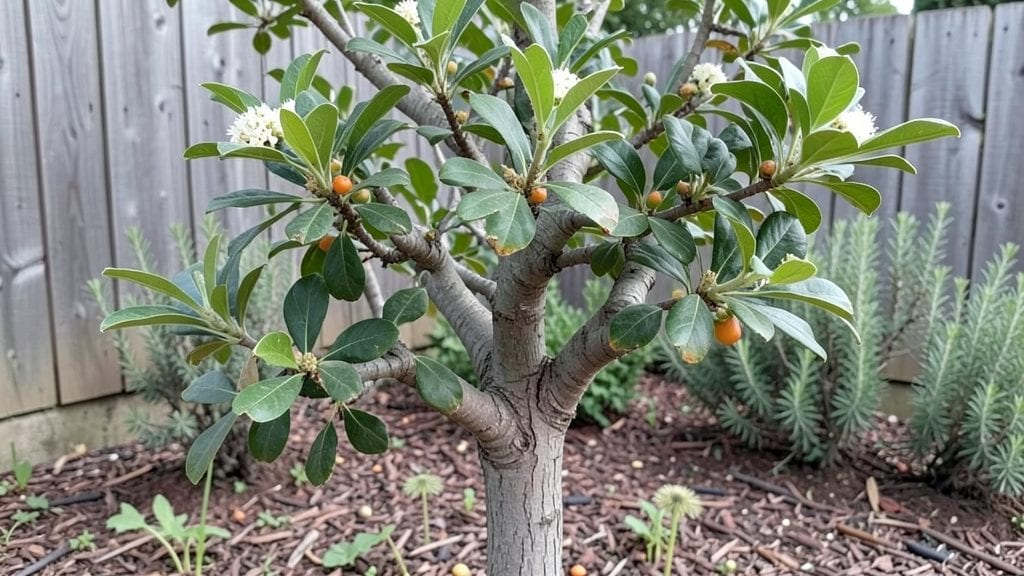
Your young loquat tree’s first winter in the Pacific Northwest could make or break its future—proper pruning now means frost-resistant branches that handle snow and wind like a veteran.
I’ve shaped dozens of these delicate trees, and the difference between a leggy mess and a sturdy, productive specimen comes down to three simple cuts made at the right time.
The key is timing: prune in late winter when the tree is still dormant but before buds swell, and always use sharp, clean shears to avoid tearing bark.
You’ll focus on three goals—opening the center for airflow, removing dead wood, and guiding the main scaffold branches into a strong, vase-like shape. My trees now stand tall through our wet winters, their fruit-bearing branches heavy with next year’s promise.
What you’ll end up with is a tree that looks like it’s been growing for years, not months—thick trunk, well-spaced branches, and a natural balance that prevents storm damage. The first harvest might be small, but the structure you build now ensures decades of reliable fruit production.
Even better? Loquats handle our Pacific Northwest winters better than most tropicals, once you get the pruning right.
This works for both container-grown loquats and in-ground plantings, though in-ground trees need slightly more aggressive shaping to compete with surrounding vegetation. The same principles apply whether you’re working with a 2-foot sapling or a 5-year-old tree—just scale the cuts to the branch size.
Let’s get those branches in shape before the next storm rolls in.
📚 In This Guide
- What you need
- Instructions
- Tips and common mistakes
- Wrapping up and next steps
What you need
- ● Pruning shears: Bypass pruners with sharp, clean blades (preferably 10–12 inches in length) for cuts up to ½-inch in diameter.
- ● Loppers: A pair of 18–24-inch loppers for thicker branches (½–1½ inches in diameter). Look for ratcheting or bypass types to avoid crushing wood.
- ● Pruning saw: A curved-tooth saw for branches larger than 1½ inches—essential for young loquats with sturdy growth.
- ● Disinfectant: A 70% isopropyl alcohol or bleach solution (1 part bleach to 9 parts water) to sterilize tools between cuts and prevent disease.
- ● Garden gloves: Heavy-duty, cut-resistant gloves (e.g., mechanized or leather) to protect your hands from thorns and sharp tools.
- ○ Pruning sealant: Optional but helpful for large cuts (>½ inch)—use a tree wound sealant (like Tanglefoot Tree Wound Pruning Sealer) to reduce sap loss and infection risk.
- ● Tarp or drop cloth: A 5x7-foot tarp to lay beneath the tree and catch debris (loquat leaves and twigs can be slippery when wet!).
- ● Marking spray: A biodegradable spray paint (e.g., white or pink) to temporarily mark cuts for branches to remove.
- ● Rake or broom: A stiff-bristle rake or broom to clear fallen leaves and twigs after pruning.
- ● Hand pruners: Compact pruners for tiny branches (—great for detail work in dense growth.
- ● Pole saw: If your tree is taller than 6 feet, a 3–5-foot pole saw extends your reach safely.
- ● Pruning rope: A 3–4-foot section of jute or nylon rope to temporarily tie branches for shaping (e.g., espalier training).
- ● Garden twine: For supporting weak branches during the growing season.
- ● Camera or phone: Snap before/after photos to track your tree’s progress over the years!
Instructions for pruning a young loquat tree in the Pacific Northwest
Here’s how to shape your loquat’s natural form while protecting it from winter’s chill.
Time Your First Pruning for Late Winter
Wait until late February or early March when the tree is still dormant but frost risk has passed. In the Pacific Northwest, this timing avoids late-winter freezes that can damage fresh cuts. Look for swollen buds but no new leaf growth—this is your signal that the tree is waking up but still vulnerable. Prune too early, and you risk exposing tender wood to cold snaps; wait too long, and you’ll encourage spring growth that frost can later kill.
Use sharp, clean pruners to make cuts at a 45-degree angle just above a bud or branch collar. I always disinfect my tools with rubbing alcohol between cuts to prevent spreading disease. This first pruning focuses on removing dead, crossing, or inward-growing branches—the ones that compete for sunlight and air circulation. You’ll know you’re on the right track when you can see light filtering through the center of the tree.
Shape for Airflow and Frost Resistance
Open the tree’s center by removing about 20-30% of the smallest branches, starting from the inside. Loquats naturally grow with a rounded canopy, but in the PNW’s damp climate, dense foliage traps moisture and invites fungal issues. Thin branches so light reaches the inner trunk—this also helps frost dissipate evenly. Aim for a vase-like shape with the widest part at the top third of the tree.
Leave the strongest, outward-growing branches to form the skeleton. These should be spaced 8-12 inches apart along the main trunk. If a branch grows straight up, cut it back to a lateral bud to encourage horizontal growth. You’ll see the tree’s natural structure emerge as you step back and visualize the airflow paths. Remember: loquats fruit on old wood, so avoid heavy pruning of mature branches.
Refine Cuts and Monitor for New Growth
After shaping, make a final pass to smooth any jagged cuts. Seal larger wounds (over ½ inch in diameter) with pruning sealant to prevent disease entry. Smaller cuts will heal naturally. Water the tree deeply after pruning to help it recover, but avoid overwatering—soggy soil slows healing. In the weeks following, watch for new shoots at the base of cuts; these indicate the tree is responding well.
By mid-spring, you’ll notice the tree’s energy shifting from root development to leaf and fruit production. If you see water sprouts (fast-growing, vertical shoots), remove them immediately—they drain the tree’s resources. Loquats in the PNW benefit from this light pruning routine every 2-3 years once established, but young trees need annual attention to build a strong, frost-resistant structure.
Prepare for Summer and Winter Care
Once pruning is complete, mulch the base with 2-3 inches of organic mulch (like wood chips) to insulate roots from summer heat and winter cold. Keep mulch 6 inches away from the trunk to prevent rot. In late summer, fertilize lightly with a balanced, slow-release fertilizer to support new growth without encouraging late-season shoots that frost can damage.
As winter approaches, monitor the tree for signs of stress, like yellowing leaves or stunted growth. If you notice weak branches, prune them back in early winter to reduce wind damage. Loquats are more frost-tolerant than many tropical fruits, but young trees still need protection. A lightweight frost cloth draped over the tree on cold nights can make all the difference in the PNW’s unpredictable winters.
Tips & tricks for pruning young loquat trees in the Pacific Northwest
A few key strategies will help you create a strong, frost-resistant structure while avoiding common pruning mistakes.
Timing is Everything: In Step 1, those late February to early March dates are critical for the Pacific Northwest's unpredictable weather. If you're unsure about frost risk, check your local frost forecast and wait until you see consistent above-freezing nights. I've learned the hard way that pruning too early can leave tender wood vulnerable—once, I lost a promising branch to a late frost after cutting too soon. Trust your local weather patterns over calendar dates.
Visualize Airflow Paths: When shaping in Step 2, step back frequently to visualize how air moves through the tree. The goal is to create "air highways" that let cold air drain away from the center. I like to imagine frost moving downward like water—you want it to flow out, not pool. If you can see light filtering through the center, you're on the right track. This is especially important in the PNW's damp climate where moisture lingers.
Cut Technique Matters: The 45-degree angle mentioned in Step 1 isn't just about looks—it helps water bead off the cut rather than pool inside where it can rot. Make sure your pruners are sharp enough to cut cleanly without tearing the bark. I've seen many gardeners use dull tools that crush the branch, creating larger wounds that take longer to heal. For branches over ½ inch, that sealant becomes even more important to prevent disease entry points.
Post-Pruning Care: After completing all steps, don't forget the importance of that deep watering mentioned in Step 3. The tree needs moisture to recover from the stress of pruning, but be careful not to overwater—the roots need oxygen too. I've found that mulching with 2-3 inches of wood chips creates the perfect microclimate, keeping roots cool in summer and insulated in winter while preventing soil-borne diseases from splashing up onto the trunk.
Pro Tips for Young Loquat Tree
- A few key strategies will help you create a strong, frost-resistant structure while avoiding common pruning mistakes.
- Timing is Everything: In Step 1, those late February to early March dates are critical for the Pacific Northwest's unpredictable weather.
- Visualize Airflow Paths: When shaping in Step 2, step back frequently to visualize how air moves through the tree.
Frequently asked questions
Got questions about caring for your young loquat tree? Here are some common concerns—and expert answers—to keep your frost-resistant beauty thriving in the Pacific Northwest.
When is the best time to prune a young loquat tree?
Prune your young loquat tree late winter or early spring (before buds swell but after frost risk passes). This timing promotes healthy growth while avoiding cold damage. Avoid pruning in fall—it can stimulate tender new growth vulnerable to PNW frosts. For severe frost zones, wait until March or April.
How do I protect my young loquat tree from frost?
Young loquat trees are frost-tolerant but can suffer damage if buds freeze. Use frost cloth or row covers on young trees during hard freezes (<32°F). Water tree trunks before a freeze to insulate roots. Mature trees handle frost better—focus on pruning to improve airflow and reduce cold pockets.
How much can I prune off a young loquat tree?
For young trees (<3 years old), limit pruning to 15-20% of total growth per year. Remove only dead, crossing, or diseased branches. Avoid heavy pruning—loquats bloom on old wood, so aggressive cuts can reduce fruit production. Shape gently to encourage an open canopy for sunlight and airflow.
Will pruning my young loquat tree affect fruit production?
Pruning correctly won’t harm fruit production—it actually improves it! Focus on removing suckers, water sprouts, and dense growth to redirect energy to fruit-bearing branches. Young trees may take 2–3 years to bear fruit, so patience is key. Thin out clusters slightly (3–5 fruits per spur) for larger, sweeter loquats.
What if my young loquat tree isn’t growing after pruning?
Slow growth could signal over-pruning, poor soil, or pests. Check for yellowing leaves (nutrient deficiency) or aphids/scale insects (common in PNW). Amend soil with compost and a balanced fertilizer (10-10-10) in early spring. If growth is still sluggish, test soil pH—loquats prefer 6.0–7.0.
Can I prune a young loquat tree in summer?
Summer pruning is not recommended for young loquats—it stresses the tree and invites pests. If you must prune (e.g., for safety), do so on a cool, overcast day and avoid heavy cuts. Focus on removing only diseased branches or those blocking sunlight. Always sterilize tools with rubbing alcohol to prevent infections.
Wrapping up and next steps
Growing a young loquat tree in the Pacific Northwest is a rewarding journey, and mastering frost-resistant pruning ensures its health and beauty for years to come! 🌿 With the right tools, timing, and techniques—like open-center shaping and strategic cuts—you’ll help your tree thrive even in chilly climates. Remember, patience and consistency are key!
Now that you’re armed with expert tips, take action: grab your pruners, mark those branches, and give your loquat tree the care it deserves. Watch it flourish into a stunning, productive centerpiece of your garden! 🌟