
Pruning
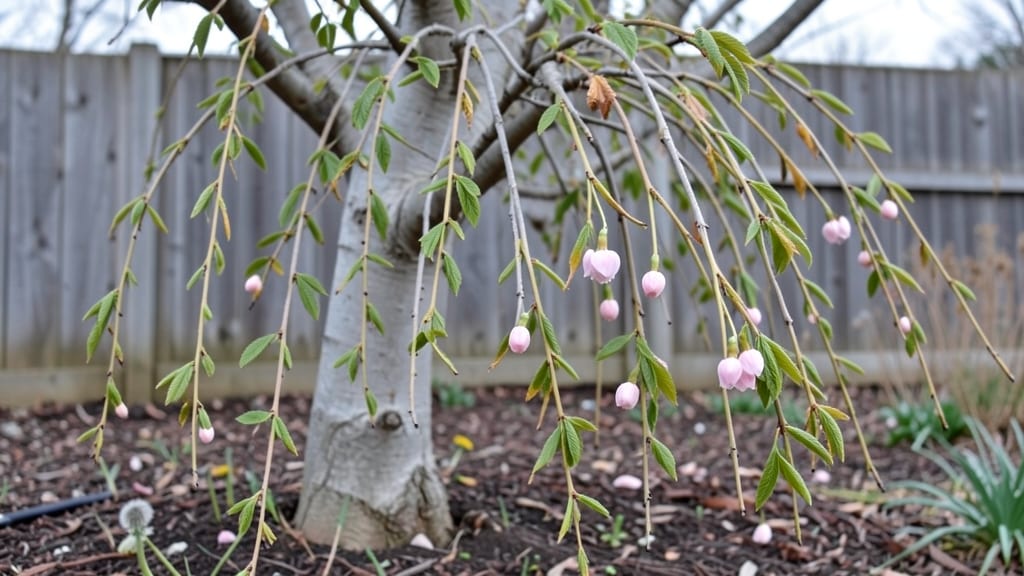
Transform your winter garden into a cascade of pink blossoms with a weeping higan cherry tree—its delicate branches already promise year-round blooms if you prune with intention. 🌸 I’ve watched mine go from a scraggly sapling to a graceful fountain of flowers by mastering just three cuts: the cleanup, the shaping, and the bloom-encouraging trim.
The key isn’t just when you prune, but how you guide its natural weeping form while preserving those stunning winter flowers.
This tree thrives in full sun to partial shade and well-draining soil, but its magic happens in the pruning. You’ll need sharp bypass pruners, a sturdy ladder (for higher branches), and a clear day to assess the branches—aim for late winter to avoid disturbing spring blooms.
The goal is to open the center for airflow while keeping the outer branches long enough to maintain that elegant weeping silhouette. Think of it like sculpting a living waterfall: every cut should enhance the flow.
By summer’s end, you’ll see the payoff: clusters of pale pink blossoms even in cold snaps, and a canopy so dense it blocks snow from weighing down the branches. The tree’s natural growth habit means less work over time—just an annual reset to remove dead wood and guide new growth.
For best results, prune after flowering, when the tree’s energy shifts to next year’s blooms. That’s when you’ll truly see its potential.
Works beautifully in lawns, patios, or as a focal point near entryways—just give it room to mature (20-30 feet wide). The secret to long-term success? Patience. These trees reward careful pruning with decades of blooms, turning your yard into a seasonal spectacle without the fuss of constant maintenance.
Let’s get those branches in shape!
📚 In This Guide
- What you need
- Instructions
- Tips and common mistakes
- Wrapping up and next steps
What you need
- ● Pruning shears: Bypass pruners (sharp, 6–8" blades) for clean cuts on small branches (1/4"–3/4" diameter). Quantity: 1 pair.
- ● Loppers: Bypass-style (18–24" handles) for medium branches (3/4"–2" diameter). Quantity: 1 pair.
- ● Pruning saw: Curved-tooth for thick branches (2"+ diameter). Quantity: 1.
- ● Disinfectant: 70% isopropyl alcohol or rubbing alcohol to sterilize tools between cuts. Quantity: Small bottle.
- ● Garden gloves: Cut-resistant (nitrile-coated) for safety. Quantity: 1 pair.
- ○ Pruning sealant: Optional but recommended (e.g., Tanglefoot Tree Wound Pruning Seal) for large cuts. Quantity: Small tube.
- ● Extension pole: Adjustable (10–12 ft) for high branches. Quantity: 1.
- ● Ladder: Sturdy, non-slip (if tree exceeds 8 ft). Quantity: 1 (or enlist help!).
- ● Heavy-duty trash bags: For collecting pruned branches. Quantity: 2–3.
- ● Hand lens: For inspecting branch health up close.
- ● Marking spray: Non-toxic (e.g., white or pink) to tag branches for removal.
- ○ Tree growth regulator: Optional (e.g., dormant oil spray) to encourage denser blooms.
- ● First-aid kit: Just in case of minor scrapes or thorns!
Strategic pruning for a beautiful weeping higan cherry tree
Here's how to keep your tree blooming abundantly while maintaining its graceful weeping shape.
☀️ Step 1: Time Your First Cut for Late Winter Dormancy
Prune your weeping higan cherry in late winter—just as buds begin to swell but before any leaves appear. This timing ensures you remove dead wood while preserving next season's blooms. I always check for tight, plump buds along the branches as my cue that it's time to start.
Use sharp, clean pruning shears to make 45-degree cuts just above a bud or branch junction. Avoid cutting into old wood—you'll see this as thicker, darker branches that no longer produce flowers. I like to work on dry days when the tree is fully dormant; the clean cuts heal faster in cooler weather.
✂️ Step 2: Thin Out Crowded Branches for Better Airflow
Look for branches that cross or rub against each other—these create wounds where diseases can enter. Remove one of the two crossing branches at its base, cutting back to the main trunk or a strong lateral branch. You'll notice the remaining branches have more space to grow outward, which improves both bloom quality and overall health.
Also target any branches growing straight upward from the main trunk. These "water sprouts" steal energy from your tree's graceful weeping form. Cut them back to a lateral branch or bud that points outward. I usually remove about 10-15% of the total branches in this step—never more than that in a single pruning session.
🌿 Step 3: Shape the Weeping Form by Selective Trimming
Now focus on maintaining that elegant weeping silhouette. Look for branches that grow too upright or outward from the center—these disrupt the tree's natural cascade. Cut these back to a bud that points downward or along the tree's natural growth pattern. You'll see the tree's natural shape emerge as you make these adjustments.
For longer branches, you can do light tip pruning to encourage bushier growth along the weeping limbs. Cut back the very tips by about 1/3 of their length, which stimulates branching lower down. This creates that lush, layered look that makes weeping cherries so stunning. I always step back every few cuts to check the overall shape from all angles.
⏰ Step 4: Summer Maintenance to Encourage Continuous Blooms
After the spring flush of flowers, do a light maintenance pruning in early summer. Remove any dead, diseased, or damaged branches you notice during the growing season. Also look for suckers—those vigorous shoots growing from the base or along the trunk. Cut these back immediately to redirect the tree's energy into its established structure.
This is also when I deadhead spent blossoms by cutting back to the nearest healthy bud. While higan cherries don't require heavy deadheading, removing these spent flowers helps the tree focus its energy on producing fresh blooms for next season. I make these cuts on a warm, dry afternoon when the tree is actively growing—it recovers quickly from light summer pruning.
🌱 Step 5: Prepare for Next Year's Blooms in Early Autumn
In early autumn, do a final light pruning to remove any branches that grew too vigorously during summer. Look for branches that are growing too densely or that might eventually cross. Cut these back to maintain good airflow through the tree's canopy. You'll see the branches become more evenly spaced as you make these adjustments.
This autumn pruning also gives you a chance to evaluate the tree's structure. Look for any branches that might need more significant attention next winter. I like to take a few photos from different angles to help me visualize the tree's shape before the winter dormancy period begins. The goal is to enter winter with a clean, healthy structure ready for next year's spectacular blooms.
Tips & tricks for perfect weeping higan cherry tree pruning
These simple strategies will help you maintain your tree's stunning weeping form while keeping those spectacular blooms coming year after year.
Tool Prep is Everything: Before you start pruning, take 5 minutes to clean and sharpen your pruning shears. Dull blades tear wood instead of making clean cuts, which slows healing and invites disease. I like to wipe the blades with rubbing alcohol between cuts to prevent spreading any potential pathogens from branch to branch. This small step makes all the difference in how quickly your tree recovers after pruning.
Seasonal Timing Secret: The late winter timing in Step 1 is critical because it lets you see the tree's structure clearly without leaves obscuring your view. Look for those tight, plump buds as your cue—when they're swollen but before leaves emerge, you're in the perfect window. In Step 4, that early summer maintenance prevents the tree from putting too much energy into suckers and lets it focus on developing next year's blooms.
Visual Cue for Perfect Cuts: When making those 45-degree cuts in Step 1, imagine you're slicing a slice of pizza—your cut should follow the natural angle of the branch. This creates a smaller wound surface that heals faster. For the weeping form in Step 3, always cut back to a bud that points in the direction you want new growth to go. This simple technique helps maintain that elegant cascading shape we love about weeping cherries.
Year-Round Observation Strategy: Make it a habit to do a quick visual inspection of your tree every month. Look for crossing branches, water sprouts, or any branches growing in odd directions. Catching these issues early means you can make small adjustments during the recommended pruning seasons rather than dealing with major structural problems later. I keep a small notebook by my gardening tools to jot down notes about which branches need attention each season.
Pro Tips for Weeping Higan Cherry Tree
- These simple strategies will help you maintain your tree's stunning weeping form while keeping those spectacular blooms coming year after year.
- Tool Prep is Everything: Before you start pruning, take 5 minutes to clean and sharpen your pruning shears.
- Seasonal Timing Secret: The late winter timing in Step 1 is critical because it lets you see the tree's structure clearly without leaves obscuring your view.
Frequently asked questions
Got questions about keeping your weeping higan cherry tree blooming beautifully? Here are some of the most common ones—and their answers!
When is the best time to prune my weeping higan cherry tree for blooms?
Prune your tree right after flowering (late spring) to encourage new growth and next year’s blooms. Avoid heavy pruning in fall or winter, as it can damage cold-sensitive branches. Light shaping cuts can be done year-round, but major pruning should wait until spring.
How much should I trim back my weeping higan cherry?
Aim to remove no more than 20-30% of the tree’s total foliage in a single session. Focus on thinning out crowded branches, dead wood, and crossing limbs. Over-pruning can stress the tree and reduce flowering. For weeping varieties, prioritize maintaining an open, graceful shape.
What if my tree isn’t blooming as much as it used to?
Several factors could be at play: over-pruning, poor sunlight, or nutrient deficiencies. Start by ensuring it gets 6+ hours of sun daily and fertilize with a balanced, acid-loving plant formula in early spring. If blooms are sparse, avoid heavy cuts—focus on selective pruning to reduce stress.
Can I prune my weeping higan cherry in winter?
Light pruning (removing dead or broken branches) is fine in winter, but avoid major cuts until spring. Winter pruning can expose fresh growth to cold damage or late frosts, which may harm the tree. If you must prune in winter, do so on mild, dry days and seal larger cuts with pruning sealant.
Are there alternatives to weeping higan cherry for year-round blooms?
Yes! Consider these low-maintenance, flowering alternatives:
- Dwarf Yoshino Cherry – Compact, cold-hardy, and blooms prolifically.
- Kwanzan Cherry – Double-pink blooms and great disease resistance.
- Japanese Snowbell – Fragrant white flowers and shade tolerance.
- Ornamental Pear (e.g., ‘Aristocrat’) – Stunning spring blooms and glossy foliage.
Wrapping up and next steps
The weeping higan cherry tree is a stunning addition to any landscape, and with the right pruning techniques, you can enjoy its breathtaking blooms year-round. By mastering the timing, tools, and methods outlined above, you’ll encourage healthier growth, vibrant flowers, and a graceful shape that defines your outdoor space.
Ready to transform your tree into a showstopper? Grab your pruners, mark your calendar, and start planning your next pruning session—your weeping cherry’s future beauty starts with your next cut! 🌸✂️