
Pruning
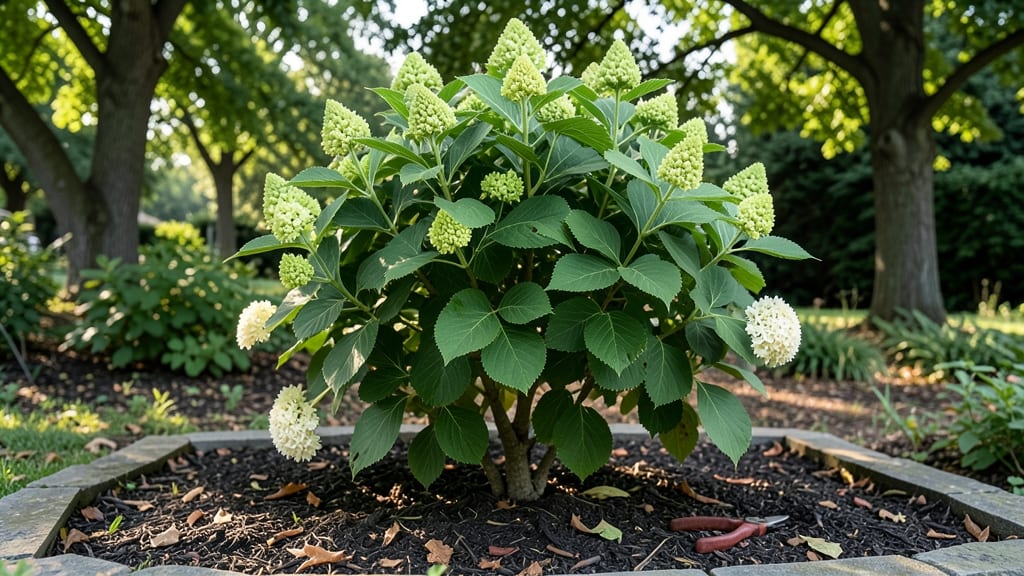
Your tree form Limelight hydrangea thrives in the Pacific Northwest’s damp winters—no other variety handles frost like this one. 🌿 The secret lies in its natural upright shape and cold-hardy blooms that stay vibrant even after frost, turning your garden into a vertical masterpiece year after year.
Plant it where it gets 6+ hours of sun daily, in well-draining soil with organic matter—think compost mixed into the top 12 inches.
Spacing matters too: give it 8-10 feet from other plants to avoid competition, and you’ll reward yourself with 6-foot-tall stems that hold blooms from midsummer through fall.
Pruning is where the magic happens—cut back one-third of the oldest stems in late winter to encourage new growth, and shape it like a tree by removing lower branches. The result? A clean, architectural silhouette with blooms that start at the top and cascade downward, creating a stunning vertical display.
Water deeply once a week (more in summer heat), and feed with a balanced fertilizer in early spring. Watch out for powdery mildew—spray with neem oil if you see white dust on leaves—and you’ll have a frost-resistant showstopper that outshines any other hydrangea in your region.
📚 In This Guide
- What you need
- Instructions
- Tips and common mistakes
- Wrapping up and next steps
What you need
- ● Pruning shears: Bypass pruners with sharp, clean blades (avoid anvil pruners to prevent crushing stems). Quantity: 1 pair.
- ● Loppers: For thicker branches (1–2 inches in diameter). Quantity: 1 pair.
- ● Hand pruners: For precision cuts on smaller stems. Quantity: 1 pair.
- ● Disinfectant: 70% isopropyl alcohol or a pruning sealant to sterilize tools between cuts. Quantity: Small bottle.
- ○ Garden gloves: Heavy-duty, cut-resistant gloves (optional but recommended for protection). Quantity: 1 pair.
- ● Rubbing alcohol or bleach solution: 1 part bleach to 9 parts water (for cleaning tools). Quantity: Small spray bottle.
- ● Pruning saw: For any stubborn, thick branches (if needed). Quantity: 1.
- ● Marking twine or flags: To tag branches for removal (helpful for planning). Quantity: Small roll.
- ● Extension pole: For reaching higher branches safely. Quantity: 1.
- ● Mulch: Organic mulch (e.g., shredded bark) to protect the base post-pruning. Quantity: 2–3 inches layer.
- ● Plant food: Balanced, slow-release fertilizer (e.g., 10-10-10) to nourish the hydrangea after pruning. Quantity: As needed.
- ● Notebook or app: To sketch your hydrangea’s structure or track growth progress. Quantity: 1.
- ● Safety goggles: If working with older, brittle wood that may snap. Quantity: 1 pair.
Step-by-Step pruning guide for tree form Limelight hydrangeas
Here's how I shape these stunning PNW shrubs into elegant tree forms while keeping them frost-hardy and vigorous.
✂️ Step 1: Choose the Right Time and Tools
Prune your Limelight hydrangea in late winter or early spring, just as buds begin to swell but before new growth starts. This timing ensures you don't cut off next year's blooms while the plant is still dormant. I use clean, sharp pruning shears and sterilize them with rubbing alcohol between cuts to prevent disease spread.
Select a central leader—the strongest, upright stem—and mark it with a ribbon if needed. This will be your main trunk. Remove any competing stems at the base, cutting them back to the ground. The goal is to create a single, dominant vertical stem that will support your tree form.
✂️ Step 2: Shape the Trunk and Remove Lower Branches
Start by removing all branches within the first 12-18 inches of the ground. These lower branches create a bushy form rather than a tree shape. Cut just above a outward-facing bud or lateral branch to encourage outward growth. I like to leave a few small branches near the base to create a subtle flare at the trunk's base.
Next, focus on the main trunk. If it's too thin or leggy, select a strong lateral branch about 1/3 of the way up and cut the trunk just above it. This will become your new main trunk. Remove any branches growing inward or crossing the trunk to maintain an open, airy structure.
☀️ Step 3: Develop the Canopy and Encourage Blooms
Once your trunk is established, shape the canopy by pruning back the remaining branches to 12-18 inches from the trunk. This encourages a fuller, more compact growth habit. Cut just above a bud that faces outward to promote even growth. I space my cuts evenly around the plant to create a balanced, rounded canopy.
For frost resistance, avoid heavy pruning in late summer or fall. Instead, focus on removing any dead or diseased wood and thinning out crowded branches. This keeps the plant's energy focused on developing strong, cold-hardy stems. Watch for new growth in spring—this is your signal that the plant is responding well to the pruning.
⏰ Step 4: Maintain Through the Growing Season
After your initial pruning, monitor your tree form Limelight hydrangea throughout the growing season. Remove any suckers that grow from the base or trunk, cutting them back to the ground immediately. These compete with your desired tree form and can weaken the plant.
In late summer, if you notice leggy growth, you can lightly prune to encourage bushier branches. However, avoid heavy pruning at this time, as it can reduce next year's blooms. Instead, focus on shaping and maintaining the form you've created. By winter, your hydrangea should have a strong, frost-resistant structure ready for another round of pruning.
Tips & tricks for perfect tree form Limelight hydrangeas
Transforming your Limelight hydrangea into a stunning tree form takes patience and precision—but these insider tips will help you achieve that elegant Pacific Northwest look while keeping your plant thriving through winter.
Timing is Everything: The late winter to early spring window is critical because it's when the plant is still dormant but buds are just starting to swell. I've learned the hard way that pruning too early (when buds aren't visible) risks cutting off next year's blooms, while waiting too long risks encouraging new growth that can't survive winter. Look for those tiny green buds—about the size of a pea—that signal it's time to prune.
Tool Prep Prevents Problems: Sterilizing your pruning shears with rubbing alcohol between cuts is non-negotiable—it prevents spreading disease from one branch to another. I also recommend using a clean, sharp pair of bypass pruners for clean cuts. Dull blades crush stems, which invites infection and slows healing. For larger branches, I use loppers with a 6-inch cutting head to reach deeper into the canopy without straining.
Bud Direction Dictates Growth: When making cuts, always aim just above an outward-facing bud. This simple technique ensures new growth will develop away from the trunk, creating that beautiful rounded canopy. I like to visualize the plant like a tree—each cut should encourage branches to grow outward and upward, not inward where they'll crowd each other. This is especially important in Step 2 when removing those lower branches.
Frost-Resistant Structure: The key to winter survival lies in developing strong, sturdy stems. When shaping your canopy in Step 3, focus on creating a framework of main branches spaced about 12-18 inches apart. These branches will become the plant's support system, distributing weight and allowing for better air circulation—both critical for frost resistance. Think of it like building a tree skeleton that can withstand heavy snow loads.
Pro Tips for Tree Form Limelight Hydrangea
- Timing is Everything: The late winter to early spring window is critical because it's when the plant is still dormant but buds are just starting to swell.
- Tool Prep Prevents Problems: Sterilizing your pruning shears with rubbing alcohol between cuts is non-negotiable—it prevents spreading disease from one branch to another.
Frequently asked questions
How cold-hardy is Tree Form Limelight Hydrangea in the Pacific Northwest?
This variety thrives in USDA Zones 3–9, making it perfect for PNW winters! While young plants may need winter mulch (3–4 inches of shredded bark), established shrubs handle frost like a champ. Just avoid late spring frosts—new growth is vulnerable.
When’s the best time to prune for maximum blooms?
Prune right after flowering (late summer/early fall) to encourage next year’s blooms. Avoid heavy cuts in spring—Limelight blooms on old wood. For shaping, light pruning in late winter (before buds swell) is safe, but keep it minimal.
Can I grow Tree Form Limelight in containers? What’s the ideal pot size?
Use a 15–20 gallon container with drainage holes and well-draining soil. Containers dry faster, so water deeply 2–3x/week in summer. Note: Potted shrubs may need winter protection (burlap wrap + mulch) in colder PNW microclimates.
Why are my Limelight Hydrangea leaves turning yellow or brown?
Yellow leaves often signal overwatering or poor drainage. Brown edges? Likely underwatering or salt buildup (flush soil with water). Check for powdery mildew (white coating) or aphids (sticky leaves)—treat with neem oil if needed.
Are there dwarf alternatives to Tree Form Limelight?
Yes! For smaller spaces, try ‘Little Lime’ (3–4 ft tall) or ‘Vanille Fraise’ (compact, fragrant blooms). Both retain the Limelight’s vibrant lime-green flowers and frost resistance but stay under 5 ft. Prune similarly for best results!
Wrapping up and next steps
Transforming your Tree Form Limelight Hydrangea into a stunning, frost-resistant masterpiece is well within reach—especially in the Pacific Northwest’s climate! 🌿 With the right tools, timing, and techniques, you’ll nurture a resilient, show-stopping shrub that thrives year after year.
Remember, patience and consistency are key, so don’t hesitate to revisit your pruning routine in late winter or early spring.
Ready to take the next step? Grab your pruners, mark your calendar, and give your hydrangea the care it deserves. Your garden—and future blooms—will thank you!