Pruning
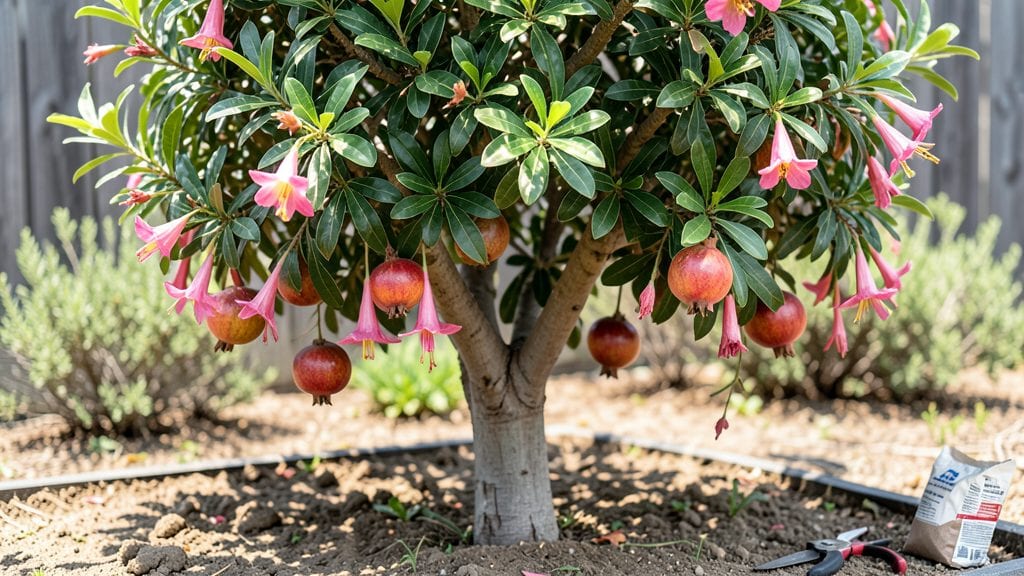
The Texas Pink pomegranate tree delivers vibrant blooms and edible fruit in just three years—even in Texas heat. 🌿 I planted mine last spring, and within weeks, the deep pink flowers caught every neighbor’s eye.
This isn’t your average pomegranate; it thrives where others fail, producing glossy red fruit with a sweet-tart flavor.
Sunlight is non-negotiable—this tree craves 6+ hours of direct sun daily, but it handles our 100-degree summers better than most. The soil? Well-draining and slightly alkaline (pH 6.5–7.5) is ideal, though it’s forgiving if you amend heavy clay.
Water deeply once a week once established, but don’t drown it—root rot is a real threat.
By year three, you’ll harvest bright pink flowers in spring and juicy pomegranates in fall, plus lush foliage that adds year-round color. The tree stays compact (10–15 feet tall), making it perfect for small yards or containers. Prune lightly after blooming to encourage bushier growth and better fruit production.
Pests are rare, but watch for aphids on new growth—spray with neem oil if needed. In Texas, this tree’s cold hardiness (down to 15°F) means fewer surprises than tropical varieties. With minimal effort, you’ll have a showstopping tree that feeds both your table and your landscape pride.
📚 In This Guide
- What you need
- Instructions
- Tips and common mistakes
- Wrapping up and next steps
What you need
- ● Pruning shears: Bypass pruners (sharp, 6-8 inch blades) for small branches.
- ● Loppers: 18-24 inch bypass loppers for medium-sized branches (2+ inches thick).
- ● Pruning saw: Curved-tooth pruning saw for thick branches (3+ inches).
- ● Disinfectant: 70% isopropyl alcohol or a 10% bleach solution (1 part bleach to 9 parts water) to sterilize tools.
- ● Gloves: Heavy-duty gardening gloves (cut-resistant, like those rated for pruning).
- ○ Pruning sealant: Optional but recommended (e.g., tree wound paint) for cuts larger than ½ inch.
- ● Trash bags or bucket: For collecting pruned branches and debris.
- ● Extension pole: For hard-to-reach branches (10-12 feet long).
- ● Ladder: Sturdy, 4-6 foot ladder (if tree is tall).
- ● Hand saw: For stubborn, thick branches that loppers can’t handle.
- ● Safety glasses: To protect eyes from debris.
- ● Notebook & pen: To mark branches for future reference.
Step-by-step instructions for planting and cultivating a Texas Pink pomegranate tree
Here's how to establish a thriving Texas Pink pomegranate that thrives in your climate and delivers fruit within three seasons.
🌱 Step 1: Select and Prepare the Planting Site
The Texas Pink pomegranate (Punica granatum 'Texas Pink') thrives in full sun—choose a location receiving at least 6-8 hours of direct sunlight daily. This variety handles Texas heat better than most, but afternoon shade helps prevent sunburn on young trees. I always test the site by observing how long nearby plants stay dry; if the soil stays moist past mid-afternoon, you’ve got a good spot.
Soil should drain freely but retain moisture—amend heavy clay with 2-3 inches of compost mixed into the top 12 inches of soil. The tree tolerates slightly alkaline soil (pH 6.5-8.0), so no adjustment is needed unless your soil tests below 6.0. I dig a hole twice as wide as the root ball but only as deep—planting too deep suffocates roots and causes stress.
🪴 Step 2: Plant the Tree at the Right Time and Depth
Plant bare-root trees in late winter or early spring (February-March in Texas) when soil is workable but not soggy. Container-grown trees can go in fall or spring, but avoid extreme heat or cold. Handle the root ball carefully—soaked roots slide easily from the container, minimizing root damage. If roots circle the root ball, gently tease them apart with your fingers to encourage outward growth.
Position the tree so the top of the root flare (where roots meet trunk) sits 1-2 inches above soil level. Backfill with native soil mixed with 1 part compost, tamping lightly every 2 inches to eliminate air pockets. Water deeply until moisture reaches 12 inches down—you’ll see water pooling at the surface before draining away. Mulch with 2-3 inches of organic mulch (like pine straw or shredded bark), keeping it 6 inches away from the trunk to prevent rot.
☀️ Step 3: Water and Fertilize for Strong Early Growth
Newly planted pomegranates need deep, infrequent watering—1-2 inches per week, more in summer heat. I water every 5-7 days in summer, checking moisture by sticking a 6-inch screwdriver into the soil; if it resists, water again. Overhead watering wets foliage and invites fungal diseases, so use drip irrigation or a soaker hose at the base. Avoid wetting leaves during the day to reduce evaporation stress.
Fertilize lightly in spring and early summer with a balanced 10-10-10 or 8-3-9 formula, applying ½ cup per year of tree age (e.g., ½ cup for a 1-year-old tree). Too much nitrogen leads to leafy growth at the expense of fruit. I also side-dress with 1 cup of compost in spring to improve soil structure—this tree’s shallow roots appreciate organic matter but hate competition from weeds, so keep the area weed-free within 3 feet.
✂️ Step 4: Prune for Structure and Fruit Production
Prune in late winter (February) to shape the tree and encourage fruiting. Remove dead, crossing, or inward-growing branches first—these compete for energy and block sunlight. I aim for an open-center shape with 3-5 main scaffold branches spaced 12-18 inches apart. Cut back to just outside a outward-facing bud to promote new growth. Avoid heavy pruning in summer, as it stresses the tree and delays fruit set.
Thin fruit in late spring when pomegranates are golf-ball sized—leave 6-8 fruits per branch to ensure size and quality. Overcrowded fruit leads to small, seedy pomegranates. I also remove suckers (shoots at the base) and water sprouts (vertical shoots from branches) to direct energy into fruit production. The Texas Pink variety is self-fertile, but planting two trees within 15 feet improves pollination and yield.
⏰ Step 5: Protect and Maintain Through Seasons
Young trees need winter protection in their first 2-3 years. In hard freezes (below 20°F), wrap the trunk with burlap or tree wrap and mound 4-6 inches of mulch around the base. Mature trees handle down to 10°F but may drop leaves—new growth returns in spring. I also watch for pomegranate butterfly caterpillars (white with black stripes) in summer; handpick or spray with neem oil if infestations appear.
By year three, your Texas Pink should produce abundant fruit with minimal care. Harvest when the rind turns deep pink and feels slightly leathery (usually October-November). Cut stems with 2 inches of stem attached to prolong shelf life. Store in a cool, dry place for up to 2 weeks—these pomegranates are sweeter than the classic red varieties and perfect for fresh eating or juicing.
Tips & tricks for perfect Texas Pink pomegranate cultivation
A few strategic moves will help your Texas Pink pomegranate tree thrive and bear fruit faster than you'd expect.
Sunlight Strategy: While 6-8 hours of direct sunlight is the minimum, I've found that positioning your tree to capture morning sun and afternoon shade in Texas's peak summer months (June-August) prevents leaf scorch while maintaining energy production. Use a simple shade cloth over young trees during the hottest hours if your site gets intense afternoon sun—this protects without sacrificing growth. The Texas Pink handles heat better than most varieties, but even it appreciates this protection in its first growing season.
Root Ball Preparation: When planting container-grown trees, soak the root ball for 15-20 minutes before transplanting to minimize shock. I like to wrap the root ball in a burlap sack before removing it from the pot—this helps maintain root integrity and makes it easier to handle. For bare-root trees, soak the roots in water for 1-2 hours before planting to revive them. This simple step dramatically improves establishment rates, especially in our dry Texas climate.
Watering Wisdom: The 1-2 inches per week guideline works well, but I've learned to adjust for our Texas heat. In summer months, I water every 5-7 days but increase to every 3-4 days during prolonged heatwaves (90°F+). To check moisture, insert a 6-inch screwdriver into the soil—if it resists, water again. This method gives you a more accurate reading than just feeling the soil surface. Remember that drip irrigation or soaker hoses are your best friends—they deliver water directly to the roots without wetting the foliage, which helps prevent fungal diseases like powdery mildew.
Pruning Precision: When pruning in late winter (February), I always make cuts just outside an outward-facing bud to encourage new growth in the right direction. For the first two years, I focus on removing only dead, crossing, or inward-growing branches—this creates an open center that allows sunlight to reach all parts of the tree. In subsequent years, I thin back to maintain that 3-5 main scaffold branches, but I never remove more than 25% of the tree's foliage in any single pruning session. This balanced approach ensures your tree has enough energy to produce fruit while maintaining its structure.
Pro Tips for Texas Pink Pomegranate Tree
- A few strategic moves will help your Texas Pink pomegranate tree thrive and bear fruit faster than you'd expect.
- Use a simple shade cloth over young trees during the hottest hours if your site gets intense afternoon sun—this protects without sacrificing growth.
- Root Ball Preparation: When planting container-grown trees, soak the root ball for 15-20 minutes before transplanting to minimize shock.
Frequently asked questions
Got questions about growing and maintaining your Texas Pink Pomegranate Tree? You’re not alone! Here are some of the most common concerns—plus expert tips to keep your tree thriving.
How cold-hardy is the Texas Pink Pomegranate Tree, really?
The Texas Pink variety is one of the most cold-resistant pomegranates, surviving down to 10–15°F (-12 to -9°C) with proper care. Young trees may need winter protection (like mulch or burlap wraps), while mature trees handle frost better. Pro tip: Plant in full sun and well-draining soil to boost resilience!
When should I prune my Texas Pink Pomegranate Tree?
Prune in late winter or early spring (before buds swell) to shape the tree and remove dead wood. Avoid heavy pruning in fall—it can stimulate new growth that won’t harden off before winter. Bonus: Light pruning after harvest (summer) improves airflow and fruit visibility!
Why aren’t my pomegranates turning pink?
Pink hue develops as fruit matures—patience is key! If fruits stay green, check for sunlight (6+ hours/day) and balanced fertilizer (low nitrogen, high potassium). Overwatering or shade can also dull color. Quick fix: Thin fruits early to ensure the tree directs energy to a few vibrant ones.
Are there pests or diseases I should watch for?
Texas Pink pomegranates are tough but can face aphids, scale, or fungal issues (like powdery mildew) in humid climates. Monitor leaves and stems—neem oil or horticultural soap works for pests. For disease prevention, prune for airflow and avoid overhead watering. Alert: Remove infected branches immediately!
Can I grow Texas Pink Pomegranates in containers?
Yes! Choose a large pot (20+ gallons) with drainage holes and use well-draining soil. Container trees may need more frequent watering and winter protection (move indoors or wrap roots). Dwarf varieties (like ‘Wonderful’) adapt best—just ensure they get full sun and occasional pruning to control size.
Wrapping up and next steps
The Texas Pink Pomegranate Tree is a fantastic choice for gardeners in colder climates—offering stunning blooms, drought tolerance, and delicious fruit in just three years! With the right pruning techniques, you’ll ensure a thriving tree that rewards you with vibrant color and harvests for seasons to come. 🌿
Ready to get started? Plant your tree today and watch it grow—your future harvest (and neighbors’ envy) will be worth the wait! For extra tips, check out our pruning guide or join local gardening groups to share your progress.