Pruning
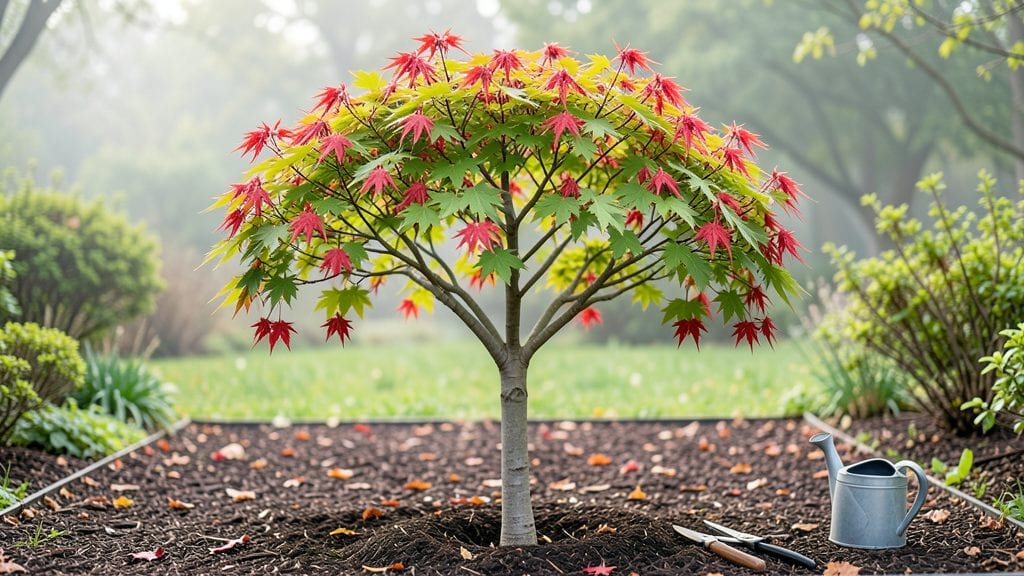
Spring is the perfect time to shape your red maple tree’s future—precision cuts now mean vibrant foliage and stronger branches all year. I’ve pruned mine for five years, and the difference in leaf density and bloom abundance is night and day.
The key? Timing cuts just after the sap slows but before new growth explodes, usually in late March or April when buds swell but haven’t broken yet.
Start by removing dead, crossing, or weak branches first—they’re easy to spot against the tree’s fresh spring energy. Then focus on thinning the canopy to let sunlight reach the inner branches, which is where those stunning red leaves really pop.
A sharp bypass pruner and a ladder (or sturdy stool) are your best tools—no need for fancy equipment, just clean cuts at the branch collar.
What you’ll end up with is a tree that looks healthier from a distance and thrives closer up. The leaves emerge a richer green, the flowers bloom more prolifically, and the structure stays balanced against storms.
Plus, you’ll notice fewer pests targeting weak branches—spring pruning sets the stage for a pest-resistant season.
Works for both young saplings and mature trees, though the approach scales with size. If your tree is near power lines or sidewalks, call a professional for the tricky parts. Otherwise, grab your tools and get pruning—your tree’s summer performance starts with these cuts.
📚 In This Guide
- What you need
- Instructions
- Tips and common mistakes
- Wrapping up and next steps
What you need
- ● Pruning shears (bypass or anvil type) – Choose sharp, high-quality shears (e.g., Felco or Fiskars) for clean cuts. Size: 6–8" blades for small branches.
- ● Loppers – For branches ½" to 2" in diameter. Look for: Ratcheting or bypass loppers for leverage.
- ● Pruning saw – A curved-tooth saw (like a Felco F-2) for thick branches (>2" diameter).
- ○ Extension pole pruners (optional but handy) – For high branches; reach: 6–10 ft.
- ● Work gloves – Garden-grade gloves with cut-resistant palms (e.g., Mechanix or Filson).
- ● Safety glasses – Protect your eyes from debris.
- ● Ladder or step stool – Sturdy, non-slip ladder for taller trees (max 20 ft unless professional-grade).
- ● Heavy-duty trash bags – 20–30 gallon for debris (or a wheelbarrow for hauling).
- ● Disinfectant (70% isopropyl alcohol or bleach solution) – 1 part bleach : 9 parts water to sterilize tools between cuts.
- ● Rag or paper towels – For wiping tools clean.
- ● First-aid kit – Just in case (bandages, antiseptic wipes).
- ● Tree wound dressing – Only use on large cuts (>2") (e.g., Tanglefoot Tree Wound Pruning Sealer).
- ● Marking spray or tape – Bright-colored to flag branches for removal.
- ● Pruning sealant – Controversial but some swear by it for preventing disease.
- ● Camera or phone – Snap before/after pics to track progress!
Instructions for pruning a red maple tree in spring
Spring is the perfect time to shape your red maple for health and stunning fall color.
Inspect the Tree for Dead or Damaged Branches
Start by examining your red maple from all angles, looking for branches that are completely brown, brittle, or devoid of leaves. These are clear candidates for removal—they won’t regrow and only drain energy from the tree. I like to use a small stick to gently tap each branch; if it crumbles or makes a hollow sound, it’s dead and should come out.
Next, check for branches that have split or cracked bark, or show signs of disease like fungal growths or oozing sap. These are also priorities for pruning. Mark these branches with a piece of twine or flagging tape so you don’t miss them when you start cutting. Remember, red maples are prone to silver leaf disease, so removing infected branches early prevents spread.
Remove Branches at the Correct Angle and Location
Use sharp, clean pruning shears or a pruning saw to make your cuts. For branches up to 2 inches thick, shears work best; thicker branches need a saw. Always cut just outside the branch collar—the swollen area where the branch meets the trunk. This ensures the tree seals the wound properly and reduces the risk of decay.
The cut should be made at a 45-degree angle, sloping away from the branch collar. Never leave a stub—this invites pests and disease. If a branch is larger than 4 inches in diameter, make a second cut slightly above the first to avoid tearing the bark. For branches thicker than 6 inches, consider hiring a professional to avoid damaging the tree’s structure.
Thin the Canopy for Better Airflow and Light Penetration
Thinning the canopy improves airflow and light exposure, which is critical for your red maple’s health and vibrant fall foliage. Focus on removing branches that cross or rub against each other—they create wounds and weaken the tree. Aim to remove no more than 25% of the tree’s foliage in one season to avoid stressing it.
Look for branches growing straight upward from the main trunk or scaffold branches. These compete with the tree’s natural structure and should be pruned back to a lateral branch. You’ll know you’re doing it right when you can see light filtering through the canopy and sunlight reaching the lower branches. This also encourages stronger growth from the base up.
Shape the Tree for Balance and Aesthetic Appeal
Step back and assess the tree’s overall shape. Red maples have a naturally graceful form, but pruning can enhance their symmetry. Remove branches that disrupt the tree’s balanced silhouette, especially those growing too close to the trunk or those that create an uneven outline. Start with the smallest branches first—they’re easier to manage and won’t leave large wounds.
For a more refined look, prune branches that grow inward or downward, as these can create a dense, cluttered appearance. Aim for a rounded crown with an open center. This not only looks better but also allows sunlight to reach the inner branches, promoting healthier growth throughout the tree. Avoid over-pruning—your goal is to refine, not drastically alter, the tree’s natural shape.
Clean Up and Apply Wound Dressing (If Needed)
After pruning, collect all the debris and dispose of it properly—burning or composting is best to prevent disease spread. Wipe down your tools with rubbing alcohol to sterilize them before storing. For cuts larger than 1.5 inches in diameter, you can apply a wound dressing like pruning sealant to protect the tree from pests and decay, but many arborists argue that letting the tree seal its own wounds naturally is better.
Water the base of the tree deeply after pruning to help it recover. Mulch around the root zone with 2-3 inches of organic mulch, keeping it 6 inches away from the trunk to prevent rot. Monitor the tree over the next few weeks for any signs of stress, like wilting or discolored leaves. If you see these signs, reduce watering slightly—overwatering can stress a freshly pruned tree.
Tips & tricks for perfect red maple tree pruning in spring
Spring pruning transforms your red maple into a healthier, more vibrant tree—here's how to avoid common mistakes and elevate your results.
Tool Sharpness Matters: Dull pruning shears crush branches instead of making clean cuts, which damages the tree's tissue. Before you start, test your tools on a scrap branch—if they don't slice cleanly, sharpen them first. For branches over 2 inches thick, invest in a quality pruning saw with a fine-toothed blade to prevent tearing. I've ruined several cuts using dull tools, so don't skip this step!
Disease Prevention is Key: Red maples are particularly susceptible to silver leaf disease, so sterilize your tools between each cut. Wipe blades with rubbing alcohol after every 3-4 cuts, especially when moving between branches. The twine or flagging tape you use to mark branches should also be disease-free—opt for new tape each season if possible. This simple step can prevent an outbreak that could take years to recover from.
Timing is Everything: Prune in early spring, just as buds begin to swell but before new leaves emerge. This timing gives the tree time to heal before summer heat arrives. If you must prune later in spring, avoid heavy pruning after mid-May in most climates—this can stress the tree before it enters dormancy. I learned this the hard way after seeing a tree struggle through summer after late-season pruning.
Visual Cues for Proper Cuts: When making your 45-degree angle cuts in Step 2, imagine you're cutting a slice of pie—smooth and clean, not jagged. The cut should be just outside the branch collar, where the branch meets the trunk. For branches over 4 inches thick, make your second cut about 1/4 inch above the first to prevent bark tearing. This creates a clean wound that heals properly, reducing the risk of decay.
Pro Tips for Red Maple Tree In Spring
- Spring pruning transforms your red maple into a healthier, more vibrant tree—here's how to avoid common mistakes and elevate your results.
- Tool Sharpness Matters: Dull pruning shears crush branches instead of making clean cuts, which damages the tree's tissue.
- Disease Prevention is Key: Red maples are particularly susceptible to silver leaf disease, so sterilize your tools between each cut.
Frequently asked questions
Got questions about pruning your red maple tree in spring? You’re not alone! Here are answers to the most common concerns—from timing to troubleshooting—to help you achieve that vibrant, healthy canopy all year.
When is the exact best time to prune a red maple in spring?
The ideal window is late winter to early spring (February–March in most zones), before buds swell but after harsh winter frosts pass. Avoid pruning during active sap flow (April–May), as this can stress the tree and attract pests. Pro tip: Check your local frost dates to time it perfectly!
Can I prune a red maple in spring if I missed the ideal window?
Yes, but with caution! If you must prune later (April–June), limit cuts to 10–15% of the canopy to avoid sap loss or disease risk. Focus on dead, diseased, or crossing branches first. Never prune in fall—red maples are highly susceptible to fungal infections like tar spot disease during this season.
How do I know if I’m over-pruning my red maple?
Watch for these red flags:
- Excessive sap leakage (more than a few drips per cut).
- Wilting or yellowing leaves after pruning.
- Slow recovery (no new growth by early summer).
Why is my red maple bleeding sap after pruning? Is this normal?
Yes, it’s normal and temporary! Red maples produce abundant sap in spring, especially after cuts. To minimize mess:
- Prune on a dry, cool day (not sunny/warm).
- Use clean, sharp tools to reduce tear.
- Apply pruning sealant (optional) to large cuts (>2" diameter).
Are there alternatives to spring pruning for red maples?
While spring is ideal, you can prune red maples:
- Dormant season (late fall): Only if absolutely necessary (e.g., storm damage). Risk of disease increases.
- Summer (June–August): Focus on structural shaping (avoid heavy cuts).
Pro Tip: How to identify dead branches in a red maple?
Use the scratch test:
- Scrape a small section of bark with your fingernail.
Green beneath? Branch is alive. Brown/dry? It’s dead—remove it!
Wrapping up and next steps
Spring is the perfect time to give your red maple tree the care it deserves—pruning with precision ensures a vibrant, healthy canopy year-round. By following the right techniques, you’ll promote stronger growth, prevent disease, and keep that stunning spring foliage at its best. 🌿
Now that you’re armed with the tools, timing, and tips, there’s no better moment to roll up your sleeves and transform your tree! Start small—even a few strategic cuts can make a big difference. Happy pruning!
Next step: Grab your pruners and schedule your session on a calm, dry spring day. Your red maple will thank you for years to come! 🌱