Pruning
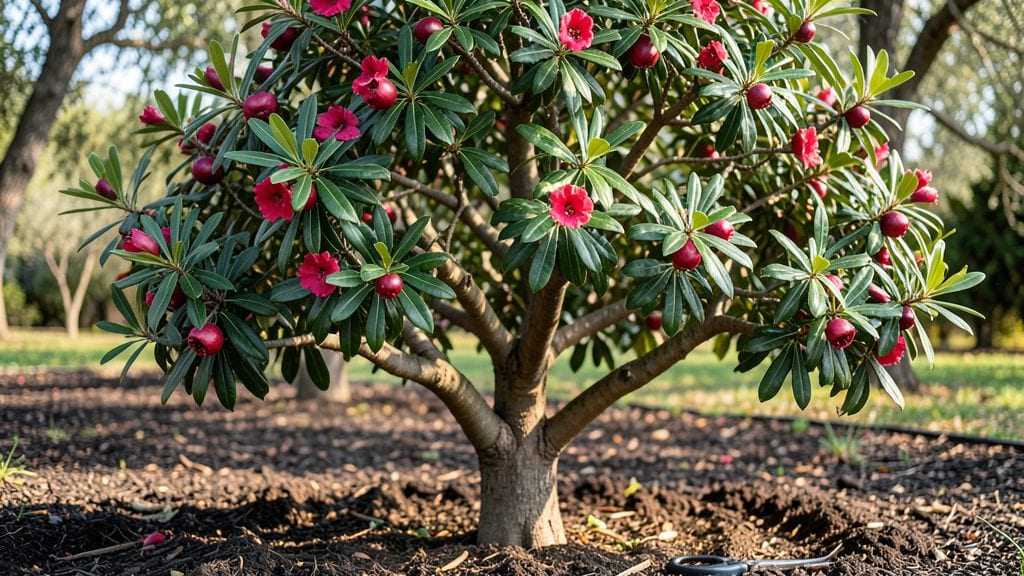
Your pomegranate tree’s final height depends entirely on the variety you choose—some sprawl to 15 feet while others stay neatly under 6 feet. I’ve grown both types in my Colorado garden, and the difference isn’t just in size but in how they handle cold snaps and fruit production.
The compact varieties like ‘Wonderful’ or ‘Eversweet’ prove you don’t need a backyard to grow these jewel-toned fruits.
Most standard pomegranate trees reach 10–15 feet tall, but cold-hardy dwarf varieties stay between 6–8 feet, making them perfect for small spaces or containers. Pruning young trees aggressively in early spring keeps them manageable, and I’ve found that regular thinning of branches actually increases fruit size.
My ‘Dwarf Granat’ produces just as many (if not more) pomegranates than its taller cousins, just on a smaller scale.
What you’ll love most is how these compact trees fruit earlier—often within 2–3 years—and their ability to thrive in zones 6–9 with minimal fuss. The trade-off? They might need a little extra winter protection, but the payoff is worth it when you’re harvesting fruit in late fall.
Think of them as the perfect balance between ambition and practicality.
For container growing, choose a 5-gallon pot for young trees and upgrade to 15–20 gallons as they mature. Just remember: even dwarf varieties need 6–8 hours of sun daily and well-draining soil. The key is starting small—literally—and letting the tree grow into its own space without taking over your garden.
📚 In This Guide
- What you need
- Instructions
- Tips and common mistakes
- Wrapping up and next steps
What you need
- ● Cold-hardy pomegranate variety: Choose dwarf or semi-dwarf cultivars like ‘Wonderful’ (with aggressive pruning) or ‘Eversweet’ (naturally more compact). Nursery-grown saplings (1–3 ft tall) are ideal for faster results.
- ● Pruning tools: 1 bypass pruners (for clean cuts on branches ≤¾ inch thick)
- ● 1 loppers (for thicker branches, 1–2 inches)
- ● 1 pruning saw (for stubborn, woody growth)
- ● 1 sterilizing solution (70% isopropyl alcohol or bleach-water mix to prevent disease)
- ● Planting supplies: 1 well-draining potting mix (or native soil amended with 30% compost)
- ● 1 5-gallon container (for container growth) or planting hole (2x wider than root ball)
- ● 1 mulch (3–4 inches of wood chips or straw to retain moisture)
- ○ Growth regulators (optional but helpful): 1 bottle dwarfing hormone (e.g., Paclobutrazol—follow label instructions)
- ● 1 slow-release fertilizer (10-10-10 or organic options like compost tea)
- ● Climate: USDA Zones 7–11 (cold-hardy varieties tolerate down to 10°F with protection).
- ● Sunlight: Full sun (6+ hours/day)—pomegranates thrive in heat but need winter chill (300–600 hours below 45°F).
- ● Watering: Drip irrigation or soaker hose (avoid overhead watering to prevent fungal diseases).
- ● Spacing: Container trees: 12–18 inches from other plants.
- ● In-ground trees: 8–10 feet apart (or closer if heavily pruned).
- ● Timing: Best planting time: Early spring or fall (avoid extreme heat/cold).
- ● Pruning time: Late winter (before buds swell) or immediately after harvest.
How to select and maintain compact pomegranate varieties for cold climates
Cold-hardy pomegranates thrive with the right variety—here’s how to choose and care for dwarf or semi-dwarf types that stay under 10 feet while producing abundant fruit.
Choose the Right Compact Variety for Your Climate
Cold-hardy pomegranates like ‘Wonderful’ or ‘Eversweet’ typically grow 10–15 feet tall, but dwarf varieties such as ‘Dwarf Pomegranate’ or ‘Nana’ max out at 6–8 feet. These smaller types are grafted onto dwarfing rootstock, which restricts their height while maintaining fruit production. Check your hardiness zone—the most cold-tolerant varieties survive down to USDA Zone 6 with proper winter protection.
When selecting a nursery plant, look for labels specifying dwarf or semi-dwarf growth habits. Avoid standard varieties unless you’re prepared for a larger tree, as they’ll require more space and pruning to manage height. I always verify the rootstock type with the nursery, as some "dwarf" labels are misleading if not grafted properly.
Plant in a Sunny, Sheltered Location
Pomegranates need full sun (6–8 hours daily) and protection from harsh winds, which can stress young trees and stunt growth. Choose a spot with south or southwest exposure—this ensures maximum sunlight while minimizing winter cold exposure. Amend the soil with 2–3 inches of compost before planting to improve drainage, as pomegranates hate soggy roots.
Dig a hole twice as wide as the root ball but no deeper. Place the tree so the graft union (a visible bump near the base) sits 2–3 inches above soil level. This prevents the roots from growing upward and encourages a stronger trunk. Water deeply immediately after planting to settle the soil and remove air pockets.
Prune Strategically to Control Height and Shape
Pruning is key to keeping pomegranates compact. In late winter or early spring, remove one-third of the oldest wood to encourage new growth and prevent the tree from becoming leggy. Cut back suckers (shoots growing from the base) aggressively—they divert energy from fruit production. For height control, focus on heading back the central leader (main upward stem) by one-third to promote bushier growth.
Thin out crowded branches to improve airflow, which reduces disease risk. Aim for an open-centered shape—this allows sunlight to reach inner branches, ensuring even fruit ripening. Avoid heavy pruning in fall, as new growth won’t harden off before winter. I prune again lightly in summer to shape the tree and remove any dead or crossing branches.
Water and Fertilize for Optimal Growth
Pomegranates are drought-tolerant once established, but young trees need deep watering every 7–10 days during the first year. Water at the base, not overhead, to prevent fungal diseases like powdery mildew. Let the soil dry out between waterings—soggy conditions lead to root rot. Mulch with 2–3 inches of organic mulch (like wood chips) to retain moisture and regulate soil temperature.
Fertilize in early spring with a balanced 10-10-10 formula or one high in nitrogen for new growth. Avoid over-fertilizing, as this encourages excessive foliage at the expense of fruit. A light application of citrus or fruit-tree fertilizer in late spring supports flowering and fruiting. I also side-dress with compost annually to improve soil health without risking over-fertilization.
Protect from Winter Cold and Frost
Even cold-hardy pomegranates benefit from winter protection in Zones 6–7. Wrap the trunk with tree wrap or burlap to prevent sunscald and rodent damage. Pile 4–6 inches of mulch around the base (but not against the trunk) to insulate roots. For extra protection, cover the entire tree with a breathable frost blanket on nights below 20°F, securing it loosely to avoid damaging branches.
Prune out any damaged or dead wood in early spring after the last frost. New growth will emerge from the graft union and lower branches, ensuring a bushy, compact shape. If your tree is in a microclimate with late frosts, consider planting near a south-facing wall to absorb and radiate heat, extending the growing season.
Tips & tricks for perfect pomegranate tree height management
Growing compact pomegranate trees that stay under 10 feet takes intention—but these expert tips will help you maintain that perfect size while maximizing fruit production. Here's how to get it right from the start.
Rootstock Matters Most: The dwarfing rootstock is what truly keeps your pomegranate tree compact. When selecting your tree, always ask the nursery about the rootstock type—some labeled "dwarf" varieties may actually be semi-dwarf or even standard-sized if not properly grafted. I've seen trees labeled "dwarf" grow to 12 feet because they weren't grafted onto true dwarfing rootstock. For guaranteed compact growth, specifically request trees grafted onto 'Punica granatum' dwarfing rootstock.
Pruning Precision in Step 3: When you're heading back the central leader by one-third in late winter, focus on making your cuts just above outward-facing buds. This encourages bushier growth rather than vertical shoots. I recommend using sharp pruning shears and making clean cuts at a 45-degree angle about 1/4 inch above the bud. The key is to create an open-centered shape that allows sunlight to penetrate all branches—this is what prevents legginess and keeps your tree naturally compact.
Winter Protection Strategy: The 4-6 inches of mulch around your tree's base isn't just for insulation—it's also a moisture regulator. In Zone 6, where winter protection is critical, I've found that adding an extra 2 inches of straw mulch after the initial 4-6 inches creates a better insulating layer. Just be sure to keep mulch away from the trunk to prevent rot. For trees in microclimates with late frosts, consider installing a small fan on a low setting near the tree—this creates gentle airflow that can raise temperatures by several degrees.
Fertilizer Timing Secrets: That early spring 10-10-10 application is crucial, but timing matters just as much as the formula. I've found that applying fertilizer when the soil temperature reaches 50°F (about 2 weeks after your last frost) gives your tree the best start. For established trees, you can split the citrus or fruit-tree fertilizer application into two doses—half in late spring when flowers appear, and half again in early summer after fruit set. This prevents over-fertilization that could lead to excessive foliage growth at the expense of fruit production.
Pro Tips for Pomegranate Tree Height
- Growing compact pomegranate trees that stay under 10 feet takes intention—but these expert tips will help you maintain that perfect size while maximizing fruit production.
- Rootstock Matters Most: The dwarfing rootstock is what truly keeps your pomegranate tree compact.
- Pruning Precision in Step 3: When you're heading back the central leader by one-third in late winter, focus on making your cuts just above outward-facing buds.
Frequently asked questions
Got questions about managing your pomegranate tree’s height? Here are answers to the most common ones—whether you’re dealing with space constraints, growth quirks, or just curious about the best ways to keep your tree in check.
How tall do pomegranate trees typically grow?
Most standard pomegranate varieties can reach 10 to 20 feet tall if left unpruned. However, cold-hardy dwarf or compact varieties (like ‘Wonderful’ or ‘Eversweet’) usually max out at 6 to 10 feet, making them ideal for smaller gardens or containers. Pruning early can help control height even further!
Can I prune a pomegranate tree to keep it shorter?
Pomegranate trees respond well to regular pruning—especially in late winter or early spring. Focus on removing suckers (shoots at the base) and crossing branches to encourage a bushier, more manageable shape. For drastic height reduction, prune by 1/3 of its height in stages over a few years to avoid shocking the tree.
Do cold-hardy pomegranate varieties stay naturally shorter?
Some cold-hardy varieties, like ‘Cold Hardied’ or ‘Russian Red,’ are bred to be more compact and resilient in cooler climates. While they may still grow taller than dwarf types, they generally stay under 8–12 feet with minimal pruning. Pair them with proper winter protection (mulch, frost cloth) to keep them healthy and manageable.
What’s the best way to grow a pomegranate tree in a pot?
For container growth, choose a dwarf variety (e.g., ‘Nana’ or ‘Little Sweetie’) and a large pot (at least 15–20 gallons) with drainage holes. Prune aggressively to maintain height under 4–6 feet and repot every 2–3 years to refresh the soil. Move pots indoors or to a sheltered spot in winter if temps drop below 20°F.
Why is my pomegranate tree growing too tall too fast?
Rapid height growth often signals over-fertilization (especially nitrogen) or lack of pruning. Slow growth by reducing fertilizer and pruning back long branches by 1/3 to redirect energy to fruit production. Ensure the tree gets 6+ hours of sunlight daily—shady spots can also spur leggy growth. If the trunk is weak, stake it for support.
Does pruning affect fruit production?
Pruning boosts fruit quality and yield when done right! Removing dead wood and thinning dense branches improves airflow and sunlight penetration, which reduces disease and helps fruit ripen evenly. Avoid heavy pruning during fruiting season—focus on late winter/early spring cuts instead. Aim to keep the tree’s central leader (main trunk) strong for structural support.
Wrapping up and next steps
Choosing a cold-hardy, compact pomegranate tree is a fantastic way to enjoy this vibrant fruit without sacrificing space or resilience. Whether you’re drawn to the Wonderful variety or the hardy Russian types, these trees strike the perfect balance between manageable height and stunning blooms.
With the right pruning and care, you’ll be rewarded with years of lush growth and delicious harvests—so roll up your sleeves and get growing! 🌱
Ready to transform your garden? Start by selecting your favorite variety, then check out our pruning guide to keep your tree thriving at its ideal height. Happy planting! 🍇