
Pruning
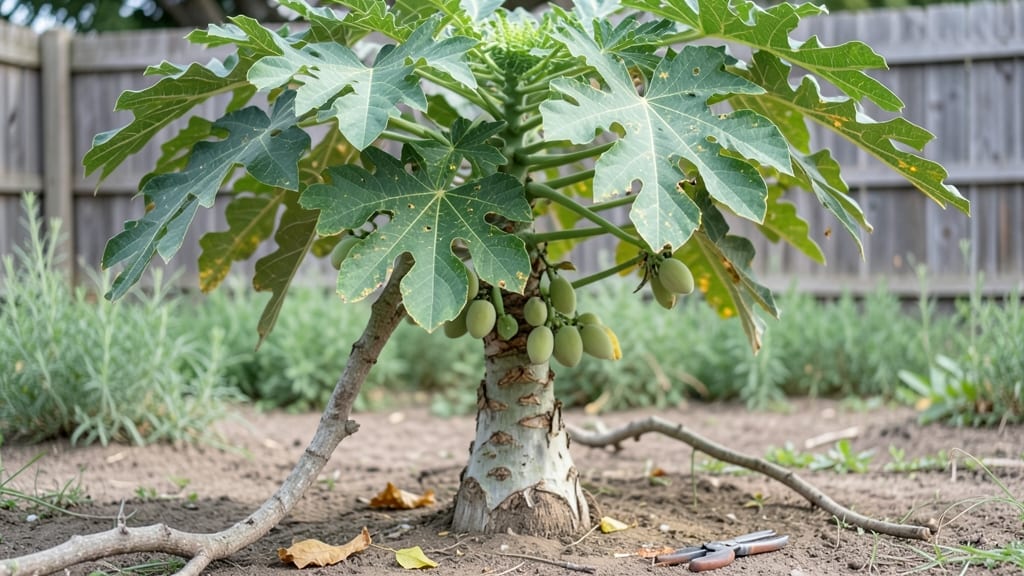
Trimming your papaya tree isn't just about shaping—it's the secret to year-round growth in Pacific Northwest's unpredictable climate. 🌿 I learned this the hard way when my first tree produced sparse fruit because I ignored the pruning schedule.
The right cuts encourage stronger branches, better air flow, and more abundant harvests, even when temperatures dip below 60°F.
Start with clean, sharp pruning shears and sterilize them with rubbing alcohol to prevent disease spread. The best time to trim is right after harvest or during early spring before new growth begins.
Focus on removing dead wood, crossing branches, and any suckers growing at the base—these steps keep your tree healthy and productive without over-stressing it.
You'll notice a difference within weeks: thicker stems, more leaves, and—most exciting—fruit clusters forming where you've made strategic cuts. Even in containers, papayas respond well to pruning, as long as you leave enough foliage to photosynthesize.
The key is balance: trim enough to shape but never so much that you stunt growth.
For PNW gardeners, winter pruning is critical—light cuts to remove frost-damaged tips can save your tree from decline. And if you're growing in pots, prune more aggressively to control size while still encouraging fruit production. The goal is a tree that thrives despite our cooler summers and wet winters.
📚 In This Guide
- What you need
- Instructions
- Tips and common mistakes
- Wrapping up and next steps
What you need
- ● Pruning shears: Bypass pruners (for cuts sharp and sterilized to prevent disease.
- ● Loppers: 1 pair (for branches ½–1½ inches thick). Opt for ergonomic handles for comfort.
- ● Pruning saw: 1 lightweight saw (for branches > 1½ inches thick). A bow saw or folding pruner saw works best.
- ● Gloves: 1 pair of cut-resistant, breathable gloves (gardening or pruning-specific).
- ● Disinfectant: 70% isopropyl alcohol or a 10% bleach solution (1 part bleach to 9 parts water) to clean tools between cuts.
- ● Ladder or step stool: Adjustable or extendable (if your tree exceeds 6 feet). Ensure it’s stable and rated for your weight.
- ● Heavy-duty trash bags: 2–3 bags (for collecting pruned branches and debris).
- ● Sharpie or permanent marker: 1 (to label cuts or track progress).
- ○ Rope or twine: 50–100 feet (optional, for securing branches during trimming).
- ● Hand sanitizer or wipes: For quick cleanups between cuts.
- ● Safety goggles: To protect eyes from debris or sap.
- ● Tree wound sealant: (e.g., pruning paint or beeswax). Note: Only use on large cuts (> 2 inches) in the PNW’s wet climate.
- ● Camera or phone: To document your tree’s progress or share tips with fellow gardeners!
How to prune a papaya tree for year-round growth in the Pacific Northwest
Here's my battle-tested approach to keep your papaya thriving through PNW's damp winters and mild summers.
✂️ Step 1: Time Your First Prune for Late Winter
Wait until mid-February to early March when your tree has finished its winter dormancy but before new growth begins. You'll know it's ready when the leaves feel firm and the branches don't snap easily when bent. This timing prevents frost damage to fresh cuts and gives the tree time to heal before summer's heat arrives.
Start by removing any dead, diseased, or crossing branches first - these are your priority. Use clean, sharp pruning shears to make cuts at a 45-degree angle just above an outward-facing bud. This creates a natural water runoff path and encourages better regrowth. I like to make my first cuts about 6 inches back from the main stem to open up the center and improve airflow.
☀️ Step 2: Shape for Maximum Sun Exposure
Papaya trees need full sun to produce fruit, so your goal is to create an open, vase-like shape. Remove any branches growing inward toward the center of the tree - these will block sunlight from reaching the inner leaves and fruit. Look for branches that are growing straight up and cut them back by about one-third to encourage outward growth.
Pay special attention to the lower branches. In the Pacific Northwest's damp climate, these often stay too wet and develop fungal issues. Remove any branches below 3 feet from the ground unless you're specifically growing a dwarf variety. You'll see the tree's natural growth pattern emerge as you work - follow the strongest, healthiest branches and let them guide your cuts.
🌱 Step 3: Encourage Fruit Production Through Strategic Cuts
For fruit production, focus on removing any suckers - those small shoots that grow from the main stem or branches. These divert energy from fruit production. Cut them back to their origin point using your pruning shears. Also, remove any flower buds that appear on new growth - these won't develop into fruit and will weaken the plant.
When you see your papaya tree flowering, leave only 3-5 of the strongest, healthiest flowers per cluster. This ensures the tree puts its energy into developing quality fruit rather than many small ones. In the Pacific Northwest, where summers are cooler than tropical regions, this selective approach gives your tree the best chance to mature fruit before fall temperatures drop.
⏰ Step 4: Summer Maintenance and Pest Prevention
After your initial pruning, check your tree every 4-6 weeks throughout the growing season. Remove any new growth that's blocking sunlight or growing in unnatural directions. Look for signs of pests like aphids or mealybugs - these are common in PNW's humid climate and can weaken your papaya tree.
If you notice any yellowing leaves, this could indicate overwatering or nutrient deficiency. Papaya trees prefer well-draining soil and don't like to sit in water. In the Pacific Northwest, this means you might need to adjust your watering schedule - water deeply 2-3 times per week during summer but reduce to once a week in winter. Always check that the top 2 inches of soil are dry before watering again.
✂️ Step 5: Prepare for Winter Dormancy
In late fall, around October or November, give your papaya tree one final light pruning. Remove any dead or diseased branches and any growth that looks weak or stunted. This helps the tree enter dormancy with less stress. Don't make any major cuts during this time - you want to let the tree focus on conserving energy rather than healing wounds.
Consider moving your papaya tree indoors or to a protected location if you expect temperatures below 50°F. These tropical plants are sensitive to cold, and even brief exposure can damage the tree. If you must leave it outdoors, wrap the trunk and larger branches with frost cloth to provide some protection. With proper winter care, your papaya tree will be ready to burst into growth when spring arrives.
Tips & tricks for perfect papaya tree trimming
These simple yet game-changing tips will help your papaya tree thrive year-round in the Pacific Northwest's unique climate.
The Right Tools Make All the Difference: Invest in a good pair of bypass pruning shears for clean cuts and a small hand saw for thicker branches. I've ruined too many cuts with dull tools—always keep your blades sharp and clean with rubbing alcohol between cuts. Sterilizing your tools between trees also prevents spreading disease, which is especially important in PNW's damp conditions.
Visual Cues Over Guessing: When deciding which branches to remove in Step 2, look for branches that grow inward at angles less than 45 degrees—these are your candidates for removal. For the upward-growing branches, cut back to where the branch is about one-third the size of the main stem. This creates that perfect vase shape while maintaining structural integrity. Think of it like sculpting—you're shaping the tree's natural growth pattern.
PNW-Specific Pest Prevention: In the Pacific Northwest's humid summers, aphids and mealybugs love papaya trees. After your summer maintenance in Step 4, spray the undersides of leaves with a mix of 1 part water, 1 part alcohol, and a drop of dish soap. This natural solution disrupts pests' protective coating without harming the tree. I do this every 4-6 weeks during the growing season, and it's made a huge difference in keeping my trees healthy.
Winter Protection Hacks: If you must leave your papaya tree outdoors during winter, create a windbreak using burlap sacks or frost cloth wrapped around the trunk and branches. This adds an extra layer of protection against the 50°F threshold. I've also had success using Christmas lights wrapped around the trunk—just don't let them touch the tree. The gentle warmth helps prevent frost damage during those unexpected cold snaps.
Pro Tips for Papaya Tree Trimming
- These simple yet game-changing tips will help your papaya tree thrive year-round in the Pacific Northwest's unique climate.
- The Right Tools Make All the Difference: Invest in a good pair of bypass pruning shears for clean cuts and a small hand saw for thicker branches.
- Visual Cues Over Guessing: When deciding which branches to remove in Step 2, look for branches that grow inward at angles less than 45 degrees—these are your candidates for removal.
Frequently asked questions
When is the best time to trim a papaya tree in PNW’s rainy climate?
The ideal window is late winter or early spring (February–March), just before new growth starts. Avoid trimming during wet spells—damp conditions can invite fungal diseases. If you must prune in summer, do it on dry mornings to reduce stress on the tree.
Can I use regular pruning shears, or do I need specialized tools?
Standard bypass pruners work for small branches, but for thicker stems (over ½ inch), invest in loppers or a pruning saw. Sterilize tools with rubbing alcohol between cuts to prevent bacterial spread. A sharp tool = cleaner cuts = faster healing!
How much can I trim without harming fruit production?
Remove no more than 20–30% of the canopy at once. Focus on:
- Dead/diseased branches (cut to the base).
- Crossing or rubbing branches (trim to the nearest outward-facing bud).
- Overly dense growth blocking light (thin out inward-facing branches).
Will trimming my papaya tree affect fruit size or yield?
Proper trimming improves yield by boosting airflow and sunlight penetration. However, avoid heavy cuts during fruiting season (summer–fall). Light shaping in early spring encourages bushier growth with more fruit clusters. Think of it like a haircut—less is more!
What if my papaya tree gets moldy after trimming?
Mold thrives in damp, shaded conditions. To prevent it:
- Trim on dry days and avoid pruning during PNW’s persistent rain.
- Apply copper fungicide to cuts if mold appears.
- Space trees 8–10 feet apart for airflow.
Can I shape my papaya tree like an orchard tree (central leader) or should I keep it bushy?
Papayas adapt to both! For bushy growth (common in PNW), prune to encourage multiple stems. For a single-trunk look, train the strongest central leader and remove competing shoots. Whichever you choose, prune to the bud—not into a stem—to guide growth direction.
Wrapping up and next steps
Trimming your papaya tree isn’t just about aesthetics—it’s the key to vibrant growth, bountiful fruit, and resilience in the Pacific Northwest’s unique climate. 🌿 By mastering the art of selective pruning, you’ll encourage airflow, sunlight penetration, and healthier branches while keeping pests at bay.
Whether you’re a seasoned gardener or just starting, every snip brings you closer to a thriving harvest.
Ready to take the next step? Grab your pruners, mark your calendar for seasonal checks, and watch your papaya tree flourish! For extra guidance, download our pruning checklist—your future fruit is waiting. 🍈✨