Orchid Care
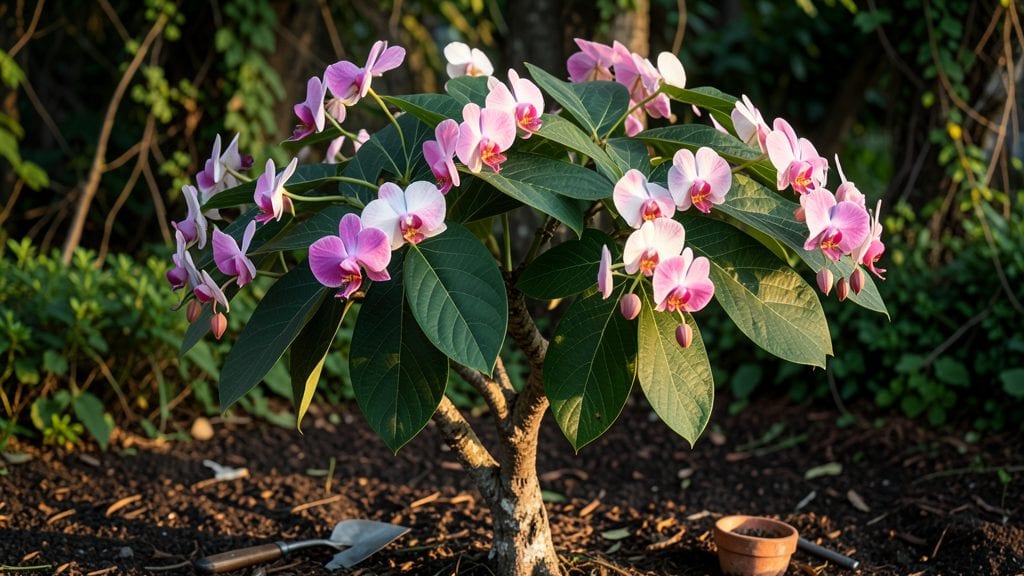
When your orchid tree leaves turn yellow, it’s rarely a death sentence—just a cry for help. 🌿 I’ve nursed back more than a few of these tropical beauties from limp and sallow to vibrant, and the fixes are simpler than you’d think.
The key is pinpointing whether your plant’s yellowing comes from overwatering, underwatering, pests, or something else entirely.
Start by checking the soil: if it’s soggy, the roots are drowning; if it’s bone-dry, they’re thirsty. Yellow leaves often mean the plant’s struggling to absorb nutrients, but the solution isn’t just adjusting water—it’s also about light, humidity, and pruning dead growth.
Within weeks, you’ll see fresh, deep-green leaves pushing through, and your orchid tree will look like it did the day you brought it home.
📚 In This Guide
- What you need
- Instructions
- Tips and common mistakes
- Wrapping up and next steps
What you need
- ● Pruning shears or sharp scissors – Sterilized to prevent disease spread (alcohol wipe recommended).
- ● Well-draining potting mix – A blend of orchid bark, perlite, and coconut coir (3:1:1 ratio) works best.
- ○ New pot (optional but ideal) – 1-2 inches larger in diameter than the current one, with drainage holes.
- ● Fertilizer (balanced or orchid-specific) – Diluted to half-strength (e.g., 10-10-10 or 20-20-20 NPK ratio).
- ● Spray bottle with room-temperature water – For gentle misting.
- ● Household disinfectant (e.g., hydrogen peroxide 3%) – For cleaning tools and trimming wounds.
- ● Cinnamon powder or sulfur-based fungicide – To dust cut areas and prevent infection.
- ● Rooting hormone – Speeds up recovery if propagating cuttings.
- ● Humidity tray or pebble tray – Creates a moist environment during recovery.
- ● Grow lights (LED or fluorescent) – If your orchid tree lacks natural sunlight.
- ● pH test kit – Ensures soil pH is between 5.5–6.5 (ideal for orchid trees).
- ● Mulch (orchid bark chips) – Retains moisture and mimics natural conditions.
Step-by-Step instructions for reviving orchid tree leaves
Here's how I nurse an orchid tree back to health when those leaves start turning yellow.
🌿 Step 1: Check Watering Habits First
Yellowing orchid tree leaves almost always start with watering issues. These plants hate soggy roots but also can't tolerate drought. Stick your finger 1-2 inches into the soil—if it's bone dry, you've underwatered. If it's still damp, you're overdoing it. I water mine when the top 3 inches feel completely dry, then let excess water drain completely.
Use room-temperature water only—cold water shocks the roots. I pour water slowly at the base to avoid wetting the leaves, which can cause fungal issues. The pot should feel light after watering, not heavy. If you're using a saucer, empty it 10 minutes after watering to prevent root rot.
💧 Step 2: Assess Light Exposure
Orchid trees need bright, indirect light—think morning sun with afternoon shade. If your plant's leaves are yellowing with brown patches, it's getting too much direct sun. Move it away from south-facing windows or add a sheer curtain to diffuse the light. I notice the biggest improvement when I place mine near an east window.
On the flip side, if the yellowing is paired with leggy growth and sparse leaves, it needs more light. Rotate the pot a quarter turn weekly so all sides get even exposure. You'll see new growth in 4-6 weeks once you get the light right. A grow light on a timer works well if natural light is insufficient.
✂️ Step 3: Prune Damaged Leaves and Roots
Snip off any yellow leaves with clean, sharp scissors at the base where they meet the stem. Don't leave stubs—this prevents disease from entering. I also check the roots by gently removing the plant from its pot. Healthy roots are firm and greenish-white; mushy or black roots need trimming immediately with sterilized scissors.
After pruning, repot if the roots are crowded or the soil has broken down. Use a pot just 1 inch larger in diameter than the root ball. Fresh, well-draining orchid mix will give your plant a fresh start. Water lightly after repotting and keep it out of direct sun for a week to reduce stress.
🌱 Step 4: Adjust Fertilizing Routine
Over-fertilizing causes yellowing leaves by burning the roots. Switch to a balanced, water-soluble fertilizer diluted to half strength. I fertilize mine every 4-6 weeks during spring and summer, then stop completely in fall and winter. Always water thoroughly before and after fertilizing to prevent salt buildup.
If you've been using slow-release granules, flush the soil with water to remove excess salts. You'll know it's time when you see new, healthy leaves emerging from the center of the plant. Avoid fertilizing if the roots look damaged—let them recover first. Once you see fresh green growth, you can gradually reintroduce nutrients.
Tips & tricks for reviving orchid tree leaves
Here's what I've learned after helping orchid trees bounce back from yellowing leaves—these tricks make all the difference.
Soil Test Tip: Before adjusting your watering routine in Step 1, do this quick check: Press your finger into the soil at the 2-inch mark. If it feels like a damp sponge, you're overwatering. If it's completely dry, it's time to water. I've found that most people overestimate how much their orchid trees need to drink—these plants prefer to dry out between waterings. Remember, the 10-minute drainage rule after watering is non-negotiable for preventing root rot.
Light Exposure Hack: When assessing light in Step 2, pay attention to the plant's growth pattern. If new leaves are growing toward one side, that's your plant telling you it needs to be rotated. I keep a small sticky note on my windowsill to remind me to rotate the pot every week—this simple habit makes a huge difference in preventing uneven light exposure. For indoor grow lights, aim for 12-14 hours of light per day during winter months when natural light is scarce.
Pruning Wisdom: When you're trimming damaged leaves in Step 3, don't throw away those yellow leaves just yet! Place them in a paper bag for a few days—they'll release ethylene gas, which can actually help ripen other fruits in your kitchen. Also, always sterilize your pruning scissors with rubbing alcohol between cuts to prevent spreading any potential diseases between healthy and damaged parts of the plant. This is especially important when dealing with orchid roots that might have fungal issues.
Fertilizer Strategy: For the 4-6 week fertilizing schedule in Step 4, I've found that using a liquid fertilizer with micronutrients helps my orchid trees recover faster. If you notice salt buildup on the soil surface (it looks like white crust), flush the soil with water until it runs clear from the drainage holes. This is your plant's way of telling you it's had enough nutrients—listen to it!
Pro Tips for Orchid Tree Leaves
- Here's what I've learned after helping orchid trees bounce back from yellowing leaves—these tricks make all the difference.
- Soil Test Tip: Before adjusting your watering routine in Step 1, do this quick check: Press your finger into the soil at the 2-inch mark.
- Light Exposure Hack: When assessing light in Step 2, pay attention to the plant's growth pattern.
Frequently asked questions
Got questions about your orchid tree's leaves turning yellow? You're not alone! Here are some common concerns and quick fixes to keep your plant thriving.
Why are my orchid tree leaves yellowing?
Yellowing leaves are often a sign of overwatering or poor drainage. Orchid trees (like the Bauhinia or Cassia) hate soggy roots. Check the soil—if it’s damp after 2-3 days, cut back on watering. Brown edges? That’s usually underwatering or dry air. Adjust based on your climate!
How long does it take for yellow leaves to recover?
With proper care, new growth should appear in 4-8 weeks. Trim the yellowed leaves only after they’ve fully dried (use clean pruners!). Focus on fixing watering habits, sunlight (bright but indirect), and humidity. Patience is key! Some leaves may not bounce back, but healthy ones will emerge.
Should I fertilize if my orchid tree has yellow leaves?
Wait until you’ve addressed watering/drainage issues first! Once stable, use a balanced, diluted fertilizer (like 10-10-10) every 4-6 weeks in spring/summer. Over-fertilizing can burn roots and worsen yellowing. Flush the soil with water monthly to avoid salt buildup.
Can yellow leaves mean my orchid tree isn’t getting enough light?
Possible! Yellowing with pale or limp leaves suggests low light. Orchid trees need bright, indirect light (east/west windows or 3-6 feet from a south window). If indoors, rotate the plant weekly for even growth. No sunburn! Avoid harsh afternoon rays.
What’s a good alternative if my orchid tree keeps struggling?
If yellowing persists despite your efforts, consider hardier orchid-like trees:
- Jade Plant (Crassula ovata) – Drought-tolerant, thrives in bright light.
- Money Tree (Pachira aquatica) – Low-maintenance and forgiving.
- Rubber Plant (Ficus elastica) – Loves indirect light and occasional watering.
Each has different care needs, so pick based on your home’s conditions!
Wrapping up and next steps
Caring for your orchid tree’s leaves—especially when they start turning yellow—is all about patience, observation, and action. 🌿 Whether it’s adjusting watering habits, checking for pests, or tweaking light exposure, small changes can make a big difference.
Your orchid tree will thank you with vibrant, healthy foliage in no time!
Ready to give your plant the TLC it deserves? Start with one fix today—trim those yellow leaves, adjust your care routine, and watch your orchid tree thrive! 🌱